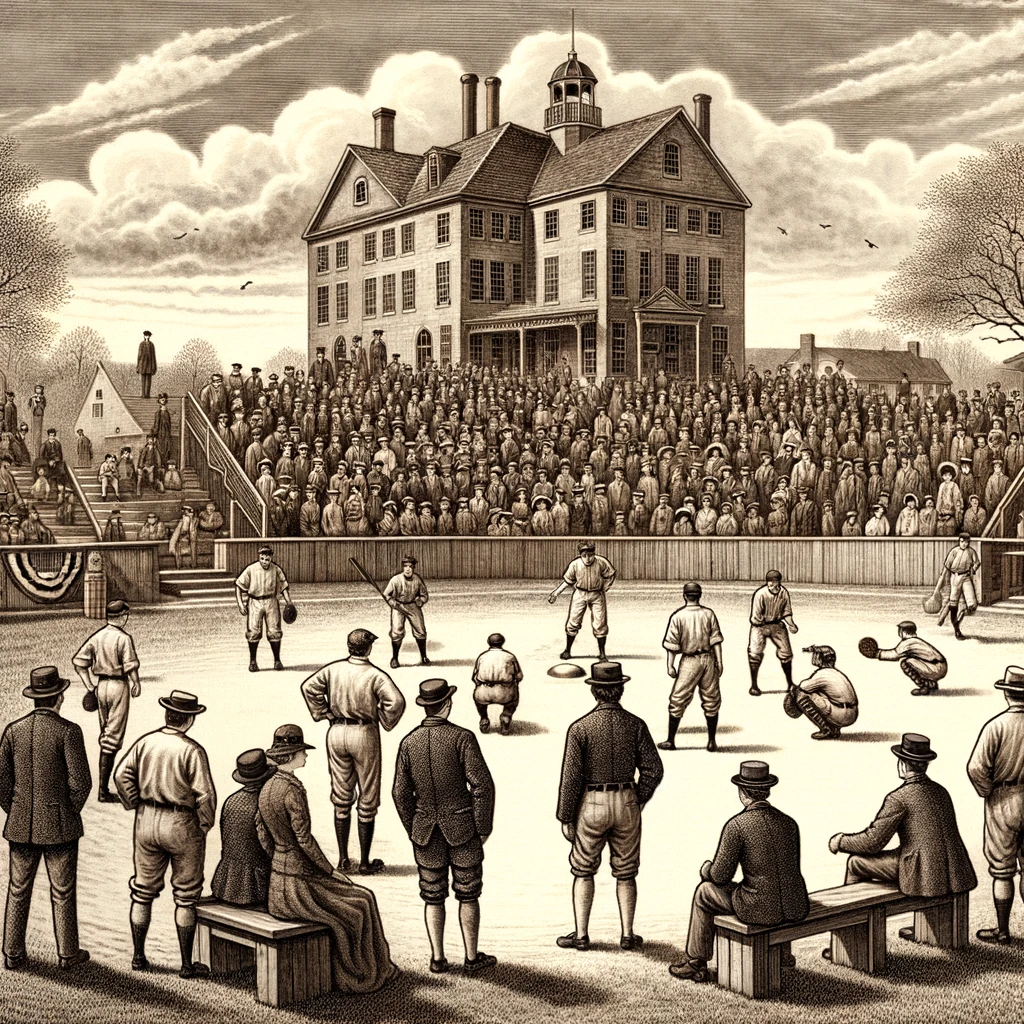
The Dawn of College Baseball
Baseball, America’s pastime, has a rich and storied history that intertwines with the nation’s cultural and educational institutions. The origins of college baseball, a key element in this narrative, reflect a journey of evolution, passion, and the spirit of competition that have become synonymous with the sport.
The Early Beginnings
The roots of college baseball date back to the mid-19th century, a time when the United States was experiencing rapid social and technological changes. Baseball, initially a recreational activity played in various informal formats across the country, began to gain popularity and structure. By the 1850s, it was evolving into a more organized sport, with established rules and dedicated clubs.
The First Collegiate Games
The first recorded instance of a college baseball game took place on July 1, 1859, between Amherst College and Williams College in Pittsfield, Massachusetts. This historic game, played under Massachusetts Game rules, which differed from the now-dominant New York Game rules, marked the beginning of college baseball as a structured sport. The enthusiasm and competitiveness of this initial encounter set the tone for what was to become a deeply ingrained part of college life.
The Spread of the Game
Following the Amherst-Williams game, the popularity of baseball on college campuses began to spread rapidly. It wasn’t just about the sport; baseball became a symbol of college identity and pride. In the years following the Civil War, numerous colleges formed their own baseball teams, and intercollegiate competitions became a regular feature of college life.
The Evolution of Rules and Gameplay
From Massachusetts to New York Rules
The early days of college baseball saw a variety of rules and styles of play. The Massachusetts Game, prevalent in New England, featured a smaller, softer ball and allowed for a runner to be put out by being hit with the ball while running between bases. However, by the late 1860s, the New York Game, with its nine-player teams and four-base diamond, began to dominate and eventually became the standard form of baseball we know today.
The First College Baseball League
The establishment of formal rules led to the creation of the first college baseball league. In 1879, the Ivy League, known then as the Intercollegiate Base Ball Association, was formed, featuring teams from Harvard, Yale, Princeton, and Columbia. This league set the stage for organized college baseball competitions and laid the groundwork for modern college leagues.
The Cultural Impact of College Baseball
More Than Just a Game
As college baseball evolved, it became deeply intertwined with American culture and education. It was not merely a sport; it was a means of building character, instilling discipline, and fostering a sense of community among students and alumni alike. The game also mirrored societal changes, including the struggle for racial equality, as seen in the integration of baseball teams in colleges long before Major League Baseball.
The Influence on Major League Baseball
Many college baseball players went on to have significant careers in Major League Baseball (MLB). This crossover had a profound impact on MLB, as it brought skilled and disciplined players into the professional arena. Additionally, the strategies and styles developed in college baseball often influenced the professional game, contributing to its evolution.
The history of college baseball is a tapestry of athletic achievement, cultural significance, and educational impact. From its humble beginnings in the mid-19th century to its current status as a key part of collegiate athletics, college baseball has mirrored the growth and changes of American society. It has fostered a spirit of competition, camaraderie, and excellence that continues to resonate on college campuses and beyond.

The Expansion and Professionalization of College Baseball
Growth Across the Nation
As the 20th century dawned, college baseball began to spread beyond the Northeast, taking root in the Midwest, South, and eventually the West Coast. This expansion was not just geographical but also cultural, as baseball became a unifying force in college athletics, bridging regional differences and creating a national collegiate pastime.
The Role of World Wars
The World Wars played a significant role in the spread and development of college baseball. During these times, baseball served as a morale booster and a symbol of American resilience. Post-World War II, many veterans enrolled in colleges under the G.I. Bill, further popularizing the sport on campuses nationwide.
The NCAA and the College World Series
The establishment of the National Collegiate Athletic Association (NCAA) in 1906 marked a significant milestone in the professionalization of college sports, including baseball. The NCAA began to oversee college baseball, standardizing rules and organizing competitions. This led to the inception of the College World Series in 1947, a tournament that has become the pinnacle of college baseball, showcasing the best teams and talent from across the country.
The Impact on Player Development and Major Leagues
A Feeder System for MLB
College baseball has evolved into a vital feeder system for Major League Baseball. The skills and experience gained in collegiate baseball have proved invaluable for many players transitioning to the professional level. Scouts and MLB teams now regularly attend college games to identify and recruit top talent, further solidifying the bond between collegiate and professional baseball.
Notable MLB Players from College Baseball
Several MLB legends started their journeys in college baseball. Players like Jackie Robinson, who played at UCLA, and Reggie Jackson, a standout at Arizona State, are prime examples of the talent that has transitioned from college diamonds to the major leagues.
The Draft and College Baseball
The introduction of the MLB Draft in 1965 had a profound impact on college baseball. For the first time, MLB teams had a formal mechanism to recruit college players, leading to a more structured relationship between college baseball and the professional leagues. This relationship has helped to raise the standard of play in college baseball, as players aspire to reach the professional ranks.
The Role of College Baseball in American Society
More Than a Stepping Stone to MLB
While college baseball is a key pathway to professional baseball, its impact extends far beyond the field. It plays a significant role in shaping the character and life skills of young athletes. The discipline, teamwork, and leadership skills developed in college baseball are valuable life lessons that extend into personal and professional realms.
A Platform for Social Change
Throughout its history, college baseball has been a platform for social change. The integration of college teams before the desegregation of Major League Baseball was a significant milestone in the fight for racial equality in sports. College baseball has also been a space for addressing and discussing broader societal issues, from racial and gender equality to educational and economic disparities.
Future Prospects and Challenges
The Evolving Landscape of College Athletics
As college sports, including baseball, face new challenges and opportunities, the landscape is evolving. Issues like player compensation, educational balance, and the impact of technology on sports are at the forefront of discussions about the future of college baseball.
Preserving the Integrity and Spirit of the Game
As college baseball continues to grow, preserving the integrity and spirit of the game is paramount. Balancing the commercial aspects with the educational and developmental goals of collegiate sports will be crucial in maintaining the essence of college baseball.
Conclusion
The story of college baseball is a reflection of America’s love for the game and its deep roots in the nation’s educational and cultural fabric. From its origins in the mid-19th century to its current status, college baseball has been more than just a sport; it has been a journey of passion, perseverance, and excellence. As it moves forward, college baseball will undoubtedly continue to be an integral part of American sports and culture.
Frequently Asked Questions
What are the origins of college baseball in the United States?
The origins of college baseball date back to the mid-19th century, specifically around the 1850s. This period was marked by a rapidly changing social landscape in the United States, where educational institutions began embracing sports as part of their curriculum. Baseball started to make its way into college life, becoming an integral part of student culture. Notably, it was in 1859 when Amherst College and Williams College, two of the oldest higher education institutions in the country, played one of the first documented intercollegiate baseball games. This marked a significant step in embedding baseball within the collegiate athletic framework, sparking what would become a lasting tradition.
How did the competition aspect evolve in college baseball?
The competitive spirit in college baseball began to take shape in the late 19th century, coinciding with the industrial revolution and the rise of organized sports. Colleges increasingly recognized the value of athletic competition in fostering school spirit and unity. Intercollegiate games became regular events, drawing large crowds and establishing rivalries that endure to this day. The adoption of standardized rules and the formation of athletic conferences further formalized the competition, providing a fair and structured environment where schools could test their teams’ prowess against peers. By the early 20th century, college baseball had developed into a deeply competitive sport, with players and fans alike eagerly anticipating each season.
What role did cultural and educational institutions play in the development of college baseball?
Educational institutions played a pivotal role in nurturing college baseball by incorporating it into their athletic programs, thereby offering students a wholesome balance of academics and athletics. These institutions saw baseball as a key component of physical education, promoting teamwork, discipline, and sportsmanship. Cultural aspects also dictated the growth of college baseball; as America urbanized and industrialized, baseball became a unifying force within communities, including those built around universities. The sport was not only a form of entertainment but also a symbol of American values and ideals, embedded in the nation’s cultural fabric. These factors collectively fueled the growth of baseball in colleges, ensuring its prominence in academia and sports.
How did college baseball influence professional baseball leagues?
The relationship between college baseball and professional leagues is symbiotic in many ways. College baseball has historically been a vital pipeline for Major League Baseball (MLB), acting as a training ground for young athletes aspiring to professional careers. The structured environment of college sports allows players to hone their skills and gain valuable experience in high-pressure games. Many MLB scouts target collegiate players, recognizing the rigorous competition and the advanced level of play. Over time, numerous college baseball stars have transitioned successfully to the major leagues, contributing significantly to the talent pool and enhancing the quality of professional baseball. This ongoing connection underscores the importance of college baseball in the larger ecosystem of American sports.
What are some notable milestones in the history of college baseball?
College baseball’s history is marked by several key milestones that have shaped its trajectory. After the first recorded intercollegiate game in 1859, the sport gradually gained popularity. The establishment of the College World Series in 1947 represented a major milestone, providing a national stage for college teams and elevating the profile of the sport. The NCAA’s involvement in organizing and regulating college baseball further professionalized the sport, ensuring consistent standards and increasing its visibility. These developments, combined with the passion and dedication of players, coaches, and fans, have cemented college baseball’s position as a significant component of the American collegiate athletics landscape.