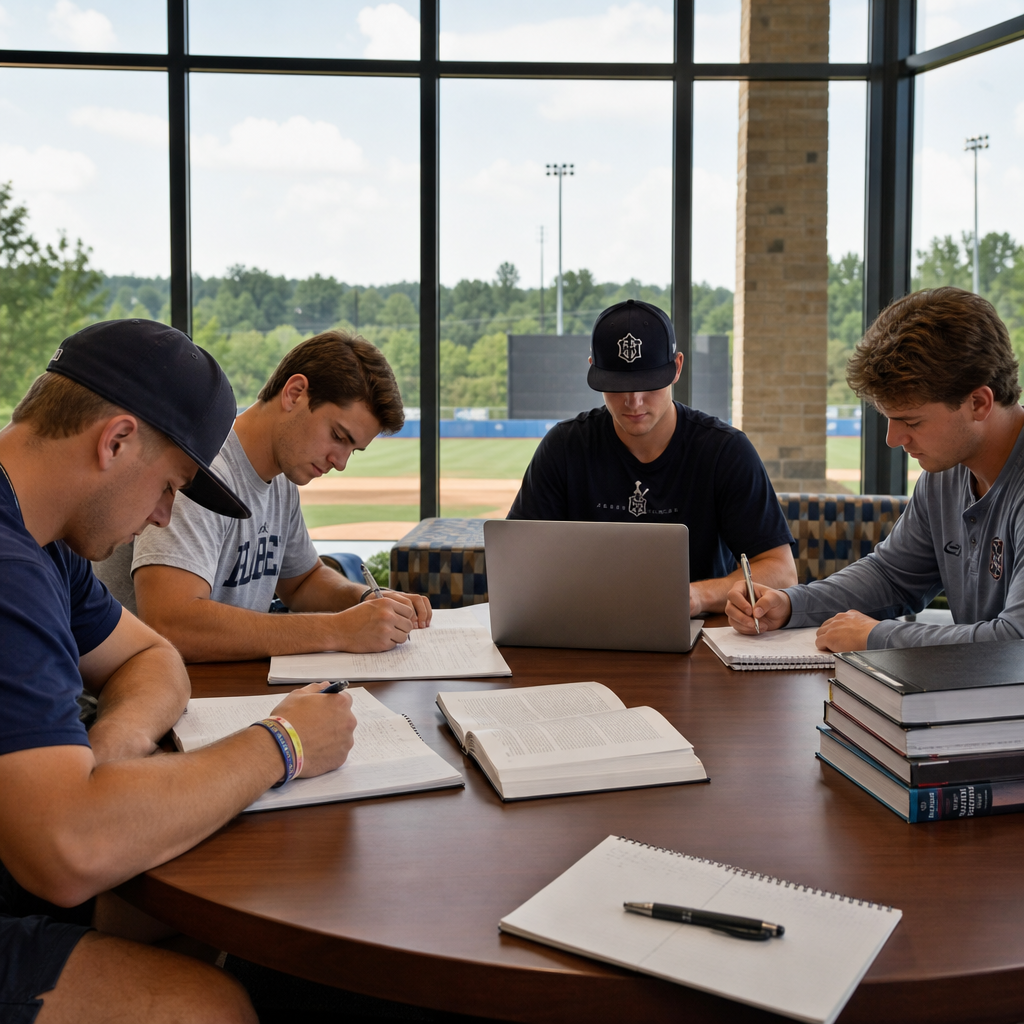
College baseball’s role in promoting academic excellence is larger and more measurable than many fans realize, because the sport sits at the intersection of higher education, athlete development, time management, and institutional accountability. In practical terms, college baseball is not just a feeder system for professional leagues; it is an academic environment where players must meet admissions standards, maintain eligibility, progress toward degrees, and perform in classrooms while handling a demanding travel and training schedule. When people discuss minor leagues and college baseball, they often focus on draft boards, velocity jumps, transfer decisions, and conference standings. The academic side receives less attention, yet it shapes the daily reality of players, coaches, academic advisors, and athletic departments. I have worked with programs that reviewed class attendance weekly, built study hall blocks around road trips, and treated grade reports with the same urgency as bullpen sessions. That experience makes one point clear: the strongest college baseball programs usually build academic habits as deliberately as they build rosters.
Academic excellence in this context means more than staying eligible. It includes steady progress toward a degree, meaningful engagement with coursework, use of tutoring and advising resources, and preparation for a career beyond playing days. It also means institutions creating systems that help athletes succeed without lowering standards. The National Collegiate Athletic Association sets baseline eligibility and progress rules, but campuses determine how those standards become daily practice through advising models, faculty communication, travel planning, and culture. This matters because only a small percentage of college baseball players reach Major League Baseball, and even those who enter professional baseball benefit from the communication, analysis, leadership, and discipline developed in college classrooms. For athletes who do not play professionally, academic outcomes are even more decisive. A college baseball program that supports genuine learning gives players a wider set of options in business, coaching, education, sports medicine, analytics, law, and countless other fields.
As a hub within the broader minor leagues and college baseball topic, this article explains how college baseball promotes academic excellence, where the model works well, where tensions remain, and what families, players, and administrators should evaluate. It also connects to related themes such as recruiting, player development, scholarship structure, transfer movement, and post-college pathways. The central idea is simple: when college baseball is organized responsibly, it reinforces academic achievement rather than competing with it.
Why college baseball creates strong academic habits
College baseball promotes academic excellence because the sport forces structure. Players operate on fixed schedules that include strength training, practice, travel, treatment, meetings, and competition. On the surface, that looks like an obstacle to learning. In reality, well-run programs use that structure to create repeatable academic routines. Morning lifts are followed by class blocks. Road itineraries include supervised study time. Academic advisors monitor registration, degree progress, and missed class communication. Coaches ask for grade updates and intervene early when patterns slip. These systems reduce the chaos that often causes students to fall behind.
The strongest programs also define academic performance as part of team identity. In those settings, a player does not view tutoring as a punishment or a sign of weakness. He sees it as another support resource, similar to video review or physical therapy. That framing matters. Baseball already teaches process orientation: show up consistently, refine mechanics, learn from failure, and trust long-term development. Those same habits transfer well to coursework. A hitter who understands incremental improvement often responds well to a writing center, a chemistry tutor, or a faculty office hour because he already knows that mastery comes through repetition.
Another overlooked factor is roster composition. College baseball clubs include future accountants, engineers, teachers, sales professionals, data analysts, and coaches. Inside the clubhouse, younger players regularly learn from older teammates who have navigated difficult majors, internships, and capstone projects. Peer modeling is powerful. I have seen freshmen who arrived overwhelmed by college expectations improve dramatically after copying how upperclassmen organized calendars, planned study blocks, and communicated with professors before travel weekends.
Eligibility rules, degree progress, and institutional accountability
Academic excellence in college baseball does not happen by accident; it is reinforced by formal eligibility systems. NCAA rules require student-athletes to meet initial eligibility standards and ongoing progress-toward-degree benchmarks. At most institutions, this means athletes must complete a required percentage of their degree over time, maintain minimum grade-point averages, and pass enough credit hours each term to compete. These standards create a baseline incentive structure that links athletic participation to academic performance.
Rules alone, however, are not enough. The difference between a compliant program and an academically strong one is execution. Effective departments use degree maps, early-alert software, mandatory advising meetings, and attendance monitoring. They coordinate with faculty when travel causes absences and schedule classes strategically around practice blocks when possible. Many also rely on learning specialists for athletes with diagnosed learning differences, ensuring that accommodations are applied properly and consistently.
The table below summarizes the main mechanisms that connect college baseball to academic outcomes.
| Mechanism | How it works | Academic benefit | Common limitation |
|---|---|---|---|
| Eligibility standards | Players must meet GPA and credit benchmarks to compete | Creates clear consequences for poor academic performance | Can encourage minimum-threshold thinking instead of deeper learning |
| Academic advising | Advisors help with schedules, degree plans, and course selection | Improves retention and keeps athletes on track for graduation | Quality varies by campus resources and advisor caseload |
| Study hall and tutoring | Structured time and subject support are built into the week | Strengthens foundational skills and accountability | Works best when targeted, not treated as a box-checking exercise |
| Coach oversight | Staff review grade reports and class attendance regularly | Signals that academics are part of team standards | Can feel punitive if communication is only reactive |
| Faculty coordination | Travel letters and make-up planning reduce disruption | Helps athletes manage missed class time responsibly | Depends on timely communication and faculty flexibility |
Institutional accountability also matters at the conference and campus level. Graduation metrics, academic progress reports, and internal retention data give administrators a way to evaluate whether a program truly supports education. When a baseball team posts strong retention and graduation outcomes across multiple recruiting classes, that usually reflects a durable support model, not luck. Families exploring college baseball opportunities should ask direct questions about advising ratios, tutoring access, graduation success by major, and how the program handles travel-heavy weeks in season.
How coaches, advisors, and faculty shape the academic culture
Coaches are central to academic culture because players follow what staff members reward. If a coaching staff praises only exit velocity and strike percentage, academics become secondary regardless of what is printed in a media guide. In contrast, when coaches ask about exams, require class attendance, and celebrate academic milestones publicly, the message changes. The best staffs do not claim that baseball and academics are easy to balance. They acknowledge the load honestly and then build systems around it.
Academic advisors translate that culture into practical action. A good advisor understands institutional requirements, NCAA regulations, and the rhythm of a baseball season. He or she helps a player avoid predictable problems such as enrolling in an overloaded lab schedule during a travel-heavy term or delaying a required course until eligibility risk becomes serious. Advisors also connect players with writing centers, supplemental instruction, counseling services, and career offices before issues become emergencies.
Faculty members play an equally important role. Most professors are willing to work with athletes when communication is timely and respectful. The key is not special treatment but clear planning. Players who notify instructors early, submit work on time when possible, and use office hours productively tend to build credibility. I have seen faculty become strong supporters of athletic programs when coaches emphasize responsibility rather than entitlement. That relationship benefits everyone, because a cooperative campus climate reduces friction around absences and academic support.
The academic benefits unique to baseball players
Every college sport can build discipline, but baseball offers several academic advantages that are distinct. First, the sport demands patience with failure. Even elite hitters fail frequently, and pitchers must recover quickly from poor outings. That mindset helps in academic settings where difficult courses require persistence through low quiz grades, confusing lectures, or rough first drafts. Players who understand adjustment are often more coachable in the classroom.
Second, baseball naturally supports analytical thinking. Modern college programs use video, biomechanics, scouting data, spin metrics, and performance reports. Players become comfortable interpreting evidence, spotting patterns, and making incremental adjustments. Those habits align well with coursework in statistics, kinesiology, economics, business analytics, and engineering. It is not unusual to see players gravitate toward fields that reward data literacy because the sport has already made those concepts familiar.
Third, roster longevity helps mentorship. Unlike one-and-done environments, many baseball players remain on campus for several years, creating stable peer networks. A veteran catcher explaining how to manage a finance internship during season can be as influential as any formal workshop. Those peer conversations often normalize ambition outside baseball and reinforce that academic achievement is part of being a complete athlete.
Where the model struggles: travel, pressure, and unequal resources
College baseball does not automatically promote academic excellence in every setting. The biggest challenge is time. In-season travel can disrupt labs, group projects, and exam preparation, especially for athletes in demanding majors. Midweek games and weekend series compress academic work into narrow windows. Players at resource-rich programs often receive more tutoring, better scheduling support, and deeper staffing than players at smaller schools. That inequality affects outcomes.
There is also tension between professional ambition and long-term education. Draft-eligible players may prioritize training, showcases, or transfer decisions in ways that compete with academics. For some, that choice is rational. A high draft bonus can change a family’s financial trajectory. Still, programs must guard against treating college coursework as disposable. Most players will need their degree or the skills connected to it, whether immediately after college or after a short professional career.
Another issue is major clustering. When athletes are steered toward easier schedules rather than best-fit academic paths, short-term eligibility can improve while long-term value declines. Responsible programs avoid this trap. They help players pursue realistic majors that match ability, interest, and career goals, even when those pathways require more planning and support.
Why this matters for careers beyond the field
The clearest argument for academic excellence in college baseball is career durability. Professional baseball is highly selective, and minor league careers are often short. Even for players who sign after college, injuries, releases, and organizational turnover can end a playing career quickly. A meaningful academic experience gives athletes options. Employers consistently value communication, teamwork, resilience, and time management, but they also need domain knowledge, technical skills, and credentials. College baseball can deliver both when done well.
Players routinely carry lessons from the sport into careers in finance, sales, education, law enforcement, coaching, sports medicine, and operations. Some move into baseball analytics or player development because they learned to interpret data and communicate adjustments. Others use alumni networks built through their universities to access internships and early job opportunities. Those outcomes are not accidental add-ons to athletics. They are evidence that a strong college baseball experience can be a launch platform for adult professional life.
For families, recruits, and administrators, the practical takeaway is to evaluate college baseball programs with academics at the center, not at the margins. Ask how the staff supports difficult majors, what graduation outcomes look like, how academic help is delivered on the road, and whether older players finish with careers in motion. Explore related topics across this minor leagues and college baseball hub, including recruiting strategy, scholarships, transfers, player development, and pro pathways. The best program is not simply the one that offers innings or exposure. It is the one that develops a player’s game and education together. Choose that model, and college baseball becomes more than a season schedule; it becomes a disciplined route to lasting academic and professional success.
Frequently Asked Questions
How does college baseball directly support academic excellence among student-athletes?
College baseball supports academic excellence by placing education at the center of the student-athlete experience rather than treating it as a secondary obligation. To compete, players must satisfy admissions requirements, remain academically eligible, and make steady progress toward completing a degree. That structure creates a clear connection between classroom performance and athletic opportunity. Unlike the common perception that sports distract from academics, college baseball often reinforces educational discipline because players quickly learn that poor grades can limit playing time, travel eligibility, scholarship opportunities, and long-term career options.
The daily demands of the sport also help build habits that translate well into academic success. Baseball players must balance practices, strength training, film review, travel, recovery, and competition schedules while still attending class, meeting assignment deadlines, and preparing for exams. That environment encourages time management, accountability, and routine. Many programs also provide academic advising, tutoring, study halls, progress monitoring, and faculty coordination, which give athletes a stronger support system than many non-athletes receive. When these resources are used effectively, college baseball becomes a framework that promotes organization, persistence, and academic focus.
Why is time management considered such an important academic benefit of playing college baseball?
Time management is one of the most significant academic benefits of college baseball because the sport requires athletes to operate on a highly structured schedule. During the season, players often juggle early workouts, classes, team meetings, practices, games, travel, and recovery sessions. That leaves very little room for procrastination. As a result, student-athletes are forced to become intentional about how they use every hour of the day. They learn to plan ahead, complete assignments during travel windows, communicate with professors early, and stay organized long before deadlines become urgent.
These habits matter academically because success in higher education is often tied to consistency rather than last-minute effort. A student who can break large projects into manageable steps, study in short but regular sessions, and maintain a semester-long routine is usually better positioned to perform well than one who works without structure. College baseball naturally encourages those behaviors. Players understand that discipline in one area affects performance in another, so the mindset developed through athletics often carries into the classroom. Over time, that ability to manage competing priorities becomes a valuable life skill, benefiting students not just in college but also in graduate school, professional careers, and leadership roles after athletics.
What role do colleges and baseball programs play in keeping athletes academically accountable?
Colleges and baseball programs play a major role in academic accountability by creating systems that track, support, and enforce academic progress. At the institutional level, student-athletes are subject to eligibility rules, credit-hour requirements, grade standards, and degree-progress benchmarks. These policies ensure that athletes are not simply enrolled in name only; they must actively work toward academic advancement in order to continue competing. Athletic departments often monitor class attendance, assignment completion, tutoring participation, and semester performance, allowing staff to identify issues early before they become eligibility problems.
At the program level, coaches, academic advisors, and support staff often work together to create a culture where academic performance is expected and discussed openly. In strong programs, classroom success is treated as part of overall team performance. Coaches may review academic reports, require study hall attendance, coordinate with academic services, and emphasize that being reliable off the field is part of being a complete athlete. This kind of accountability can be especially powerful because it combines institutional standards with team culture. When players know that their professors, advisors, teammates, and coaches all expect them to stay on track academically, they are more likely to develop a serious and sustained commitment to their education.
Does college baseball prepare players for careers outside of professional sports?
Yes, college baseball can be highly effective in preparing players for careers beyond professional sports, and this is one of its most important educational functions. Only a small percentage of college baseball players will reach the professional level, which makes academic development and career preparation essential. Through the college experience, players pursue degrees, build relationships with faculty and mentors, and gain exposure to fields such as business, education, communications, sports management, engineering, health sciences, and many others. That academic foundation gives them practical options after graduation and helps ensure that their future is not dependent solely on athletic outcomes.
In addition, the experience of competing in college baseball helps athletes develop transferable professional skills that employers value. These include teamwork, leadership, resilience, communication, punctuality, problem-solving, and the ability to perform under pressure. Athletes also learn how to accept feedback, improve through repetition, and stay committed to long-term goals. When those traits are paired with a college education, they create a strong platform for career success. For many former players, the biggest long-term value of college baseball is not just what happened on the field, but how the sport helped them earn a degree, mature personally, and enter the workforce with discipline and confidence.
How can fans, parents, and students measure whether college baseball is truly promoting academic excellence?
Fans, parents, and prospective student-athletes can measure college baseball’s academic impact by looking beyond wins and losses and paying attention to meaningful education-related indicators. Graduation rates, academic progress rates, team grade point averages, retention rates, and the number of athletes completing degrees on time are all useful benchmarks. These metrics show whether a program is helping players move steadily through college rather than simply keeping them eligible from one season to the next. Strong academic cultures are usually visible in consistent outcomes, not just promotional language.
It is also important to evaluate the quality of the support environment around the team. Questions worth asking include whether the program offers tutoring, academic advising, structured study time, mentorship, and flexibility for missed classes during travel. Families and students should also pay attention to how coaches talk about education during recruiting. If academic fit, major selection, and career preparation are discussed seriously, that is often a sign that the program values the full student-athlete experience. Ultimately, college baseball promotes academic excellence most effectively when schools combine measurable standards with genuine educational support, creating an environment where athletes are expected to succeed in the classroom as consistently as they compete on the field.