Introduction
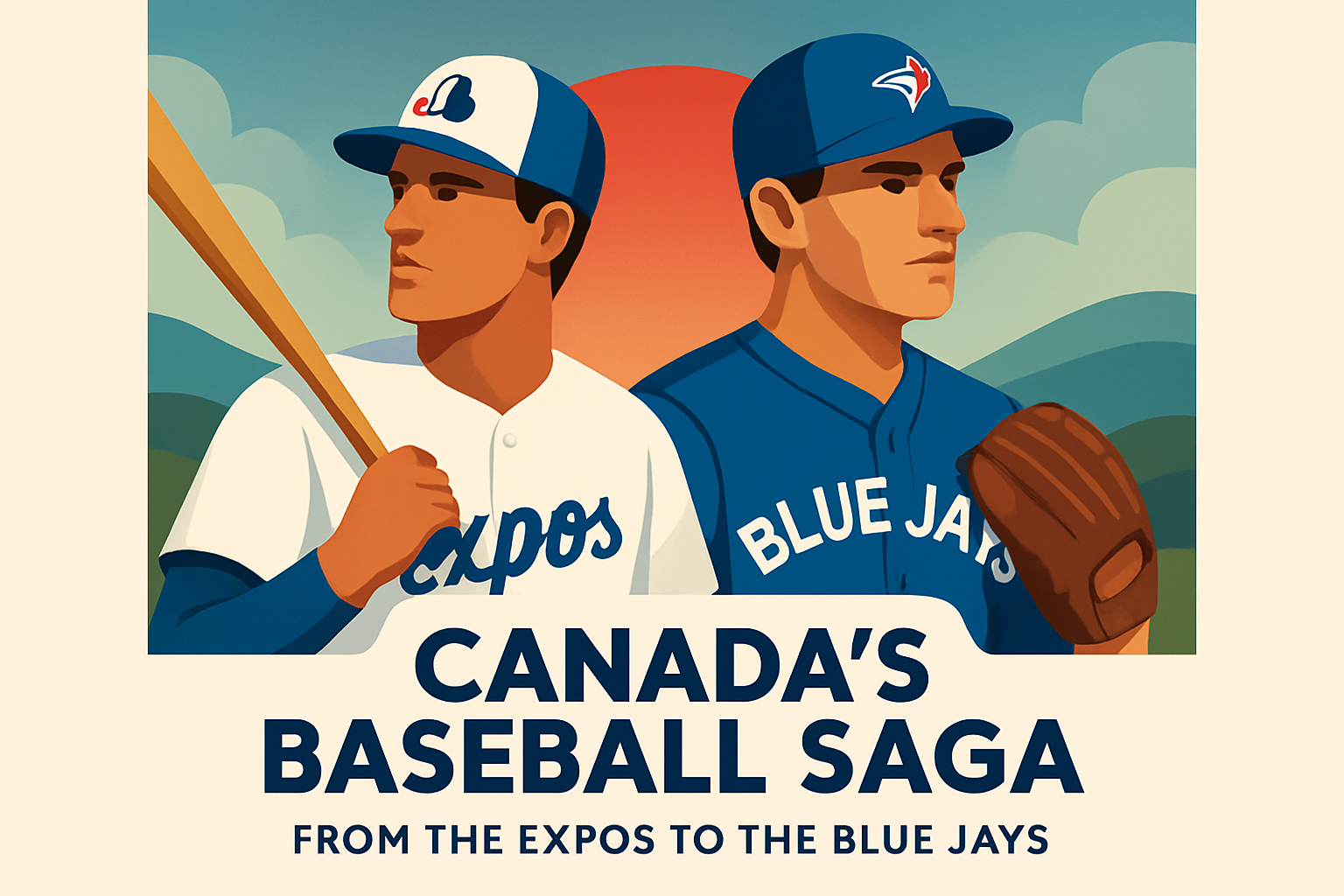
Baseball, often referred to as America’s pastime, has found fertile ground north of the United States border. Canada, a nation celebrated for its landscapes, ice hockey, and the Leafs, has also woven baseball into its cultural fabric. The country’s journey in baseball is a saga marked by triumph, loss, and enduring passion, from the Montreal Expos’ humble beginnings to the Toronto Blue Jays’ significant successes on the global stage. Understanding Canada’s baseball history is essential, not only to appreciate the country’s diverse sports culture but also to grasp the broader tapestry of North American baseball.
The term “baseball” conjures images of iconic stadiums, legendary players, and jubilant celebrations. But in Canada, it also symbolizes a community of fans whose dedication transcends the sport itself. This narrative matters because it underlines the ability of sport to unify diverse populations, bridge geographical gaps, and create lasting legacies for generations to cherish.
The tale of Canadian baseball involves narratives of business challenges, the struggle for cultural significance, and the pursuit of excellence. As we delve deeper, we will explore how Canadian teams have stood at the crossroads of history, impacting both the sports world and societal trends.
From St. Louis to Montreal: A Team’s Birth
The Montreal Expos made their debut in Major League Baseball (MLB) in 1969. The team marked a significant chapter in Canadian sports as the first MLB franchise located outside the United States. But how did this journey begin?
Montreal’s venture into the baseball arena can be traced back to the relocation of a minor league franchise, the Montreal Royals, whose ties to Jackie Robinson underpin the city’s rich baseball heritage. As interest grew, the push for a major league team gained momentum. Spearheaded by Charles Bronfman, a Montreal businessman, the Expos were born.
Named in honor of the Expo 67 World’s Fair held in Montreal, the Expos managed to embody the spirit of modernism and openness. They played their early games at Jarry Park, a modest venue that quickly became the heart of baseball in the city. Despite facing steep competition from established teams, the Expos captured fans’ imaginations with their gritty performances and charm.
Highs and Lows: The Expos’ Mixed Trajectory
Throughout the 1970s and 80s, the Expos experienced both dizzying highs and devastating lows. In 1981, the team’s “Nos Amours” era brought them closest to a World Series berth, making it to the National League Championship Series (NLCS). Stars such as Gary Carter, Andre Dawson, and Tim Raines elevated the team’s profile, drawing more fans to watch.
Yet challenges shadowed the Expos’ successes. The mid-1990s baseball strike was particularly damaging, leading to significant financial losses and diminishing fan support. Merely years after fielding what many believed was a World Series-caliber team, the franchise was plunged into uncertainty.
- Increased fan support in the early ’80s was due to a playoff appearance.
- Financial woes paralleled with local economic downturns.
- The Expos’ roster boasted future Hall of Famers.
- Relocation rumors frequently haunted the team in the late ’90s.
By 2004, maintaining an MLB team in Montreal became untenable. The Expos played their last game before relocating to Washington D.C., becoming the Nationals.
The Rise of the Toronto Blue Jays
While the Expos struggled for survival, the Toronto Blue Jays embarked on a story of success that few could have anticipated. Established in 1977, the Blue Jays filled the void left by struggling Canadian baseball narratives and quickly became Canada’s premier team.
The Blue Jays were an expansion team, introduced alongside the Seattle Mariners. However, unlike many expansion franchises that floundered for years, the Blue Jays swiftly proved their mettle. Within a decade, by 1985, they made their first playoff appearance, in large part due to the talent of players like Dave Stieb and George Bell.
The early 1990s witnessed the team’s golden era. The Blue Jays clinched consecutive World Series Championships in 1992 and 1993, becoming the first (and only) Canadian team to achieve this feat. The ’93 series, in particular, etched Joe Carter’s legendary walk-off home run against the Philadelphia Phillies into the annals of baseball lore. The triumph solidified their reputation not only in Canada but globally.
Economic and Social Implications of Baseball in Canada
Baseball’s impact on Canadian society goes beyond the diamond. Economically, the presence of two MLB teams brought numerous jobs, increased tourism, and commercial investments. Cities like Montreal and Toronto leveraged their baseball teams as anchors of urban development and community engagement.
| City | Direct Economic Impact (1977-1995) |
|---|---|
| Montreal | $280 million |
| Toronto | $470 million |
Beyond economics, the sport fostered a sense of unity and identity. Both Toronto and Montreal baseball fans were a testament to the Canadian spirit of resilience and innovation. The fanfare and public celebrations surrounding games ignited civic pride, translating sport into a medium of cultural expression.
Expat Fans and Cross-Border Appeal
Canada’s baseball teams have also cultivated a considerable following among expatriates and cross-border fans. U.S. residents and former Canadians often support these teams, connecting with shared histories and memories. This cross-national support has helped the sport bridge traditional geographical divides.
The “snowbird” phenomenon, where Canadians spend part of the year in warmer U.S. locales, has also strengthened baseball’s presence beyond Canada’s boundaries. Many of these fans bring their enthusiasm to U.S. ballparks, particularly during spring training sessions.
Challenges and Opportunities Moving Forward
The challenges faced by Canadian baseball are much the same as those faced by MLB as a whole: evolving fan expectations, financial pressures, and maintaining relevance in a digitally-driven age. However, opportunities are abundant.
Youth programs in Canada continue to thrive, with talented players rising from junior leagues and semi-professional teams to international recognition. Investment in grassroots initiatives, similar to those that nurtured legends like Larry Walker, is critical.
Additionally, partnerships between the MLB and Canadian communities stand poised to unlock future growth, whether through broadcasting deals, merchandise, or joint marketing ventures.
Conclusion
Canada’s baseball story, laden with triumphs, resilience, and passion, illustrates sports’ cultural significance. The legacies of the Montreal Expos and Toronto Blue Jays extend far beyond their win-loss records, speaking to a broader narrative of community, identity, and aspiration.
Embracing these stories offers valuable lessons in unity, perseverance, and the importance of a solid cultural foundation. For the reader, engaging with the narrative of Canadian baseball is both a journey of discovery and a testament to the power of sport to transcend boundaries and enrich lives.
As we look forward, there’s an open call to action: Support your local teams, cherish the shared history, and let Canada’s baseball saga inspire future generations to build on this remarkable legacy.
Frequently Asked Questions
1. How did the Montreal Expos come to be a part of Major League Baseball (MLB)?
The Montreal Expos hold a special place in Canada’s baseball history as they paved the way for the sport’s development in the country. The Expos were established as part of the MLB’s expansion efforts. In 1969, Major League Baseball decided to expand beyond its American confines, and Montreal was selected as the location for the first MLB team outside the United States, making the Expos not just a Canadian milestone but also a significant step toward internationalizing one of America’s most cherished sports. The team was named after Expo 67, a successful World’s Fair held in Montreal. This fair was pivotal in showcasing Canada on a global stage, and the new team was hoped to do the same within the realm of sports. Initially, the Expos played their games at Jarry Park before moving to the Olympic Stadium, known for its retractable roof, although it was frequently criticized for its unreliability. Despite various challenges, including financial constraints and struggles on the field, the Expos created a dedicated fan base, largely owing to their charismatic players and the excitement of having a major league team in Canada.
2. What were some of the notable achievements of the Montreal Expos during their time in MLB?
The Montreal Expos, despite facing an uphill battle in many seasons, had moments of brilliance and notable achievements. One of the most remarkable seasons for the team was 1981, a year that saw the Expos reach the playoffs for the first time. That year, they made it to the National League Championship Series (NLCS) but were narrowly defeated by the Los Angeles Dodgers. The team’s roster during various seasons boasted several future Hall of Famers, such as Gary Carter, Andre Dawson, and Tim Raines, each of whom left an indelible mark on baseball history. In 1994, the Expos had the best record in baseball and looked poised to win their first World Series. Sadly, the season was abruptly interrupted and eventually canceled due to a players’ strike, leaving fans with a lingering “what could have been” sentiment. Despite not winning a World Series, the Expos’ legacy endures through the players who became icons in the sport and the unforgettable moments that they gifted to their fans.
3. What led to the Montreal Expos’ relocation and subsequent rebranding?
The relocation and rebranding of the Montreal Expos into the Washington Nationals in 2005 was the culmination of a series of challenges, primarily financial instability and dwindling attendance. Throughout the 1990s and early 2000s, the Expos struggled with financial issues, partly due to unfavorable exchange rates and the lack of a robust media deal that many other MLB teams enjoyed. The strike-shortened season of 1994 further impacted the fan base, as it was particularly demoralizing when the team had been performing so well. Ownership changes and failed attempts to secure a new ballpark also contributed to the team’s instability. By the early 2000s, it became apparent that the Expos could not sustain themselves in Montreal without significant changes. MLB eventually took ownership of the team, and after a temporary stint of splitting games between Montreal and Puerto Rico, a decision was made to relocate. The team was moved to Washington, D.C., and rebranded as the Washington Nationals, a fresh start supported by a new stadium and a market eager for baseball.
4. How did the Toronto Blue Jays establish their presence in MLB and distinguish themselves from the Expos?
The Toronto Blue Jays were introduced to Major League Baseball as part of the league’s expansion for the 1977 season, giving Canada a second MLB team and offering a distinctive counterpoint to the Montreal Expos. Located in Toronto, Ontario, a major commercial and cultural hub, the Blue Jays quickly set about forging their own identity within the league. The team played initially at Exhibition Stadium and later moved to the then-SkyDome, now known as Rogers Centre, which was the first stadium with a fully retractable roof, reflecting Toronto’s innovative spirit. The Blue Jays distinguished themselves by appealing to a broader national audience, effectively becoming not just Toronto’s team but also Canada’s team. They built a reputation for focusing on both English and French-speaking communities, helping cultivate a wide fan base. This inclusive approach resonated so well that even after the Expos left Montreal, Canadian baseball fans across the country rallied around the Blue Jays, particularly during their successful World Series campaigns in the early 1990s.
5. What are some key moments in Toronto Blue Jays’ history that shaped the team’s legacy?
The legacy of the Toronto Blue Jays is punctuated by several key moments that solidified their status as a powerhouse in baseball. One of the pinnacle achievements came in the early 1990s when the Blue Jays emerged from a period of building and development to become dominant contenders. In 1992 and 1993, the Blue Jays clinched back-to-back World Series titles, the first and only Canadian MLB team to achieve this feat, garnering international recognition and admiration. These victories firmly placed them on the global baseball map, largely credited to strategic acquisitions and developing homegrown talent. The charismatic Joe Carter’s walk-off home run in the 1993 World Series remains one of the most iconic moments in baseball history, celebrated by fans both in Canada and beyond. Another key achievement was the team’s ability to foster strong player development, exemplified by stars like Carlos Delgado and Roy Halladay, who contributed significantly to the team’s success over the years. More recently, in 2015 and 2016, the Blue Jays revived national pride during playoff runs, capturing the collective imagination of fans and reigniting the passion for baseball in Canada. These achievements have not only enriched the team’s legacy but have also fostered a vibrant baseball culture within the nation.