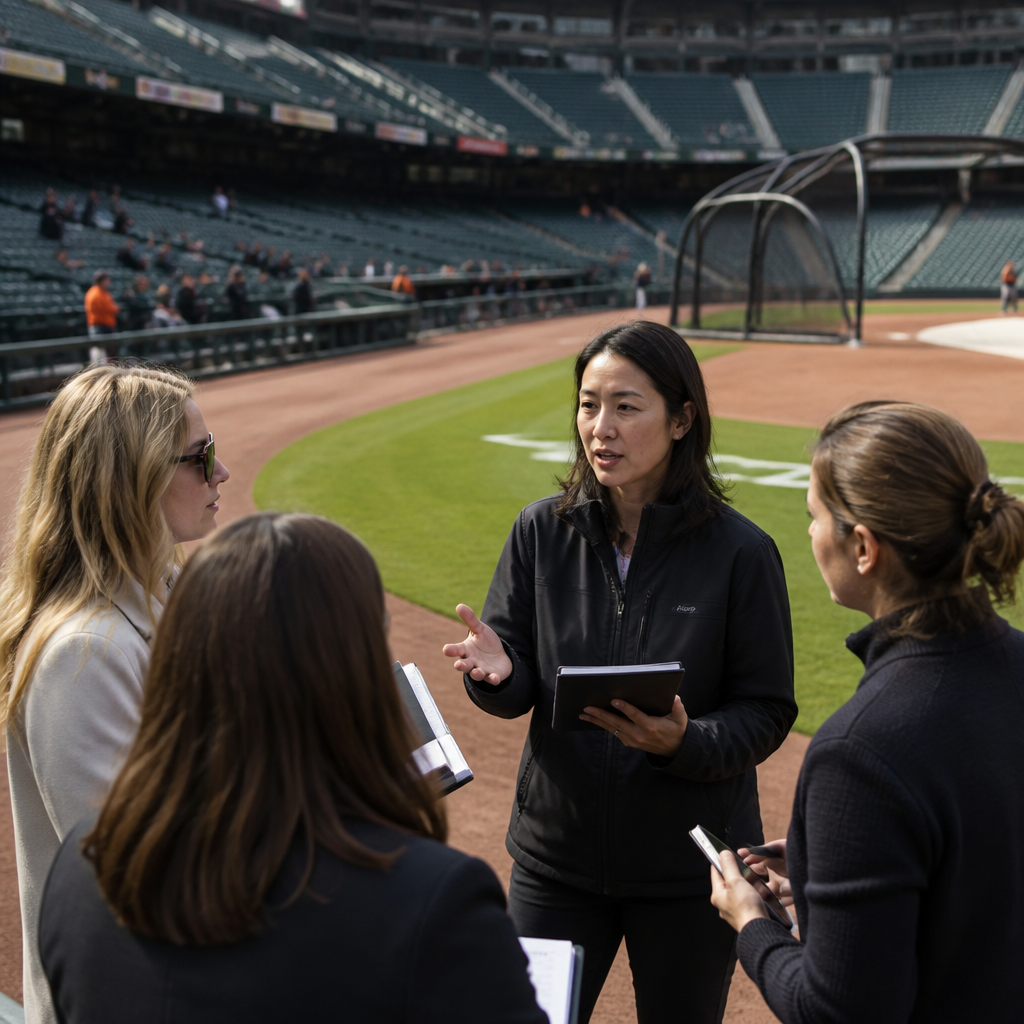
Behind every great baseball team is an operations group that turns scouting reports, player development plans, contracts, travel, medical data, and clubhouse logistics into daily action. Women in baseball operations have become central to that work, shaping how clubs evaluate talent, support players, and make decisions across the front office. Baseball operations refers to the connected departments responsible for roster construction, research and development, player development, performance, medical coordination, professional and amateur scouting, international strategy, contract administration, compliance, and the systems that keep an organization functioning from the Dominican academy to the major league dugout.
This topic matters because modern baseball is no longer run by instinct alone. Every competitive club blends analytics, biomechanics, traditional scouting, and operational discipline. In that environment, the best organizations hire broad talent and build structures that convert information into wins. I have seen this firsthand covering and working around baseball decision-making environments: when departments communicate well, road trips run cleaner, injury interventions happen sooner, draft boards become sharper, and players receive more consistent support. When they do not, even a talented roster can underperform because small failures compound over six months.
Women have long worked in baseball, but their visibility in operations has accelerated during the past two decades as clubs expanded data staffs, formalized player care roles, and opened more pathways through internships, development programs, and cross-functional jobs. The change is significant not simply as representation, but as competitive strategy. Teams need more perspectives, more specialized knowledge, and more disciplined process. This hub article surveys the broad miscellaneous landscape of women in baseball operations: what these roles involve, where women are influencing outcomes, which leaders have changed the profession, what barriers remain, and how readers can navigate the wider Women in Baseball topic from this sub-pillar.
What baseball operations includes today
Baseball operations is often mistaken for a narrow executive office, but in practice it covers a wide network of functions. Core areas include major league operations, minor league administration, roster management, transactions, arbitration preparation, contract tracking, rules compliance, scouting coordination, research and development, player development operations, strength and conditioning planning, sports science support, video systems, international operations, and player services. A general manager or president of baseball operations sits at the top, but the engine depends on directors, coordinators, analysts, assistants, and specialists whose work is highly technical and relentlessly time-sensitive.
Women now hold jobs throughout that structure. Some lead strategic decision-making as assistant general managers, farm directors, directors of baseball operations, or heads of research initiatives. Others run crucial connective systems as coordinators for travel, visas, housing, education, interpretation, and player programs. In many organizations, the person who ensures a newly promoted prospect has a flight, a locker, housing information, and current medical records is just as essential as the analyst presenting swing decisions or the scout filing reports from the Southeastern Conference. Baseball operations succeeds when all those functions align.
The miscellaneous category matters because many influential jobs fall outside the public spotlight. Fans know field managers and star players, but they rarely see the people who prepare Rule 5 draft information, maintain internal databases, coordinate off-season camps, or connect medical and performance staffs after a pitcher reports forearm tightness. Those roles are often where careers begin and where women have established lasting influence. They are also the positions that teach the organizational fluency required to rise into senior leadership.
Where women are changing outcomes across organizations
Women in baseball operations are influencing clubs in at least three practical ways: decision quality, organizational communication, and player support. Decision quality improves when front offices combine different backgrounds and challenge assumptions. A draft room benefits when an analyst, area scout, performance specialist, and operations executive interrogate the same player from different angles. Organizations that encourage rigorous debate usually avoid false certainty and identify risk earlier.
Communication is equally important. Baseball departments can become siloed because scouts, coaches, analysts, and medical staff use different vocabularies and timelines. Some of the best operations professionals act as translators across departments. I have watched effective coordinators turn a scattered process into a repeatable one by standardizing reports, clarifying ownership, and making sure information reaches the right people before deadlines. That is not soft work; it is competitive work.
Player support is another area where women have made measurable impact. International signees may need housing guidance, language resources, cultural adjustment help, banking assistance, nutrition planning, and family communication channels. Draftees and minor leaguers need education on routines, reporting expectations, and professional standards. Clubs that handle those transitions well reduce friction and allow players to focus on performance. Operations staffs often determine whether a player’s first month in pro ball feels chaotic or structured.
| Area | Typical responsibilities | Why it matters on the field |
|---|---|---|
| Roster and transactions | Option status, injured list moves, waiver deadlines, contract records | Prevents costly administrative errors and preserves roster flexibility |
| Player development operations | Camp scheduling, program tracking, affiliate coordination, staff logistics | Keeps development plans consistent across levels |
| Research and development | Modeling, decision support, pitch and swing analysis, database management | Improves player acquisition and game strategy |
| Player services | Travel, housing, visas, education, family support, interpreter coordination | Reduces distractions and accelerates player adjustment |
| Medical and performance coordination | Information flow, rehab scheduling, workload tracking, return-to-play logistics | Supports availability and lowers preventable setbacks |
Notable leaders and why their careers matter
Several women have become reference points for understanding baseball operations. Kim Ng’s appointment as general manager of the Miami Marlins in 2020 was historic because it placed a highly experienced executive in the sport’s top operational chair after decades of work with the White Sox, Yankees, Dodgers, and Major League Baseball. Her career showed that deep command of transactions, labor rules, scouting structures, and player personnel is the real foundation of executive leadership. Her presence also made the pathway more legible to younger professionals.
Raquel Ferreira, an executive vice president and assistant general manager with the Boston Red Sox, has long been one of the sport’s most respected baseball operations leaders. She built influence through contract administration, arbitration preparation, budgeting, winter ball relationships, and the detailed mechanics that keep an organization legally sound and strategically flexible. People outside front offices often underestimate that expertise. Inside the industry, it is understood as indispensable.
Elaine Weddington Steward, formerly an assistant general manager with the Red Sox and previously with the Cubs, became known for blending legal, administrative, and player personnel perspectives. Her rise illustrated how baseball operations rewards people who can connect policy, process, and talent evaluation. In player development, women such as Sarah Goodrum, who worked in farm leadership roles, demonstrated that development systems need both baseball acumen and organizational design. Their careers matter because they prove there is no single entry point. Law, analytics, video, administration, scouting support, and development operations can all lead upward when paired with mastery and stamina.
How careers begin and what skills actually matter
Most careers in baseball operations start with unglamorous work. Internships, seasonal assistant roles, video support, scouting administration, clubhouse services, and minor league coordination jobs are common entry points. Candidates often imagine the industry values only former players or advanced statisticians. In reality, clubs hire for a mix of traits: discretion, stamina, detail orientation, comfort with deadlines, written clarity, spreadsheet skill, and the ability to solve small problems before they become expensive ones.
Technical skills matter, especially in research and development. SQL, Python, R, Tableau, and experience with TrackMan, Hawk-Eye, or biomechanical systems can distinguish a candidate. But operations also rewards people who understand the Official Baseball Rules, the Major League Rules, roster regulations, collective bargaining implications, and international signing structures. A transaction coordinator who misreads an option rule can create just as much damage as an analyst who builds a flawed model. Precision is nonnegotiable.
Soft skills are often described vaguely, so it is worth being exact. Good baseball operations professionals write concise memos, ask clarifying questions early, keep clean records, and maintain trust. They can brief an executive in thirty seconds, then turn around and help a player or staffer with practical next steps. They know when to escalate, when to document, and when to stay out of the way. Women who have advanced in this space consistently demonstrate that credibility comes from execution over time, not from title alone.
Persistent barriers and the realities behind progress
Progress is real, but it is incomplete. Baseball remains a relationship-driven industry with long hours, frequent travel, informal hiring channels, and a culture that can still default to old assumptions about who looks like a baseball decision-maker. Women entering operations may face skepticism, isolation, or the burden of being treated as symbolic firsts rather than fully developed professionals. Those pressures are sharper for women of color, women without playing backgrounds, and those entering from nontraditional fields.
Work-life balance is another challenge because baseball’s calendar is relentless. The season runs daily, player issues emerge at all hours, and the off-season contains arbitration, free agency, winter meetings, development planning, and amateur preparation. Teams that want to retain talented women have to build sustainable staffing models, formal mentorship, transparent promotion criteria, and reporting structures that do not depend on personal access alone. Good intentions are not enough; organizations need process.
There is also a visibility gap. High-profile breakthroughs attract attention, but mid-level women doing foundational work can remain overlooked despite carrying major responsibility. That matters because younger professionals need realistic models, not only exceptional outliers. The healthiest organizations normalize women as decision-makers across levels, from coordinators and directors to assistant general managers and department heads. Representation in one office is meaningful. Representation throughout the chain is what changes culture.
Why this hub matters within Women in Baseball
As a sub-pillar hub, this page serves readers who want the full picture of women in baseball operations beyond a single role or headline. The broader Women in Baseball topic includes executives, scouts, analysts, coaches, umpires, broadcasters, player development staff, and medical or performance specialists. This miscellaneous hub connects those threads by focusing on the operational infrastructure that links them. If another article explores women in scouting, for example, this page provides the front-office context for how reports become decisions. If another covers women in analytics, this hub explains how models reach the field through organizational systems.
The central lesson is simple: women in baseball operations are not peripheral to winning; they are embedded in it. Great teams depend on clear information, disciplined logistics, coordinated development, and trustworthy leadership. Women are contributing in all of those areas every day, often far from cameras and credit. Follow this hub to explore the wider Women in Baseball landscape, study the leaders named here, and pay closer attention to the people whose operational work makes excellence possible from the complex to the big leagues.
Frequently Asked Questions
What does baseball operations include, and where do women contribute within those departments?
Baseball operations is the broad engine room of a professional baseball organization. It typically includes roster management, scouting, analytics and research, player development, performance science, medical coordination, contract administration, advance preparation, travel logistics, and communication between the major league club and the farm system. In practice, it is the part of the organization that turns long-term strategy into daily decisions. That can mean evaluating a player for the draft, designing a development plan for a pitcher in Double-A, managing 40-man roster moves, coordinating rehab timelines, or helping the front office prepare for the trade deadline.
Women contribute across all of these areas. Some work in research and development, building models that help clubs value players and make better in-game or roster decisions. Others work in player development, helping translate instruction plans into individualized support for athletes. Women also serve in operations-heavy roles involving contract tracking, compliance, scheduling, travel coordination, and communication between departments, all of which are essential to keeping a team functioning smoothly. Increasingly, women are part of scouting staffs, medical and performance teams, and front-office leadership groups that influence major personnel decisions.
The key point is that women in baseball operations are not limited to one lane. Their work is woven into the same decision-making structure that drives how teams acquire talent, support players, and compete over a 162-game season. As clubs have become more interdisciplinary, organizations benefit from professionals who can connect data, people, process, and long-term planning. Women have become central to that connected work.
Why are women in baseball operations so important to a team’s success?
Women in baseball operations are important because modern team success depends on more than scouting instincts or on-field talent alone. Winning organizations need sharp information flow, disciplined planning, strong collaboration, and a willingness to challenge assumptions. Women working in baseball operations strengthen those areas by contributing expertise in analysis, player support, logistics, communication, and strategic decision-making. Their impact is often felt in the quality of the process behind the outcome, which is exactly where strong organizations separate themselves over time.
Baseball has become increasingly complex. Teams now combine traditional scouting, biomechanics, performance data, mental skills work, injury prevention, financial planning, and player development systems into a single competitive model. That model works best when different perspectives are represented in the room. Women help broaden how organizations think about players, development environments, and internal systems. In many cases, that leads to better questions, clearer communication, and more complete evaluations of both talent and organizational needs.
There is also a practical leadership dimension. Baseball operations requires constant coordination: between the front office and coaching staff, between the major league club and the minor leagues, and between performance, medical, and development personnel. Women in these roles often help keep departments aligned so that plans do not remain theoretical. They help ensure the organization actually follows through. That combination of expertise and execution makes them vital contributors to team performance, even when much of the work happens behind the scenes.
How has the role of women in baseball operations changed in recent years?
The role of women in baseball operations has expanded significantly in recent years, both in visibility and in substance. Historically, women in professional baseball were often excluded from the core areas where player evaluation and roster decisions were made. Over time, that has changed as organizations have modernized their front offices and adopted more interdisciplinary approaches to team building. As clubs invested in analytics, performance science, player care, and systems-based development, opportunities opened for highly qualified professionals from a wider range of backgrounds, including more women.
Today, women are more present in roles tied directly to competitive decision-making. That includes research and development, amateur and professional scouting, baseball administration, player development operations, and high-level front-office strategy. Just as important, women are no longer only entering baseball operations at the entry level. More are taking on leadership positions with influence over policy, planning, staffing, and long-term organizational direction. That shift matters because representation at the leadership level changes not only who is in the room, but also what kinds of ideas are heard and implemented.
There is still progress to be made, but the trend is clear. The baseball industry increasingly recognizes that operational excellence depends on talent, insight, and effectiveness, not outdated assumptions about who belongs in the game. As a result, women are helping redefine what baseball operations looks like in practice: more collaborative, more evidence-driven, and more inclusive of the full range of expertise needed to support a modern team.
What kinds of skills are most valuable for women working in baseball operations?
The most valuable skills in baseball operations are the same ones that matter for anyone trying to help a team make better decisions and run efficiently: analytical ability, communication, organization, adaptability, and a deep understanding of the game. Depending on the role, technical skills can be especially important. For example, someone in research and development may need strong experience in statistics, coding, database work, and model building. Someone in player development operations may need project management strength, attention to detail, and the ability to coordinate across coaches, analysts, and support staff.
Communication is especially important because baseball operations is highly cross-functional. A great idea has little value if it cannot be clearly explained to coaches, executives, scouts, or players. The same is true for player information. Development plans, injury updates, roster implications, and performance feedback all need to move quickly and accurately across the organization. Professionals who can translate complex information into usable action are incredibly valuable, and many women in baseball operations stand out precisely because they bring that combination of technical knowledge and people skills.
Relationship-building also matters more than many outsiders realize. Trust drives good organizations. Whether the job involves evaluating players, presenting research, coordinating travel, or supporting the daily needs of a clubhouse, the ability to work well with others is critical. Baseball is demanding, seasonal, and often unpredictable, so resilience and flexibility matter too. Women succeeding in baseball operations tend to pair expertise with composure, persistence, and a team-first mindset, all of which are essential in an environment where small decisions can have major competitive effects.
How do women in baseball operations influence player development and front-office decision-making?
Women in baseball operations influence player development and front-office decision-making by helping shape the systems teams use to evaluate, support, and improve players. In player development, that can include organizing individualized training plans, integrating analytics into instruction, tracking progress across the minor leagues, coordinating with medical and performance staff, and making sure feedback is consistent from one affiliate to another. Development is not just about giving advice; it is about building an environment where information is actionable and where players can improve in measurable ways. Women working in these areas play a major role in making that happen.
On the front-office side, their influence often shows up in how decisions are framed and executed. A trade, draft pick, waiver claim, promotion, or roster move typically involves layers of input: scouting reports, analytics, health history, makeup evaluations, contract considerations, and organizational fit. Women in baseball operations contribute to that process by producing analysis, managing critical information, identifying risks, and helping leadership compare short-term needs with long-term goals. In many cases, their work sharpens the quality of the decision even if they are not the public face of it.
Perhaps most importantly, women in baseball operations help connect strategy to implementation. It is one thing for a team to say it values development, communication, and evidence-based decisions. It is another to build daily systems that actually reflect those priorities. Women across baseball operations are helping teams do exactly that. Their influence can be seen in better organizational alignment, stronger player support, and more thoughtful decision-making at every level of the club.