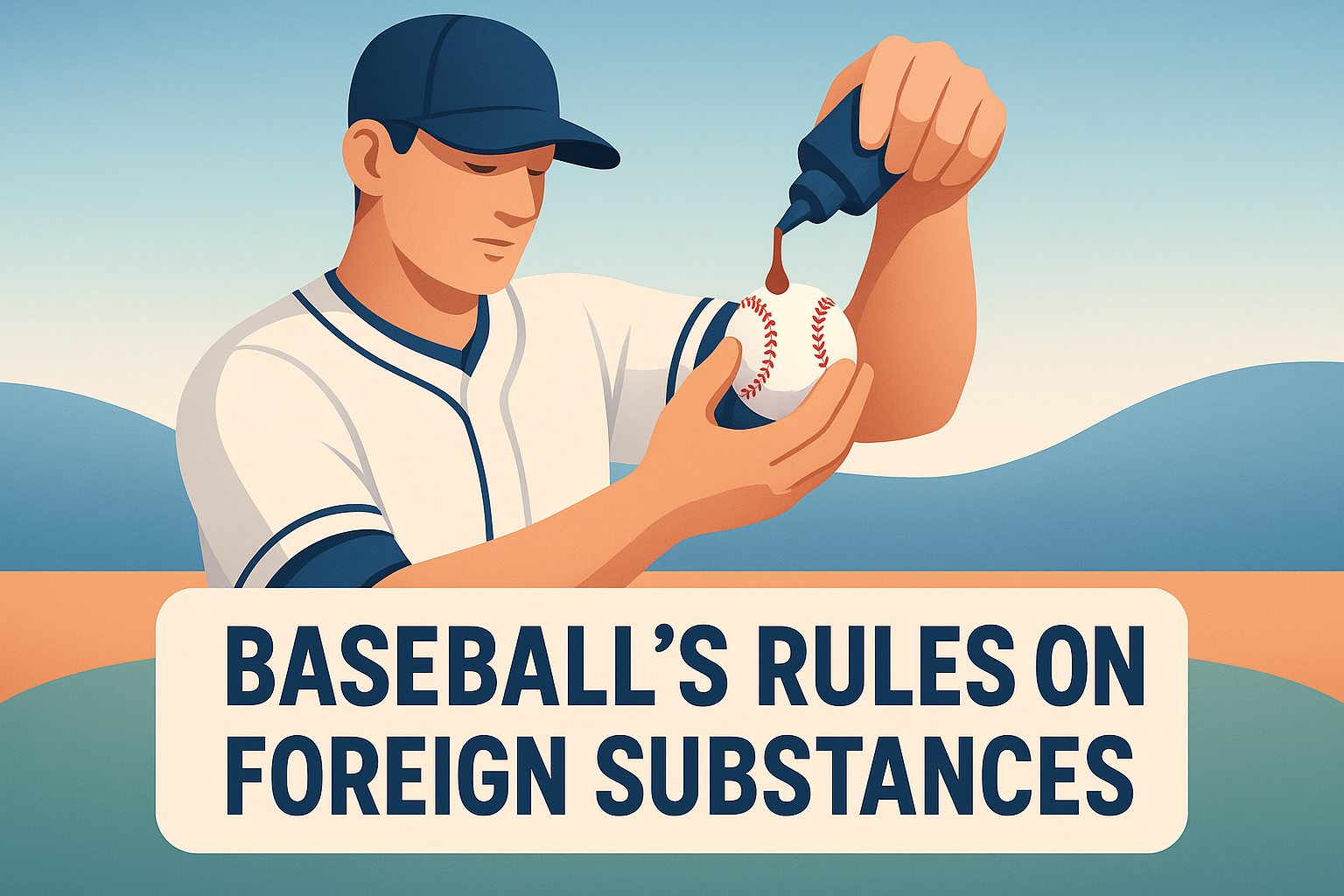
Baseball, often referred to as America’s pastime, is a sport deeply ingrained in the fabric of American culture. Since its inception, it has evolved through the concourse of time while staying true to its fundamental nature of bat-and-ball gameplay. A key aspect of this evolution includes the enforcement of rules and regulations, aiming to preserve fairness and integrity within the sport. Among these rules, the regulation of foreign substances has increasingly become a topic of interest and scrutiny over the years.
Foreign substances refer to any sticky, slippery, or otherwise unusual materials applied to a baseball or a player’s body that enhances grip or alters the ball’s movement, potentially giving pitchers an unfair advantage. This matter is of great importance as it directly influences the balance of play. Clarity and enforcement of these rules are vital to maintaining the credibility of the game, ensuring that competition remains fair and that the sport’s core integrity is upheld. Exploring the historical perspective on these rules provides a comprehensive understanding of how baseball has addressed challenges within its ranks, evolving the game while respecting its fundamental principles.
The Early Days: Establishing Fair Play
In the early days of baseball, the game was characterized by a relatively relaxed attitude towards rule enforcement, including the use of substances. Players frequently resorted to various methods, notably including the spitball, where pitchers used saliva or other lubricants to affect the ball’s movement unpredictably. The lack of stringent oversight during baseball’s nascent stages presented challenges in creating a level playing field.
However, the introduction of more formalized rules in the early 20th century marked a pivotal moment in baseball’s history. The spitball, despite its popularity, was eventually banned in 1920 amidst concerns about its dangerous implications and the unfair advantage it provided to pitchers. The ban was a landmark decision that demonstrated a commitment to fairness and player safety, setting a precedent for future regulations.
Mid-Century Adjustments: The 1960s and 1970s
As baseball continued to evolve, so too did its oversight mechanisms. The 1960s and 1970s witnessed technological advancements and heightened player competitiveness, which prompted further examination of unfair practices involving foreign substances. This era saw increased scrutiny on pitchers’ tendencies to doctor the ball using substances like vaseline, emery boards, or even pine tar.
One notable figure was Gaylord Perry, a Hall of Fame pitcher whose reputation was marked by speculation regarding his use of foreign substances. Perry’s skilled, yet sometimes controversial, pitching techniques exemplified the gap in enforcement capabilities during this period. It wasn’t until stricter enforcement policies and umpire checks were introduced in later decades that substantial regulatory advancements were made, illuminating the journey towards comprehensive rule enforcement.
The Modern Era: Technological Influence and Renewed Focus
In the early 2000s and beyond, technological innovations in broadcasting and analytics brought baseball’s intricacies into sharper focus. These advancements also led to a resurgence of concerns about foreign substance use, notably involving substances that improve grip, such as Spider Tack. The increased use of spin-rate data underscored these concerns, providing empirical evidence of alterations that were linked to unfair advantages.
Major League Baseball (MLB), responding to these developments, made concerted efforts to enforce existing rules more strictly and introduced new regulations when necessary. In 2021, MLB heightened its enforcement protocols, including mandatory checks on pitchers for illegal substances during games. This marked a contemporary shift in the enforcement paradigm, striving to address concerns head-on while highlighting baseball’s adaptive capacity.
| Era | Focus | Outcomes |
|---|---|---|
| Early 20th Century | Ban on Spitball | Foundation of Fair Play |
| 1960s-1970s | Increased Scrutiny | Highlight on Enforcement Gaps |
| Modern Era | Use of Technology | Enhanced Enforcement Measures |
Impact on Players and the Game
Regulating foreign substances has significant implications for both players and the broader game of baseball. For pitchers, these rules necessitate adjustments in technique and strategy, demanding higher skill and precision in delivering pitches without relying on external aids. This often heralds an evolution in pitching styles, promoting canny adaptation and innovation.
Moreover, the stringent enforcement of these rules bolsters baseball’s integrity, maintaining its standing as a sport that champions fair competition. For fans, regulation ensures that the excitement derived from watching closely contested games and remarkable skill on display remains genuine. Baseball’s credibility and its rich history are preserved when respect for its rules is maintained, offering a sport where talent reigns supreme.
The Path Forward: Balancing Tradition and Innovation
Looking ahead, baseball faces the ongoing challenge of balancing tradition with innovation. While staying committed to traditional aspects of the game, baseball’s governing bodies must remain vigilant in updating rules and enforcement mechanisms to reflect contemporary challenges. This ongoing adaptation is crucial to ensuring that competitive equilibrium is maintained in spite of evolving player tactics and technological advancements.
Future directions may involve continuous collaboration with players’ associations and leveraging technology for better rule enforcement. The ultimate goal remains steadfast: to uphold the integrity of baseball while embracing the dynamic nature of sport and society.
Conclusion: Learning from the Past, Shaping the Future
The historical perspective on baseball’s rules regarding foreign substances reveals a sport committed to fairness and evolution. Understanding these changes provides valuable insights into how baseball navigates contemporary challenges by learning from its past. Today’s fans and players benefit considerably from ensuring fairness on the diamond, allowing for displays of genuine skill and competition.
As baseball continues to captivate generations, it is essential to support the game’s integrity by staying informed and engaged with ongoing rule developments. Every fan, player, and stakeholder has a role to play in preserving the sanctity of baseball, ultimately contributing to the rich tapestry of this beloved sport. Let’s remain vigilant, informed, and passionate as we cheer for fairness, integrity, and the love of the game.
Call to Action: Join the conversation about baseball’s ongoing evolution. Stay updated on the latest rules and regulations, and participate in community discussions to keep this great sport as fair and exciting as it has always been.
Frequently Asked Questions
1. What are foreign substances in baseball, and why are they controversial?
Foreign substances in baseball refer to any materials that are used by players, especially pitchers, to gain an unfair advantage. This typically involves applying sticky or slippery substances to the ball to affect its grip and movement. Historically, substances like pine tar, sunscreen mixed with resin, or even saliva have been used to alter the ball’s behavior, thus making it more challenging for batters to hit. The controversy around foreign substances arises from the tension between maintaining traditional player practices and protecting the integrity of the game. While some pitchers argue that using certain substances helps them grip the ball better, especially in varying weather conditions, others see it as an unethical shortcut that undermines honest competition. The Major League Baseball (MLB) has implemented stricter regulations over the years to curb their use, arguing that they distort the game’s natural flow and skew fair play.
2. How have the rules regarding foreign substances in baseball evolved over time?
The regulation of foreign substances in baseball has undergone significant evolution over the years. Initially, the rules were quite lax, with little enforcement, allowing pitchers the liberty to use various materials as they saw fit. However, as the sport’s popularity grew, so did the scrutiny over fair play. In the early 20th century, MLB officially banned the spitball and other doctoring tactics, but it wasn’t until the 1970s and beyond that more stringent monitoring was put in place. In recent years, particularly in 2021, MLB made a concerted effort to enforce these rules more rigorously. This included umpire checks of pitchers for illegal substances and issuing suspensions for rule violations. This ongoing transformation illustrates MLB’s commitment to preserving the game’s fairness while adapting regulations to modern standards.
3. What are the penalties for players caught using foreign substances?
The penalties for players caught using foreign substances have escalated to reflect the seriousness with which MLB views these violations. Today, if a pitcher is found using or possessing an illegal substance, they can face a 10-game suspension without pay, and the team cannot replace the suspended player on the roster. These sanctions are in place to deter players from engaging in such practices and to maintain a level playing field. The enforcement includes routine checks by umpires during games, with visual and physical inspections of players, especially pitchers. MLB’s strict approach serves as a warning to players about the consequences of circumventing the rules and emphasizes the league’s dedication to upholding the integrity of the sport.
4. Why do some players and analysts argue in favor of allowing certain substances?
Some players and analysts argue in favor of allowing certain substances because they believe these can enhance safety and improve performance without compromising the competitive nature of the game. Pitchers argue that improved grip from substances like a combination of sunscreen and rosin helps them control the ball better, especially in adverse weather conditions, such as extreme heat or humidity. Supporters claim that controlled use of specific substances could lead to fewer hit batters and better quality pitching, which could benefit both players’ careers and fan enjoyment. Additionally, they argue for transparency in the use of substances, suggesting that a regulated list of approved substances could help standardize pitcher aids, making the game fairer and safer. Despite these arguments, MLB remains firm on its stance against such substances, citing the importance of natural skill and fairness.
5. How does the enforcement of rules on foreign substances impact the dynamics of the game?
The enforcement of rules on foreign substances dramatically impacts the dynamics of baseball, influencing both pitcher and batter performance. The crackdown on these substances can lead to decreased pitcher dominance, as many rely on added grip to enhance pitch movement and control. This has the potential to shift the balance of power towards hitters, resulting in more offense-oriented games. On the other hand, pitchers have to adapt by improving their natural skills, such as refining their mechanics and working on their grips, to succeed without assistance from foreign substances. This enforcement also adds a layer of strategic depth, as managers and players must constantly adjust to the evolving rules and methodologies employed by umpires. Ultimately, the rigorous monitoring of substance use aims to preserve the spirit of fair play while promoting a more authentically skill-driven competition.