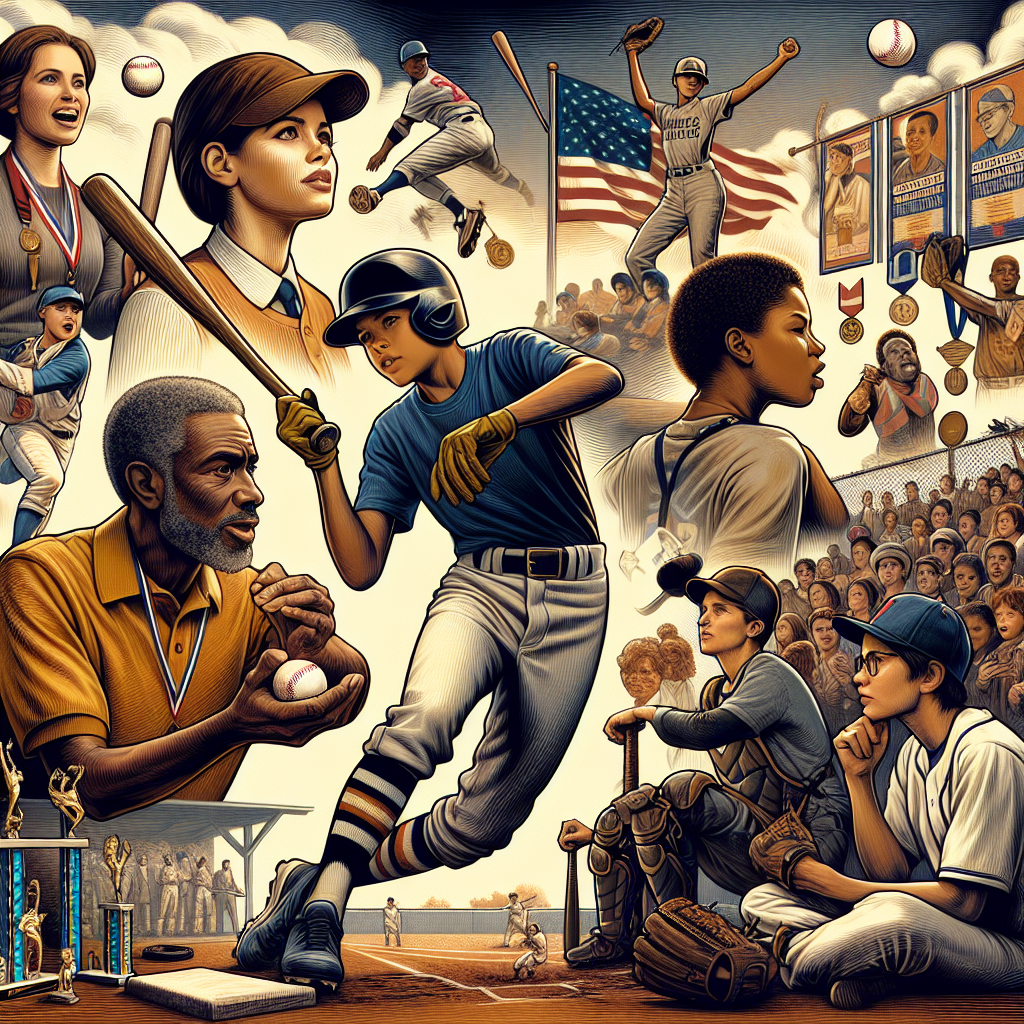
Baseball, often referred to as America’s pastime, holds a special place in the hearts and history of the United States. Its impact stretches far beyond the diamond, weaving into the cultural, social, and economic fabric of American society. The game has mirrored the nation’s own journey, reflecting its dreams, aspirations, successes, and struggles. Baseball isn’t just a sport; it’s a symbol of the American dream, representing the promise that through talent, hard work, and perseverance, anyone can achieve greatness. It offers stories of triumph against adversity, a battleground for social change, and a platform for immigrants, minorities, and underdogs to stake their claim to a piece of America’s promise. From corner lot games to big league stadiums, the narrative of baseball is deeply entwined with the idea of opportunity and success, even as it exposes the challenges and inequalities that persist in society.
From its early roots in the 19th century to present day, baseball has grown alongside the country, serving both as a lens through which we can understand shifts in American values and a stage for broader societal changes. The stories of baseball players—their background, their struggles, and their victories—offer a unique perspective on the American dream. Through its traditions, baseball teaches perseverance and discipline while also highlighting innovation and opportunity. At its best, the game is a celebration of diversity; a place where barriers can be broken and lasting change can be inspired. In this exploration of baseball’s role in shaping and defining the American dream, we will delve into pivotal stories that showcase both triumphs and challenges, illustrating how this seemingly simple game holds profound significance in American history and life.
Baseball as a Melting Pot:
Baseball reflects America’s multicultural essence and complexities. As immigrants arrived on American shores, they brought with them diverse cultures and experiences, yet they also sought commonality and belonging. Baseball served as a unifying force, a pastime accessible and relatable to the masses. The immigrant experience is tightly woven into baseball’s narrative, with many immigrant players rising through the ranks to etch their names into history. Ethnic leagues once formed by communities are testament to baseball’s ability to build bridges between various cultures, allowing new arrivals to maintain a connection with their heritage while embracing their new home.
The story of baseball’s international influence does not stop at America’s borders. As the game grew in popularity, so too did the presence of international players within American leagues, adding layers of diversity that enriched the sport and its audience. Players from Latin America, Asia, and beyond have left indelible marks on the game, showcasing baseball as not merely an American pastime but a global one. The melding of different playing styles and cultures has broadened the horizons of what baseball can be, adding vibrancy and dynamism to the sport.
However, the path for many immigrant and international players has often been fraught with challenges. Language barriers, cultural adjustments, and racial discrimination are hurdles that many have had to overcome to achieve their dreams. Nonetheless, their stories of success amidst struggle embody the spirit of the American dream, affirming the idea that perseverance and talent can prevail over adversity.
Breaking Barriers: The Role of Race:
One of the most compelling chapters in the history of baseball and society is the story of racial integration. For decades, Major League Baseball was a segregated institution, reflecting the pervasive racial divisions of the time. The Negro Leagues were born out of necessity as some of the most talented players of color were denied the chance to compete at the highest levels purely because of their race.
The courageous story of Jackie Robinson breaking the MLB color line in 1947 serves as a pivotal moment not only in sports but also in American history. His successful integration into the major leagues was a monumental step towards equality, catalyzing broader discussions on civil rights and sparking further integration within American society. Robinson’s journey and those of subsequent African American players echo the persistent pursuit of justice and opportunity central to the American dream.
Beyond Robinson, many other players have played significant roles in breaking down barriers and confronting societal norms, from Larry Doby to Roberto Clemente. Their achievements highlight baseball as more than just a game; it becomes a platform to challenge prejudices, advocate for equality, and inspire future generations regardless of their background or race. As baseball continues to evolve, it remains a powerful symbol of unity, resilience, and change in the face of adversity.

Economic Opportunities Through Baseball:
Baseball has also been intertwined with the economic spectrum of the American dream. The sport has offered countless individuals the chance to lift themselves out of poverty, providing pathways to financial success that seemed unimaginable. Stories abound of players coming from humble beginnings, using their talent and work ethic to rise to wealth and prominence, embodying the Meritorious Wealth aspect of the American dream.
For many, baseball scholarships provide an educational opportunity that might otherwise be inaccessible, offering young players a route through college to professional leagues. Moreover, the professionalization of baseball opened up various economic avenues beyond playing, including coaching, management, and broadcasting, which have often led to lucrative and sustaining careers for former players.
Stadiums themselves have historically been sites of economic activity, stimulating local economies, and providing communities with jobs. Additionally, the flourishing memorabilia market and media rights have further entrenched baseball as an economic force. While not all stories are ones of fortune and success, as mismanagement and exploitation have also been present, the overarching narrative is one of opportunity through effort and talent, again resonating with the ideals of the American dream.
Women in Baseball: Shattering Glass Ceilings:
The role of women in baseball is another crucial aspect of the sport’s intersection with societal evolution. While largely marginalized in professional leagues, women have made significant contributions to baseball, both historically and contemporarily. The All-American Girls Professional Baseball League (AAGPBL), established during World War II, demonstrated that women could not only play at a high level but also attract significant fanfare.
Women’s baseball leagues and endeavors have continuously faced challenges in gaining equal recognition compared to their male counterparts. However, change, although gradual, has seen women breaking into roles traditionally held by men, such as coaching, management, and umpiring at various levels, including the majors. These achievements serve not only to challenge traditional gender roles but also to inspire future generations of female athletes.
Moreover, women are increasingly involved in the business side of baseball, with growing numbers taking on significant roles within organizations, challenging the status quo and proving that the dream is very much within reach, regardless of gender. This progress symbolizes the broader societal shift towards gender equality, with baseball providing both a mirror and a mechanism for this change.
The Role of Baseball in Cultural Reflection and Change:
Baseball has often been a stage upon which broader societal issues are reflected and examined. From labor disputes and player strikes advocating for workers’ rights and fair compensation, to recent player activism addressing social justice and inequality, baseball is more than a game; it becomes a reflection of the time.
The platform that baseball provides for its players and its community to voice concerns and advocate for change is significant. Baseball, in many respects, has been both a catalyst for change and a reflector of society’s ongoing struggles. Its players, teams, and those around the sport have continuously attempted to harness its unique positioning within American culture to amplify important messages and bring attention to societal issues.
Baseball provides a space for expression and dissent, promoting dialogue around pressing issues. When players take the knee or wear symbols of advocacy, they are very directly engaging in the dialogue of the American dream, pushing for a more equitable and just society. Through its inclusive community and its vast reach, baseball continues to play a crucial role in reflecting and effecting cultural change.
Conclusion:
Baseball’s rich narrative in the American context is a complex interplay of success and struggle. As intertwined as it is with the pursuit of the American dream, it embodies ideals of liberty, opportunity, and equality. The sport’s evolution mirrors societal progression, illustrating the possibilities and the ongoing challenges within America. Its role as a unifying force, an agent of social change, and an engine of economic opportunity allows baseball to transcend its nature as just a sport, planting it firmly within the realm of enduring symbols of the American dream.
As we look to the future, baseball’s capacity to adapt and remain relevant is crucial. The stories of struggle and triumph played out on baseball’s stage will continue to inspire. The ongoing efforts to break barriers, challenge societal norms, and harness the economic power of baseball will ensure that it maintains its pivotal role both within American culture and as a reflection of broader societal currents.
What remains most compelling is baseball’s ability to connect individuals from diverse backgrounds around common themes, echoing the ideals of opportunity and belonging. Whether on impromptu sandlots or bustling stadiums, baseball continues its promise of hope and potential—the enduring allure of the American dream.
Frequently Asked Questions
1. How does baseball embody the American Dream?
Baseball is often seen as a microcosm of the American Dream, representing a level playing field where success is attainable through talent, hard work, and perseverance. Much like the American Dream itself, baseball offers the promise that anyone can achieve greatness regardless of their background. Historically, the sport has been a staircase of opportunities for many individuals living in America. Don’t forget, iconic players like Jackie Robinson, who broke baseball’s color barrier, didn’t just step through the doors of the major leagues – they kicked them open, broadening the American Dream beyond race. For many, a baseball field is a proving ground, where each hit, run, and catch can transform lives, raise families from poverty, and even inspire change in society.
2. What role has baseball played in social and cultural change?
Baseball has been a pivotal force in America’s social and cultural revolutions. The sport has the unique ability to unite individuals from diverse backgrounds, and it’s always been a mirror reflecting societal trends and tensions. When Jackie Robinson debuted for the Brooklyn Dodgers in 1947, it wasn’t merely a triumph for sports but a leap forward in the Civil Rights Movement, demonstrating that talent knows no boundaries of color. Similarly, during times of war and economic hardship, baseball provided an escape, a sense of normalcy, and unity. Women entered the baseball fields during WWII in the All-American Girls Professional Baseball League, showcasing how baseball could break gender norms. Today, with the increasing number of players from Latin America and Asia, baseball continues to integrate and affirm the multicultural American fabric.
3. Can you illustrate some success stories of players who achieved the American Dream through baseball?
Sure, there are countless stories of individuals who have personified the American Dream through the vehicular power of baseball. Perhaps none is more fitting than Babe Ruth, whose journey from a troubled child in Baltimore to becoming baseball’s most famous and beloved player epitomizes the American narrative. Another inspiring story is that of Ichiro Suzuki, who left Japan to become one of the greatest hitters in Major League Baseball history, proving that the American Dream is accessible even for international players. Similarly, players like Roberto Clemente and Fernando Valenzuela became legends not only for their athletic prowess but also for their humanitarian contributions and the doors they opened for future generations of Latino players.
4. Baseball isn’t always about success stories; are there examples of struggle within the sport?
Absolutely. Baseball, like the nation it represents, has encountered its share of struggles and controversies. The infamous Black Sox Scandal of 1919, where eight Chicago White Sox players were accused of throwing the World Series, highlighted issues of corruption and greed. More recently, the Steroid Era revealed challenges related to performance-enhancing drugs, questioning the integrity and ethics within the sport. On a more personal level, players often face immense pressure and adversity, battling with poverty, injuries, and personal setbacks. Manny Ramirez’s career, for instance, had its highs and lows, marred by suspensions and controversies that underscored the fine line between glory and downfall. These narratives remind us that while baseball does reflect dreams and successes, it also mirrors the falls and failures that come with chasing those dreams.
5. In what way does baseball influence American communities and economies?
Baseball’s impact on American communities and economies is substantial, ranging from grassroots levels to grand sporting events. Major League teams can revitalize cities, providing jobs, boosting local business revenues, and fostering a sense of communal identity and pride. The construction of new ballparks often leads to urban renewal and economic rejuvenation in surrounding neighborhoods. Additionally, baseball’s minor league systems act as economic lifelines for smaller communities, merging sports with local culture and community engagements. From hosting Little League matches to organizing charity events, baseball enriches community life with inclusivity and accessibility, making it more than a sport but a communal enterprise pivotal to cultural and economic development.