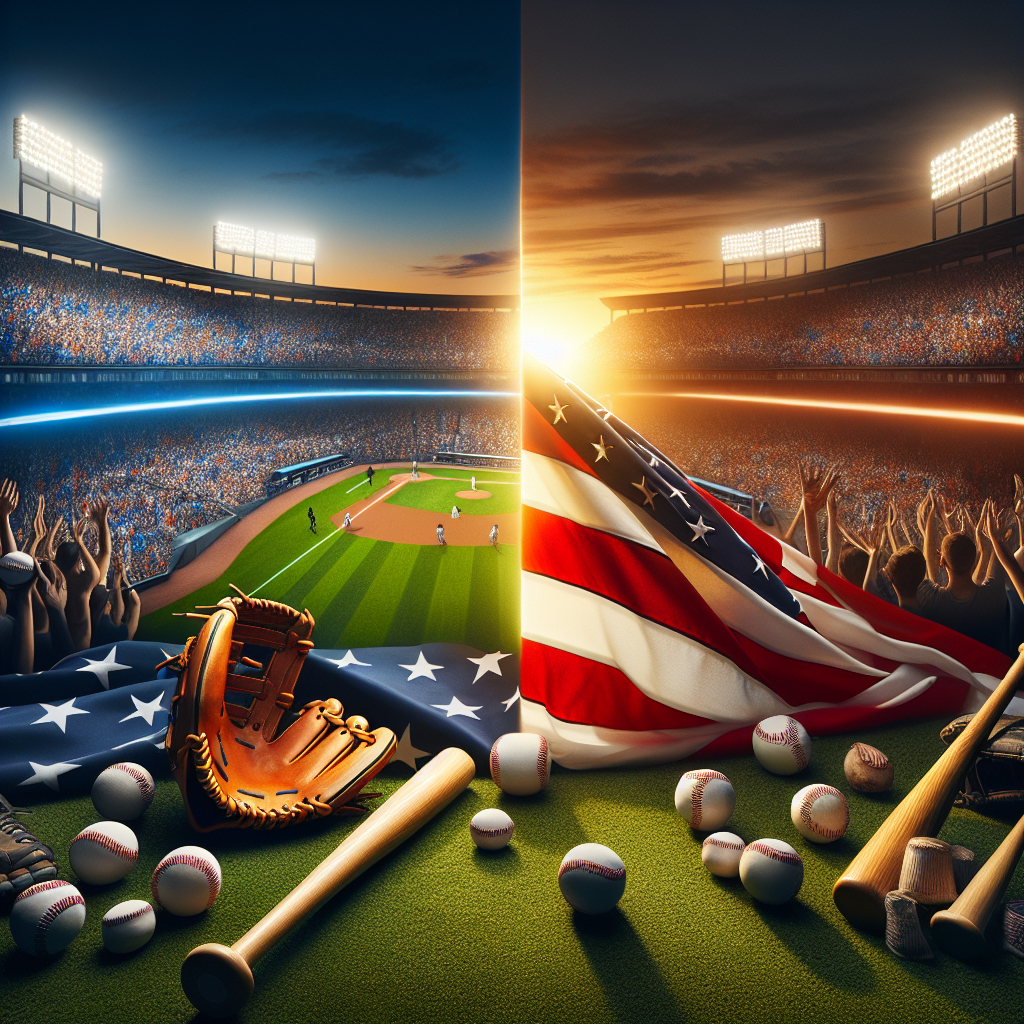
Baseball and patriotism have been deeply intertwined since the inception of the American pastime. Often referred to as America’s game, baseball holds a unique position in the cultural fabric of the United States. Its historical developments are not just reflections of social and economic changes, but also of national identity and patriotism. Over the decades, baseball has mirrored societal shifts and frequently served as a unifying force through times of crisis and celebration alike. Whether it was during times of war or peace, baseball has consistently provided a platform for expressing and fostering American patriotism.
From the inaugural pitch of baseball in the 19th century to its evolution as a major league sport, baseball has been intrinsically linked with the national psyche. Its influence permeated various aspects of society, from entertainment to politics. In the heydays of the 20th century, baseball thrived not only as a sport but as a representation of American ideals such as democracy, equality, and freedom. The sport grew with the nation, often ennobling itself during critical historical moments, such as World War I and II. Patriotism and baseball intertwined, as each baseball game became a stage for national pride.
The intersection of baseball and patriotism reached new dimensions during moments of national significance, reflecting the United States’ evolving identity. Whether serving as an escape during tough times or a celebration during prosperous eras, baseball has managed to stay relevant as a crucial cultural and patriotic symbol. As we delve into the specifics of its historical and cultural impact, we observe how the sport has not only contributed to fostering national unity but also shaping the identity of the nation itself.
Baseball During War Times
The role of baseball during wartime has been particularly significant in strengthening the American spirit. During World War I and II, baseball games offered a respite from the hardships and anxiety of war. Soldiers took to the fields as a form of recreation, and games were organized as morale boosters both at home and abroad. It was during these times that baseball teams and players contributed significantly to the war effort by raising funds and volunteering. For instance, prominent players like Joe DiMaggio and Ted Williams served in the military, casting the sport in a light of national service and sacrifice.
Baseball was not only a distraction from the grim realities of war but also a reminder of what the nation was fighting for. Major League Baseball (MLB) played on through these turbulent times, with the league commissioner during World War II famously deciding to continue the games as a way to keep spirits high. This decision underscored baseball’s role as a representation of normalcy and resilience. Games were broadcasted over the radio, bringing a sense of comfort and unity to families and soldiers, as they could all cheer for the same team.
Moreover, baseball players participating in the war effort helped catalyze a sense of shared sacrifice. When stars left the field for the battlefield, it personalized the concept of service and patriotism for fans. The involvement of baseball in wartime activities and the continuation of the game during those times reinforced its importance in American life as a symbol of unity and hope.
Baseball as a Reflection of Social Changes
Throughout its history, baseball has reflected the social changes occurring within the United States, making it not only a pastime but also a mirror of American values. During moments of societal change, the sport has adapted and grown, bringing the nation’s evolving identity along with it. Significant moments in civil rights, for instance, found their echo on the baseball diamond. The most notable intersection was Jackie Robinson breaking the color barrier in 1947. As the first African-American to play in Major League Baseball, Robinson’s entry into the league marked a turn toward greater inclusivity and equity in American society.
Baseball has also been at the forefront of gender equality, with women like Effa Manley playing pivotal roles in team management and women’s leagues emerging during World War II when men were off fighting. The All-American Girls Professional Baseball League, which operated from 1943 to 1954, was a direct result of this. It not only filled the baseball void left by men at war but also mirrored the changing roles of women during that era.
Such changes on the baseball field often presaged larger societal shifts, reflecting evolving values of equality and justice. As a major aspect of American culture, baseball has continuously adapted, growing more inclusive and representative of the nation’s diverse population, championing these social changes on a public stage.

Baseball and the American Dream
Baseball is closely tied to the concept of the American Dream. This connection is embodied in stories of players who rose from humble beginnings to become legends. Known as the “rags-to-riches” tale, these narratives have become iconic representations of the American Dream — that through talent and determination, anyone can succeed. Many players, such as Babe Ruth and Lou Gehrig, exemplified this ideal, and their stories provided hope and inspiration to countless American citizens seeking a better life.
Baseball’s mythology also includes the classic metaphor of life’s opportunities — the idea that you’re only one pitch away from hitting a home run. This metaphor extends beyond baseball into real-life situations, symbolizing the opportunities for success that are available to every individual in a nation built on dreams and aspirations. Such connections make baseball more than just a game; it’s a narrative that echoes the desires and potential of America and its people.
The sport’s portrayal of the American Dream ties directly to patriotism. Fans associate baseball with their own hopes, dreams, and perseverance. Each game represents an opportunity for triumph, reinforcing national pride and identity. Baseball’s role in promoting and embodying the American Dream strengthens its place within the cultural and patriotic realm.
Representation of National Unity
Perhaps nowhere is baseball’s patriotic influence more evident than in its role in promoting national unity. American baseball events, especially the World Series, have over time developed into celebrations of national spirit. During such events, a unified patriotic sentiment can be felt, as millions of fans across different states rally behind their favorite teams.
National anthems and displays of the American flag before games reaffirm baseball’s connection to national pride. Every year, events such as Opening Day and the Fourth of July games reignite a shared cultural and patriotic spirit. Stadium ceremonies often honor veterans and open with family-friendly, patriotic tributes, reinforcing the sport’s symbolic role of unification and shared heritage.
These public displays of patriotism and unity on such a wide scale are unique to baseball. They represent the sport’s ability to draw together diverse populations, transcending regional and cultural divisions. Baseball thus serves as a conduit for shared experiences, allowing various threads of society to weave a cohesive national narrative, celebrating what it means to be American.
The Future of Baseball and Patriotism
As we reflect on baseball’s historical contributions to American patriotism, the future promises continued evolution. In a rapidly changing world, how might baseball adapt to continue playing its role as a unifying and patriotic symbol? With globalization and the increasing diversity of the MLB, the league finds itself balancing tradition with modernity.
As more international players join the Major Leagues and baseball’s popularity grows worldwide, the U.S. becomes a central hub for showcasing baseball as a global sport. The challenge and opportunity lie in maintaining the American spirit of the game while celebrating international contributions. This global intersection only strengthens the narrative of baseball as a bridge across cultures, fostering international goodwill and understanding.
Moreover, baseball’s potential in technological advancements, such as virtual reality experiences and digital broadcasts, hold possibilities for reaching wider audiences. Engaging newer generations with innovative approaches while upholding the sport’s traditions will ensure that baseball remains at the heart of American patriotism.
By embracing change and diversity, baseball can serve as a model for national unity, demonstrating how different cultures can contribute to and enrich a nation. The game’s future rests on its ability to adapt to contemporary societal dynamics, sustaining its status as a symbol of American identity and patriotism.
Conclusion
Baseball has long been a vessel of American patriotism, contributing immeasurably to the fabric of the nation’s cultural and social identity. It has been much more than a sport; it’s a conduit of historical moments, a reflection of societal changes, and a symbol of the American Dream and unity. Without a doubt, baseball has managed to embed itself deeply within the psyche of what it means to be American.
The historic link between baseball and patriotism has taken on various forms — war-time morale booster, herald of social change, and embodiment of national unity. These associations have helped foster baseball as a cultural institution that surpasses entertainment, providing valuable patriotic contributions over decades. This rich history ensures that as long as the game continues to evolve, it will remain a significant and cherished element of American life and its national identity.
Looking forward, baseball’s continued embrace of diversity and innovation assures its role will persist. As the sport adapts and transcends borders, it reflects the evolving narrative of American patriotism. The national identity it embodies is not static but dynamic, adapting to the expansive and inclusive nature that characterizes the modern American experience. Thus, baseball remains an enduring icon of patriotism in the U.S., ever-ready to adapt, inspire, and unite.
Frequently Asked Questions
1. Why is baseball considered an integral part of American national identity and patriotism?
Baseball’s status as “America’s pastime” does not just refer to its popularity. It reflects a deep-rooted connection to the country’s history, culture, and identity. This connection began in the mid-19th century when baseball was becoming formalized as a sport. As the nation was expanding and industrializing, baseball emerged as a leisure activity that brought together people from various backgrounds. The sport’s accessibility and simplicity allowed it to flourish in cities and towns across the country, fostering a shared national culture.
During times of conflict, baseball has played a vital role in national morale. For instance, during World War II, baseball games served as a distraction and gave citizens a sense of normalcy amidst the chaos. Players like Joe DiMaggio became emblems of American resilience. Events like the 2001 first pitch at the World Series thrown by President George W. Bush following the tragic events of September 11th stand as testaments to baseball’s ability to unify the nation in times of hardship.
Furthermore, baseball has captured the spirit of American values such as teamwork, fair play, and the pursuit of personal achievement. These core principles transcend the game, becoming symbols of American ideals. As such, baseball is not just a sport, but a tradition that embodies patriotism and serves as a vehicle for expressing national pride.
2. How has baseball historically mirrored societal changes in the United States?
Baseball’s evolution is closely tied to the social and economic shifts within the United States, acting as a microcosm of broader societal trends. In the early 20th century, the integration of baseball mirrored the country’s slow progress toward racial equality. When Jackie Robinson broke Major League Baseball’s color barrier in 1947, it was not only a landmark moment in sports history but also a significant step towards civil rights, reflecting shifting attitudes towards race in America.
The modern era saw baseball adapt to globalization and shifts in national demographics. Latin American and Asian players have brought new flair and styles, which has both diversified and enriched the sport. The globalization of baseball reflects America’s changing population and growing multicultural identity.
Economically, baseball has transitioned from being a local affair to a multi-billion dollar industry, emblematic of the rise of consumer culture. The controversy and changes brought about by the introduction of free agency and the use of performance-enhancing drugs also reflect broader dialogues about labor rights and ethical standards in professional environments.
3. In what ways has baseball served as a unifying force during times of national crisis?
Throughout history, baseball has provided a platform for unity and healing during times of national strife. During World War I and II, baseball continued, symbolizing the enduring strength of American spirit. Soldiers overseas played and watched baseball games as a reminder of home, offering a brief respite from the realities of war. The warm welcome back for returning players who served in the military signaled national gratitude and unity.
Baseball’s unifying power was particularly evident following the September 11 attacks. The resumption of games marked a step toward normalcy. The New York Yankees played a critical role during this period, providing both solace and a sense of belonging for grieving New Yorkers and the nation. The 2001 World Series became a focal point of national attention, with famous moments like President Bush’s first pitch at Yankee Stadium being a symbolic gesture of solidarity and resilience.
This sense of unity through baseball is not confined to crises on a grand scale. Locally, baseball has brought communities together, providing shared experiences and promoting communal pride. Youth leagues, minor leagues, and college baseball often act as the social glue, creating lifelong bonds among teammates and fans, echoing the sport’s national role in maintaining unity.
4. How does the symbolism of baseball reinforce American patriotic sentiments?
Baseball is steeped in symbolism that reinforces aspects of American patriotism. The game’s events are often intertwined with patriotic ceremonies and traditions. National anthems are played before games, serving as a moment for collective reverence and national pride. Special events, such as the annual Fourth of July games, are colorful celebrations of American independence and heritage.
Particular stadiums themselves have become symbols of patriotism. Fenway Park in Boston, Wrigley Field in Chicago, and Dodger Stadium in Los Angeles represent not just architectural feats, but are revered as historic sites that have chronicled and celebrated the nation’s past. Photos of triumphant moments are often displayed as icons of perseverance and celebration.
Patriotic gestures within the game, like military appreciation nights and ceremonial first pitches by veterans or political figures, anchor baseball in the broader context of national pride. Trading cards, memorabilia, and documentaries keep alive legendary moments such as Lou Gehrig’s “Luckiest Man” farewell speech, reinforcing baseball’s role in inspiring and evoking patriotic emotions.
5. How do baseball’s traditions contribute to its role in American patriotism?
Baseball is steeped in rich traditions that contribute to its role as a pillar of American patriotism. One of the sport’s most notable traditions is the singing of “Take Me Out to the Ball Game” during the seventh-inning stretch, a simple yet unifying ritual shared by fans across nationalities and generations. This song, akin to a folk anthem, emphasizes the communal nature of baseball and its wide embrace within American culture.
Each season’s Spring Training marks a period of renewal and hope, resonating with the themes of rebirth and potential that are central to the American dream. Similarly, the World Series embodies not just the climax of the baseball season, but a time when regional loyalties and pride converge on a national stage, laying down a tapestry of sportsmanship tied to American identity.
Moreover, baseball’s farm system and the yearly draft highlight the value placed on opportunity and the nurturing of talent—ideals that echo the nation’s founding ethos. Even the language within baseball, such as “home run” and “grand slam,” reflects a narrative of celebration and achievement, resonating with the aspirational spirit that defines America’s national consciousness.