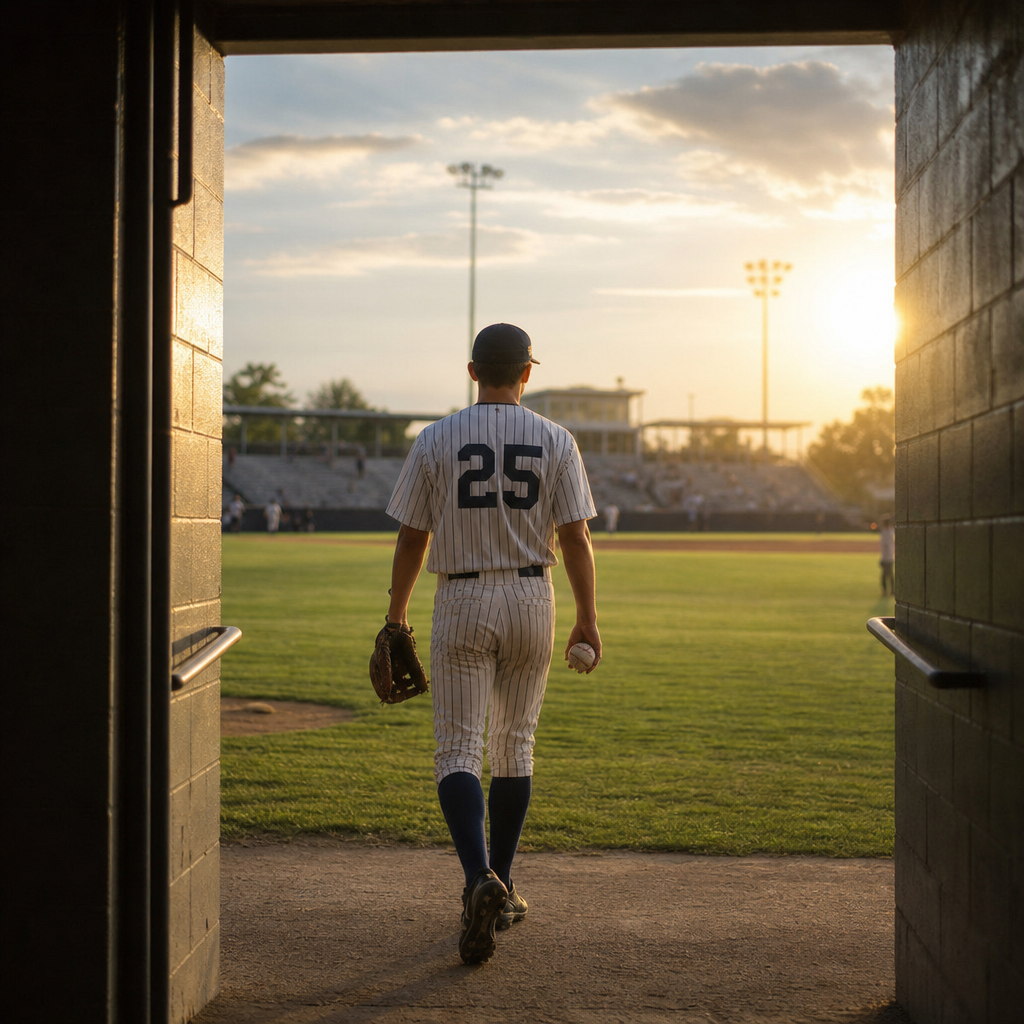
Baseball and the American dream in literature are linked so tightly that one often becomes shorthand for the other: a green field promising renewal, fair rules, individual effort, communal memory, and the hope that one good swing can change a life. In literary criticism, the American Dream usually means the belief that talent and work can produce mobility, dignity, and belonging. In baseball writing, that belief is tested rather than merely celebrated. After years of reading and assigning novels, memoirs, poems, and essays on the game, I have found that baseball literature matters because it turns a national myth into human-scale stories about labor, race, family, migration, failure, and second chances. This hub article maps that miscellaneous territory. It explains how writers use baseball as symbol, setting, moral language, and social argument, while also showing where the dream breaks down. For readers exploring baseball in literature and film, this page provides the core framework: what themes recur, which authors and texts define the field, and why the game remains one of the strongest narrative engines in American writing.
The reason the theme endures is simple. Baseball unfolds slowly enough for reflection and dramatically enough for plot. Its structure gives writers ready-made tension: opening aspiration, middle-inning setbacks, late reversals, and an ending that can feel earned or cruel. Statistics create the illusion of fairness, yet luck, injury, money, and prejudice constantly intrude. That tension mirrors the American Dream itself. In novels from Bernard Malamud’s The Natural to W. P. Kinsella’s Shoeless Joe, in nonfiction by Roger Angell and Doris Kearns Goodwin, and in poems by Marianne Moore and Robert Frost, baseball becomes a language for asking who gets opportunity, who is excluded, and what success finally means. A useful way to read this subtopic is not as nostalgia alone, but as a debate. Literature preserves the glow of the ballpark while exposing the cost of the myth. That balance is what gives baseball writing its staying power.
Why baseball became the literary stage for the American Dream
Baseball became the preferred literary stage for the American Dream because its rules are clear, its career ladder is visible, and its emotional stakes translate easily into broader social meaning. A child can move from sandlot to school team to minor leagues to the majors; that progression resembles the classic upward-mobility narrative found throughout American fiction. Writers repeatedly use the diamond as a meritocratic diagram. Nine innings suggest endurance. The box score implies accountability. The long season rewards consistency rather than spectacle. Yet every informed baseball writer also understands the catch: merit exists, but it never operates in a vacuum. Scouts miss talent. Owners exploit labor. Cities subsidize stadiums while preaching pure competition. The literary power of baseball lies in this contradiction.
In practice, authors use baseball to make abstract ideals visible. A farm boy entering organized ball can represent immigration into modern America. A washed-up veteran can stand for the fading promise of postwar prosperity. A neighborhood game can embody local democracy more effectively than a political speech. Malamud’s Roy Hobbs is not simply a slugger; he is a mythic striver whose gifts are compromised by vanity and corruption. Mark Harris’s Henry Wiggen novels show the working player not as a legend but as an employee navigating management, contracts, and bodily wear. Don DeLillo’s Underworld turns Bobby Thomson’s 1951 home run into a national memory node, linking sport to Cold War anxiety, media saturation, and urban life. These examples show why baseball and the American Dream in literature remain inseparable: the game offers a complete social theatre, from innocence to commerce, from aspiration to disillusion.
Classic themes: mobility, merit, nostalgia, and reinvention
Four themes dominate this miscellaneous hub: mobility, merit, nostalgia, and reinvention. Mobility appears in stories where baseball promises escape from poverty or obscurity. Merit appears in the belief that performance can override class background. Nostalgia appears because baseball invites backward-looking narration; memory is built into the sport through records, legends, and repeated rituals. Reinvention appears because players and fans alike imagine beginning again tomorrow. These themes often overlap. A son playing catch with a father may look like nostalgia, but the scene can also dramatize transmission of values, masculinity, and citizenship.
Reinvention is especially central. In many texts, baseball offers not wealth but restoration. Shoeless Joe, adapted into the film Field of Dreams, treats the game as a route back to damaged relationships and interrupted history. The dream here is emotional rather than economic. By contrast, in August Wilson’s Fences, baseball is the bitter measure of opportunity denied. Troy Maxson’s memories of the Negro Leagues reveal how a merit-based ideal collapses under racial exclusion. Even when Troy uses baseball metaphors to explain life, those metaphors carry grievance. The game is still the language of aspiration, but it has become evidence against the nation’s promise. That duality is essential for any serious reading of baseball literature.
| Theme | What it means in baseball literature | Representative text | Connection to the American Dream |
|---|---|---|---|
| Mobility | Baseball as escape from poverty, obscurity, or limited local prospects | The Natural | Talent appears to create upward movement |
| Merit | Performance, discipline, and numbers as measures of worth | Henry Wiggen novels | Work should lead to reward, though often imperfectly |
| Nostalgia | Memory, fathers and sons, vanished ballparks, and recovered innocence | Shoeless Joe | The dream survives through recollection and ritual |
| Reinvention | Second chances after failure, exile, aging, or regret | Field of Dreams tradition | America is imagined as a place where beginnings can be renewed |
Race, exclusion, and the limits of the dream
No account of baseball and the American Dream in literature is credible without confronting race. For decades, baseball was presented as the national pastime while excluding Black players from the major leagues and segregating them into unequal institutions. Literature preserves both the romance of the game and the injustice built into it. August Wilson is indispensable here, but so are Jackie Robinson’s autobiography I Never Had It Made, essays on the Negro Leagues, and works that revisit figures such as Satchel Paige, Josh Gibson, and Cool Papa Bell. These texts show that the dream was never universally available. Access was policed by law, custom, ownership, and media representation.
The impact on literary meaning is profound. When Black characters pursue baseball, the game becomes a test case for American democracy. Success can no longer be read as simple personal triumph because the system itself is unstable and biased. Robinson’s career narrative demonstrates resilience, but it also documents the burden of being required to dignify an institution while enduring abuse from it. In Fences, Troy’s thwarted baseball past shapes his parenting and his distrust of institutions. His bitterness is not personal weakness; it is historically grounded. Contemporary criticism often reads such works alongside the integration era to show how baseball fiction moved from idealized opportunity toward structural analysis. That shift strengthens, rather than weakens, the literature. It allows the American Dream to be examined as a contested promise instead of a slogan.
Immigration, cities, and belonging
Baseball literature also treats the American Dream as a question of belonging, especially for immigrants and urban communities. The game has long served as a civic language for newcomers learning regional loyalties and public rituals. Literature about city teams often uses fandom to explain assimilation more effectively than policy debate can. The Brooklyn Dodgers are a recurring example because they symbolize both ethnic neighborhood identity and collective loss after relocation. Writers such as Roger Kahn in The Boys of Summer connect baseball to postwar urban change, Jewish and immigrant family life, and the reshaping of local memory.
At the same time, baseball narratives about Latin American players complicate the dream by tracing transnational ambition. A prospect from the Dominican Republic may see baseball as economic salvation, yet his path runs through academies, exploitative contracts, language barriers, and fragile odds. Modern fiction and reportage have increasingly addressed this system, showing that the baseball dream is now global but still unevenly distributed. In literary terms, this expands the meaning of “American” rather than replacing it. The dream becomes an export, an aspiration attached to U.S. leagues, media, and consumer culture. But the stories remain deeply human: a family investing everything in one athlete, a player navigating identity between home and clubhouse, a city seeing itself reflected in a team. Baseball, in these works, is not just entertainment. It is a mechanism for civic and personal attachment.
Fathers, sons, memory, and the pastoral myth
One of the strongest strands in this subtopic is the relationship between baseball and memory, especially family memory. Few literary motifs are more durable than a father teaching a child to throw, score a game, or keep faith with a losing club. These scenes endure because baseball ritualizes time. It returns every spring. It records every play. It gives private feeling a public form. When literature links baseball with fathers and sons, it is rarely only about sports. It is about inheritance, emotional restraint, apology, aging, and grief.
The pastoral setting intensifies this effect. A field cut into summer grass suggests order within the chaos of modern life. That is why so many baseball texts describe light, dust, chalk lines, and distant fences with almost religious care. The imagery carries a promise that life can be bounded, interpreted, and briefly redeemed. Yet strong writers resist pure sentimentality. In Kinsella’s work, wonder coexists with loss. In Jane Leavy’s biography The Last Boy, Mickey Mantle’s myth is inseparable from damage, pain, and the burden of national projection. The pastoral myth survives, but it is revised. Baseball can recover memory without erasing history. That nuance is what keeps these works alive for serious readers.
From page to screen: why the theme thrives across media
Because this article sits within a baseball in literature and film hub, it is important to note how seamlessly the theme travels between page and screen. Film often amplifies baseball’s dream imagery through visual shorthand: golden light, empty bleachers, old uniforms, a final swing. Literature, by contrast, can linger inside doubt, social context, and interior memory. The best adaptations preserve both. The Natural famously alters the novel’s darker moral structure, turning cautionary myth into redemptive spectacle. Field of Dreams intensifies the reconciliation plot in Kinsella’s fiction. Fences, whether read or watched, retains its central insight that baseball language can express both aspiration and exclusion.
For readers using this page as a hub, the practical takeaway is clear: compare versions whenever possible. Notice what film simplifies and what literature complicates. Track how narration changes the meaning of success. Ask whether the ending confirms the dream or interrogates it. These comparisons are valuable because baseball’s cultural symbolism is so familiar that adaptation choices become highly visible. A changed ending, a softened character, or a more triumphant score can shift the entire argument about American possibility.
How to explore this miscellaneous hub effectively
The best way to use this hub is thematically rather than chronologically. Start with foundational texts that define the myth, then move to works that challenge it. Read The Natural for ambition and corruption, Shoeless Joe for memory and healing, Fences for race and exclusion, and The Boys of Summer for nostalgia tied to urban change. Add selected essays by Roger Angell for observational precision and emotional intelligence. Then extend outward to biographies, Negro Leagues histories, poetry, and film adaptations. This approach reveals that baseball literature is not a narrow niche. It is a compact archive of American hopes and contradictions.
Keep one principle in mind as you read: baseball is rarely the endpoint. It is the instrument authors use to measure fairness, longing, identity, labor, and time. That is why the field remains fertile across genres. A novel can use a pennant race to discuss capitalism. A memoir can use scorekeeping to describe a family. A play can turn a bat and ball into the grammar of thwarted citizenship. When readers understand that range, the subtopic opens up quickly and rewards deeper study.
Baseball and the American Dream in literature endure because they illuminate each other. The game supplies structure, ritual, and recognizability; the dream supplies stakes, conflict, and moral urgency. Together they produce stories that can celebrate talent, expose injustice, preserve memory, and question national myths without losing emotional force. That breadth is why this miscellaneous hub matters within baseball in literature and film. It connects classic novels, modern criticism, autobiography, poetry, urban writing, race narratives, and adaptation studies under one durable idea: baseball is a way Americans imagine what a fair life should look like, and literature is where that imagination is tested.
The strongest works do not ask readers to choose between faith and skepticism. They show why the dream attracts people and why it disappoints them. They honor the beauty of the game while naming the systems that distort opportunity. They make room for fathers and sons, immigrants and neighborhoods, superstars and minor leaguers, legends and those shut out from legend. If you want to understand this subtopic fully, use this page as your starting map, then follow each theme into its own texts and adaptations. Read broadly, compare closely, and let the game reveal the nation that built so much meaning around it.
Frequently Asked Questions
Why is baseball so often used as a symbol of the American Dream in literature?
Baseball appears so frequently in literary discussions of the American Dream because it gathers many of the dream’s central promises into one recognizable image. The game suggests order, rules, merit, patience, and the possibility of advancement through discipline and skill. A player steps to the plate alone, but he does so within a team, before a community, and inside a tradition larger than himself. That balance between individual effort and shared belonging mirrors the dream as it has often been imagined in American culture: work hard, play fairly, and a better future may become possible.
Writers are drawn to baseball because it is never just a sport on the page. A ballpark can stand in for a nation, a hometown, a family inheritance, or a memory of innocence. The diamond’s clean geometry offers a reassuring vision of fairness, yet the game’s unpredictability reminds readers that outcomes are never fully controlled. A single swing can change everything, but so can bad luck, social barriers, aging, injury, or exclusion. That tension is exactly what makes baseball such a powerful literary vehicle. It allows authors to present the American Dream not as a settled truth, but as a hope under pressure.
In many novels, essays, and poems, baseball becomes shorthand for renewal. Spring training, open fields, and fresh starts evoke national myths about reinvention. At the same time, literature often complicates that optimism by asking who gets invited onto the field, who remains in the stands, and who is told the rules are fair when the larger society is not. That is why baseball and the American Dream are so tightly connected in literature: both promise mobility and meaning, and both invite scrutiny when reality falls short of the ideal.
How do literary works use baseball to question, rather than simply celebrate, the American Dream?
One of the most important things literary works do is resist treating baseball as a simple patriotic emblem. Instead of presenting the game as proof that America rewards talent and hard work, many authors use baseball to show how fragile that belief can be. A player may have extraordinary ability and still fail because of class limitations, racial discrimination, exploitative institutions, family obligations, physical decline, or plain chance. In that sense, baseball writing often becomes a testing ground for the Dream’s claims.
This questioning can take many forms. Some texts focus on the gap between public mythology and private disappointment. The stadium may symbolize glory and communal admiration, while the clubhouse, farm system, or off-season life reveals insecurity, loneliness, and economic precarity. Other works emphasize the emotional burden of aspiration itself. Characters are taught to believe that perseverance guarantees reward, only to discover that effort is necessary but not sufficient. Baseball’s statistics and formal rules suggest objectivity, yet literature repeatedly shows that human lives are shaped by forces the scoreboard cannot measure.
Authors also use baseball to expose contradictions in national ideals. The sport is often described as democratic because anyone can in theory rise through talent, but many literary depictions remind readers that access has never been equally distributed. Questions of race, immigration, masculinity, labor, and regional identity frequently enter the story. As a result, baseball narratives become especially effective when they hold two ideas together at once: the game genuinely represents aspiration, dignity, and communal hope, and it also reveals the limits of those values in American life. The best literature does not destroy the dream altogether, but it refuses to romanticize it without examining its costs.
What themes commonly appear in literature about baseball and the American Dream?
Several themes appear again and again in this body of writing. One is mobility: characters pursue baseball as a route out of poverty, obscurity, or social confinement. The sport becomes a ladder, or at least the image of a ladder, connecting local life to national recognition. Closely tied to that theme is meritocracy, the belief that measurable talent and disciplined effort can earn advancement. Literature often explores the emotional power of that belief while also testing whether it truly holds.
Another major theme is belonging. Baseball literature frequently links personal identity to family, neighborhood, ethnicity, and nation. A game of catch, a minor league town, a radio broadcast, or a remembered box score can carry deep emotional weight because baseball often functions as a language shared across generations. For many writers, this makes the sport a way of asking who counts as fully American and how people inherit cultural memory. Nostalgia is therefore common, but it is rarely simple. It can preserve meaning, yet it can also soften the harsher realities of exclusion, labor, and failure.
Time is another essential theme. Baseball is a sport obsessed with seasons, records, repetition, and return, so it naturally invites reflection on youth, aging, mortality, and historical change. Literary works often use its rhythms to think about lost innocence or the passage from hope to disillusionment. At the same time, redemption remains central. Even after long droughts, slumps, mistakes, or personal collapse, baseball offers another inning, another at-bat, another season. That repeated possibility of renewal is one reason it aligns so closely with the American Dream. Yet literature usually asks whether renewal is real, affordable, and available to everyone, or whether it survives mainly as an ideal people need in order to endure disappointment.
How do issues like race, class, and identity shape baseball literature about the American Dream?
Race, class, and identity are crucial to understanding how baseball literature engages the American Dream because they determine who can realistically pursue the promise the game seems to offer. On the surface, baseball can appear to be a neutral field governed by rules and performance. But literary works repeatedly show that the field exists within a larger society marked by inequality. That means the dream of success through talent is never experienced the same way by all characters.
Race is especially significant. Because baseball has such a prominent place in national mythology, stories about racial exclusion, segregation, integration, and belonging naturally become stories about America itself. Writers use baseball to dramatize the contradiction between democratic ideals and discriminatory realities. A player may represent excellence and discipline, yet still confront barriers that reveal how incomplete the nation’s promises are. In literary criticism, this makes baseball a particularly rich site for examining not just individual struggle, but structural injustice.
Class matters as well. For some characters, baseball offers one of the few imaginable routes to mobility; for others, it exposes the precariousness of betting one’s future on a narrow chance. Minor league hardship, economic dependence, unstable labor conditions, and the commodification of athletes all complicate any easy belief in upward movement. Identity more broadly—regional, ethnic, familial, and gendered—also shapes how the game is understood. A character’s relationship to baseball may express pride, alienation, assimilation, or resistance. That is why serious baseball literature rarely treats the American Dream as a universal formula. Instead, it shows that the dream is filtered through lived experience, and that baseball’s symbolism becomes most powerful when writers reveal who has historically been permitted to dream freely and who has had to fight just to be seen.
What should readers pay attention to when analyzing baseball and the American Dream in literature?
Readers should begin by looking beyond plot and asking what baseball symbolizes in a given work. Is the game presented as a genuine avenue of hope, a nostalgic refuge, a national myth, a business, a ritual of memory, or a stage for disappointment? The answer will usually shape how the text understands the American Dream. It is also useful to notice whether baseball scenes are framed as realistic, idealized, or almost mythic. Some authors rely on the sensory beauty of the game to invite belief in renewal, while others deliberately undercut that beauty with social or emotional complexity.
Character perspective matters a great deal. Consider who is telling the story and what stake that person has in baseball’s promises. A young prospect, an aging fan, a parent, a critic, or a marginalized observer will not interpret the game in the same way. Pay attention as well to setting. Small towns, city stadiums, sandlots, segregated spaces, and commercial ballparks all carry different meanings. Baseball in literature is often about institutions as much as individuals, so readers should watch for signs of labor systems, media narratives, public memory, and economic pressures operating around the game.
Finally, readers should track tension rather than resolution alone. Strong baseball literature often works by placing hope and skepticism side by side. A text may love the game and still challenge the ideology attached to it. It may celebrate effort while doubting fairness, or honor community while exposing exclusion. The most insightful analysis therefore asks not simply whether a work endorses or rejects the American Dream, but how it stages the dream’s appeal, its emotional necessity, and its limits. When readers attend to symbolism, voice, history, and contradiction, they can see why baseball remains such a durable and revealing lens for thinking about American aspiration in literature.