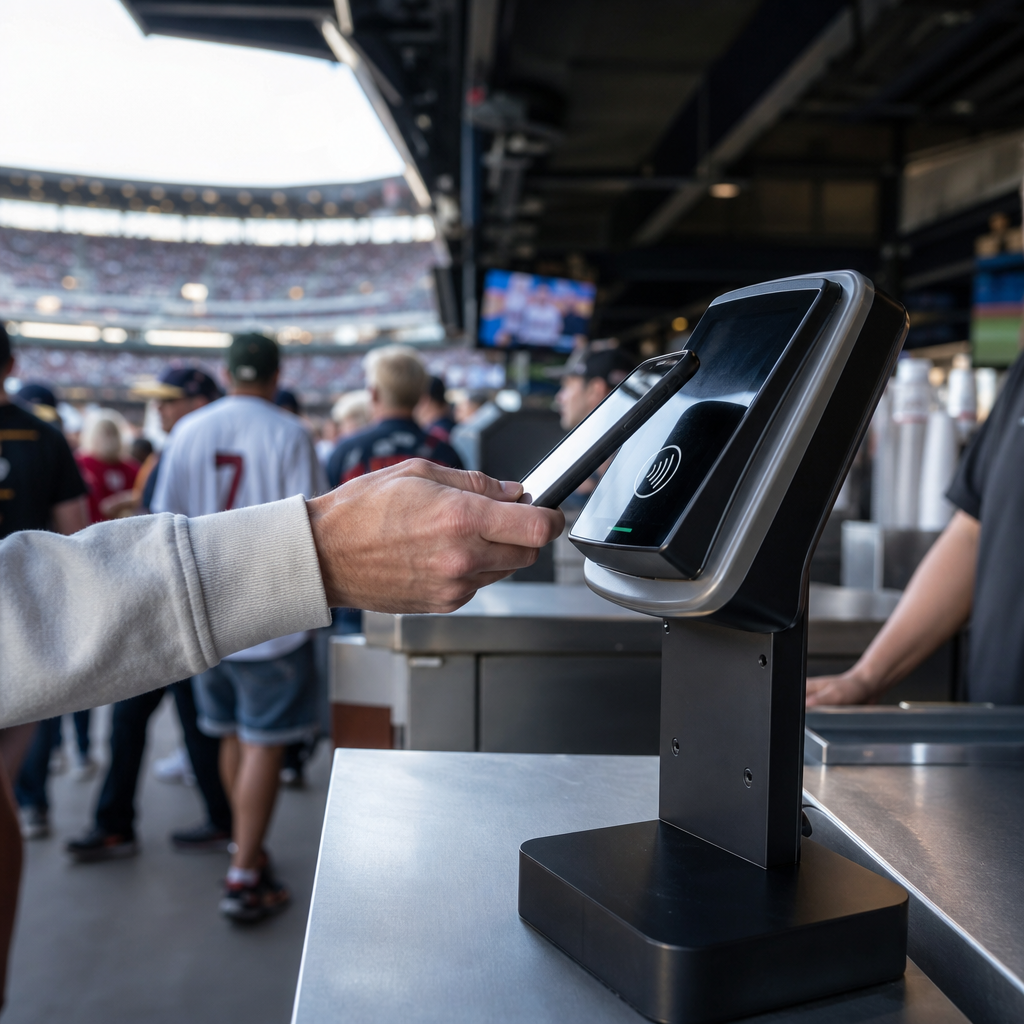
The cashless ballpark has moved from novelty to operating standard, reshaping how fans buy tickets, food, drinks, parking, and merchandise while changing the economics behind every game day decision. In modern stadium transactions, “cashless” means purchases are completed through credit cards, debit cards, mobile wallets, stored value, team apps, and contactless wearables instead of bills and coins. “Technology’s role” goes beyond payment terminals. It includes point-of-sale software, ticketing systems, customer identity tools, dynamic pricing engines, loyalty platforms, inventory systems, fraud controls, and the data pipelines that connect them. I have worked on venue commerce rollouts where a payment upgrade looked simple on the surface but actually touched concessions staffing, refund policies, PCI compliance, Wi-Fi coverage, and fan communication. That is why the topic matters: a ballpark is not just a place to watch baseball, but a dense retail environment with intense transaction volume packed into short time windows.
Baseball is especially suited to studying the synergy of technology and economics because the business model depends on many small purchases repeated across eighty-one home dates, plus concerts and other events. A single Major League Baseball venue can process tens of thousands of transactions in a few hours, with demand peaking before first pitch and during inning breaks. Under those conditions, every second shaved from checkout matters. Faster throughput means more completed orders, higher per-cap spending, shorter lines, and a better fan experience. It also creates richer data for forecasting labor, pricing products, and planning promotions. The same systems that let a fan tap a phone for a hot dog also tell operators which stand is underperforming, which items sell best in cold weather, and when to push a targeted offer through the team app. For a sub-pillar in innovations and changes in baseball, the cashless ballpark is a useful hub because it connects ticketing, fan behavior, concession operations, venue cybersecurity, sponsorship, and revenue strategy into one practical story.
How Cashless Transactions Change Stadium Economics
The strongest economic case for cashless stadium transactions is throughput. In venue operations, throughput means the number of customers a stand, portable cart, or self-service market can serve in a fixed period. During the fourth inning rush, a five-second improvement per order scales quickly. If a cashier-assisted stand processes 180 transactions per hour and contactless payment reduces average payment time enough to lift capacity by 10 to 20 percent, the revenue impact across an entire season is meaningful. Operators also save on cash handling. Counting tills, reconciling drawers, transporting deposits, investigating shortages, and managing change funds all create labor and security costs. Cashless systems remove much of that friction.
There are tradeoffs. Card processing fees reduce margin, and not every fan arrives digitally prepared. Teams have addressed that gap with reverse ATMs or cash-to-card kiosks, where fans insert bills and receive prepaid cards usable throughout the venue. Those kiosks are not cosmetic. They are part of access strategy, protecting inclusivity while preserving the operational benefits of cashless service. When I have seen rollouts succeed, venues paired the policy with clear signage before arrival, website FAQs, trained guest services staff, and enough kiosks near major entry points. When they failed, it was usually because clubs treated payment change as a technical switch instead of a guest education project.
The shift also changes how managers measure revenue. In a cash-heavy environment, estimating true demand at individual stands is difficult because line abandonment and manual errors blur the picture. In a cashless environment, every item can be tied to time stamps, location, basket size, and payment method. That helps operators identify whether a sales problem comes from pricing, menu mix, stockouts, line design, staffing, or poor stand placement. It also supports better sponsorship economics. If a branded checkout lane, mobile order pickup shelf, or digital wallet promotion raises conversion, the team can document the impact and justify higher partner fees.
The Technology Stack Behind the Cashless Ballpark
A modern stadium transaction depends on a connected stack rather than one machine at a register. At the front end are EMV-capable terminals, NFC readers for Apple Pay and Google Pay, mobile handhelds for hawkers, self-order kiosks, and smart market gates. Behind them sit point-of-sale platforms from providers such as Oracle MICROS, Appetize, and Mashgin, each designed for high-volume venue commerce. Those systems connect to product catalogs, tax logic, kitchen printers, inventory counts, and payment gateways. Ticketing platforms, often through providers like Ticketmaster or SeatGeek, feed identity and entitlements into the broader fan profile. CRM and loyalty tools then turn purchase history into targeted marketing.
Network reliability is the hidden hero. Stadiums are difficult radio environments filled with concrete, steel, and thousands of phones competing for bandwidth. A payment architecture that works in a quiet retail store may fail under a sold-out crowd if the venue has weak Wi-Fi, poor cellular coverage, or no offline transaction strategy. Resilient setups use segmented networks, backup connectivity, battery support, and monitored failover rules. Security is equally important. Payment Card Industry Data Security Standard requirements shape how card data is encrypted, tokenized, and transmitted. Good venues minimize the systems that touch sensitive data and use tokenized payments for recurring purchases in team apps.
Integration is what turns isolated transactions into economic intelligence. If the POS system knows ticket scans by gate and inning, the venue can adjust staffing at concession nodes in near real time. If it sees inventory depletion by SKU, it can reroute labor before a best-selling beer runs out. If the loyalty platform recognizes a season-ticket holder entering the park, it can trigger a mobile coupon with a measurable redemption window. This is where the synergy of technology and economics becomes concrete: integrated systems transform operational events into pricing, staffing, and merchandising decisions.
| Technology | Primary Function | Economic Effect | Baseball Venue Example |
|---|---|---|---|
| Contactless POS terminals | Fast card and wallet acceptance | Higher throughput, lower cash handling cost | Beer and food stands clearing pregame rush faster |
| Self-service kiosks | Guest-led ordering and payment | Lower labor per order, larger average baskets | Custom food orders during inning breaks |
| Frictionless markets | Computer vision or sensor-based grab-and-go | Minimal queue time, more impulse purchases | Quick snack and bottled drink purchases on concourses |
| Mobile ordering apps | Remote order placement and payment | Better demand smoothing, targeted upsell offers | Seat pickup windows for premium sections |
| Loyalty and CRM systems | Fan identity and promotion management | Higher retention and more precise marketing | Discounts tied to season-ticket accounts |
Frictionless Commerce, Mobile Ordering, and Fan Behavior
Cashless ballparks are not all built the same. The simplest model is card-only payment at staffed stands. The next level adds mobile wallets and in-app purchasing. More advanced venues deploy self-order kiosks, walk-up express pickup shelves, and frictionless markets where computer vision or shelf sensors identify products as fans exit. Each model changes fan behavior differently. Staffed card-only lanes mainly reduce payment delay. Kiosks shift labor from order taking to production and pickup. Mobile ordering lets fans spend from seats or while moving through concourses. Frictionless retail attacks the biggest bottleneck of all: waiting in line.
These systems influence spending psychology. Digital payment is less tangible than cash, which can increase willingness to purchase discretionary items, especially low-ticket products such as bottled water, candy, and second-round beverages. At the same time, convenience affects category mix. In venues where I have tracked results, mobile ordering often boosts bundled meals and family purchases because menus can present add-ons clearly. Frictionless stores tend to favor grab-and-go items with simple packaging and predictable inventory. That means operators must align technology with product strategy. A labor-intensive specialty sandwich may perform well at a kiosk but poorly in a frictionless market designed for speed.
Consumer adoption also depends on trust and usability. Fans need confidence that the charge is correct, refunds are easy, and the app will not freeze at the wrong moment. User experience details matter: clear digital receipts, visible order status, accessible interfaces, and quick support options. Baseball crowds are multi-generational, so designers cannot assume uniform comfort with mobile payments. The best ballparks maintain assisted options even while pushing digital channels. They make the fast path obvious without making less technical guests feel excluded.
Data, Dynamic Pricing, and the Revenue Engine
Once transactions become digital, they become analyzable at scale. That enables one of the most important changes in sports business: pricing and merchandising can move from intuition to evidence. Teams already use dynamic pricing for tickets, adjusting based on opponent quality, day of week, weather, and demand signals. The same logic increasingly shapes concessions, parking, and premium hospitality. A team can test whether a bundled meal sells better at a slight discount before weekday games, whether souvenir cups convert more often after a pitching matchup is announced, or whether rain-threat games require different staffing and product mixes.
Data also sharpens inventory planning. Baseball seasons are long, and product demand shifts with temperature, team performance, promotional nights, and school calendars. With clean POS data, operators can forecast item-level demand more accurately, reducing spoilage and stockouts. That matters economically because food waste erodes margin while out-of-stocks cap revenue and frustrate fans. Predictive models do not need to be exotic to help. Even straightforward regression models using attendance, weather, and opponent can outperform manual estimates. More sophisticated venues layer machine learning into replenishment and labor scheduling, but the basic principle is simple: better data creates better decisions.
There is a governance question here. Just because a team can vary prices in real time does not mean it should do so aggressively. Fans accept some price movement, especially for tickets, but concession pricing can trigger backlash if changes feel opaque or opportunistic. Successful clubs define guardrails. They may use dynamic offers, bundles, or loyalty discounts more often than volatile list prices. They also measure not only short-term spend but repeat attendance, app retention, and fan satisfaction. The best revenue engines protect long-term trust while optimizing game day income.
Operations, Labor, Security, and Inclusion
Technology does not eliminate labor; it reallocates it. In a cashless ballpark, fewer employees may be needed to count money and make change, but more skill is required in device management, order flow, guest troubleshooting, and system support. Training therefore becomes operational strategy. Cashless rollouts work best when every front-line employee knows the payment policy, the location of reverse ATMs, the basics of mobile wallet troubleshooting, and the escalation path for disputed charges. Supervisors also need live dashboards showing terminal health, queue length, and sales by location so they can redeploy staff during peaks.
Security covers both cyber risk and physical risk. Removing cash can reduce theft exposure and shrink opportunities for till skimming, but digital systems introduce phishing, credential compromise, and network vulnerabilities. Venues should use role-based access controls, multi-factor authentication, encrypted traffic, regular patching, and vendor risk reviews. They should also rehearse outage procedures. If connectivity drops in the seventh inning, can terminals queue transactions offline? How are limits set to reduce fraud exposure? Who authorizes a temporary switch in workflow? These questions separate resilient stadium commerce from fragile stadium commerce.
Inclusion remains essential. Some fans are unbanked, underbanked, or simply prefer cash. Others may have disabilities that complicate app-based ordering if interfaces are poorly designed. A strong cashless policy therefore includes accommodations: cash-to-card kiosks with no surprise fees, ADA-aware kiosk placement, multilingual instructions, and customer service desks empowered to solve payment issues quickly. Economics and technology are strongest when paired with policy discipline. If the system is efficient for most fans but alienates a meaningful minority, the venue has created friction in a new form.
What the Cashless Ballpark Signals for Baseball’s Future
The cashless ballpark shows how baseball modernization works in practice: new tools succeed when they improve fan experience and unit economics at the same time. Payment technology is not an isolated trend. It connects to mobile ticketing, personalized marketing, sponsor activation, labor planning, food service design, and venue analytics. As clubs invest in mixed-use districts, premium spaces, and year-round events, they need commerce systems that travel across the entire property, from parking entry to team store to postgame concert. The same identity and payment rails can support memberships, rewards, and cross-property spending, turning a ballpark visit into a unified commercial journey.
The main lesson is straightforward. Cashless stadium transactions matter because they compress time, increase visibility, and create better managerial control over thousands of small economic decisions. They can raise throughput, reduce handling costs, improve forecasting, and support more relevant promotions. They also demand reliable infrastructure, disciplined security, and inclusive design. For executives, the opportunity is to treat payments as a strategic platform rather than a back-office utility. For fans, the benefit is a smoother day at the park with fewer lines and more convenient choices. If you are exploring innovations and changes in baseball, use the cashless ballpark as the starting point, then follow the linked topics on ticketing, concessions, fan data, and stadium operations to see how the entire system fits together.
Frequently Asked Questions
What does a cashless ballpark actually mean for fans on game day?
A cashless ballpark is a stadium where transactions are handled digitally rather than with physical bills and coins. In practical terms, that means fans use credit cards, debit cards, mobile wallets like Apple Pay or Google Pay, prepaid stored-value options, team apps, QR-based ticketing, and sometimes contactless wristbands or other wearable devices to pay for tickets, concessions, parking, and merchandise. For most fans, the experience feels faster and more streamlined because payment is integrated into nearly every step of the event journey, from entry at the gate to buying a drink in the concourse.
The important point is that cashless operations are not limited to swapping out a cash drawer for a card reader. The full system usually includes digital ticketing platforms, point-of-sale software, handheld checkout devices, self-service kiosks, loyalty systems, mobile ordering, and back-end reporting tools that help stadium operators manage pricing, staffing, inventory, and transaction flow in real time. That broader technology stack is what makes the modern cashless ballpark possible.
For fans, the biggest benefits are speed, convenience, and fewer friction points. They can store tickets on their phones, preload payment information in an app, order food before leaving their seats, and move through shorter lines at high-traffic locations. At the same time, ballparks still need to account for guests who prefer cash or do not have easy access to digital payment methods. Many venues address this by offering reverse ATMs or cash-to-card kiosks, where fans can convert cash into a prepaid card that works throughout the stadium.
How does technology improve stadium transactions beyond simple card payments?
Technology’s role in modern stadium transactions extends far beyond accepting tap-to-pay cards. Today’s stadiums rely on connected systems that link ticketing, concessions, merchandise, parking, customer data, and operational analytics into a single digital environment. A point-of-sale platform does more than process a purchase; it can track inventory levels, monitor peak buying times, support mobile ordering, apply promotions automatically, and feed data into dashboards that help operators make immediate adjustments during an event.
For example, digital ticketing technology helps reduce fraud, speeds up entry, and gives teams better visibility into attendance patterns. Mobile apps can connect tickets, payment methods, loyalty rewards, seat upgrades, and food ordering into one user experience. Self-checkout stations and handheld payment devices can be deployed in high-demand areas to keep lines moving. In some venues, computer vision, RFID, or grab-and-go technology allows fans to walk into a concession area, take what they want, and leave without a traditional checkout line.
On the business side, these systems create a richer picture of fan behavior. Operators can see which products sell fastest, which sections order the most food, what time parking lots fill up, and how promotions influence purchasing. That information supports smarter staffing, more accurate restocking, dynamic pricing strategies, and better event-day planning. In other words, payment technology is now part of a broader operational intelligence system that helps stadiums improve both fan satisfaction and revenue performance.
Why are stadiums and teams adopting cashless systems so quickly?
Stadiums are adopting cashless systems because the model can improve efficiency, reduce operational complexity, and create a more predictable flow of transactions on busy event days. Handling cash requires counting, balancing drawers, safeguarding deposits, transporting funds, training staff on cash management procedures, and resolving discrepancies. Digital payments simplify much of that process. They can shorten transaction times, reduce human error, lower shrinkage risk, and give finance and operations teams clearer visibility into sales as they happen.
There is also a strong fan-experience reason behind the shift. In a packed venue, even small delays at concession stands or merchandise counters can create long lines and missed moments of the game. Contactless cards, mobile wallets, in-app ordering, and self-service technology help reduce wait times and keep customers moving. When fans can enter faster, order faster, and pay faster, they are more likely to make purchases and less likely to feel frustrated by congestion.
From a strategic standpoint, cashless systems also produce better data. Teams and venue operators can analyze purchase patterns, promotional performance, traffic surges, and item-level sales with much greater precision than cash-heavy environments typically allow. That data can inform menu planning, staffing schedules, product placement, inventory decisions, and personalized marketing. The result is not just a faster payment process, but a more measurable and manageable business model for the entire stadium ecosystem.
Are cashless ballparks more secure and efficient than traditional payment models?
In many cases, yes. Cashless ballparks can be both more secure and more efficient, provided the technology is implemented well and supported by strong policies. On the security side, reducing the amount of physical cash on site lowers the risks associated with theft, loss, counterfeit bills, and cash-handling errors. Digital transactions create auditable records, which makes reconciliation easier and can help finance teams track exceptions, refunds, and sales anomalies with greater accuracy.
Efficiency improves because digital payments typically move faster than cash exchanges, especially in high-volume environments where every second matters. Contactless payments, mobile wallets, and stored credentials reduce the number of steps required at checkout. Integrated systems can also automate tasks that once required manual effort, such as updating sales reports, syncing inventory counts, or applying discounts and loyalty rewards. This allows staff to focus more on service and less on administrative transaction handling.
That said, a cashless stadium is only as strong as the technology and planning behind it. Network reliability, system redundancy, cybersecurity protections, PCI compliance, and staff training all matter. If mobile connectivity fails or systems are poorly integrated, the experience can quickly become frustrating. Good operators build resilience into the system through backup connectivity, offline transaction capabilities where available, clear support procedures, and strong vendor partnerships. So while cashless environments often deliver meaningful gains in security and efficiency, they work best when digital convenience is paired with operational discipline.
What challenges do cashless ballparks face, and how are venues addressing them?
The biggest challenge is accessibility. Not every fan arrives with a bank card, smartphone, or comfort level with digital payments. A fully cashless environment can create friction for unbanked or underbanked guests, international visitors, older attendees, or anyone who simply prefers using cash. To address this, many venues install reverse ATMs or cash-to-card kiosks that let fans exchange cash for a prepaid card accepted throughout the stadium. Some venues also provide guest services support and clear signage to help visitors understand their options before they reach the register.
Another challenge is system dependence. Once a stadium moves to digital-first transactions, it becomes highly reliant on network connectivity, hardware uptime, software integrations, and cybersecurity. Payment terminals, scanners, kiosks, and mobile ordering systems all need to work together consistently under heavy demand. Venues respond by investing in better infrastructure, choosing enterprise-grade payment and POS providers, building backup procedures, and training staff to manage outages or transaction issues quickly.
There is also the question of fan trust and privacy. As stadiums collect more transaction data through apps, ticketing systems, and loyalty programs, they must communicate clearly about how that information is used and protected. Strong privacy policies, secure payment processing, and transparent customer communication are essential. Ultimately, the most successful cashless ballparks are the ones that treat technology not just as a revenue tool, but as part of a broader service strategy that balances speed, security, inclusion, and convenience.