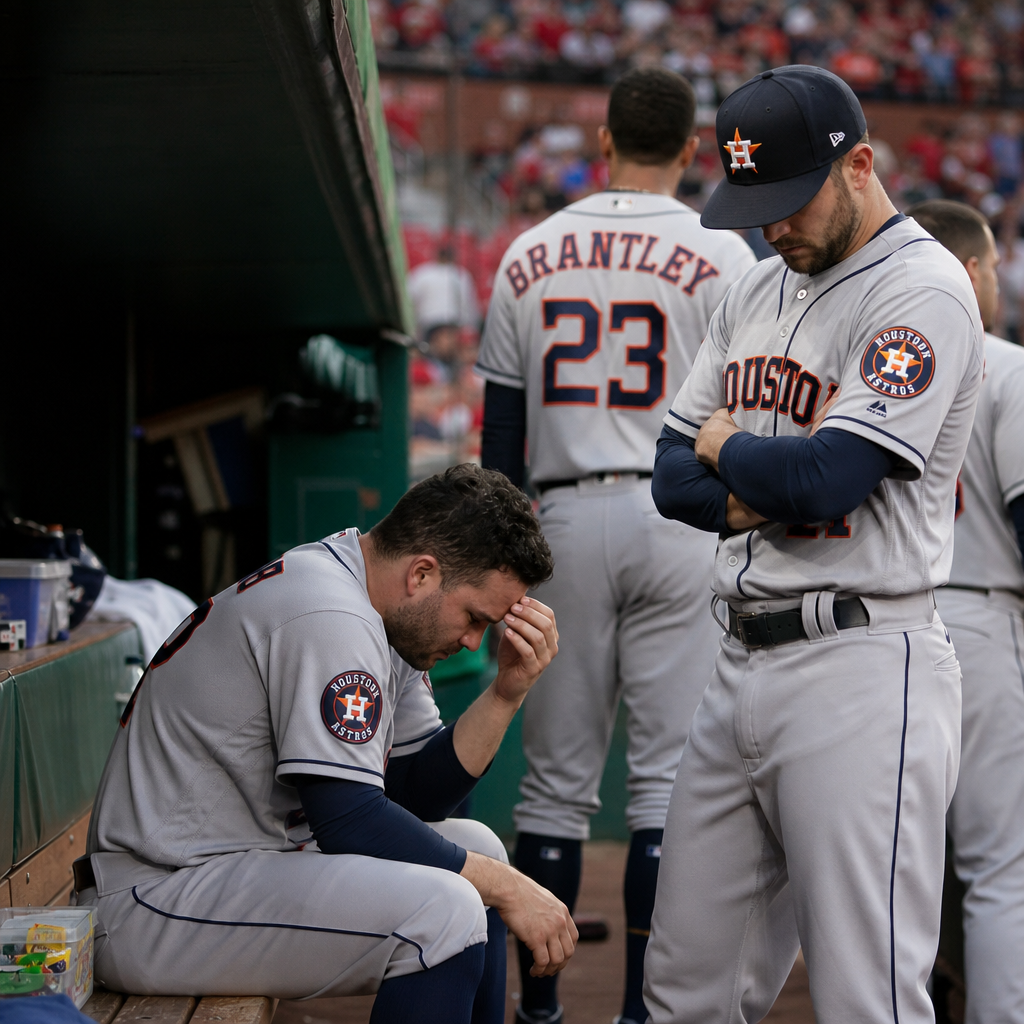
The 2019 Houston Astros sign-stealing fallout became one of baseball’s defining modern controversies because it forced Major League Baseball, players, executives, and fans to confront a basic question: how much rule-breaking can a championship survive before trust collapses? In baseball, sign stealing refers to decoding the catcher’s signals to the pitcher and relaying that information to the batter. Traditional sign stealing from a runner on second base has long been tolerated as part of the game’s gamesmanship. The Astros case was different because it centered on the use of technology, real-time video feeds, and a coordinated system that moved beyond accepted on-field tactics. Although the public explosion peaked after the 2019 season, the scandal’s roots, investigation, and consequences stretched across multiple years, making the fallout larger than one team, one title, or one set of punishments.
This story matters because it sits at the intersection of competitive integrity, front-office culture, clubhouse responsibility, and league governance. I have worked through many sports controversies as a researcher and editor, and few cases match this one for the sheer volume of unresolved anger it left behind. Fans wanted clarity on what happened, whether the Astros’ 2017 World Series title was tainted, why the 2019 club remained a focal point, and whether MLB’s penalties were strong enough to deter future electronic cheating. Those questions still shape how the Astros are discussed within the broader scandals and controversies landscape. As a hub topic under miscellaneous controversies, this article connects the mechanics of the scheme, the timeline of exposure, the commissioner’s response, player backlash, reputational damage, and the lasting institutional changes that followed across baseball.
How the Astros’ sign-stealing system worked and why 2019 became the fallout year
The core of the Astros scandal was straightforward. During the 2017 season, according to MLB’s January 2020 investigative findings, Houston used a center-field camera feed routed to a monitor near the dugout tunnel to decode opposing signs. Once the upcoming pitch was identified, players or staff relayed the information to the batter, most infamously by banging on a trash can. MLB found that the system was player-driven, enabled within the organization, and in violation of league rules that had been reinforced in a 2017 memo from Commissioner Rob Manfred warning clubs against using electronic equipment to steal signs.
Why, then, does the phrase “2019 Houston Astros sign-stealing fallout” carry so much weight when the confirmed system was tied primarily to 2017? Because the public reckoning happened after the 2019 season, when former Astros pitcher Mike Fiers told The Athletic about the operation. At that point, Houston had just reached another World Series, this time losing to the Washington Nationals in seven games. The team was still elite, still under suspicion from rivals, and still a symbol of baseball’s analytics revolution. The 2019 season therefore became the bridge between hidden misconduct and visible consequences. It was the moment the broader baseball world processed not merely an old violation, but the possibility that a winning model, celebrated for innovation, had also normalized unethical shortcuts.
The scandal also spread because the Astros were not a fringe club. They were one of the sport’s flagship organizations, praised for data-driven decision-making, player development, and aggressive roster construction. Their rise from rebuilding tank job to champion had been held up as a template. Once the sign-stealing allegations were substantiated, the story became larger than illicit pitch tipping. It challenged the credibility of one of baseball’s most admired operations and raised a wider concern: if the league’s smartest teams were willing to blur lines, how many other clubs were pushing the same boundaries in less visible ways?
The investigation, penalties, and why many observers saw them as incomplete
MLB’s investigation was extensive but narrow in key respects. The league interviewed dozens of witnesses, reviewed messages and video, and concluded that the Astros had run an illegal sign-stealing scheme during the 2017 regular season and parts of the postseason. The discipline announced in January 2020 included one-year suspensions for manager AJ Hinch and general manager Jeff Luhnow, a $5 million fine, and the loss of Houston’s first- and second-round draft picks in 2020 and 2021. Astros owner Jim Crane then fired Hinch and Luhnow. Bench coach Alex Cora, who had been implicated and had since become Red Sox manager, was dismissed by Boston, while Mets manager Carlos Beltran parted ways with New York before managing a game.
Those penalties were significant on paper, especially the draft-pick losses, but they immediately drew criticism because no Astros players were punished. Manfred’s office granted player immunity in exchange for cooperation, reasoning that testimony was necessary to establish facts. Legally and practically, that choice made the investigation easier. Publicly, it created a legitimacy problem. Opposing players and many fans believed the people who directly benefited at the plate escaped sanction while coaches and executives absorbed the formal punishment. That perception hardened when Manfred described the World Series trophy as “a piece of metal,” a phrase that became shorthand for how detached the league office seemed from the emotional stakes of competitive integrity.
| Issue | MLB Response | Why It Was Controversial |
|---|---|---|
| Player involvement | Immunity for testimony | No active Astros player received suspension or fine |
| Club punishment | $5 million fine | Maximum allowed fine looked small relative to franchise revenues |
| Leadership accountability | One-year suspensions for Hinch and Luhnow | Some felt executives paid for a player-driven system |
| Competitive sanctions | Loss of four high draft picks | Severe long term, but did not alter 2017 title history |
| Championship status | No vacating of title | Critics argued the sport failed to defend its own results |
From a governance standpoint, MLB was balancing deterrence, proof, and labor realities. The Players Association would have contested broad player discipline, particularly if rules had been unevenly enforced in prior years. Still, the absence of player penalties became the scandal’s central emotional trigger. In practical terms, the league established that organizational cheating had occurred while leaving the most visible participants available to keep playing, speaking, and collecting accolades. That disconnect is a major reason the fallout lasted far longer than the investigative report itself.
Player reactions, clubhouse anger, and the public relations collapse
If MLB’s report defined the facts, player reactions defined the fallout. Across spring training in 2020, current and former players openly condemned the Astros with unusual intensity. Yankees slugger Aaron Judge, Dodgers pitcher Ross Stripling, Cody Bellinger, Mike Trout, and many others questioned the sincerity of Houston’s apologies and the fairness of the league’s sanctions. Their frustration was not abstract. Players believed jobs, postseason bonuses, arbitration numbers, and even legacies may have been affected by games distorted through illegal advance knowledge of pitches. For pitchers especially, the issue was personal. Knowing whether a fastball or off-speed pitch is coming can transform an at-bat and damage a pitcher’s career line in ways that are hard to reverse.
The Astros compounded the anger with a deeply ineffective apology tour in February 2020. Owner Jim Crane initially said the cheating did not impact the game, then tried to clarify that he meant it did not impact the outcome, a distinction that satisfied almost no one. Several players delivered short, guarded statements that sounded lawyered, vague, or incomplete. Jose Altuve and Alex Bregman, two of the team’s biggest stars, faced scrutiny not only for what they said but for what they did not say. The organization missed a critical communications principle: when trust is broken, precision and humility matter more than damage control. Instead of closing the story, the press conference widened it.
By the time the pandemic-shortened 2020 season began, every Astros road game carried a residue of fury. They were booed relentlessly, taunted with inflatable trash cans, and treated as villains in a way rarely seen in contemporary baseball. Some retaliation was symbolic, some dangerous. Hit-by-pitch incidents drew scrutiny, and the league had to manage the risk that player anger would turn into on-field justice. That atmosphere matters to understanding the 2019 fallout because the scandal was not simply a report and a fine. It became a culture-wide reckoning over how baseball polices dishonesty when formal discipline leaves the public unconvinced.
The wider scandal web: Red Sox parallels, Beltran’s role, and technology across baseball
The Astros case also opened a broader conversation about how widespread electronic sign stealing had become. MLB’s investigation identified former Astros bench coach Alex Cora as a key figure in the 2017 scheme, and a separate inquiry later found that the 2018 Boston Red Sox had used the video replay room in an improper but more limited way. Carlos Beltran, then a veteran Astros player in 2017, was described in MLB’s report as the only player named specifically for helping develop the system’s structure. Those links mattered because they suggested a network of personnel and practices extending beyond one clubhouse.
At the same time, it is important to distinguish degrees of misconduct. Not every allegation around baseball was equal, and not every club accused by rivals operated a synchronized real-time relay method. The Astros became the central case because the evidence was strong, the scheme was organized, and the team won the World Series while using it. In my experience covering complex sports disputes, that combination is what creates lasting scandal memory: identifiable method, elite success, and institutional reluctance to deliver fully satisfying consequences.
Technology was the accelerant. By the late 2010s, teams had more camera angles, replay access, and in-game information systems than ever before. MLB had issued prior warnings, but enforcement lagged behind innovation. The Astros case demonstrated that the line between legal preparation and illegal live assistance had become too easy to exploit. In response, MLB tightened video room rules, limited access pathways, increased live monitoring, and eventually introduced systems such as PitchCom to reduce the vulnerability of traditional hand signs. Those changes were not cosmetic. They were structural acknowledgments that baseball’s old assumptions about gamesmanship no longer matched its technological environment.
Legacy, historical judgment, and what the Astros scandal means now
The hardest question is the one fans still ask: how should history remember the Astros? The fairest answer is also the least satisfying. Houston’s roster was genuinely talented. The club developed stars, built a formidable pitching infrastructure, and remained strong after the scandal surfaced. None of that erases the fact that the 2017 team cheated, that the championship remains permanently disputed in the minds of many fans, and that the 2019 season became the platform from which those disputes exploded into the open. Talent and wrongdoing can coexist. In this case, they do.
That dual reality explains why the fallout never fit neatly into a single verdict. To Astros supporters, the team became a target of selective outrage in a sport where many clubs were testing limits. To critics, Houston was the clearest example of a champion crossing an unmistakable line. To historians, the scandal marks a turning point in baseball’s regulation of technology and organizational accountability. It is now impossible to discuss modern competitive integrity without discussing Houston, Manfred’s investigation, the immunity decision, and the public backlash that followed.
As a hub within scandals and controversies, this miscellaneous topic connects to several related threads: the ethics of gamesmanship, uneven league enforcement, crisis communication failures, front-office culture, and the challenge of preserving trust in an era of ubiquitous data. The key takeaway is simple. The 2019 Houston Astros sign-stealing fallout was not just a cheating story; it was a stress test for baseball’s values. It revealed how championships can be shadowed, how weak apologies intensify damage, and how institutional penalties must make sense to both rulebooks and people. If you are exploring sports controversies, use this case as the reference point for how modern scandals spread, why they endure, and what leagues must do to protect credibility before the next crisis arrives.
Frequently Asked Questions
What was the Houston Astros sign-stealing scandal, and why did it become such a major controversy?
The Houston Astros sign-stealing scandal centered on an organized effort to decode opposing catchers’ signs and relay that information to Astros hitters during games. In baseball, some forms of sign stealing have traditionally been accepted, especially when a runner on second base tries to identify pitch signals through observation alone. What made the Astros situation different was the reported use of technology and a coordinated in-game system to pass along decoded signs, crossing a line that Major League Baseball had explicitly tried to police. That distinction turned what might have been dismissed as gamesmanship into a serious integrity issue.
The controversy became so large because it touched the most sensitive part of professional sports: trust in fair competition. The Astros were not just any team; they were one of baseball’s most successful franchises during that era, and their 2017 World Series title, along with the broader success of the club, suddenly came under intense public scrutiny. By the time the fallout extended into 2019 and beyond, the issue was no longer simply about one method of cheating. It became a referendum on whether fans, players, and rival teams could believe in results produced during a period when baseball was already wrestling with questions about analytics, technology, and competitive ethics.
It also became a defining modern baseball controversy because of how many groups were drawn into it. Players felt betrayed because they believed careers, contracts, and postseason opportunities may have been affected. Executives had to answer for organizational responsibility. MLB had to defend its ability to regulate a sport increasingly shaped by video review rooms, data systems, and electronic communication. Fans, meanwhile, were left to sort through a difficult question: if a championship team broke rules in a meaningful way, how should that success be remembered? That is why the Astros fallout resonated far beyond Houston and became one of the central scandals of the era.
How did the Astros’ sign-stealing system reportedly work, and why was it considered different from traditional sign stealing?
Traditional sign stealing in baseball usually refers to players trying to pick up patterns naturally during the course of play. For example, a runner standing on second base might watch the catcher’s fingers, decode the sequence, and then signal the batter in real time. That sort of gamesmanship, while controversial at times, has long been treated as part of baseball’s unwritten culture because it relies on human observation from the field itself. Teams may dislike it, but it has generally been seen as something opponents can counter through more complex signs and better communication.
The Astros scandal was viewed differently because the allegations involved the use of technology and a structured system rather than only on-field observation. Reports described players or staff using a live video feed to identify signs, then relaying the expected pitch to hitters through audible cues. The most widely discussed detail involved sounds, including banging on a trash can, to communicate whether an off-speed pitch was coming. Even for people who accept aggressive gamesmanship, that kind of system represented a far more serious violation because it removed much of the uncertainty and skill that make baseball competition legitimate.
Major League Baseball had already warned clubs about improper use of electronics for this exact reason. The sport understood that technology could turn sign stealing from a cat-and-mouse battle into an engineered advantage. Once that line is crossed, it is no longer just a player being clever on the field; it becomes an institutional practice with the potential to affect every pitch, every at-bat, and every game. That is why the Astros’ reported method was judged so harshly. The outrage was not only about stealing signs, but about using modern tools to industrialize an advantage the rules were designed to limit.
Why is the fallout often associated with 2019, even though the Astros won the World Series in 2017?
The Astros’ championship came in 2017, but the controversy’s public and emotional fallout extended deeply into 2019 and then exploded even further after that season. By 2019, Houston was still one of baseball’s elite teams, which kept the issue relevant because the franchise remained in the spotlight and continued competing at the highest level. As more discussion emerged about rule-breaking, the scandal stopped being a closed chapter about a past title and instead became an active debate about whether ongoing Astros success should be viewed differently.
The 2019 season also matters because it was the last full season before MLB’s formal punishment phase became front-page news, and because the Astros’ presence in another World Series intensified scrutiny from opposing players, media, and fans. Every postseason game, every big hit, and every road appearance invited renewed questions about competitive fairness. For many observers, 2019 was the year the emotional bill for the earlier misconduct came due. Even before all official consequences were finalized, baseball’s broader culture had already turned. Suspicion hardened into public anger, and the Astros became the focal point of that resentment.
In practical terms, the fallout associated with 2019 reflects timing, visibility, and escalation. The team’s success kept the subject alive. Rival players became more vocal. Fans across the league grew louder in their reactions. Discussions about trust, championships, and accountability became impossible to separate from Houston’s identity. So while the core misconduct was tied to earlier seasons, the 2019 context matters because that was when the scandal became a sustained force in baseball conversation rather than just a retrospective accusation.
What penalties did MLB impose, and were many people satisfied with the punishment?
Major League Baseball ultimately handed down significant organizational penalties, including suspensions for top baseball operations figures, financial punishment, and the loss of valuable draft picks. The league also put enormous pressure on the franchise’s leadership structure, which led to major departures at the managerial and executive levels. From an institutional standpoint, those penalties signaled that MLB wanted to show it was serious about protecting competitive integrity and discouraging clubs from exploiting technology in similar ways.
At the same time, many players, commentators, and fans felt the punishment did not go far enough. One major source of frustration was that no championship was vacated and no players received direct discipline through the league’s final process. To critics, that created a gap between the seriousness of the misconduct and the visible consequences for the people most closely tied to on-field outcomes. Opposing players in particular argued that careers can be altered by playoff losses, inflated or depressed statistics, and reputational damage, so organizational fines and draft penalties alone did not feel proportional.
Others defended MLB’s approach as a practical compromise. The league was trying to uncover the truth, secure cooperation, and set a precedent without creating years of legal and labor conflict. Even so, dissatisfaction remained widespread because punishment alone could not settle the larger issue. The scandal had already triggered a moral argument about fairness, accountability, and memory. In that sense, the Astros faced two separate judgments: the official ruling from MLB and the far less controllable verdict from players and the public. The second one lasted much longer and shaped the true fallout.
How did the scandal affect the Astros’ legacy and baseball’s broader conversation about integrity?
The scandal permanently complicated the Astros’ legacy. On one hand, the franchise remained talented, well-run in many respects, and capable of sustained success. On the other hand, any discussion of the team’s accomplishments from that era now carries an asterisk in the minds of many fans and rivals, even if no literal asterisk appears in the record books. That tension is exactly why the fallout has endured. The question is not whether the Astros had good players; it is whether trust in the legitimacy of key achievements can ever be fully restored once rule-breaking is proven or widely accepted.
For baseball as a whole, the controversy forced a much bigger conversation about integrity in the modern game. It exposed how technology had changed the boundaries of acceptable behavior and how unevenly baseball’s old customs fit the digital era. The sport has long tolerated gray areas, from on-field sign decoding to the use of elaborate scouting and data systems. But the Astros scandal showed that once electronics, video feeds, and coordinated relay methods become part of the process, the line between cleverness and corruption becomes much harder to ignore. MLB had to respond not just to one team, but to a structural problem involving enforcement, competitive pressure, and technological oversight.
The fallout also influenced how fans and players think about accountability. It sharpened skepticism toward dynasties, increased calls for transparency, and made competitive ethics a central part of baseball debate in a way that goes beyond Houston. In that sense, the scandal’s long-term impact may be larger than its immediate penalties. It changed the language of the sport. People now ask tougher questions about what should count as gamesmanship, what role technology should play, and whether championships can retain their full meaning after trust breaks down. That is why the 2019 Houston Astros sign-stealing fallout remains such an important subject in baseball history.