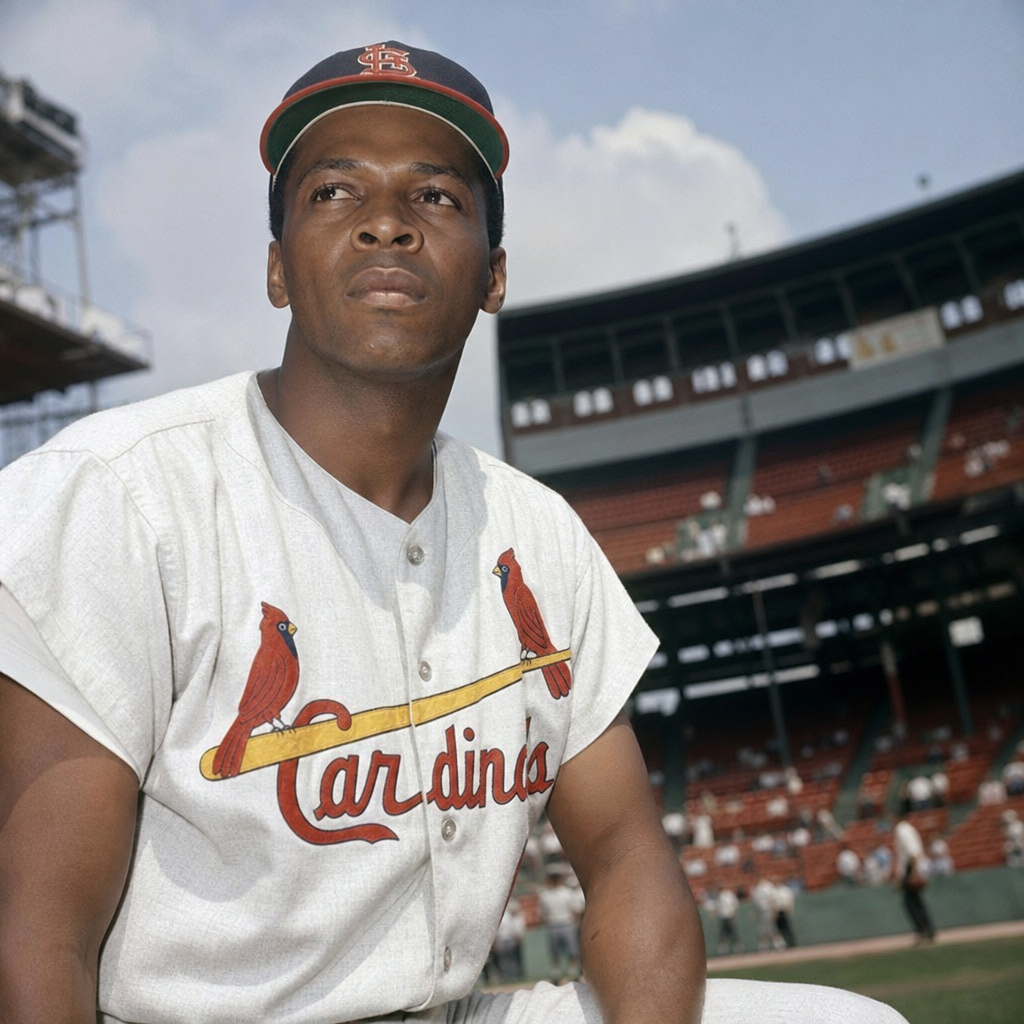
The Curt Flood case reshaped professional sports labor by challenging baseball’s reserve clause, a contract device that tied a player to one club indefinitely and treated his career mobility as team property rather than personal choice. To understand why this fight still matters, it helps to define the core issue clearly. The reserve clause was a standard term in Major League Baseball contracts that allowed owners to renew a player’s deal year after year, even after the original contract expired. In practice, that meant a player could not freely negotiate with other teams unless he was traded, released, or retired. Curt Flood, a star center fielder for the St. Louis Cardinals, refused to accept that arrangement after being traded to the Philadelphia Phillies in 1969. He sued Major League Baseball, Commissioner Bowie Kuhn, and the club owners, arguing that the system violated federal antitrust law and basic principles of personal liberty. The result, decided by the United States Supreme Court in 1972, did not immediately free players. Yet the case transformed public understanding of labor rights in sports, weakened the moral legitimacy of the reserve system, and prepared the ground for free agency only a few years later.
As someone who has worked through baseball labor history documents, court opinions, and collective bargaining records, I can say the Flood case is often remembered too simply as a legal loss. That misses its real importance. Flood lost in court by a 5-3 decision, but his challenge exposed the contradictions behind baseball’s long-standing antitrust exemption. That exemption came from earlier Supreme Court cases, especially Federal Baseball Club v. National League in 1922 and Toolson v. New York Yankees in 1953, which treated baseball as outside normal antitrust scrutiny. By the late 1960s, that reasoning looked outdated. Major League Baseball was plainly an interstate business, driven by national broadcasting, interstate travel, and extensive commercial revenue. Flood’s case forced judges, lawmakers, fans, reporters, and players to confront whether baseball should remain legally unique while operating as a major national industry. It also raised broader questions that fit naturally within scandals and controversies in sports: when does tradition become exploitation, how much power should leagues have over workers, and what happens when a respected athlete challenges an entire institutional system?
Flood’s stand matters beyond baseball because it sits at the intersection of race, labor, law, and public image. He was not a fringe player looking for one last contract. He was a three-time All-Star, a seven-time Gold Glove winner, and a central figure on Cardinals teams that won pennants and a World Series. He was also a Black player who had experienced segregation and understood that “ownership” language carried deep historical weight. In his famous letter to Commissioner Kuhn, Flood wrote, “I do not feel that I am a piece of property to be bought and sold irrespective of my wishes.” That sentence became the moral center of the case. It made the reserve clause understandable to the public in human terms, not merely legal jargon. This article serves as a hub for the miscellaneous side of sports controversies by explaining the background, legal arguments, public reaction, practical fallout, and long-term legacy of the Curt Flood case so readers can connect it to later fights over free agency, player unions, salary systems, and league power.
What the reserve clause actually did
The reserve clause was not just a line in a contract; it was the mechanism that gave club owners near-total control over a player’s employment options. Once a player signed his first professional contract, a team could renew that agreement for another season, then renew it again, creating a rolling obligation with no open market. Salaries were negotiated within that closed system, so the player’s leverage was minimal. If he held out, he did not have a rival major league employer to approach. If he objected to a trade, he still had no practical freedom to choose his destination. Owners defended the system as necessary for competitive balance and financial stability, arguing that richer clubs would otherwise sign every top player. In reality, the reserve clause also suppressed wages by eliminating bidding competition for talent.
Baseball was not the only sport to restrict player mobility, but its reserve system was unusually entrenched because of the sport’s special legal status. By the 1960s, the Major League Baseball Players Association was becoming more organized, especially after Marvin Miller became executive director in 1966. Miller recognized that the reserve clause was the central labor issue in the sport. Before free agency became a realistic goal, players needed to challenge the assumption that teams permanently controlled them. Flood’s case did exactly that. It gave a human face to a structural labor problem and moved the debate from clubhouse frustration into national legal and political discussion.
Why Curt Flood decided to fight
After the 1969 season, the Cardinals traded Flood, along with Tim McCarver, Joe Hoerner, and Byron Browne, to the Phillies. On paper, trades were routine. For Flood, this one was unacceptable. He had established roots in St. Louis, where he ran a business and built a life. He also had concerns about Philadelphia, including the city’s racial climate and the Phillies’ organizational reputation. Instead of reporting quietly, he challenged the premise that he could be reassigned without consent. His letter to Kuhn was direct and historically important because it rejected the language of property and asserted individual dignity in unmistakable terms.
Flood’s choice carried enormous personal risk. In that era, openly fighting the owners could end a career. There was no guarantee the union could protect him, and the legal path was uncertain. He sat out the 1970 season while the case moved forward, costing himself salary and momentum. He briefly returned with the Washington Senators in 1971 but left the game soon after. That sacrifice is one reason the case remains central in any serious account of sports controversies. It was not a symbolic protest detached from consequences. Flood put a successful career on the line to challenge a system that most players disliked but few were in a position to confront publicly.
The legal battle and the Supreme Court ruling
Flood’s lawsuit argued that baseball’s reserve system violated the Sherman Antitrust Act. The central question was whether baseball should continue to enjoy an antitrust exemption created by earlier Supreme Court precedents. Flood’s legal team, which included former Supreme Court Justice Arthur Goldberg, argued that professional baseball was clearly interstate commerce and should be treated like other businesses. They also emphasized that the reserve clause unreasonably restrained trade by preventing players from selling their labor in an open market.
Major League Baseball responded with two main arguments. First, it relied on precedent: the Court had already recognized baseball’s exemption, and Congress had not overturned it. Second, owners claimed the reserve system preserved the sport’s structure by preventing chaotic bidding and protecting competitive balance. When the Supreme Court decided Flood v. Kuhn in 1972, Justice Harry Blackmun’s majority opinion acknowledged that professional baseball was indeed engaged in interstate commerce. Even so, the Court left the exemption in place, calling it an “aberration” but concluding that any change should come from Congress, not the judiciary. That reasoning was narrow, formal, and controversial.
| Issue | Flood’s position | MLB’s position | Court’s result |
|---|---|---|---|
| Antitrust status | Baseball is interstate commerce and subject to Sherman Act rules | Earlier cases created a valid exemption | Court admitted baseball is interstate commerce but preserved exemption |
| Reserve clause | Unlawful restraint on player labor and mobility | Necessary for league stability and balance | No direct judicial dismantling in this case |
| Authority to change system | Supreme Court should correct outdated precedent | Congress must act if change is needed | Majority deferred to Congress |
The decision was a defeat in immediate legal terms, but the opinion’s logic exposed how fragile the exemption had become. Blackmun practically invited legislative action by stressing that baseball’s special treatment survived mainly because it had been tolerated for so long. Justice William O. Douglas, who had earlier accepted the precedent, now signaled regret. The dissenters argued more directly that the exemption had no sound basis. In practical terms, the ruling preserved the old structure while undermining confidence in its legal and moral foundation. That distinction is crucial for understanding why Flood lost the case but changed the sport.
Public reaction, race, and labor politics
The public response to Flood was mixed, and that mixed reaction reveals a great deal about American sports culture in the early 1970s. Many players quietly supported him because they understood the reserve clause’s daily impact on salaries and autonomy. Some fans, however, accepted owner arguments that player control was necessary to preserve tradition. Others viewed athletes through a paternalistic lens and believed highly paid players should not complain. That response ignored the central point: this was not only a salary dispute. It was a labor rights dispute about freedom to choose an employer.
Race shaped the controversy in ways that cannot be ignored. Flood was a thoughtful and outspoken Black athlete at a time when many institutions preferred racial progress to remain symbolic rather than confrontational. His language about being bought and sold resonated because it connected baseball’s labor system to longer histories of coercion and inequality. Some commentators understood that immediately; others dismissed it as too political. In my reading of contemporary coverage, that discomfort is one reason Flood did not receive unanimous support, even among people who agreed that the reserve clause was unfair. He challenged not just a contract rule, but the sport’s self-image as an innocent national pastime.
How the case led to free agency
The Curt Flood case did not abolish the reserve clause, but it created the climate in which abolition became possible. Marvin Miller and the players union used the momentum strategically. Instead of waiting for Congress or another sweeping court decision, they pursued labor arbitration through the collective bargaining agreement. That path produced the decisive breakthrough in 1975, when pitchers Andy Messersmith and Dave McNally challenged the owners’ interpretation of the reserve clause after playing a season without signed contracts. Arbitrator Peter Seitz ruled that the clause allowed only a one-year renewal, not perpetual control. That decision effectively created modern free agency.
Without Flood, that later victory would have been harder to achieve. His case educated the public, hardened player resolve, and made owner claims look less legitimate. It also demonstrated that baseball’s legal shield was vulnerable, even if not yet removed. Once free agency arrived, salaries rose sharply because clubs had to compete for talent in an open market. Critics said this would ruin baseball. It did not. Teams adapted, payroll strategies evolved, and competitive balance was addressed through other mechanisms such as amateur drafts, revenue sharing, and luxury tax systems. Flood’s challenge therefore belongs in a larger pattern seen across sports controversies: a supposedly radical reform becomes normal once institutions are forced to adjust.
The lasting legacy of Flood v. Kuhn
The legacy of the Curt Flood case reaches far beyond the final vote count in the Supreme Court. Legally, baseball’s antitrust exemption still exists in limited form, though Congress narrowed it through the Curt Flood Act of 1998, which applied antitrust law to major league labor relations while leaving other areas largely untouched. Historically, Flood stands as a foundational figure in athlete labor rights, alongside later union leaders and free agency pioneers. Culturally, his case changed the way many people talk about player movement. Today, fans debate trades, contract extensions, no-trade clauses, and free agent signings within an accepted framework that players have meaningful employment rights. That framework did not emerge naturally; it was fought for.
For readers exploring scandals and controversies in the miscellaneous corner of sports history, the Flood case is essential because it shows controversy at its most consequential. There was no hidden crime, no one-day scandal, and no tabloid twist. Instead, there was a deep structural injustice defended as tradition until one elite player forced the country to look at it directly. The key takeaway is simple: Curt Flood lost his case, but he changed baseball by exposing the reserve clause as indefensible in principle and unsustainable in practice. His challenge helped clear the path to free agency, stronger unions, and a more honest understanding of who creates value in professional sports. If you are building out this subtopic hub, start with Flood, then follow the trail to Marvin Miller, Messersmith and McNally, the Curt Flood Act, and later disputes over salary caps, collusion, and player empowerment.
Frequently Asked Questions
What was the reserve clause in Major League Baseball, and why was it so controversial?
The reserve clause was a standard provision in Major League Baseball player contracts that gave a club the power to renew a player’s contract even after the stated term had ended. In practice, that meant a player was not truly free to market his services to other teams once his contract expired. Instead, the team effectively retained control over his playing rights year after year. Although the clause was framed as part of the business structure of the sport, its real effect was to limit player mobility, suppress open competition for talent, and place the bargaining power overwhelmingly in the hands of team owners.
The controversy came from what the clause represented. It treated a player less like an independent professional and more like an asset tied to a franchise. If a player wanted better pay, a different market, or simply a fresh start with another club, the reserve system stood in the way. Owners argued that it helped preserve competitive balance and organizational stability, but critics saw it as a mechanism that denied players basic labor freedom. That tension is exactly why the reserve clause became one of the most important labor issues in sports history.
Why did Curt Flood challenge the reserve clause?
Curt Flood challenged the reserve clause because he believed it violated his dignity, his economic freedom, and his right to choose where he worked. The immediate trigger came after the St. Louis Cardinals traded him to the Philadelphia Phillies following the 1969 season. Flood was an accomplished and respected player, not a fringe athlete fighting for a final opportunity. He had built a strong career and felt that being transferred without his consent highlighted the deeper injustice of the reserve system. To him, the issue was not simply one trade. It was the broader idea that a player could be treated as property rather than as a person with agency.
Flood’s stance was especially powerful because he understood the personal and professional cost of speaking out. Challenging Major League Baseball meant confronting a deeply entrenched system backed by owners, league leadership, and longstanding legal precedent. His objection was rooted in principle: he argued that baseball players should have rights comparable to workers in other industries, including the ability to negotiate employment freely. Even though his legal challenge did not produce an immediate courtroom victory, his decision to take a public stand transformed the debate and helped expose the reserve clause as a fundamental labor rights issue rather than just a contractual technicality.
What happened in Curt Flood v. Kuhn, and what did the Supreme Court decide?
Curt Flood v. Kuhn was the landmark Supreme Court case that arose from Flood’s effort to challenge baseball’s reserve system under antitrust law. Flood argued that Major League Baseball’s structure, including the reserve clause, unlawfully restrained trade by preventing players from freely selling their services on an open market. The case directly confronted baseball’s unusual legal status, because professional baseball had long benefited from a judicially created antitrust exemption that did not apply in the same way to many other businesses.
In 1972, the Supreme Court ruled against Flood. The Court acknowledged that professional baseball was engaged in interstate commerce and also recognized the odd, even inconsistent nature of baseball’s antitrust exemption. Still, it chose not to overturn the earlier precedents that had protected the sport from antitrust scrutiny. In essence, the Court said that if baseball’s special treatment was to be changed, Congress should do it rather than the judiciary. This meant Flood lost the case in legal terms. However, the decision is remembered not only for the outcome, but for its significance in highlighting the fragile logic behind baseball’s exemption and energizing the movement for player rights.
If Curt Flood lost his case, how did it still change professional sports labor?
Flood lost in court, but his challenge shifted the entire conversation around player rights and employer control in professional sports. By forcing the reserve clause into national view, he helped reframe what had long been accepted as normal business practice into a question of labor fairness, personal liberty, and economic justice. His case exposed how little control players had over their own careers and made it harder for owners and the public to ignore the imbalance built into the system. That moral and political pressure mattered enormously, even without a Supreme Court win.
The long-term impact became clear just a few years later. In 1975, arbitrator Peter Seitz ruled in favor of pitchers Andy Messersmith and Dave McNally, a decision that effectively undermined perpetual reserve rights and opened the door to modern free agency in baseball. Flood did not win the decisive legal judgment himself, but his resistance helped create the conditions for change. More broadly, his stand influenced labor relations across professional sports by showing that athletes could challenge long-standing institutional controls. Today’s free agency systems, stronger player unions, and more robust contract negotiations all reflect the legacy of that struggle.
Why does the Curt Flood case still matter today?
The Curt Flood case still matters because it sits at the intersection of sports, labor law, civil rights, and economic power. At its core, the case asks a question that remains relevant well beyond baseball: how much control should an employer have over a worker once a contract ends? Flood’s challenge reminds us that even popular and tradition-rich industries can normalize systems that restrict individual freedom. His case is not just about one era of baseball; it is about the broader fight over who gets to make decisions about a person’s livelihood and mobility.
It also matters because many current debates in sports still revolve around similar themes. Issues such as free agency rules, salary structures, player movement restrictions, union strength, and league control mechanisms all reflect ongoing negotiations between institutional stability and worker autonomy. Flood’s story provides historical context for those debates and underscores the fact that rights often expand because someone is willing to challenge a deeply rooted system at great personal cost. In that sense, his legacy is larger than the legal opinion in Curt Flood v. Kuhn. He helped redefine athletes as workers entitled to a meaningful voice in the conditions of their employment.