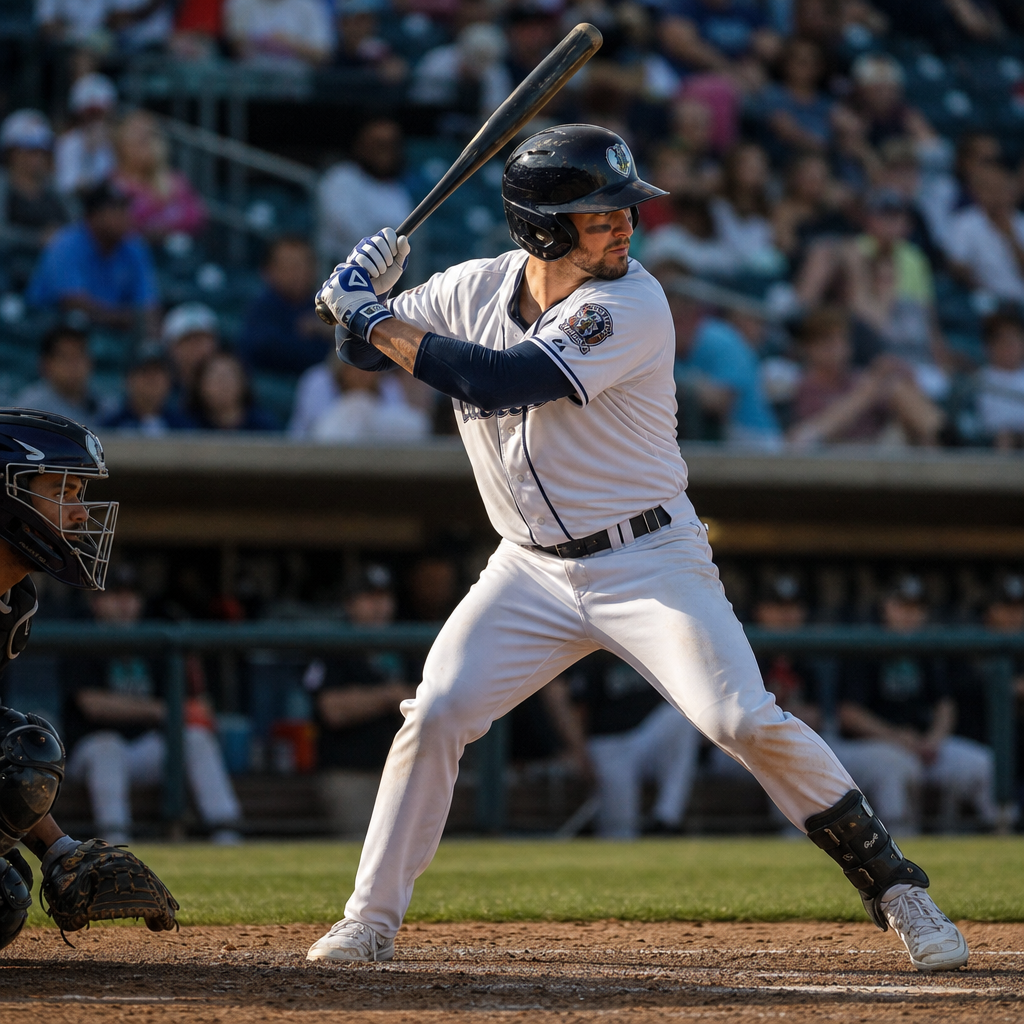
Undrafted baseball players are often treated as long shots, but in professional baseball they are one of the clearest reminders that talent evaluation is imperfect and development is rarely linear. In the minor leagues, where roster churn is constant and opportunity can appear with one injury, one swing change, or one pitching tweak, undrafted players have built remarkable careers and, in some cases, become major league stars. For readers exploring minor leagues and college baseball, this subject matters because it sits at the intersection of scouting, player development, independent leagues, college performance, and organizational decision-making. A hub page on miscellaneous minor league success stories should explain not only who broke through, but how the system gives overlooked players multiple paths to legitimacy.
In baseball terms, an undrafted player is an amateur who was eligible for the MLB Draft and was not selected, then later signed as a free agent. That category includes college seniors, small-school standouts, players from major programs who lacked one carrying tool, and even elite talents who slipped through for reasons unrelated to ability. A minor league success story does not always mean an All-Star outcome. In my experience covering player development, clubs often define success more broadly: reaching Double-A after being overlooked, carving out years as an organizational anchor, earning a 40-man roster spot, or turning an indy-ball contract into big league service time. Those milestones matter because they show what the farm system is actually designed to do: identify, refine, and maximize baseball skill wherever it appears.
The appeal of these stories is practical as well as inspirational. Fans want to know whether draft status predicts future value, parents and players want examples of alternative routes, and evaluators study undrafted breakouts to improve scouting models. Teams now blend TrackMan data, Hawkeye ball-tracking, biomechanical assessments, bat-speed readings, and traditional in-person scouting to reduce misses, yet misses still happen every year. Players mature late, gain strength after college, recover from injuries, or finally land with instructors who simplify a swing or redesign a pitch mix. Understanding the undrafted path offers a better picture of the modern talent pipeline and connects many related topics across the minor leagues and college baseball landscape.
Why talented players go undrafted
Players go undrafted for more reasons than raw ability. Sometimes the issue is age and leverage. College seniors historically have had less negotiating power, so clubs may prefer to spend draft picks on younger players with higher upside and then sign seniors afterward at modest bonuses. In other cases, a player’s performance is solid but not loud enough in a crowded class. A hitter may control the strike zone and post strong on-base numbers without obvious power. A pitcher may throw strikes at 89 to 91 mph before later adding velocity through strength training and mechanical adjustments. Small-school players face inconsistent competition levels and less scouting coverage, making them easier to underestimate.
There are also contextual misses. The draft is short relative to the number of playable professionals in college baseball, summer leagues, and independent circuits. Weather can limit looks for northern players. Injuries can erase a spring season. Positional bias matters too; right-right first basemen and corner outfielders usually need dominant offensive production to attract attention, while relievers without premium velocity are often discounted until they demonstrate unusual movement profiles or command. I have seen organizations sign undrafted players because one coordinator noticed a single translatable skill that got buried during the draft process: elite spin efficiency on a fastball, unusual extension, chase-resistant swing decisions, or exceptional contact quality against velocity.
The key point is that being undrafted is not the same as being unqualified. It often means the market failed to price a player correctly at one specific moment. Minor league baseball gives clubs a lower-cost way to test those bets, and it gives players a structure in which improvement can become visible quickly.
How the minor league system creates second chances
The minor leagues are built for iteration. Once an undrafted player signs, the first objective is not superstardom; it is proof of a carrying tool against professional competition. Development staffs break players into specific categories: bat-to-ball ability, swing decisions, raw power, defensive versatility, pitch characteristics, strike-throwing, recovery, and routine adherence. A player who enters pro ball with one plus trait can often survive long enough to improve a second and third. That is why overlooked players can move faster than expected. The environment rewards adaptation more than résumé.
At the lower levels, coaches can make targeted changes quickly. Hitters may narrow stances, optimize attack angle, or alter swing intent based on count and pitch shape. Pitchers often see immediate gains by adjusting seam orientation, adding a sweeper, tightening a slider, or using a changeup more aggressively against opposite-handed hitters. Strength programs also matter. A college infielder who signed at 185 pounds may report the next spring at 198 with improved rotational force and exit velocity. Because pro clubs collect daily data, small improvements become measurable, and measurable improvement leads to more opportunity.
Opportunity is the real currency. Undrafted players rarely receive the same initial patience as high picks, but they can create patience by forcing decisions. If a player performs in Low-A, handles advanced sequencing in High-A, and maintains process markers such as chase rate, hard-hit rate, or strike percentage, the organization has to keep testing him. That is how a player moves from depth piece to prospect. For this reason, the minor league system is less about where a player started and more about whether each level confirms the skill set.
Notable undrafted success stories
Several modern examples explain why this topic remains important. Kevin Millar was not drafted out of college, played independent baseball, and eventually reached the majors, where he became a key part of the 2004 Boston Red Sox championship team. His story illustrates the value of persistence and offensive consistency; he kept hitting, got noticed, and turned a nontraditional route into nearly 1,100 major league games. J.D. Martinez is another benchmark example. Though often discussed for his later offensive stardom, his professional path also showed how player development can unlock a skill set that amateur evaluation did not fully capture. His swing changes became a model for how targeted instruction can reshape a career.
More recently, players such as Jose Martinez and Bobby Wahl demonstrated how organizations mine overlooked talent from varied backgrounds. Jose Martinez, signed after going undrafted and spending years in the minors, reached the majors because his bat kept proving itself. He did not fit a clean scouting template, but his contact ability and offensive production were impossible to ignore forever. On the pitching side, relievers and swingmen frequently emerge from this pool because one weapon can carry them quickly. A late-blooming fastball, a deceptive low-slot slider, or elite command can transform a roster filler into a useful major league contributor.
| Player | Path after going undrafted | What translated in pro ball | Why the story matters |
|---|---|---|---|
| Kevin Millar | Independent leagues to affiliated ball to MLB | Reliable offensive production and durability | Shows that indy-ball performance can force a big league opportunity |
| J.D. Martinez | Overlooked amateur profile, later pro breakout | Swing refinement, power optimization, pitch damage | Proves development can reveal elite traits missed in early evaluation |
| Jose Martinez | Long minor league climb before MLB role | Contact skill and consistent hitting | Highlights persistence and the value of pure bat ability |
| Dan Winkler | Undrafted signee who developed into MLB arm | Improved stuff and strike-throwing | Represents the late-blooming pitcher path common in farm systems |
These cases are not identical, and that is the lesson. There is no single undrafted blueprint. Some players need independent ball to build a record. Others need one organization willing to rework the body or the mechanics. Others simply need time. The minor leagues remain the proving ground where those differences become visible.
Independent leagues, college baseball, and overlooked pipelines
Independent leagues are central to many undrafted success stories because they function as both a finishing school and an extended tryout. The Atlantic League, American Association, Frontier League, and Pioneer League have all supplied affiliated organizations with players who either were missed in the draft or improved afterward. Clubs monitor these leagues closely because the data quality and competition level have improved. A pitcher touching 95 mph with strike efficiency in the Atlantic League is not a rumor anymore; teams can verify the shape, movement, and usage patterns. When affiliated clubs need depth or see a trait worth betting on, these leagues offer ready-made candidates.
College baseball is just as important. Every year, productive players from mid-major conferences, Division II programs, NAIA schools, and junior colleges are squeezed by draft economics. Some become priority free agents immediately after the draft. Others return to school, transfer, or keep playing in summer leagues such as the Cape Cod League, Northwoods League, or Coastal Plain League to gain exposure. These environments matter because wood-bat performance, velocity gains, and defensive versatility are easier to compare across regions. I have watched scouts dismiss a player in March, then revisit him in July after seeing better bat speed, cleaner actions, or a new breaking ball. Those late adjustments can change a career.
This is why a miscellaneous hub under minor leagues and college baseball should connect draft misses, independent ball, transfer development, summer leagues, and late-bloomers in one place. They are parts of the same pipeline. The common thread is continued competition against credible opposition, followed by enough objective evidence that a club decides the player is worth a roster spot.
What organizations look for in undrafted free agents
Organizations do not sign undrafted players at random. They usually target one or more traits they believe can scale. For hitters, common indicators include zone contact, swing decisions, exit velocity on pitches in the heart of the zone, and defensive flexibility. A player who can catch, play the infield, or handle center field has more pathways to usefulness. For pitchers, teams prioritize strike-throwing, pitch shape, induced vertical break on fastballs, horizontal movement on sweepers, extension, deception, and the ability to recover between outings. Modern departments also care about coachability and training compliance because development plans only work if players can execute them consistently.
The best undrafted signings often come from alignment between amateur scouting and player development. A scout may file a report saying the current performance is ordinary but the hand speed is real, or the slider shape is already major league quality. Development staff then creates a plan to support that conviction. If the player buys in, progress can be rapid. This is especially true for relievers, utility players, and catchers, where role clarity can accelerate advancement. A catcher who receives well, controls the running game, and manages pitchers can move despite modest offensive numbers. A utility infielder with contact skills and dependable defense can fill multiple roster needs and stay employed long enough for the bat to improve.
There are limits, of course. Most undrafted players do not become stars, and many are released quickly because the margin is thin. But the presence of a thin margin does not make the path unrealistic. It means evaluation must focus on translatable skills, not draft pedigree.
Lessons for players, fans, and evaluators
The main lesson is that baseball development is non-linear. Draft status matters because it shapes bonus size, opportunity, and initial patience, but it does not fix future performance. Players should treat the undrafted route as a professional challenge, not a verdict. The best response is to identify one carrying trait, make it undeniable, and then build the rest of the profile around it. Fans should read minor league stat lines with context, looking at age, level, role, and underlying indicators rather than assuming a player is insignificant because he lacked draft acclaim. Evaluators should study every undrafted breakout as feedback on the blind spots that still exist in scouting and modeling.
For a hub page, the broader benefit is perspective. Miscellaneous minor league success stories reveal how the ecosystem actually works: college baseball produces more professional-caliber players than the draft can absorb, independent leagues create alternative entry points, and minor league development can surface value that was invisible a year earlier. If you follow this corner of the game closely, you start to recognize the pattern. A player gets overlooked, signs quietly, improves one skill enough to survive, earns more reps, and eventually changes the conversation from “Why wasn’t he drafted?” to “How did everyone miss him?” Explore the related stories in this subtopic, and you will see that the undrafted path is not an exception to baseball development. It is one of its most revealing truths.
Frequently Asked Questions
Why do talented baseball players go undrafted in the first place?
Going undrafted does not necessarily mean a player lacks ability. In baseball, it often reflects how difficult projection can be. Scouts and front offices have to make decisions on thousands of amateur players, and those choices are shaped by limited viewing opportunities, differing opinions on tools, injuries, age, competition level, signability, and roster economics. A player might have one standout skill but still be viewed as incomplete, such as a hitter with excellent bat-to-ball ability but little power, or a pitcher with command but modest velocity at the time of the draft.
There are also many players who develop later than their peers. Some are physically immature in high school, some are learning a new position, and others do not make meaningful mechanical adjustments until college or even after entering pro ball. In some cases, a player spends much of college in a reserve role, then flourishes only after getting regular reps. In others, the player’s statistics may not fully capture underlying strengths, especially before today’s more advanced tracking and data tools became common.
Baseball’s draft structure also creates practical reasons for strong players to slip through. Teams have finite picks, finite bonus pools, and specific organizational preferences. If clubs prioritize younger upside, premium defensive positions, or velocity thresholds, productive but unconventional players can be overlooked. That is why undrafted success stories are so compelling: they show that evaluation is imperfect, growth does not happen on a neat schedule, and professional development can reveal qualities the draft process missed.
How do undrafted players get into professional baseball and earn minor league opportunities?
Most undrafted players enter pro baseball by signing as free agents after the draft, attending open tryouts, joining independent leagues, or standing out in partner leagues, summer leagues, and winter competition. Once the draft ends, organizations often move quickly to contact players they still like but did not select. These signings can be relatively low-cost for clubs, which means teams are often willing to take a chance on players with one or two intriguing traits, especially if they believe there is room for development.
For many undrafted players, the first challenge is simply getting into an environment where coaches, analysts, and coordinators can work with them every day. That can happen in rookie ball, at a complex league affiliate, or through a nontraditional route such as an independent league contract that eventually leads to a purchase by a major league organization. Independent ball has become an especially important proving ground because it gives overlooked players game reps, video, TrackMan data, and a chance to show they can perform against professional competition.
Once signed, an undrafted player has to do more than survive. He needs to show adaptability. That may mean accepting a defensive position change, altering a swing path, adding a pitch, increasing fastball usage in certain counts, refining command, or improving strength and conditioning. Organizations value players who can respond to instruction and turn small opportunities into momentum. In the minors, where injuries and promotions constantly create openings, one productive month or one successful mechanical adjustment can completely change a player’s trajectory.
What makes the minor leagues such an important place for undrafted success stories?
The minor leagues are where baseball’s uncertainty becomes visible every day. Unlike the draft, which captures one moment in a player’s amateur life, the minors stretch development over months and years. That longer timeline matters because many players are not close to finished products when they sign. The minor league system gives undrafted players access to professional coaching, nutrition, strength programs, biomechanics, pitch design, video analysis, and consistent competition. For players who were previously overlooked, that environment can unlock a different level of performance.
Minor league baseball is also built around constant movement. Players are promoted, demoted, injured, released, converted to new roles, or asked to fill temporary needs. That churn creates opportunity. An undrafted infielder might get at-bats because of an injury and suddenly establish himself. A reliever might be moved into higher-leverage innings and prove his stuff plays better than expected. A catcher might improve his receiving and game-calling enough to become organizationally valuable even if he was never highly regarded as an amateur.
Just as importantly, the minors reward skill growth more than reputation over time. Draft status may open doors early, but performance keeps players moving. If an undrafted hitter controls the strike zone, makes hard contact, and handles multiple defensive spots, he will get attention. If an undrafted pitcher adds velocity, improves shape on a breaking ball, or demonstrates elite command, evaluators notice quickly. The minor leagues do not erase bias or organizational preference, but they do provide repeated chances for players to redefine themselves through actual professional results.
Are there common traits shared by undrafted players who eventually succeed in the minors or reach the majors?
There is no single formula, but successful undrafted players tend to share a few themes. One is adaptability. Because they are rarely handed long developmental leashes, they often learn to make adjustments quickly. Hitters may simplify pre-pitch movement, improve swing decisions, or lean into an approach built around contact quality rather than raw power. Pitchers may reshape a slider, move to the bullpen, alter release height, or attack hitters in a way that better fits their strengths. The players who rise are usually the ones who treat development as ongoing rather than fixed.
Another common trait is resilience. Undrafted players often begin their careers without the financial investment, media attention, or organizational patience given to high picks. That means they can face shorter timelines and more pressure to produce immediately. The players who break through generally handle failure well, stay ready when playing time is limited, and maintain performance even when their role changes. In a sport defined by slumps and setbacks, mental steadiness is a major asset.
Undrafted success stories also frequently involve one standout carrying tool or one area of elite improvement. A player may have exceptional strike-zone judgment, unusual bat control, deceptive stuff, defensive versatility, plus speed, or elite work habits that allow his tools to play up. With modern player development, one above-average skill can become a foundation. If the rest of the profile improves from below average to playable, that once-overlooked player suddenly looks like a legitimate prospect. In other words, many undrafted players succeed not because they become perfect, but because they become clearly valuable in specific ways.
Why do undrafted minor league success stories matter to fans of minor league and college baseball?
These stories matter because they reveal something true about the sport: talent is broader than the draft board. For fans of college baseball, undrafted success stories are a reminder that a player’s career does not end when draft day is disappointing. Many college players continue to mature physically and mentally after school, and some are far better professionals than amateur evaluators expected. That makes player development itself a compelling part of the baseball conversation, not just prospect rankings or signing bonuses.
For minor league fans, undrafted players often represent the heart of the system. They are the players fighting for every at-bat, every inning, and every roster spot. Their progress can be dramatic and easy to follow: a utility player becomes an everyday contributor, a pitchability starter turns into a strikeout reliever, or a lightly regarded senior sign equivalent emerges as a real big league option. These are some of the most satisfying developmental arcs in baseball because they unfold step by step in front of local crowds and dedicated followers of the farm system.
On a broader level, these success stories also challenge the idea that baseball careers are predictable. They remind readers that scouting is important but never infallible, that opportunity can arrive suddenly, and that the gap between overlooked and indispensable can narrow fast in the right environment. That is why undrafted players occupy such a meaningful place in the minor leagues: they are living proof that persistence, adjustment, and timing can reshape a career long after the draft has passed.