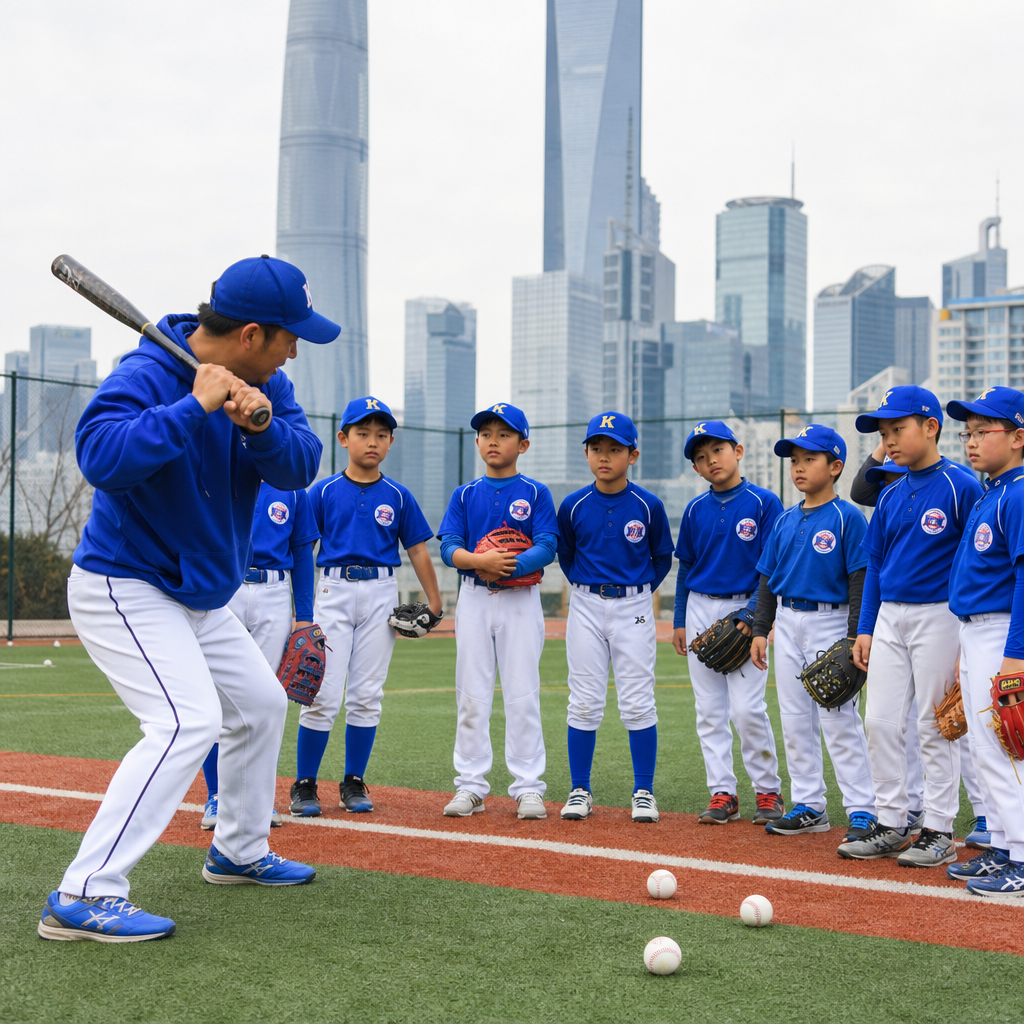
Baseball in China sits at an unusual intersection of sport, policy, education, media, and consumer culture, which is exactly why the question of whether it is the next big market deserves a careful answer. In practical terms, a “market” for baseball means more than ticket sales. It includes youth participation, school programs, coaching depth, facilities, equipment demand, media rights, brand sponsorship, digital fandom, and pathways linking amateur players to professional opportunities. China already has scale in every adjacent category that matters: a vast youth population, strong e-commerce infrastructure, state influence over sports development, and growing interest in global entertainment products. Yet baseball remains a niche sport compared with basketball, soccer, and increasingly winter disciplines that have received concentrated policy support.
From working with international sports content and tracking league expansion efforts, I have seen the same mistake repeated: people assume population size alone guarantees sports growth. It does not. A sport expands when three conditions align at the same time: access, aspiration, and visibility. Access means fields, equipment, coaches, and local leagues. Aspiration means families and athletes can see a meaningful future in the game, whether educational, professional, or social. Visibility means regular exposure through streaming, social media, school events, and recognizable stars. China has made progress in all three areas, but the progress is uneven across cities and age groups.
That unevenness is why baseball in China is better understood as an emerging ecosystem than a fully formed market. There are real indicators of momentum: youth academies in major cities, MLB development initiatives, the continued symbolic value of events such as the World Baseball Classic, and a consumer class willing to spend on premium sports experiences. At the same time, there are structural barriers that make growth slower than optimistic headlines suggest. Baseball requires specialized space, patient coaching, and repeated game exposure. It is harder to install than basketball, which can spread through a single court and a ball. The opportunity is substantial, but it will belong to organizations that understand the local conditions rather than import assumptions from North America or Japan.
For readers exploring international baseball, this hub examines the miscellaneous but crucial factors shaping China’s trajectory: history, infrastructure, youth development, commercial opportunity, digital behavior, policy influence, and the realistic timeline for growth. The core takeaway is straightforward. China is not yet baseball’s next dominant market, but it is one of the most strategically important long-term growth markets because success there would be built on durable systems rather than short-lived novelty.
How baseball developed in China and where it stands now
Baseball is not completely new to China. The sport has appeared in different forms since the late nineteenth and early twentieth centuries, often through schools, foreign communities, and regional exchanges with Japan and Taiwan. Modern development accelerated later through organized amateur competition, university programs, and national teams competing in Asian events. China’s governing structure has supported baseball at various points, but support has rarely matched the sustained depth seen in sports prioritized for Olympic medal potential or broad mass participation. That policy reality matters because Chinese sport often scales fastest when schools, municipal authorities, and national federations move in coordination.
Today, baseball remains concentrated in larger urban centers such as Beijing, Shanghai, Guangzhou, Shenzhen, and parts of eastern China where international schools, higher household income, and better facilities create stronger entry points. The China Baseball League has existed in different forms, but domestic professional visibility remains limited compared with leagues in Japan, Korea, or Taiwan. For many Chinese consumers, baseball is still more familiar as an international product than as a local live sport. MLB clips, cap culture, and brand collaborations may be better known than domestic clubs or players. That gap reveals both a weakness and an opening: consumer recognition exists, but it often sits above a thin local participation base.
National team results have also shaped perception. China has participated in international competitions, including the World Baseball Classic, yet it has not established consistent elite status in Asia. Japan, South Korea, and Taiwan remain the regional benchmarks because they combine school baseball traditions, strong coaching pipelines, professional leagues, and intense fan culture. China’s challenge is not simply to imitate those models. It must adapt them to local realities, especially land use, educational pressure, and uneven grassroots coaching quality. In my experience, markets move faster when they stop asking how to copy established powers and start building a version that fits local institutions.
Youth participation, schools, and the development pipeline
If baseball becomes a major Chinese market, youth participation will be the reason. No sport with baseball’s technical demands grows sustainably without a broad developmental pyramid. Children need repeated instruction in throwing mechanics, fielding footwork, batting timing, situational awareness, and game rules. That means more than introductory clinics. It means weekly training, age-group competition, and coaches who can teach progression safely. In China, the most promising growth has come from private academies, international schools, bilingual schools, and municipal programs in affluent districts. Parents are often motivated by the sport’s educational image, college pathway potential, and relative novelty.
School sports culture is central. Baseball has advantages in school settings because it teaches teamwork, patience, reaction time, and strategic thinking. It also aligns well with parent demand for structured extracurricular activities. However, the obstacles are significant. Chinese students face intense academic schedules, which limits practice time. Baseball also requires more space and specialized equipment than table tennis, badminton, or basketball. A school can launch basic basketball participation with minimal investment. A credible baseball program needs a suitable field or training area, protective gear, bats, balls, nets, and trained supervisors. Without those, baseball risks becoming an occasional activity rather than a developmental program.
Still, the educational pathway is one of China’s strongest long-term opportunities. Families who view sport as part of international education are willing to invest in coaching, travel tournaments, and branded equipment. Some youth players also see baseball as a route to study abroad, especially in the United States or Japan. That aspiration can be a powerful market catalyst because it links participation to a tangible family objective.
| Growth Driver | Why It Matters | China Reality |
|---|---|---|
| Youth academies | Create repeat participation and coaching continuity | Growing in major cities, limited beyond top urban areas |
| School adoption | Builds scale efficiently through existing institutions | Promising but constrained by space and academics |
| College pathways | Gives families a long-term reason to invest | Strong appeal among internationally oriented households |
| Local competition | Turns training into sustained engagement | Improving, but schedule density remains inconsistent |
| Coach education | Determines quality, safety, and retention | Still a major bottleneck in many regions |
That bottleneck is more important than many outsiders realize. A weak coach can stall a market because beginner frustration rises quickly in baseball. I have seen youth programs lose families not because children disliked the sport, but because sessions lacked structure and game understanding. Better coaching certification, translated training resources, and partnerships with established baseball nations would produce immediate returns.
Commercial opportunity: media, brands, facilities, and consumer spending
The commercial case for baseball in China depends on whether the sport can convert cultural interest into recurring behavior. On the cultural side, the signs are encouraging. MLB branding has visibility, baseball caps are mainstream fashion items, and short-form sports content performs well on Chinese digital platforms. On the behavior side, the challenge is sharper. Watching highlights, buying a Yankees cap, and enrolling a child in a year-round baseball program are very different forms of engagement. A real market emerges only when enough consumers move from symbolic association to active spending.
There are several monetization lanes. First is youth training, including academies, camps, private lessons, and travel teams. In China’s affluent urban districts, this can become a premium category similar to tennis, golf, or hockey in certain demographics. Second is equipment and apparel. Bats, gloves, cleats, catcher’s gear, training aids, and licensed merchandise all offer retail upside, especially through e-commerce ecosystems such as Tmall and JD.com. Third is facility development. Indoor training centers are particularly important because they reduce weather dependence and solve some land constraints. Batting cages, pitching labs, and small-sided practice venues can scale where full diamonds cannot.
Media rights are a longer-term play. Baseball’s slow-build appeal works best when audiences understand narratives, statistics, and player identities. That requires consistent broadcasting, localized commentary, and educational storytelling. Streaming platforms can help because they allow flexible access and targeted distribution. Yet media value will remain modest until local fandom deepens. In most emerging sports markets, participation revenue arrives before major media revenue. China is likely to follow that pattern.
Sponsors should also be realistic about category fit. Baseball aligns well with education, youth wellness, sportswear, consumer technology, and automotive brands seeking family audiences in upper-income segments. It is less likely, at least initially, to deliver the broad mass reach of basketball. That does not make baseball unattractive. It makes it more precise. For many brands, a concentrated, affluent, internationally minded audience is highly valuable.
What could accelerate growth, and what could hold it back
Several catalysts could push baseball forward. Stronger international performance would help because national pride still matters in sports adoption. More visible Chinese players reaching foreign professional systems would be even more powerful, giving young athletes a believable role model. Expanded cooperation with MLB, NPB in Japan, and CPBL in Taiwan could improve coaching, scouting, and event quality. Urban indoor facilities could solve access issues for families who cannot reach full fields regularly. Finally, better local storytelling on platforms such as Douyin, Bilibili, and WeChat could turn baseball from an unfamiliar rules-heavy game into a digestible, personality-driven product.
The barriers are equally clear. Land is expensive, especially in tier-one cities, and baseball’s spatial demands are real. Coaching depth remains thin outside developed pockets. Academic pressure reduces the time available for practice and weekend competition. Domestic league visibility is limited, which weakens aspiration. Baseball also competes against sports with lower startup friction. A parent deciding between basketball and baseball often sees basketball as simpler, cheaper, and easier to fit into school life. That is a rational decision, not a failure of interest.
So, is baseball in China the next big market? The most accurate answer is that it is one of the most important long-range markets, but not the next breakout market in a short-cycle sense. Growth will likely be urban, youth-led, and premium before it becomes broad. Organizations that invest in coach development, school partnerships, and localized media education will be positioned best. Readers following international baseball should watch China closely, then explore connected topics such as Asian league models, youth development systems, and baseball’s role in global education pathways. The opportunity is real, but it will reward patience, local knowledge, and disciplined execution rather than headline chasing.
Frequently Asked Questions
1. Why are people asking whether China could become the next big baseball market?
People are asking this because China has several of the ingredients that can turn a niche sport into a meaningful commercial and cultural market: a massive youth population, growing middle-class spending on education and extracurricular activities, expanding digital media ecosystems, and a sports industry that often develops through a mix of policy support, school participation, and private investment. When analysts talk about a “baseball market” in China, they are not just talking about whether professional teams can sell tickets. They are looking at whether baseball can build a durable ecosystem made up of youth leagues, school programs, coaches, facilities, equipment sales, streaming audiences, sponsorships, and long-term fan habits.
What makes China especially interesting is that baseball fits several modern trends at once. It can be positioned as a developmental sport for children, a school-based activity, a branded consumer category through bats, gloves, apparel, and training tools, and a digital content product through highlights, livestreams, and social media communities. That creates multiple entry points for growth even if the professional game remains relatively small in the short term. In other words, baseball in China does not need to look like baseball in the United States or Japan to become a significant market. It can grow through youth development, education partnerships, and urban sports consumption before a large domestic pro audience fully emerges.
At the same time, the question is worth asking carefully because scale alone does not guarantee success. China has a huge population, but sports markets are built through repetition, infrastructure, and habit. Baseball competes with basketball, soccer, badminton, table tennis, and many other activities that are already deeply embedded in schools and media. That is why the debate is not really whether China is large enough to matter. It is whether baseball can convert pockets of interest into a stable, self-reinforcing system. That distinction is what makes the “next big market” question both credible and complicated.
2. What factors will determine whether baseball can truly grow in China?
The biggest factor is youth participation. If children are not playing the sport consistently, the rest of the ecosystem remains thin. Youth participation drives demand for coaches, fields, equipment, tournament organizers, training academies, parent spending, and eventually a wider fan base. In many countries, sports become sustainable markets when families begin treating them as normal, recurring activities rather than occasional curiosities. For baseball in China, that means success will depend heavily on whether schools, local clubs, and private training programs can make the sport accessible, understandable, and worth the time commitment.
Coaching depth is another major variable. Baseball is a technical sport, and quality instruction matters. If beginners are introduced to the sport without good coaching, retention drops quickly. A healthy market needs not just elite coaches in major cities, but a broader pipeline of trained instructors who can teach fundamentals, organize practices, and create enjoyable development pathways. This is where partnerships with foreign baseball organizations, coach education programs, and certification systems can make a real difference. Facilities also matter. Baseball requires appropriate space, and in dense urban environments, field access can be a bottleneck. Adaptations such as smaller practice spaces, indoor training centers, and development-focused academies can help, but long-term growth still benefits from reliable access to playable fields.
Media exposure and storytelling will also shape the sport’s trajectory. Baseball can be difficult for new audiences if it is presented without context. To grow, it needs explanation, personalities, local heroes, and content that makes the game emotionally legible. Digital platforms in China can be powerful accelerants if leagues, brands, and creators produce engaging highlights, instructional videos, lifestyle content, and narratives around rising players. Finally, the market depends on pathways. Families and young athletes need to see where the sport can lead: school opportunities, elite training, overseas competition, scholarships, or professional development. If baseball is perceived as a dead-end hobby, growth will stall. If it is seen as a structured pathway with educational and athletic value, growth becomes much more likely.
3. Is professional baseball the main indicator of success in China, or are other areas more important?
Professional baseball is important, but it is not the only, or even the first, indicator that matters most. In an emerging market, the stronger signals are often found lower down the pyramid: how many children are playing, how many schools offer baseball, how often parents are willing to pay for training, how many qualified coaches are available, and whether brands see a consumer audience worth targeting. A country can have a modest professional league and still represent a very attractive baseball market if participation and consumer demand are rising. In fact, many sports grow commercially through youth and amateur channels before the top professional layer becomes robust.
For China, amateur and developmental baseball may be the real foundation of market expansion. School sports, weekend tournaments, training academies, and community clubs can generate recurring spending and long-term habits. Equipment manufacturers, apparel companies, facility operators, event organizers, and digital training platforms all benefit from this kind of grassroots activity. That means baseball’s market potential in China should be judged through a wider lens than professional attendance or television ratings alone. If families are buying gloves and bats, enrolling children in camps, following baseball content online, and participating in local competitions, that is real market growth even if the domestic pro scene remains relatively limited.
That said, professional baseball still plays an important symbolic role. It gives the sport visibility, aspiration, and legitimacy. Elite competition creates stars, stories, and a sense of destination for young players. It also provides sponsors and media partners with a more recognizable product. But in China’s case, professional success will likely be the result of ecosystem growth rather than the starting point. The healthiest reading is that pro baseball matters most when it is connected to a broader developmental pipeline. Without that base, the top level struggles to sustain interest. With it, professional baseball becomes a powerful amplifier rather than a fragile standalone project.
4. What are the biggest challenges baseball faces in becoming a major market in China?
The first challenge is competition. China is crowded with sports options, and many of them already have stronger traditions, easier rules for casual viewers, or lower barriers to entry. Basketball has immense visibility, soccer has global prestige, and racquet and table sports fit more naturally into many school and urban settings. Baseball must therefore do more than exist; it must justify why children should choose it, why parents should pay for it, and why media platforms should allocate attention to it. That is difficult in any country, but especially in one where time, educational pressure, and urban space can all constrain extracurricular choices.
The second challenge is infrastructure and expertise. Baseball is not as simple to launch as some other sports. It requires specialized coaching, technical understanding, suitable playing areas, and enough organized competition to keep players engaged. If one part of that system is weak, the rest suffers. A child may enjoy baseball initially, but without regular games, capable instruction, and visible progression, interest can fade. The sport also needs localized development rather than isolated showcase events. A few high-profile tournaments or promotional campaigns can create awareness, but they do not automatically build sustainable participation. Durable growth comes from repeated weekly activity, local institutions, and practical access.
Another major challenge is converting curiosity into fandom. Many people may encounter baseball through international brands, clips, or novelty, but becoming a fan requires deeper familiarity. The game’s pace, strategy, and traditions often become more compelling with exposure, not instantly. That means baseball in China needs translators in the broadest sense: coaches, commentators, creators, and communities who can explain why the sport is interesting. Finally, there is the challenge of patience. Emerging sports markets are often discussed with exaggerated optimism, but real development usually takes years. Baseball may very well grow in China, but expecting overnight transformation would be unrealistic. The key challenge is not whether growth is possible. It is whether stakeholders can invest long enough, and intelligently enough, to build a genuine ecosystem instead of chasing short-term headlines.
5. So, is China likely to become the next big baseball market?
The most accurate answer is that China has the potential to become a major baseball market, but that outcome is not automatic and will likely happen unevenly rather than all at once. If the phrase “next big market” means a country where baseball becomes deeply rooted across youth development, education, consumer spending, media engagement, and talent pathways, then China is certainly one of the most plausible candidates simply because of its scale and the breadth of possible growth channels. It offers a combination of urban consumer demand, digital distribution, school-based sports development, and aspirational family spending that could support baseball in ways that go far beyond professional ticket sales.
However, potential should not be confused with inevitability. Baseball still has to earn its place in a highly competitive sports landscape. Its future in China depends on whether organizations can build sustained participation, train coaches, expand access to facilities, create locally relevant content, and establish visible pathways for players and families. Growth is more likely to emerge city by city, school by school, and program by program than through one dramatic national breakthrough. In practical terms, that means the sport’s real progress may first show up in stronger youth leagues, more academy investment, better digital communities, and rising equipment demand before it shows up in mainstream professional visibility.
So the honest conclusion is yes, China could become the next big baseball