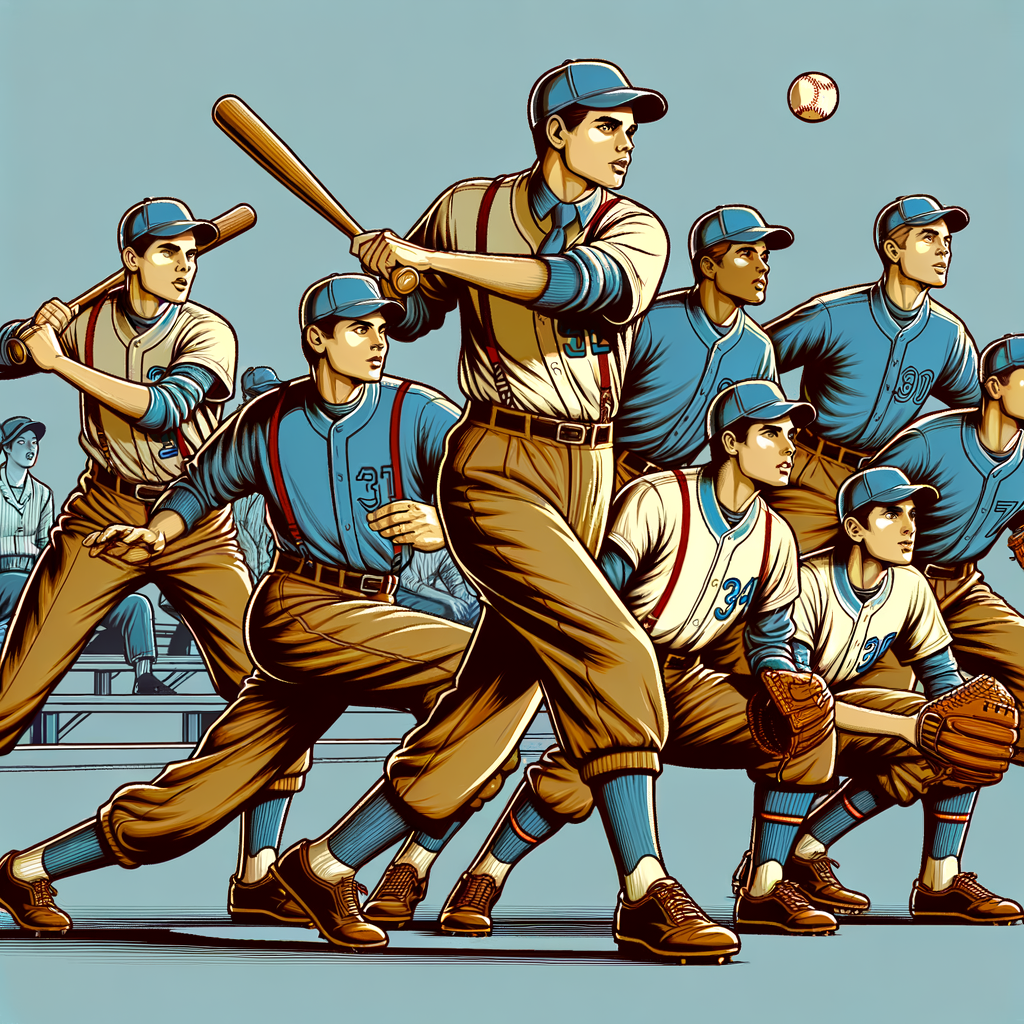
The tale of the 1966 Baltimore Orioles is a story of unexpected triumph and the kind of ascendancy that can only occur when raw talent, strategic leadership, and sheer determination converge on the same field. This particular season is etched in the annals of Major League Baseball (MLB) history as one where the Orioles, a young and relatively unrecognized team, soared above their perceived capabilities to claim not only the American League pennant but also their first World Series title. With players who would soon become household names and a series of games that captivated a nation, the 1966 Orioles demonstrated a blend of chemistry and potential that forever changed the franchise’s trajectory. As we delve into the attributes that made this team unique, it is essential to understand both the societal and competitive landscape of Major League Baseball at the time and how a team considered underdogs broke through the barriers to leave a permanent legacy.
During the mid-1960s, Major League Baseball was experiencing a shift in both style and perception. The golden age of the Yankees had come to an end, and other teams were beginning to rise to prominence, although none had yet claimed dominance. This transitional phase allowed emerging teams such as the Orioles the opportunity to pave their path. Furthermore, the decade represented a time of great cultural change in America, and baseball wasn’t immune to these shifts. Against this backdrop, the 1966 Orioles didn’t just win games; they embodied the spirit of what it meant to challenge norms, synergize diverse talents, and embrace modernity in the sport.
This article will explore the 1966 Baltimore Orioles’ journey from an underestimated squad to World Series champions. Through a comprehensive look at the team’s formation, strategies, key players, and the series events leading up to their historic victory, we will uncover how a fusion of youthful energy, calculated risks, and breakthrough moments carved out a legacy for the Orioles that not only redefined the franchise but also left an indelible mark on baseball history.
Formation and Strategy
The emergence of the Baltimore Orioles as champions in 1966 was no accidental feat. At its core, the team’s formative success was deeply rooted in the strategic vision laid out by their management and coaching staff. Under the guidance of Manager Hank Bauer, known for his military discipline and team-first approach, the Orioles began cultivating an environment where player development was emphasized alongside winning instincts. Bauer’s tactical emphasis was simple yet effective: using the young roster’s athleticism to play aggressive, smart baseball.
Off the field, the Orioles’ front office, led by General Manager Lee MacPhail, played an instrumental role in building the team. MacPhail focused heavily on scouting and player development, understanding that a solid farm system would be the foundation for lasting success. This approach led to the recruitment and nurturing of talented athletes who would become core members of the 1966 championship team.
The Orioles’ strategy capitalized on speed and defensive capabilities, complemented by a pitching rotation that matured rapidly. Their innovative approach disrupted opponents who had grown accustomed to more traditional play styles. The blend of these strategies allowed the Orioles to build momentum throughout the season and ultimately into the postseason, setting the stage for a transformative year.
Key Players and Determining Games
Among the driving forces behind the Orioles’ momentous season were players who would soon become legendary figures in the sport. Notable among them was Frank Robinson, acquired in a trade from the Cincinnati Reds in the off-season prior to 1966. Robinson brought not only sheer offensive prowess but also invaluable leadership to the team. His impact was immediate; Robinson not only led the league in home runs, runs batted in, and batting average, earning him the Triple Crown, but his presence instilled a competitive edge across the roster.
Alongside Robinson, teammates such as Brooks Robinson (no relation), a stalwart at third base and defensive marvel, and Jim Palmer, a young pitcher who came into his own during the 1966 season, bolstered the Orioles’ lineup. Palmer’s standout performance included a stint on the disabled list early in the season but saw him recover and deliver crucial wins as the competition intensified.
Pivotal games throughout the season acted as turning points, reinforcing the Orioles’ credibility as championship contenders. One of the most significant matches came against the Cleveland Indians in September, where Robinson’s grand slam solidified the Orioles’ position and forward momentum towards the playoffs. This game wasn’t just another win; it was a statement of intent that the team was ready to take on the best and defy expectations.
Simultaneously, the development of the Orioles’ pitchers, under the watchful eye of pitching coach Harry Brecheen, provided the defensive backbone necessary to withstand some of the league’s most aggressive hitters. Together, these players — young, driven, and somewhat overlooked by their competitors — formed the core strength that propelled the Orioles through a competitive season onto the grandest stage of the World Series.
The Spectacular World Series Run
The Orioles’ pathway to their historic triumph could be defined by the unprecedented events of the 1966 World Series. Facing the formidable Los Angeles Dodgers, who boasted a roster filled with accomplished veterans and future Hall of Famers, the Orioles were the clear underdogs. The Dodgers presented a significant challenge, having had a stellar regular season with a pitching staff featuring the likes of Sandy Koufax and Don Drysdale.
Yet, it was in the face of such adversity that the Orioles solidified their legacy. Their performance in Game 1 at Dodger Stadium served notice. Frank Robinson’s defying home run provided the fuel needed for the Orioles to assert themselves with a 5-2 victory. This set the tone for a series where they continually outperformed expectations.
Perhaps the most striking aspect of the 1966 World Series was the Orioles’ historic dominance through pitching and defense. Back-to-back games involved shutouts from the Orioles’ rotation. Jim Palmer, Dave McNally, and Wally Bunker delivered performances that showcased not just individual excellence but also a team synchronized in their objectives. These consecutive shutouts signified not only a series lead but also a dismantling of the Dodgers’ esteemed offensive lineup.
The standout Game 4 culminated in a 1-0 victory for the Orioles, sealing the series sweep and symbolizing the complete disruption of what seemed an insurmountable challenge against the Dodgers. It was a conclusive statement aligning with Baltimore’s entire season narrative — one of skill, belief, and the emergence of a new baseball powerhouse. Every Orioles player contributed decisively, and in that moment, they embodied the true essence of teamwork, lead by the capable and inspiring Frank Robinson, who was rightfully named the series’ Most Valuable Player.
Legacy and Impact
The implications of the 1966 Orioles’ triumph extended beyond the celebratory season. It altered the landscape within Major League Baseball, proving that strategic talent development and integration of young players could overcome teams with a historically dominant presence. This victory encouraged other franchises to revisit their paradigms in team-building, sowing seeds for future league-wide parity.
Furthermore, the 1966 championship paved the way for the Orioles’ success in the subsequent years, fostering an era in Baltimore where the team became regular contenders and claimed further titles in 1970 and the early 1980s. It also cemented the legacy of key players such as Frank Robinson and Brooks Robinson within the franchise and the broader baseball community. Their careers left a lasting influence, transforming the perspective on the cultural significance professional athletes could wield both on and off the field.
Off the field, the victory instilled a sense of pride in Baltimore, anchoring the Orioles as not just a sports entity but a symbol of the city’s resilience and potential. The community rallied around the team’s success, embracing the championships’ role in rekindling local spirit and bolstering the civic identity tied to their hometown sports franchise.
Conclusion
In encapsulating the story of the 1966 Orioles, one is left with an enduring testament to the power of ambition harnessed with youthful energy and a visionary approach. Their ascendancy in Major League Baseball history is marked by an unwavering belief in potential, cultivated by an environment that nourished talent while shrewdly adapting to and circumventing the competitive challenges faced.
The Orioles’ remarkable season serves as a case study in how integrating youthful potential with seasoned leadership can disrupt established norms, leading to both unexpected success and a longer-lasting impact. By clinching the World Series against overwhelming odds, the Orioles pioneered a new standard in baseball, signifying not only a literal victory on the field but also a poignant reminder that destiny, when guided by resilience and vision, favors the brave.
The 1966 Baltimore Orioles stand as a beacon in sports history — a testament to what can be achieved when individuals unite for a common purpose. Their triumph has transcended the epochs of baseball, offering inspiration and a blueprint to teams and organizations who dare to dream and pursue greatness beyond the threshold of limitations.
Frequently Asked Questions
1. What made the 1966 Orioles consider a young team, and who were the standout players?
In 1966, the Baltimore Orioles were widely recognized as a young team. This characterization was largely due to the presence of several rising stars who were still establishing themselves in the major leagues. Notably, Frank Robinson, who had just been acquired in a blockbuster trade with the Cincinnati Reds, emerged as a pivotal figure that season. His impact was immediate and transformative; Robinson brought a powerful combination of experience and talent, culminating in his earning the Triple Crown, leading the league in batting average (.316), home runs (49), and RBIs (122). Alongside Robinson, a young Jim Palmer began to make a name for himself on the mound, offering stability in the rotation with a talent that hinted at his future Hall of Fame potential. Boog Powell, with his impressive power hitting, also contributed significantly to the team’s success. The energy and promise of these players, among others, defined the Orioles as a team on the rise.
2. How did the Orioles’ management contribute to the team’s success in 1966?
Strategic leadership was crucial in the Orioles’ climb to success in 1966. At the helm was Manager Hank Bauer, whose ability to instill discipline and a winning mentality in a young roster was pivotal. Bauer, having been part of championship teams as a player with the New York Yankees, brought a wealth of experience and a clear vision for success. His management style encouraged players to focus on the fundamentals while fostering a team-first culture. Additionally, General Manager Harry Dalton played a significant role with his adept acquisitions, most notably the trade for Frank Robinson, which injected both momentum and confidence into the team. Dalton’s knack for assembling a lineup that blended youthful enthusiasm with seasoned expertise was instrumental in crafting a cohesive unit capable of surprising the baseball establishment.
3. What challenges did the Orioles face during their 1966 season, and how did they overcome them?
The Orioles faced several challenges in their 1966 campaign. As a relatively youthful team with sparse experience to draw from, the psychological challenge of enduring the season and maintaining consistency was significant. A defining moment that tested their resilience came mid-season when they needed to solidify their standing in the American League while competing against seasoned powerhouses like the New York Yankees and the Minnesota Twins. Their success in overcoming these challenges was a testament to the tenacity and adaptability of the young roster. The collective focus on their strengths, such as a potent batting lineup led by the batting dynamo Frank Robinson and robust pitching performances from Jim Palmer and Dave McNally, allowed them to maintain momentum and finish the season strongly, setting the stage for their triumph in the postseason.
4. How did the Orioles’ performance in the World Series exemplify their rise to prominence?
When the Orioles face-off against the Los Angeles Dodgers in the 1966 World Series, few could have predicted their dominance. The series was an unwavering showcase of the Orioles’ ascendant path, culminating in an emphatic four-game sweep. The young team’s performance was characterized by impeccable pitching; they shut out the Dodgers in the last three games of the series. Particularly noteworthy was the brilliance of Jim Palmer, who, at just 20 years old, became the youngest pitcher to throw a shutout in World Series history. Offensively, the Orioles were led by Frank Robinson, who exemplified leadership and clutch hitting, earning the World Series MVP Award. Their disciplined play and dynamic versatility on both ends of the field demonstrated not just skill but a maturity that belied their years, affirming their place in baseball history as a team whose potential had fully materialized.
5. What lasting impact did the 1966 season have on the Orioles and Major League Baseball?
The 1966 season left an indelible mark on both the Orioles franchise and Major League Baseball at large. For Baltimore, the triumph established the team as a legitimate contender and laid the groundwork for a golden era in the following decades, during which they would become known for their “Oriole Way,” a philosophy centered on meticulous fundamentals and team unity. This season also heralded the rise of several players who would become significant figures in baseball history, including Frank Robinson, whose leadership and performance redefined his legacy. For the broader landscape of MLB, the Orioles’ ascent was emblematic of a shifting paradigm; it signaled an era where young, homegrown players could surpass entrenched franchises, calling attention to the importance of strategic management and nurturing talent from within the organization. Their win in 1966 thus stood as an example for other teams aspiring to develop competitive strategies and foster young talent to achieve unexpected greatness.