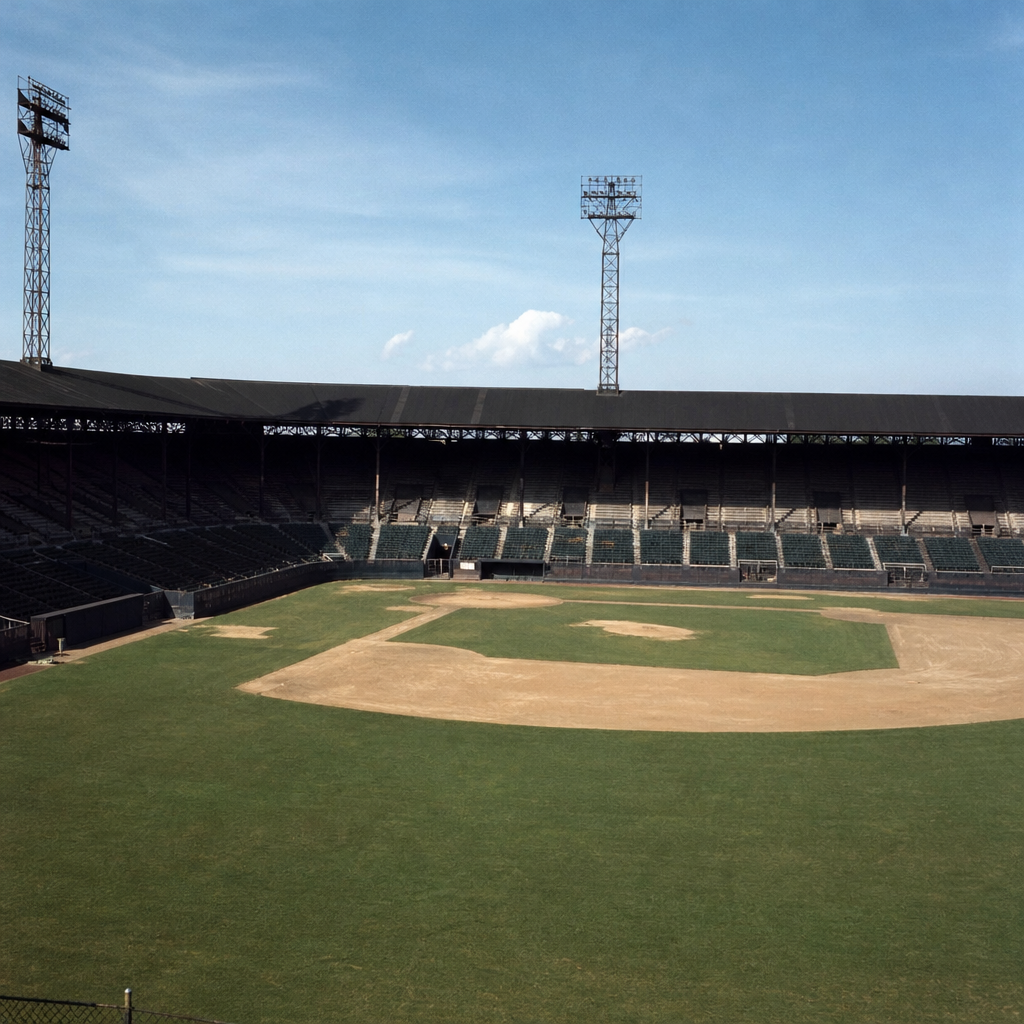
Robison Field was the St. Louis National League ballpark that bridged nineteenth-century baseball and the modern major league era, standing as the home of the Cardinals before Sportsman’s Park became the club’s defining address. In discussions of lost MLB ballparks, it deserves far more attention than it usually gets, because the site captures how teams, cities, ownership, stadium design, and fan culture evolved at a time when professional baseball was still stabilizing. The name itself can confuse casual readers: Robison Field referred to the former League Park in St. Louis after the Robison brothers, Frank and Stanley, acquired the club in 1899, and the park served as the Cardinals’ home until the team moved to Sportsman’s Park for the 1920 season. That makes it a key chapter in the history of St. Louis baseball and an essential starting point for understanding why so many early major league venues vanished, were renamed, rebuilt, or absorbed into larger urban change.
When I build out a serious lost ballparks research framework, I usually begin with places like Robison Field because they force you to look beyond nostalgia. Early ballparks were working pieces of city infrastructure. They were shaped by street grids, transit access, construction economics, fire risk, neighborhood pressure, and league politics as much as by the game itself. Robison Field matters for all of those reasons. It hosted the Cardinals through years of uneven performance, changing ownership expectations, and the dead-ball era, while also revealing the limits of older wooden parks as attendance demands and safety standards changed. It is also a practical hub point for the broader subject of lost MLB ballparks, since many of the same patterns seen here appeared in Washington Park in Brooklyn, South Side Park in Chicago, Huntington Avenue Grounds in Boston, and the Polo Grounds in New York in different forms.
To understand Robison Field, you need three core definitions. First, a lost MLB ballpark is a former major league venue that no longer exists in its original baseball function, whether demolished, replaced, or repurposed. Second, a pre-modern ballpark generally refers to a nineteenth- or early twentieth-century park built before the reinforced concrete stadium boom changed the sport’s architecture. Third, a hub article for iconic ballparks should do more than retell one site’s story; it should connect that story to the larger themes that explain why these places mattered and why they disappeared. Robison Field does all three jobs. It tells the local St. Louis story, anchors the Cardinals’ pre-Sportsman’s Park years, and illustrates the broader rise and fall of early major league grounds in America.
Robison Field’s origin and place in Cardinals history
Robison Field began life as League Park, a name used by more than one baseball venue in different cities, which is one reason the site is often overlooked in broad histories. In St. Louis, the park opened in the 1890s and became home to the National League club that would later be known permanently as the Cardinals. After Frank and Stanley Robison purchased the team from the bankrupt Cleveland Spiders ownership structure they controlled, the St. Louis club entered a new phase. The ballpark was renamed Robison Field in their honor, tying the venue directly to one of the most controversial ownership arrangements in baseball history. The Robisons shifted talent from Cleveland to St. Louis, helping doom the Spiders while attempting to strengthen the St. Louis franchise. That episode is not trivia; it shows how unstable major league operations could be at the turn of the century.
The Cardinals of the Robison Field era were not yet the polished national brand associated with Branch Rickey, the Gashouse Gang, or Stan Musial. They were a club searching for identity in a crowded sports and entertainment market. The ballpark therefore functioned as both home field and business asset. Owners needed a site that could draw paying fans, support scheduling, and keep pace with league competition. Robison Field served that role for two decades, but it did so in an age when baseball parks often changed through piecemeal renovations instead of complete master planning. Stands were expanded, sightlines adjusted, and capacity increased as needs changed. That adaptive quality is typical of lost MLB ballparks and helps explain why exact dimensions, seating figures, and architectural descriptions sometimes vary across historical sources.
What the ballpark looked like and how fans experienced it
Like many nineteenth-century and dead-ball era parks, Robison Field was primarily a wooden facility, and that material fact shaped everything from atmosphere to risk. Wooden grandstands were faster and cheaper to build than steel-and-concrete structures, but they were more vulnerable to weathering, fire, and structural wear. The park’s asymmetrical footprint reflected the realities of urban land use rather than abstract design ideals. Corners, fences, stand angles, and foul territory often followed the block pattern and neighboring properties. Fans in that era did not expect the standardized stadium geometry familiar today. They expected quirks, intimate proximity to the field, and occasional obstructed views in exchange for closeness and noise.
The game-day experience at Robison Field would have felt immediate and rough-edged by modern standards. Seating was less comfortable, amenities were minimal, and crowd movement could be crowded or chaotic. Yet the intimacy was real. Spectators were near the action, and the environment amplified every disputed call, bunt, stolen-base attempt, and outfield chase. In the dead-ball era, when scoring was lower and strategy revolved around bunting, hit-and-run plays, base stealing, and defensive execution, that intimacy mattered. Fans could feel the tension of each baserunner in a way that large later stadiums sometimes diluted. This is one reason early ballparks remain so compelling in baseball history: they were not just containers for games, but sensory machines that shaped how the sport was watched.
| Ballpark | City | Primary era | Typical construction style | Why it mattered |
|---|---|---|---|---|
| Robison Field | St. Louis | 1890s-1919 | Wooden park with incremental expansions | Cardinals home before Sportsman’s Park; key transitional venue |
| South Side Park | Chicago | 1900s-1910 | Wood and steel mix | Early White Sox home during formative American League years |
| Huntington Avenue Grounds | Boston | 1901-1911 | Wooden grandstand complex | Red Sox home before Fenway Park |
| Washington Park | Brooklyn | 1898-1912 | Urban wooden ballpark | Dodgers predecessor site before Ebbets Field |
| Polo Grounds | New York | multiple versions | Evolving park forms | Shows how rebuilding and reinvention defined early venues |
Why Robison Field was replaced by Sportsman’s Park
Robison Field was replaced for reasons that were practical, financial, and competitive. The simplest answer is that early wooden ballparks aged poorly and eventually could not match the revenue potential, durability, or public expectations associated with more substantial venues. By the late 1910s, baseball was moving toward larger, safer, more commercially efficient parks. Steel and concrete construction offered better fire resistance and a stronger platform for higher capacities. Clubs also wanted improved circulation, broader grandstands, and facilities that signaled permanence. Robison Field, for all its history, belonged to an older generation of baseball real estate.
The Cardinals’ move to Sportsman’s Park before the 1920 season reflected a broader pattern in lost MLB ballparks. Teams left older grounds not because history was unimportant, but because baseball economics changed. Better parks could support bigger crowds, better sightlines, and stronger prestige. Sportsman’s Park already had a deeper baseball history in St. Louis and provided the Cardinals with a more viable long-term home after arrangements were made with the American League Browns. This kind of shared occupancy was not unusual in an era when urban land was valuable and stadium construction required major capital. In practical terms, moving to Sportsman’s Park allowed the Cardinals to leave behind a field whose infrastructure no longer aligned with the direction of the major leagues.
There is also a symbolic reason the transition matters. Robison Field belonged to the old National League world of unstable ownership, wooden architecture, and local improvisation. Sportsman’s Park pointed toward the more corporate, systematized, and nationally marketable major league game that developed in the 1920s and 1930s. If you want to understand why lost ballparks disappear from public memory, this is one of the biggest reasons: replacement venues often become the stage for championships and legends, pushing earlier grounds into footnotes. For the Cardinals, Sportsman’s Park and later Busch Stadium occupied that spotlight, while Robison Field receded into specialist history.
Robison Field in the wider story of lost MLB ballparks
As a hub for lost MLB ballparks, Robison Field helps explain the main forces that erased many early venues. The first force was construction technology. Wooden parks were common because they were economical, but they were temporary by nature. Fires destroyed many parks outright, and even those that avoided disaster faced relentless maintenance problems. The second force was urban growth. As cities expanded, neighborhoods around stadiums changed in value and density, making older sites less suitable or less profitable. The third force was league modernization. Once one club opened a more advanced park, rivals felt pressure to keep up in seating, comfort, and image.
Real-world comparisons make this clearer. Huntington Avenue Grounds in Boston gave way to Fenway Park because the Red Sox needed a more durable and distinctive venue. Washington Park in Brooklyn was replaced by Ebbets Field as the Dodgers sought a modern home with better commercial potential. South Side Park disappeared as the White Sox transitioned to Comiskey Park, a stronger symbol of major league ambition. In each case, the older park was important, beloved by some fans, and entirely inadequate for the next stage of the sport. Robison Field fits that pattern almost perfectly. It was not uniquely flawed; it was historically timed to become obsolete.
This is why collectors, historians, and serious baseball travelers treat lost ballparks as more than demolished structures. They are evidence of baseball’s adaptation to American urban life. Studying them reveals how clubs balanced land costs, transit lines, neighborhood politics, and fan demand. It also clarifies why some franchises built identity around a place while others repeatedly relocated within the same city. Robison Field stands near the center of that conversation because it links one of baseball’s oldest franchises to the physical realities of the sport before the modern stadium age fully arrived.
How to research Robison Field and other vanished ballparks today
The best way to research Robison Field is to combine team history, city records, period newspapers, and specialized ballpark scholarship. Newspaper archives are especially useful because they preserve opening-day descriptions, renovation notices, attendance comments, transit directions, and neighborhood references that later summaries often omit. Sanborn fire insurance maps can help reconstruct the park’s footprint and surrounding blocks. Historic aerials, where available, and local land records add context about how the site changed after baseball left. I have found that relying on one source alone usually produces repeated errors, especially with early parks that changed names or configurations over time.
For readers exploring the wider lost ballparks category, a sensible path is to group parks by transition type. Some were replaced by landmark successors, such as Robison Field to Sportsman’s Park or Huntington Avenue Grounds to Fenway Park. Others were rebuilt after disasters. Others vanished because teams moved or leagues collapsed. This hub article should send you into those subtopics with a framework, not just a list of names. Ask four questions each time: What did the park replace? Why was it built that way? Why did it stop working? What ballpark, if any, took its place in public memory? Those questions consistently produce better baseball history than simple nostalgia does.
Robison Field deserves recognition as one of the most important lost MLB ballparks because it preserves the missing middle of Cardinals history: the years between baseball’s rough nineteenth-century roots and the franchise’s emergence on a larger national stage. It was not the Cardinals’ most famous home, nor their grandest, but it was the park that carried the club through a formative period when the business and architecture of the major leagues were changing fast. Its story explains why early ballparks were intimate, irregular, and vulnerable, and why so many of them disappeared once teams demanded stronger materials, larger capacities, and more stable revenue. For St. Louis, Robison Field is the essential predecessor to Sportsman’s Park. For baseball history, it is a textbook example of how a once-central venue can fade from popular memory while remaining crucial to the sport’s development.
If you are building knowledge around iconic ballparks, use Robison Field as your entry point into the broader world of vanished major league parks. Study the ownership history, compare the architecture, trace the move to successor stadiums, and look at how city growth reshaped each site. That approach turns lost ballparks from a sentimental side topic into a powerful way to understand baseball itself. Continue through the rest of the lost ballparks coverage with that lens, and the full map of premodern major league history becomes much clearer.
Frequently Asked Questions
What was Robison Field, and why is it important in St. Louis baseball history?
Robison Field was the home ballpark of St. Louis’s National League club during a critical transition period in baseball history, making it an essential chapter in the story of the Cardinals before Sportsman’s Park became the franchise’s better-known long-term address. Its importance comes from timing as much as from architecture. The park stood at a moment when professional baseball was moving out of its looser nineteenth-century roots and into a more structured, commercially organized modern major league era. That means Robison Field was more than just a venue where games happened; it was a physical setting where the sport’s identity was changing in real time.
For St. Louis, the ballpark represents a bridge between earlier baseball traditions and the more recognizable major league culture that fans associate with the twentieth century. Ownership structures were evolving, leagues were becoming more stable, urban fan bases were growing, and clubs were beginning to think more seriously about how ballparks functioned as business assets as well as sporting spaces. Robison Field helps historians and fans see that process clearly. It reminds us that the Cardinals did not simply emerge fully formed in a famous stadium with a polished brand. Like many franchises, they passed through an experimental phase in which venue, identity, and public image were all still taking shape.
That is why Robison Field deserves more attention in conversations about lost MLB ballparks. It is easy for older parks to be overshadowed by larger, more famous successors, but Robison Field captures a period when baseball was still defining what a major league club looked like, how a city supported it, and how a ballpark fit into neighborhood life. In that sense, its historical value is not just local. It speaks to the broader development of professional baseball in America.
Was Robison Field the same as Sportsman’s Park, or are they different ballparks?
They were different ballparks, and that distinction matters because the names can create confusion for readers exploring early St. Louis baseball history. Robison Field was the earlier home of the St. Louis National League club, while Sportsman’s Park became the more enduring and iconic address later associated with the Cardinals. Because both names appear in the same franchise history and both are tied to St. Louis baseball before the modern stadium age, it is easy to blur them together, especially if someone is reading quickly or encountering the topic for the first time.
Robison Field belongs to an earlier phase of the franchise’s development. It reflects a time when teams often occupied ballparks that were less permanent in image and less monumental in reputation than the classic stadiums that followed. Sportsman’s Park, by contrast, became a defining location in Cardinals history and eventually occupied a much larger place in baseball memory. That later prominence tends to push Robison Field into the background, even though the earlier park was essential in carrying the club from one historical era into another.
Understanding the difference also helps clarify how baseball franchises often evolve through multiple homes before settling into the stadiums that become most famous. A club’s identity is not tied to one building from the very beginning. In St. Louis, Robison Field was part of the franchise’s formative years, while Sportsman’s Park came to symbolize a more mature and widely recognized chapter. So when historians refer to Robison Field, they are not using an alternate name for Sportsman’s Park. They are pointing to a separate and meaningful ballpark that came before it.
Why does Robison Field matter in the history of lost MLB ballparks?
Robison Field matters because it represents a kind of lost ballpark history that can be easy to overlook: not the giant, legendary stadium at the center of baseball mythology, but the transitional park that reveals how the major leagues actually became modern institutions. In discussions of vanished MLB venues, attention often goes to parks linked to dynasties, famous pennants, or architectural grandeur. Robison Field is valuable for a different reason. It shows what professional baseball looked like when leagues, teams, and cities were still negotiating what big-league baseball would become.
That makes it especially useful to historians. A park like Robison Field tells us about more than field dimensions or seating arrangements. It opens a window into early urban sports culture, the business strategies of ownership, and the expectations of fans at a time when baseball was becoming a mass spectator enterprise. Ballparks of that era were often deeply connected to neighborhood patterns, transit habits, and the realities of city growth. They were not merely neutral containers for games. They shaped how fans experienced baseball and how teams presented themselves to the public.
Robison Field also deserves notice because it helps correct a common tendency in baseball history to focus only on endpoints. Sportsman’s Park is remembered; Robison Field is the path that led there. If you want to understand how the Cardinals’ home environment changed, how St. Louis developed as a major league city, and how baseball moved from improvisational nineteenth-century habits toward a more standardized modern form, Robison Field is indispensable. Its disappearance from the physical landscape should not mean disappearance from the historical conversation.
What does Robison Field reveal about the evolution of baseball stadium design and fan culture?
Robison Field reveals a great deal about a period when ballparks were still evolving from relatively simple nineteenth-century grounds into more organized major league venues built to handle larger crowds and more demanding commercial expectations. Even without treating it as a singular architectural masterpiece, the park illustrates how baseball spaces were adapting to a growing sport. Owners were thinking more deliberately about capacity, sightlines, admissions, crowd flow, and the overall presentation of the game. In other words, parks like Robison Field were part of the experimentation that eventually led to the classic stadium forms people recognize from the twentieth century.
Just as important is what the ballpark suggests about fan culture. During this period, attending a baseball game was becoming a more structured and communal urban activity. Fans were no longer participating in a pastime that felt semi-local and loosely organized; they were increasingly engaging with a major league product tied to civic pride, newspaper coverage, league standings, and repeat attendance. A ballpark like Robison Field sat at the center of that change. It was a place where spectatorship itself was being standardized, where crowd habits and team loyalty were deepening, and where the relationship between club and city was becoming more visible.
That combination of design change and cultural change is what makes Robison Field historically rich. It stands for an era when stadiums were becoming more intentional and fans were becoming more central to the business and identity of the game. The park may not dominate popular memory today, but it helps explain how baseball moved toward the stadium culture and fan experience that later generations would take for granted.
Why is Robison Field less famous than Sportsman’s Park, even though it was so important?
Robison Field is less famous largely because baseball memory tends to favor longevity, championships, iconic imagery, and later eras that were better documented through photography, journalism, broadcasting, and nostalgia. Sportsman’s Park became more deeply embedded in the Cardinals’ public identity, so it naturally occupies more space in the historical imagination. When one stadium becomes the setting for a larger share of a franchise’s defining moments, the earlier home often gets reduced to a footnote, even if it played a crucial role in making those later years possible.
There is also a broader pattern at work in how lost ballparks are remembered. Fans and writers often gravitate toward venues that feel monumental or mythic. Transitional parks like Robison Field can be harder to celebrate because their significance is more interpretive than symbolic. They matter not only because of one famous event, but because they illuminate change over time: changes in ownership, league stability, urban growth, architecture, and fan behavior. That kind of importance is extremely real, but it does not always translate into instant name recognition.
In Robison Field’s case, the confusion created by naming and chronology can add to the problem. Readers may conflate it with later St. Louis ballparks or simply skip over it while focusing on Sportsman’s Park. Yet that is precisely why it deserves renewed attention. If you want a fuller, more accurate picture of Cardinals history and of baseball’s development in St. Louis, Robison Field cannot be treated as a minor prelude. It was the stage on which the franchise navigated one of the most formative transitions in its history.