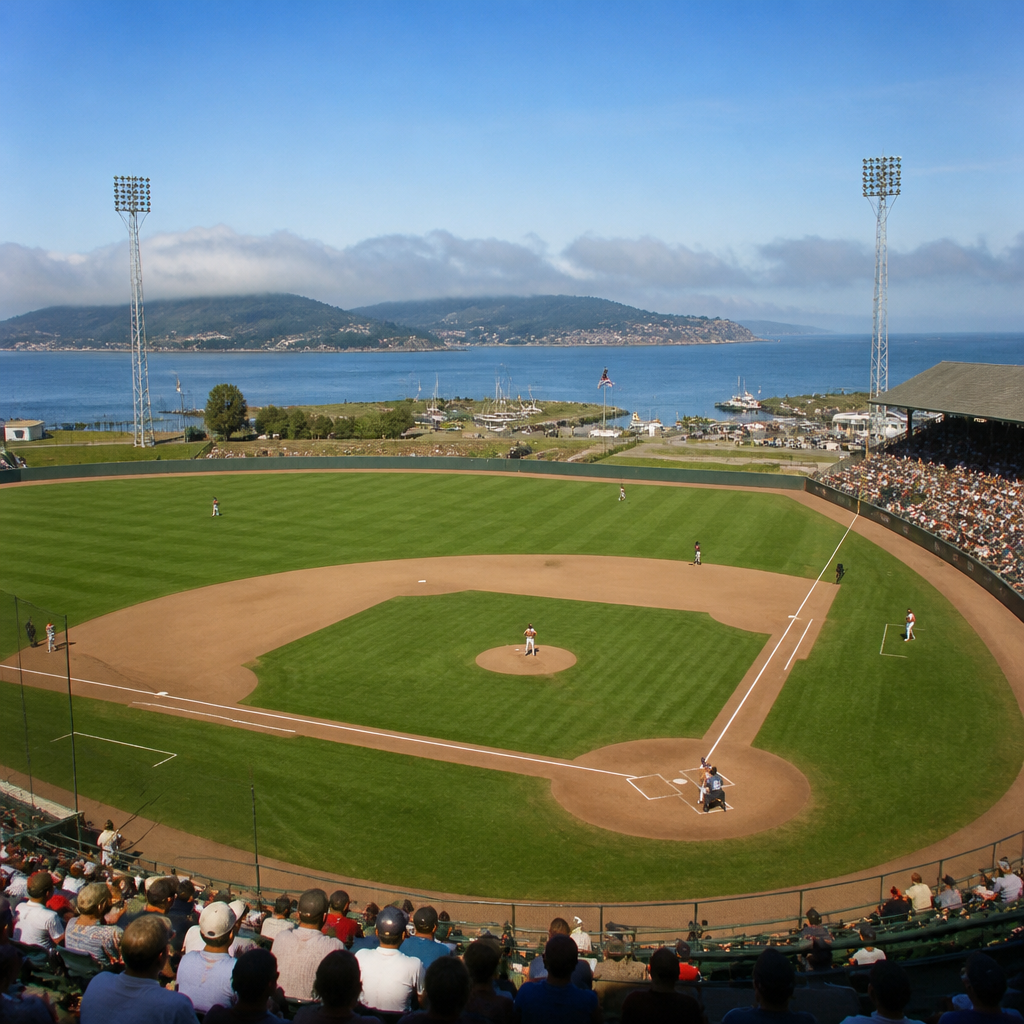
Seals Stadium occupies a unique place in baseball history because it was both a beloved Pacific Coast League park and, for two transitional seasons, the first San Francisco home of the Giants. For anyone exploring lost MLB ballparks, it is an ideal starting point: a venue built for one level of baseball, adapted in haste for another, and remembered today as a bridge between eras, leagues, and cities. Understanding Seals Stadium helps explain how franchises relocate, how temporary homes shape fan identity, and why some demolished parks remain central to the story of the sport.
In practical terms, Seals Stadium was the longtime home of the San Francisco Seals of the Pacific Coast League, one of the most prestigious minor leagues in North American baseball before westward major league expansion. When the New York Giants moved to San Francisco in 1958, Candlestick Park was not yet ready. The club therefore played the 1958 and 1959 seasons at Seals Stadium, making the ballpark a rare example of a minor league facility that briefly hosted Major League Baseball at a formative moment. That short tenancy connected the old PCL world to the modern National League footprint on the West Coast.
This matters beyond nostalgia. Lost MLB ballparks are not simply vanished structures; they are case studies in urban growth, stadium economics, architecture, transportation, weather, and fan culture. Seals Stadium in particular shows how a city with deep baseball roots prepared for the majors before a purpose-built park existed. It also offers a useful hub for the wider topic of lost MLB ballparks because its story overlaps with relocation history, temporary venues, and the way memory outlasts demolition. I have found that when readers begin with Seals Stadium, they better understand why some parks vanish physically yet become more important historically.
What Seals Stadium Was and Why It Fit the Giants, Temporarily
Seals Stadium opened in 1931 at 16th and Bryant in San Francisco and immediately reflected the stature of West Coast baseball before MLB arrived. The Pacific Coast League was not a casual feeder operation. For decades it offered a high standard of play, lengthy seasons, and strong urban followings in cities such as San Francisco, Los Angeles, Oakland, Seattle, and Portland. The San Francisco Seals were one of its flagship franchises, and their park was designed to serve a serious baseball audience with a substantial grandstand, intimate sightlines, and a downtown-adjacent location accessible by city transit.
When the Giants arrived from New York for the 1958 season, Seals Stadium was not ideal by major league standards, but it was workable in a way many temporary homes are not. It was a baseball-only facility, which meant fans were not staring across a football field or track. The dimensions were credible, the atmosphere was close, and the site already had a baseball habit embedded in the neighborhood. The club expanded capacity to roughly 23,000 through temporary seating and practical modifications. By modern standards that figure sounds small, but for a stopgap solution it was serviceable, especially given the urgency of relocating a major league schedule to a new market.
The most important point is that Seals Stadium gave San Francisco continuity. Instead of asking fans to wait for an unfinished future, it offered immediate major league baseball in a familiar local setting. That continuity often determines whether a relocated franchise feels imported or adopted. In 1958, the Giants did not arrive as an abstraction. They played in a real neighborhood park where baseball already mattered.
The 1958 Transition Season and the First San Francisco Giants Game
The symbolic power of Seals Stadium is inseparable from Opening Day 1958. On April 15, the Giants played their first regular-season game in San Francisco, defeating the Los Angeles Dodgers 8-0 before a packed crowd. That single event did several things at once. It inaugurated National League baseball on the West Coast, intensified the Giants-Dodgers rivalry in a new geographic setting, and validated San Francisco as more than a speculative expansion market. The city was not auditioning for baseball. It was presenting itself as ready.
From a historical standpoint, that first game is one of the key moments in the story of lost MLB ballparks because it happened in a stadium never intended to become a major league landmark. Seals Stadium’s brief role demonstrates that significance does not always correlate with longevity. Some parks host thousands of games and leave a modest historical footprint. Others host only two major league seasons and become essential because of timing. Seals Stadium belongs firmly in the second category.
I always return to the practical challenge the Giants faced in those first months. They were moving an established franchise across the continent, reshaping travel patterns, courting a new fan base, and operating in a temporary park under intense scrutiny. If the experience had felt second rate, the move might have seemed premature. Instead, the intimacy of Seals Stadium often worked in the Giants’ favor. Fans were close to the field, noise carried well, and the park conveyed energy on opening dates and rivalry games. That gave the franchise a stronger local foothold before Candlestick Park opened in 1960.
How Seals Stadium Compared With Other Lost MLB Ballparks
Seals Stadium serves as a useful hub article because it connects to several categories within lost MLB ballparks. Some vanished parks were iconic long-term homes, such as Ebbets Field in Brooklyn or the Polo Grounds in upper Manhattan. Others were transitional or temporary, such as the Los Angeles Memorial Coliseum for the Dodgers before Dodger Stadium. Seals Stadium belongs to the transitional class, but with a distinct twist: unlike the Coliseum, it was already a purpose-built baseball venue with deep local roots.
That difference matters. Many temporary parks feel borrowed. Seals Stadium felt inherited. It had hosted notable PCL baseball for decades, including stars who moved through the Seals organization such as Joe DiMaggio, whose early development remains one of the franchise’s proudest historical threads. So when the Giants used the ballpark, they were stepping into an established baseball culture rather than manufacturing one from scratch. This is why Seals Stadium often resonates more warmly in memory than some other stopgap homes.
For readers building a broader understanding of lost MLB ballparks, it helps to classify them by role: foundational urban parks, suburban replacements, multipurpose casualties, and transitional venues. Seals Stadium illustrates the transitional model at its best. It was not architecturally revolutionary, and it was not built to anchor a half-century of major league attendance. Its importance came from absorbing pressure during a major geographic shift in the sport.
Architecture, Location, and the Fan Experience
Architecturally, Seals Stadium reflected the practical, steel-and-concrete ballpark tradition of the early twentieth century, though in a later and more streamlined form than the oldest jewel-box parks. It was compact rather than monumental. The neighborhood setting at 16th and Bryant gave it an urban texture that many later stadiums lost. Fans approached through city streets, not vast rings of parking. That changed the rhythm of attendance. The game felt tied to the everyday life of San Francisco rather than isolated from it.
Because the Giants used Seals Stadium only briefly, discussions of the park sometimes skip over what spectators actually experienced. The charm was intimacy. Sightlines were generally good, and the smaller scale concentrated crowd sound. Temporary seating and major league demand certainly strained the building, but the setting offered a closer, more immediate style of watching baseball than fans later found at Candlestick Park, whose winds and harsher environment became infamous. In that sense, Seals Stadium gave the Giants an appealing first impression even if it could never be a permanent solution.
| Feature | Seals Stadium | Candlestick Park | Historical Significance |
|---|---|---|---|
| Primary role | Pacific Coast League home, temporary MLB park | Purpose-built long-term MLB home | Shows the bridge from regional to major league baseball |
| Location type | Urban neighborhood site | Large edge-of-city site | Highlights changing stadium planning priorities |
| Capacity profile | Roughly 23,000 after expansion | Much larger major league scale | Reveals the temporary nature of the Giants’ first home |
| Fan experience | Intimate, close to field | Expansive, often windy and colder | Explains why Seals Stadium remains fondly remembered |
| Legacy | Two MLB seasons, lasting symbolic impact | Decades of franchise history | Demonstrates that short use can still shape identity |
Why Seals Stadium Is Central to the Lost MLB Ballparks Conversation
The phrase lost MLB ballparks usually brings to mind famous demolitions, but Seals Stadium broadens the category in productive ways. A lost ballpark can matter because it framed a pivotal relocation, because it preserved local baseball continuity, or because it hosted a moment that changed the national map of the game. Seals Stadium did all three. It is central not because the Giants stayed long, but because the park absorbed the shock of transformation.
This is also why Seals Stadium works as a sub-pillar hub within the wider Iconic Ballparks topic. It naturally points readers toward related articles on Ebbets Field, the Polo Grounds, the Los Angeles Memorial Coliseum, old Comiskey Park, Crosley Field, Forbes Field, and other vanished venues. Each represents a different reason a ballpark becomes historically durable after demolition. Seals Stadium’s branch of that family tree is westward transition. If Ebbets Field tells the story of what Brooklyn lost, Seals Stadium tells the story of how San Francisco gained.
Another reason the park deserves attention is that its memory is often overshadowed by the larger narratives around New York’s losses and Candlestick’s later reputation. Yet if you examine the actual mechanics of the Giants’ move, Seals Stadium was indispensable. Without it, the franchise either delays relocation, improvises in a less suitable venue, or opens in a city not yet prepared to host the club. The stadium was not incidental. It was the hinge.
Demolition, Legacy, and What the Site Represents Today
Seals Stadium closed as a major league venue after the 1959 season when the Giants moved into Candlestick Park in 1960. The old park was demolished not long after, a common fate for midcentury urban stadiums that no longer fit changing economics or land priorities. Like many lost MLB ballparks, its physical disappearance can make its importance seem abstract to later generations. That is exactly why documenting it carefully matters.
The site today does not reproduce the old experience, but the historical footprint remains meaningful. In preservation work, memory often survives through markers, photographs, newspaper archives, ticket stubs, oral histories, and city maps more than through architecture. Seals Stadium is a textbook example. You cannot walk into the grandstand anymore, yet the park still exists as a reference point whenever historians explain how Major League Baseball established itself in Northern California.
The clearest takeaway is simple. Seals Stadium was brief, but it was not minor in consequence. It connected the Pacific Coast League’s rich pre-MLB culture to the arrival of the Giants, delivered the first major league baseball played in San Francisco, and now stands as one of the most revealing entries in any survey of lost MLB ballparks. If you are building out this subtopic, start here, then follow the links to other vanished parks and compare what each one says about baseball, cities, and change.
Frequently Asked Questions
What was Seals Stadium, and why is it important in baseball history?
Seals Stadium was a San Francisco ballpark best known first as the home of the San Francisco Seals of the Pacific Coast League and later as the Giants’ temporary home after the franchise relocated from New York. Its historical importance comes from that unusual double identity. Before the Giants arrived, it was already a respected and familiar West Coast baseball venue tied to the long and rich tradition of the PCL, which for decades was one of the most significant minor leagues in the country and, in some eras, close to major league stature in public attention and quality of play.
What makes Seals Stadium especially notable is that it became a literal bridge between baseball worlds. It was not built as a permanent Major League Baseball park, yet it suddenly had to serve that purpose when the Giants moved to San Francisco in 1958. For two seasons, 1958 and 1959, Seals Stadium gave the Giants a place to play while the city prepared for the construction of Candlestick Park. That made it the setting for the beginning of National League baseball in San Francisco and a key site in the broader westward expansion of Major League Baseball.
In that sense, Seals Stadium represents more than a building. It helps explain how baseball relocations actually work in practice. Franchises do not always move directly from one purpose-built stadium to another. Sometimes they land in temporary, imperfect, highly symbolic spaces that help fans, owners, and cities adjust to a new reality. Seals Stadium was exactly that kind of place: a transitional park that connected local baseball tradition with a new major league future.
Why did the Giants play at Seals Stadium instead of moving directly into a permanent major league ballpark?
The Giants played at Seals Stadium because it was the most practical immediate option when the franchise relocated from New York to San Francisco. When a team changes cities, the move often happens faster than the construction of a new stadium. That was the case here. The Giants needed a functioning home field right away for the 1958 season, but San Francisco did not yet have a newly built major league facility ready for them. Seals Stadium, already an established professional baseball venue, could be adapted quickly enough to fill that gap.
This kind of arrangement is common in the history of sports relocations and expansions. A team may have long-term plans for a modern, permanent stadium, but those plans involve financing, design, politics, construction schedules, and infrastructure work that take time. In the meantime, a temporary ballpark allows the club to begin operating in its new market, build a fan base, and establish a local identity. For the Giants, Seals Stadium served that exact purpose. It gave San Francisco an immediate major league presence rather than forcing the franchise to delay its move.
The choice also carried symbolic value. Because Seals Stadium had deep local baseball roots, the Giants did not arrive in a generic or borrowed space disconnected from the city’s sporting culture. Instead, they entered San Francisco through a park already meaningful to local fans. That made the transition feel more organic. Even if the stadium was not ideal by major league standards, it helped the Giants become part of San Francisco’s baseball story from day one.
How well did Seals Stadium work as a major league venue for the Giants?
Seals Stadium worked well enough to host major league baseball, but it was always understood to be a temporary solution rather than a perfect fit. The park had been designed for Pacific Coast League baseball, not for the long-term demands of a National League franchise. As a result, the Giants and the city had to adapt the stadium in haste to handle larger crowds, bigger media attention, and the operational needs that came with major league games.
That said, “temporary” did not mean unimportant or insignificant. Seals Stadium successfully staged the Giants’ first home games in San Francisco and gave local fans their first chance to see National League baseball in person. It was intimate in a way many larger stadiums were not, and that likely contributed to the atmosphere during those early seasons. Fans were not simply watching another year of baseball; they were witnessing the beginning of a new era for the city. The stadium’s imperfections were part of the experience.
From a historical perspective, the limitations of Seals Stadium are central to why it remains so interesting. It illustrates what happens when a ballpark built for one level of professional baseball is asked to serve another. Questions of seating, amenities, dimensions, and infrastructure become part of the story. Rather than being remembered as a failed venue, Seals Stadium is usually remembered as a capable stopgap that did exactly what it needed to do: welcome the Giants, anchor the transition, and hold the line until a permanent major league home was ready.
Why do historians and fans still talk about Seals Stadium when the Giants only played there for two seasons?
Seals Stadium remains a frequent topic among historians and baseball fans because its importance is far greater than the length of the Giants’ stay. Two seasons may sound brief, but those seasons marked the beginning of major league baseball in San Francisco. First chapters matter, especially when they involve franchise relocation, regional identity, and the reshaping of the sport’s geographic map. Seals Stadium was where the San Francisco version of the Giants officially began, and that alone secures its place in baseball memory.
It also endures because it existed at the intersection of multiple traditions. For longtime San Francisco baseball followers, it was already a beloved Pacific Coast League park before the Giants arrived. For Giants fans, it became the site of the team’s local debut. For students of ballpark history, it stands as an example of a “lost” venue that reveals how baseball evolved in the mid-20th century. It tells a story not just about one team, but about the relationship between minor league culture, major league expansion, and urban change.
There is also a strong emotional dimension to its legacy. Transitional venues often become deeply memorable because they capture uncertainty and possibility at the same time. At Seals Stadium, fans were seeing something both temporary and historic: a major league future taking shape inside a familiar older park. That contrast gives the stadium a lasting appeal. It is remembered not because it was the Giants’ longest home, but because it was the place where a new baseball city first announced itself.
What does Seals Stadium teach us about franchise relocation and temporary ballparks?
Seals Stadium is an excellent case study in how franchise relocation works beyond press releases and headline announcements. When a team changes cities, the move is not complete just because ownership approves it or a schedule is released. A franchise has to root itself in a new community, create habits for local fans, adapt to existing infrastructure, and often make do with temporary arrangements before a permanent home is available. Seals Stadium shows that these in-between stages are not side notes; they are essential parts of the relocation story.
One of the clearest lessons is that temporary ballparks can have lasting significance. They are often treated as placeholders, but in reality they shape first impressions, attendance patterns, media narratives, and the emotional bond between a team and a city. The Giants’ first San Francisco identity was formed at Seals Stadium, not at the later stadium built for longer-term use. That means the temporary home helped define the franchise’s public image in its new market.
Seals Stadium also demonstrates that continuity matters. By placing the Giants in a park already associated with local baseball, San Francisco did not begin its major league era from scratch. Instead, the city’s baseball culture carried forward from the Pacific Coast League into the National League. That continuity made the transition more meaningful and historically layered. For anyone interested in lost MLB ballparks, relocated franchises, or the growth of baseball on the West Coast, Seals Stadium offers a concise but powerful lesson: temporary homes can become permanent landmarks in the history of the game.