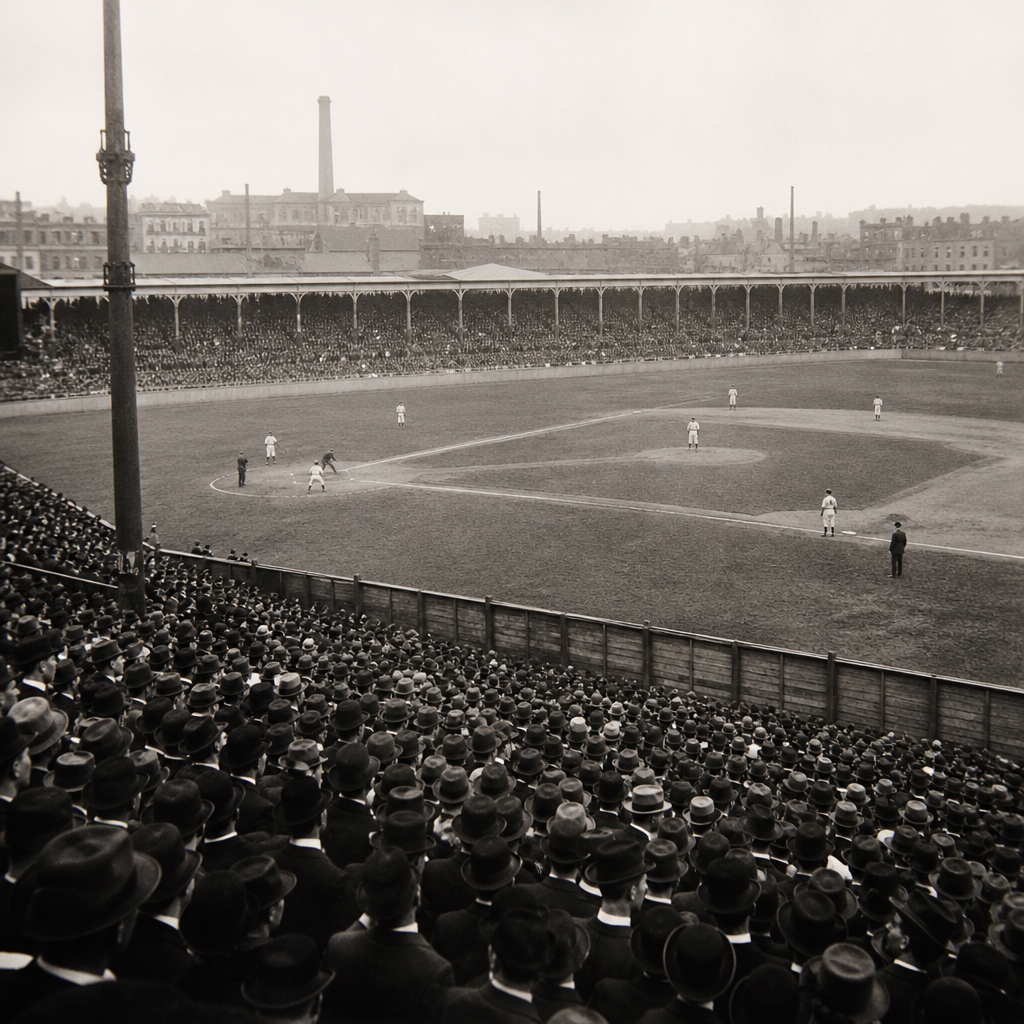
South End Grounds was the most important lost baseball park in nineteenth-century Boston, and understanding its story helps explain how professional baseball evolved from a rough urban pastime into a major league business. The name refers not to one static structure but to a sequence of ballparks used primarily by the National League Boston club, later known as the Beaneaters, in the South End during the 1870s through 1914. In practical terms, South End Grounds sits at the center of any serious discussion of lost MLB ballparks because it connects early league organization, wooden grandstand construction, urban transit, fire risk, fan culture, and the eventual shift to concrete stadiums. I have found that readers often know Fenway Park or the Polo Grounds, yet they rarely see how a predecessor like South End Grounds shaped the template those venues refined. As a hub within Iconic Ballparks, this article also frames the wider category of lost MLB ballparks: parks demolished, rebuilt, renamed, or erased by city growth, but still crucial to baseball history.
To define the subject clearly, a lost MLB ballpark is a former major league venue that no longer survives in its original form and no longer hosts major league baseball. Some disappeared through fire, redevelopment, or structural obsolescence. Others were replaced because teams needed larger seating bowls, better sightlines, safer materials, or more profitable locations. South End Grounds experienced several of those pressures at once. It served one of the National League’s flagship clubs at a time when the league was still stabilizing schedules, rules, travel patterns, and franchise identity. Because the park was rebuilt multiple times on or near the same site, it offers a clean case study in how nineteenth-century baseball parks functioned, failed, and adapted. That is why it matters beyond local nostalgia: the story reveals how professional baseball learned to survive in crowded American cities.
Why South End Grounds matters in the history of lost MLB ballparks
Among lost MLB ballparks, South End Grounds deserves attention because it hosted winning baseball and institutional change at the same time. The Boston National League club played there during a dominant era, winning multiple pennants in the late nineteenth century. Hall of Fame figures such as King Kelly, John Clarkson, Kid Nichols, Hugh Duffy, and Tommy McCarthy performed on its field. This was not a minor or transitional venue. It was home to one of the sport’s model franchises, and league leaders watched Boston closely when judging attendance, scheduling, ticketing, and crowd control. In my own research on historic parks, South End Grounds consistently appears in period newspapers not just as a location, but as a standard of comparison for how a first-class baseball enclosure should operate.
The park also matters because it illustrates a recurring pattern in baseball architecture before steel-and-concrete stadiums took hold. Early major league parks were often built of wood, enclosed by high fencing, fitted irregularly into city blocks, and vulnerable to weather, fire, and surrounding development. South End Grounds exemplified all of that. It was hemmed in by Boston streets, shaped by real estate constraints, and repeatedly altered to meet demand. The venue did not vanish because baseball failed there. It vanished because baseball outgrew the construction methods and urban assumptions on which it had been built. That makes it an ideal hub topic for readers exploring broader lost MLB ballparks such as the original Washington Park in Brooklyn, Philadelphia’s Columbia Park, or the first Sportsman’s Park in St. Louis.
The three South End Grounds and how the site evolved
When people speak of South End Grounds, they often compress several parks into one memory. In fact, historians usually identify three major iterations. South End Grounds I opened in 1871 for the Boston Red Stockings of the National Association, the professional circuit that preceded the fully established National League structure. It stood in the South End near the intersection of Walpole, Columbus, and other surrounding streets, on filled land in an expanding neighborhood. In 1876, when Boston joined the new National League, the club carried its home identity to this ground. That continuity matters because it ties the park directly to the earliest surviving major league framework, not merely to pre-major league baseball.
South End Grounds I burned in May 1887, one of several devastating ballpark fires in the wooden-park era. The club responded with remarkable speed, opening South End Grounds II within weeks on the same basic site. That rapid reconstruction tells you how financially important continuous operation had become. Teams could not simply skip months of games without severe revenue loss. Then, after another fire in 1894, Boston again rebuilt, creating South End Grounds III. The final version was larger and more ambitious, yet still rooted in the same nineteenth-century urban logic. By the time the Braves moved to the more modern Braves Field in 1915, South End Grounds had become historically rich but materially outdated, its life cycle mirroring the path many lost MLB ballparks followed.
| Version | Approximate use | Key event | Why it changed |
|---|---|---|---|
| South End Grounds I | 1871–1887 | Hosted early Boston championships | Destroyed by fire |
| South End Grounds II | 1887–1894 | Rapid rebuild kept club operating | Destroyed by fire |
| South End Grounds III | 1894–1914 | Served Beaneaters and later Braves era transition | Replaced by Braves Field |
Location, design, and the fan experience at a nineteenth-century Boston ballpark
South End Grounds was a product of its neighborhood. Unlike later suburban-style sports complexes, nineteenth-century parks were inserted into active city districts, close to housing, streetcar lines, commercial activity, and muddy streets. Boston’s South End in this period was filling and changing rapidly, and the ballpark’s exact geometry reflected the parcel more than abstract design symmetry. That meant unusual field dimensions, asymmetrical boundaries, and seating arrangements that modern fans would find improvised. Yet these quirks were normal across lost MLB ballparks of the era. Owners cared most about enclosing paying spectators, maintaining usable sightlines, and fitting a large entertainment business into expensive urban land.
The experience inside South End Grounds was intense, noisy, and physically close to the action. Contemporary accounts describe packed stands, boisterous partisan crowds, and a more direct relationship between players and spectators than exists in modern parks. Wooden grandstands amplified sound but also raised safety concerns. Exits, aisles, and structural supports were less standardized than they would become after twentieth-century engineering norms and stricter fire codes. The park’s high outfield walls and fences served practical functions: controlling admission, defining the playing space, and reducing free views from outside. In plain terms, South End Grounds felt less like a polished modern stadium and more like a robust urban theater for competitive sport, where the boundary between city life and the ballgame was thin.
Baseball history made at South End Grounds
A ballpark becomes iconic because of events, not just architecture, and South End Grounds hosted a remarkable concentration of important baseball. Boston’s National League club was one of the sport’s powerhouses there, especially in the 1870s, 1880s, and 1890s. The team won pennants in 1877, 1878, 1883, 1891, 1892, 1893, 1897, and 1898, with many of those campaigns tied directly to games played before South End crowds. Great pitchers such as Clarkson and Nichols worked in a baseball environment very different from the modern game: heavier workloads, different pitching distances over time, rougher fields, and looser equipment standards. South End Grounds therefore belongs in any serious history of how major league performance should be interpreted across eras.
The park also staged milestone moments tied to baseball’s competitive structure. During this period, pennant races could turn on long home stands, weather disruptions, makeup games, and gate receipts in ways that are easy to underestimate now. Boston’s attendance strength made South End Grounds strategically important for league finances. Newspapers treated big series there as civic events. The ballpark saw stars who helped define the game’s first celebrity culture, especially King Kelly, whose drawing power anticipated the modern sports superstar. For anyone studying lost MLB ballparks, this is a critical point: many vanished parks were not peripheral. They were the main stages on which the major leagues built their audience, rituals, and economic model.
How South End Grounds fits into the wider story of lost MLB ballparks
As the hub page for this subtopic, South End Grounds should be read alongside other lost MLB ballparks that illuminate the same themes from different cities. Brooklyn’s Washington Park shows how teams navigated dense urban parcels and changing transit access. The Polo Grounds demonstrates repeated rebuilding, relocation pressures, and the magnetic power of a strange field shape. Philadelphia’s Baker Bowl reveals how beloved parks could remain deeply flawed because ownership economics lagged behind fan demand. Cincinnati’s League Park and St. Louis’s early Sportsman’s Park show that replacement and reinvention were routine, not exceptional. South End Grounds belongs in this company because it combines success on the field with all the vulnerabilities of the wooden-ballpark era.
What links these lost MLB ballparks is not simply disappearance. It is the transition from temporary-looking wooden enclosures to engineered stadiums designed for scale, permanence, and improved crowd management. Fires were common because timber grandstands, smoking spectators, heating sources, and dense adjoining structures created constant risk. Urban growth also pushed clubs to seek larger footprints or more favorable lease terms. In Boston, that process eventually led to a divergence: the American League Red Sox settled at Fenway Park in 1912, while the National League club moved to Braves Field in 1915. South End Grounds thus sits at the hinge point between baseball’s formative urban past and its modern stadium age, making it one of the essential case studies in the lost ballparks canon.
Why the park disappeared and what remains today
South End Grounds disappeared for reasons that were structural, economic, and technological. By the early twentieth century, leading clubs wanted steel and concrete, wider concourses, more dependable seating inventories, and facilities that projected permanence. Wooden parks could still host games, but they carried maintenance costs and public-safety liabilities. They also limited revenue growth because expansions were constrained by lot lines and design weaknesses. South End Grounds III lasted until 1914, but the club’s future clearly lay elsewhere. Braves Field, with its vast footprint and more advanced construction, represented baseball’s answer to rising attendance expectations and changing standards for major league presentation.
Today the original park does not survive, and the area has been absorbed into Boston’s city fabric. That absence is typical of lost MLB ballparks, especially nineteenth-century sites built before preservation became a mainstream civic priority. What remains are maps, photographs, newspaper reports, Sanborn fire insurance plans, and the statistical record of games played there. For researchers, those sources are enough to reconstruct not only the ballpark’s outline but its role in daily urban life. For visitors, the lesson is broader: many foundational baseball places are invisible in the modern streetscape, yet their influence persists in team histories, league structures, and the vocabulary of stadium design. South End Grounds may be gone, but it still explains how baseball learned to build, rebuild, and endure.
South End Grounds stands as the essential Boston chapter in the history of lost MLB ballparks because it combines early major league continuity, championship baseball, repeated rebuilding, and eventual obsolescence. The park was home to one of the National League’s defining nineteenth-century franchises, and its three iterations show exactly how teams coped with fire, urban land limits, and rising fan demand. It also clarifies a larger truth: baseball’s most influential venues were not always the ones that survived. Many of the game’s operating habits, revenue practices, and crowd traditions were forged in parks that no longer exist. That is why South End Grounds deserves hub status within any serious Iconic Ballparks coverage.
If you want to understand lost MLB ballparks comprehensively, start here and then follow the connections outward to Brooklyn, New York, Philadelphia, St. Louis, and other vanished major league sites. South End Grounds provides the framework for reading them well: study the neighborhood, the construction materials, the team economics, the transit access, and the signature games. Do that, and these missing parks stop feeling like footnotes. They become central evidence in the story of how modern baseball was built. Use this page as your starting point for the Lost MLB Ballparks series, and you will see the surviving stadiums of today with sharper historical perspective.
Frequently Asked Questions
What was South End Grounds, and why is it so important in baseball history?
South End Grounds was the principal home of Boston’s National League club in the late nineteenth and early twentieth centuries, and it stands as one of the most significant lost ballparks in American sports history. Rather than referring to a single permanent stadium, the name describes a succession of ballparks in Boston’s South End that served the club through multiple eras of professional baseball. That distinction matters because the site evolved alongside the game itself. As baseball grew from a loosely organized urban pastime into a structured, commercial major league enterprise, South End Grounds became one of the clearest physical stages on which that transformation played out.
The park’s importance comes from both timing and influence. Boston was one of the key cities in early professional baseball, and its National League club—later widely known as the Beaneaters—was one of the sport’s foundational franchises. Many of the organizational habits, business practices, fan expectations, and competitive traditions that later defined major league baseball were visible there in developing form. South End Grounds was a place where owners, players, journalists, and spectators all helped shape the modern game. It hosted pennant races, stars of the nineteenth century, and some of the most important seasons in Boston baseball before the city’s center of gravity shifted to newer parks and newer teams.
It also matters because it represents what historians often lose when a ballpark disappears. Unlike surviving venues that can still be visited and interpreted directly, South End Grounds must be reconstructed through maps, photographs, newspapers, insurance records, and team history. That challenge makes it especially valuable to historians. Studying the park reveals not just where baseball was played, but how the sport fit into the city around it—its transportation links, neighborhood setting, crowd management, architecture, and commercial ambitions. In that sense, South End Grounds is central to understanding both nineteenth-century Boston and the broader rise of professional baseball in America.
Why is South End Grounds described as a sequence of ballparks rather than one single stadium?
South End Grounds is best understood as a series because the Boston club occupied multiple versions of a ballpark on or near the same general South End site over several decades. Fires, rebuilding campaigns, design changes, and the growing needs of professional baseball meant that the “same” park was repeatedly remade. This was common in nineteenth-century baseball, when wooden grandstands were vulnerable to damage, urban land use was changing rapidly, and clubs often had to adapt facilities to rising attendance and new business expectations.
Calling it a sequence of ballparks also helps avoid a misleading modern assumption that a famous sports venue must have had one stable, fixed identity. In the nineteenth century, that was rarely the case. Teams frequently altered dimensions, rebuilt stands, changed entrances, upgraded seating, or reconstructed the park after disaster. South End Grounds followed that pattern. Each version reflected a slightly different stage in the sport’s development, from relatively basic enclosed grounds to more substantial facilities intended to handle larger crowds and generate more revenue.
This matters historically because each iteration tells a different story. An early version of South End Grounds speaks to baseball’s experimental, entrepreneurial beginnings. Later versions reveal the increasing sophistication of the National League model: reserved seating, improved spectator accommodations, larger and more formal grandstands, and a stronger sense that baseball was becoming a dependable urban entertainment business. So when historians refer to South End Grounds, they are really talking about a continuing baseball place whose structures changed over time, even as its identity remained closely tied to Boston’s National League club.
Which team played at South End Grounds, and how does it connect to the Boston Beaneaters?
South End Grounds was primarily associated with Boston’s National League team, one of the league’s most important early franchises. Over time, that club was known by different names, as was common in nineteenth-century baseball, but it became especially famous under the nickname “Beaneaters.” That team is a direct ancestor of today’s Atlanta Braves, making South End Grounds part of the deep lineage of one of Major League Baseball’s oldest continuous franchises.
The Beaneaters connection is especially important because the club was one of the dominant forces of its era. Boston fielded many outstanding teams in the nineteenth century, and some of the game’s most influential players and managers passed through South End Grounds. The ballpark was therefore not just a local field but a major league stage for one of baseball’s flagship organizations. In an era when league stability could be fragile, Boston’s National League club helped define what a successful professional baseball operation looked like, and South End Grounds was where much of that success became visible to the public.
For readers tracing baseball history, the park offers a bridge between early professional ball and the modern major leagues. It connects the rougher, more improvisational culture of nineteenth-century baseball with the increasingly polished and commercial game of the early twentieth century. It also reminds people that Boston once had a National League baseball identity long before Fenway Park became the city’s most famous baseball address. In that sense, South End Grounds is essential for understanding not only the Beaneaters, but the larger story of franchise continuity, league evolution, and the shifting baseball map of Boston itself.
How did South End Grounds reflect the growth of professional baseball in nineteenth-century Boston?
South End Grounds reflected baseball’s growth by showing, in physical form, how quickly the sport was becoming more organized, more profitable, and more central to urban culture. Early professional baseball parks were often modest by later standards, but as attendance rose and competition for spectators intensified, clubs had strong incentives to improve their grounds. At South End Grounds, that meant larger stands, more structured seating arrangements, enclosed spaces that made admission easier to control, and a greater emphasis on spectator comfort and visibility. These were not just architectural changes; they were business decisions that reveal how baseball was becoming a serious commercial venture.
The park also reflected the relationship between baseball and the city. It was situated in a dense urban environment where transportation, neighborhood growth, and real estate pressures all mattered. Fans needed to be able to get to games, clubs needed to manage large crowds, and owners needed facilities that could generate consistent gate receipts. The fact that South End Grounds endured through multiple rebuildings shows how valuable the location and the franchise were. Baseball was no longer simply an informal recreation played on open land. It was becoming a ticketed event embedded in the rhythms of city life.
Equally important, South End Grounds illustrates the cultural legitimization of baseball. In its early decades, the sport could still be viewed as rowdy, unstable, or morally suspect by some observers. But by the time South End Grounds was flourishing, major league baseball had become a respectable and heavily reported public entertainment. Newspapers covered games extensively, pennant races drew passionate attention, and clubs cultivated loyal followings. The park stood at the intersection of that transition. It was a place where baseball’s rough edges had not entirely disappeared, but where the game was clearly moving toward the structured, spectator-centered, revenue-driven form that defines the major leagues today.
Why doesn’t South End Grounds survive today, and why do historians still care so much about it?
South End Grounds does not survive because nineteenth-century ballparks were often built in ways that made them vulnerable to time, disaster, and urban redevelopment. Wooden structures were especially susceptible to fire, weathering, and obsolescence. As cities changed and teams sought newer, larger, or more modern facilities, older parks were frequently demolished rather than preserved. Historic preservation standards for sports venues were also far less developed than they are now. At the time, a ballpark was usually treated as a functional commercial structure, not as a civic landmark that ought to be saved for future generations.
Historians still care deeply about South End Grounds because its disappearance makes it even more important as a subject of reconstruction. Lost ballparks often reveal more than surviving ones because researchers must piece together every available clue: period maps, aerial perspectives, team records, city atlases, photographs, newspaper descriptions, and firsthand accounts. Through that process, South End Grounds becomes a case study in how baseball fit into everyday urban life. It helps scholars understand crowd behavior, stadium economics, neighborhood geography, transportation patterns, and the physical experience of watching baseball in the nineteenth century.
There is also a larger symbolic reason for its importance. South End Grounds represents a foundational era that can be overshadowed by later, better-preserved baseball landmarks. Before iconic twentieth-century parks came to dominate public memory, places like South End Grounds were where the major league game learned how to function as a business and a spectacle. Remembering it restores that earlier chapter to its proper place. For anyone interested in Boston sports history, National League history, or the development of professional baseball in America, South End Grounds remains indispensable precisely because it is gone.