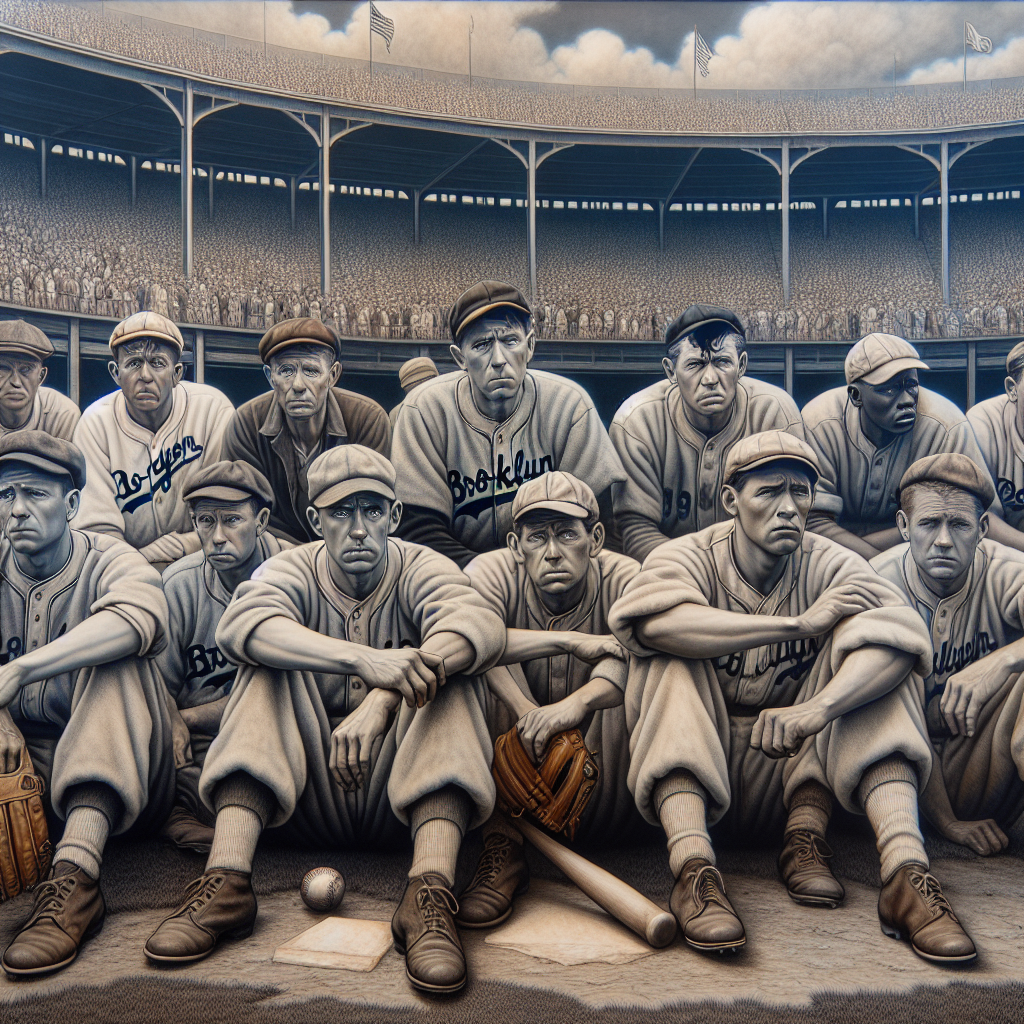
The year 1942 marked a poignant chapter in the history of one of Major League Baseball’s most storied franchises—the Brooklyn Dodgers. Embedded within the annals of baseball lore, the Dodgers of 1942 were a team brimming with talent and ambition, poised for greatness. This team, however, faced a year riddled with unexpected twists, memorable moments, and profound disappointments. As wartime loomed over the nation, shaping every facet of American life, the Dodgers, too, found themselves grappling with the uncertainty and upheaval of the times.
Baseball was more than just a pastime; it was a reflection of America’s spirit, resilience, and collective dreams. For the Dodgers, this period presented an opportunity to shine, propelled by iconic players and zealous fans who believed in the team’s potential to overcome and ascend. Despite a commendable start to the season and moments of brilliance on the field, the Dodgers’ journey in 1942 was one characterized by heartbreak—a season cut short by circumstances beyond their control.
In the pages that follow, we will delve deeper into the dynamics of the 1942 Brooklyn Dodgers, examining the key players, critical moments, and broader context within which this memorable season unfolded. From the strategic decisions made by management to the valiant efforts displayed on the field, every aspect of the Dodgers’ 1942 narrative offers valuable insights into the challenges and complexities faced by a baseball team navigating an era marked by global conflict and domestic uncertainty.
The Team That Could
The 1942 Brooklyn Dodgers were a formidable squad, boasting a roster of talented players whose names would become synonymous with the golden era of baseball. Managed by the astute Leo Durocher, a figure known for his fiery passion and tactical acumen, the Dodgers had a blend of seasoned veterans and promising newcomers—a combination that seemed destined for success.
Key players such as Pee Wee Reese, one of the game’s finest shortstops, and Dolph Camilli, the reigning MVP from the previous year, formed the core of the team’s offensive prowess. Pitching greats like Whitlow Wyatt and Kirby Higbe anchored the rotation, providing the Dodgers with the kind of consistency and dominance that pitchers of that era are celebrated for. These players weren’t mere athletes; they were symbols of hope and entertainment for a nation at war.
The Dodgers started the season with high expectations, driven by the memory of their near-miss in 1941 when they lost to the Yankees in the World Series. The early months of the 1942 season saw the Dodgers perform impressively, displaying skill, determination, and a flair for the dramatic—a hallmark of Durocher’s managerial style. The team’s resilience was evident as they navigated the challenges posed by injuries and the shifting dynamics of wartime baseball, where player availability could change drastically due to military drafts.
The Mid-Season Surge
As summer arrived, the Dodgers found themselves in a heated race for the National League pennant. Their mid-season surge was highlighted by a series of electrifying games that captivated fans and ignited a sense of optimism across Brooklyn. Key victories over rivals like the St. Louis Cardinals and the Pittsburgh Pirates bolstered their standing, with the Dodgers showcasing depth and versatility in their lineup.
One of the standout moments of the mid-season came in June when the Dodgers went on a remarkable winning streak, propelling them to the top of the standings. The contributions came from all corners of the roster—whether it was Dixie Walker’s consistent hitting or Pete Reiser’s spectacular fielding. Each game was a testament to the team’s potential and a reminder of why they were considered one of the elite squads in baseball that year.
Despite the mounting pressure, the camaraderie and unity within the Dodgers’ clubhouse were palpable. Durocher’s leadership played a crucial role in fostering an environment where every player felt valued and motivated to contribute to the team’s success. This period of momentum was crucial, not only for the standings but for maintaining the morale and focus needed to endure the rigors of a long season.
Challenges and Adversity
No season is devoid of challenges, and for the 1942 Dodgers, adversity came in various forms. The impact of World War II loomed large, with numerous players across the league being called to serve. The Dodgers were not immune to this, as several key players faced uncertainty regarding their availability. This constant flux made it difficult to maintain a stable lineup and rhythm.
Injuries also played a significant role in shaping the Dodgers’ journey. Pete Reiser, whose dynamic play had been instrumental in the team’s success, faced a series of injuries that hampered his ability to contribute consistently. The physical toll of the season began to manifest, testing the depth and resilience of the roster.
To compound these challenges, the Dodgers had to contend with the brilliance of their principal rivals, the St. Louis Cardinals. The Cardinals, managed by Billy Southworth, were a relentless opponent, showcasing their own blend of skill and tenacity. Every game against the Cardinals was a battle, and the Dodgers found themselves embroiled in a tug-of-war for the National League’s top spot. The intense competition added layers of pressure and complexity to an already tumultuous season.
The Final Stretch
As the 1942 season entered its final stretch, the Dodgers were neck-and-neck with the Cardinals in the race for the pennant. The closing weeks saw some of the most thrilling and high-stakes baseball of the era, with each game carrying significant implications for the ultimate outcome. The Dodgers, driven by a collective will to win, fought valiantly to secure their place at the top.
However, the strain of a grueling season began to take its toll. Players who had shouldered the burden of the campaign struggled with fatigue and injuries. Despite these challenges, the Dodgers continued to give their all, embodying the spirit of determination and perseverance.
The final series against the Cardinals proved decisive. In a showdown that captivated fans and showcased the very essence of competitive sports, the Dodgers fell just short of clinching the pennant. The series was marked by dramatic plays, strategic maneuvers, and moments of individual brilliance, but ultimately, the Cardinals emerged victorious, leaving the Dodgers with a sense of what could have been.
Aftermath and Reflection
The end of the 1942 season left the Brooklyn Dodgers and their fans with a deep sense of heartbreak. To come so close and yet miss out on the ultimate prize was a bitter pill to swallow. However, the season was not devoid of positives. The performance of the Dodgers in 1942 reaffirmed their place as one of baseball’s premier teams and set the stage for future successes.
The resilience displayed by the players and the lessons learned from the arduous campaign would serve as valuable experiences in the years that followed. Leo Durocher’s leadership and the camaraderie within the team were instrumental in navigating the challenges of the season and laid the foundation for future endeavors.
The impact of the 1942 season extended beyond the confines of the baseball field. In a time of global uncertainty, the Dodgers provided moments of joy, excitement, and a shared sense of purpose for their fans. The narrative of the 1942 Brooklyn Dodgers stands as a testament to the enduring spirit of the game and the timeless nature of baseball as a source of inspiration and connection.
Conclusion
The 1942 Brooklyn Dodgers exemplify a season of highs and lows, triumphs and tribulations, encapsulated within the broader context of a world at war. Their journey, although marked by heartbreak, is a poignant reminder of the unpredictable and often transcendent nature of sports. Through their perseverance and unwavering spirit, the Dodgers not only contended with formidable opponents on the field but also provided solace and entertainment to a nation grappling with immense challenges.
As we reflect upon the significance of the 1942 Dodgers, their story resonates as a symbol of resilience and collective effort. Their ability to inspire and captivate, despite falling short of their ultimate goal, underscores the profound impact that sports can have on our lives. The legacy of the 1942 Brooklyn Dodgers endures, a chapter in baseball history that continues to be celebrated and remembered by fans and historians alike.
The heartbreak of 1942 paved the way for future achievements, serving as a catalyst for growth and determination in the seasons that followed. It reminds us that the essence of competition lies not only in the victories but also in the valor displayed in the face of defeat. The 1942 Dodgers, with their indomitable spirit, remain an integral part of the rich tapestry of baseball history, exemplifying the enduring magic of the game.