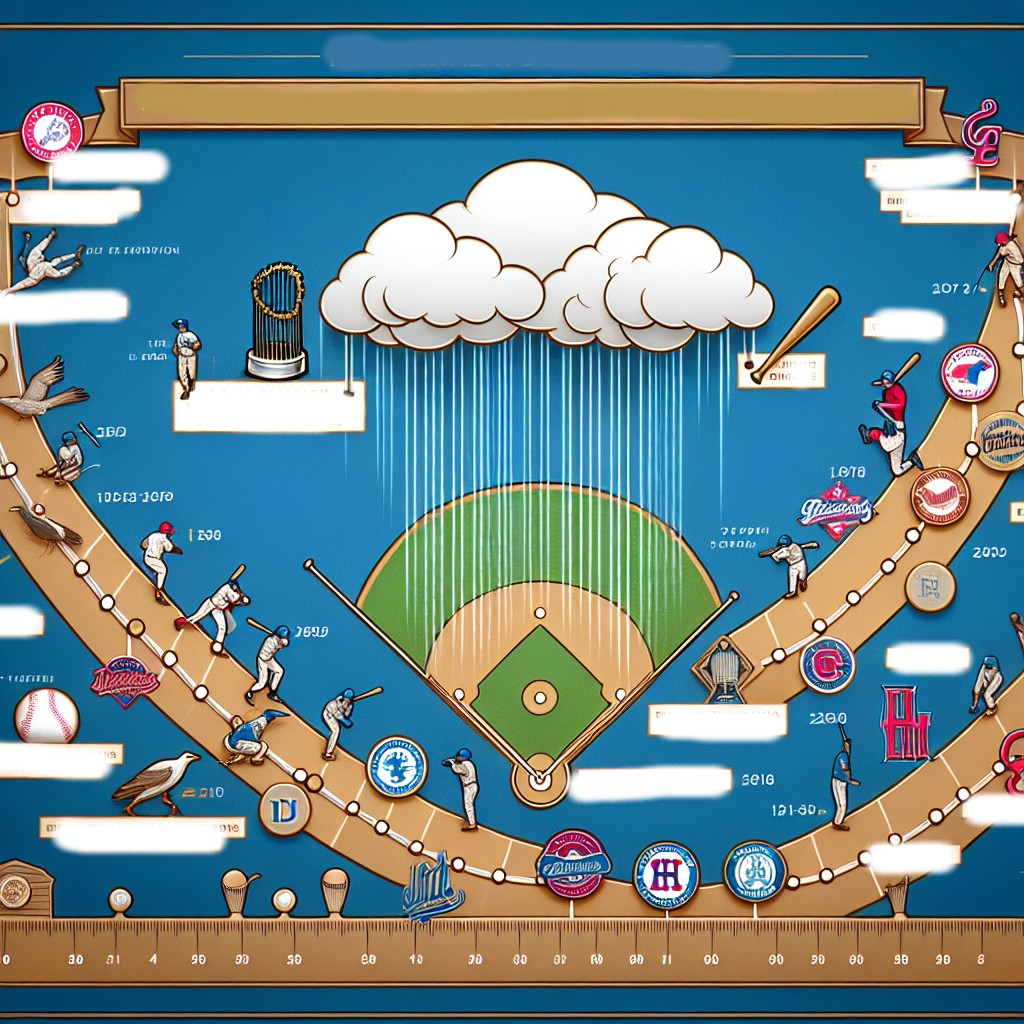
The World Series stands as the pinnacle of professional baseball, a spectacle of athletic prowess and sheer willpower. While some Major League Baseball (MLB) teams bask in the glow of multiple championships, others endure prolonged periods of championship drought. These droughts, often lasting decades, can be sources of immense frustration and heartache for both players and fans. This article delves into the fascinating phenomenon of World Series droughts and explores how certain teams have struggled, and, in some cases, overcome prolonged periods without tasting World Series glory.
To understand the significance of these droughts, it’s crucial to grasp the competitive nature of MLB and the storied history of the World Series. The World Series, first played in 1903, is an annual championship series that determines the best team in MLB. Winning the World Series is the ultimate goal, one that teams invest considerable time, money, and effort into achieving. Each season, 30 teams compete not only to make it to the playoffs but to ultimately earn the title of World Series champions.
Throughout the years, numerous teams have experienced lengthy droughts, where they either struggled to make it to the playoffs or fell short in the World Series itself. The significance of these droughts extends beyond the baseball diamond; they impact the morale of fans and communities, often becoming interwoven with the cultural identity of the cities they represent. These droughts can be attributed to various factors, including bad management decisions, lack of talent, financial constraints, or simply bad luck.
In this article, we will explore some of the most notable World Series droughts, examining their causes, the emotional toll on fanbases, and the glorious moments when these droughts were finally broken. Through these stories, we uncover not only the resilience of the teams and their supporters but also the enduring allure of the World Series.
The Chicago Cubs: A Century of Waiting
The Chicago Cubs are perhaps the most famous example of a World Series drought. The curse of the Billy Goat is a tale well known among baseball enthusiasts. The Cubs won their last World Series in 1908 and then embarked on a 108-year journey filled with heartache and near-misses before finally capturing the title in 2016.
The “curse” supposedly began in 1945 when a tavern owner and his pet goat were ejected from Wrigley Field during Game 4 of the World Series. The owner allegedly declared that the Cubs would never win another World Series. Whether one believes in the curse or not, the team’s subsequent history wasn’t in their favor. Seasons filled with errors, close calls, and heartbreaking defeats only served to deepen the mystique of the curse.
Generations of Cubs fans lived and, in many cases, died without seeing their team win a championship. The drought became part of the city’s identity, with phrases like “Wait Till Next Year” becoming a common lament. It also fueled a sense of camaraderie and loyalty among fans, who continued to support the team year after year despite the odds.
When the Cubs finally won the World Series in 2016, it was more than just a victory on the field. It was a cathartic release of decades of pent-up hope and frustration. The win unified the city of Chicago and was celebrated by fans worldwide. The end of the Cubs’ drought serves as a reminder that even the longest waits can culminate in the sweetest victories.
The Cleveland Guardians’ Ongoing Struggles
The Cleveland Guardians, formerly known as the Cleveland Indians, are another team that has faced a lengthy World Series drought. The team last won the World Series in 1948. Despite making multiple playoff appearances and reaching the World Series several times since then, they’ve been unable to capture the championship, creating a drought that persists to this day.
Fans of the Guardians are no strangers to heartbreak. The team came agonizingly close to ending their drought in both 1995 and 1997, only to fall short. The 1997 World Series was particularly heartbreaking, as the Guardians were just outs away from victory in Game 7 but ultimately lost to the Florida Marlins in extra innings.
The drought has weighed heavily on the team’s loyal fanbase. Cleveland, a city that has seen its fair share of sports disappointment, continues to rally behind the Guardians. Each new season brings renewed hope that this could be the year the drought ends, but it also brings a sense of trepidation given the team’s history of near-misses.
Until the Guardians can finally secure another championship, their fans remain in a state of limbo, enjoying the highs of regular-season success and playoff appearances but always longing for the ultimate prize. The pressure, the hopes, and the disappointments all contribute to the ongoing narrative of the Guardians’ World Series drought.
Brooklyn/Los Angeles Dodgers: A Rollercoaster Ride
The Dodgers’ franchise, which started as the Brooklyn Dodgers and later became the Los Angeles Dodgers, is a narrative of transformation and perseverance. While they have had periods of remarkable success, including multiple World Series titles, they’ve also experienced significant droughts, the most recent of which lasted from 1988 to 2020.
The journey to their 2020 World Series victory was fraught with challenges. The team frequently made it to the playoffs and even appeared in several World Series matchups during this period but often fell short. Noteworthy moments include their losses in the 2017 and 2018 World Series, where expectations were high but outcomes disappointing.
During their drought, the Dodgers became synonymous with regular-season dominance and postseason disappointment. Each fall marked another chapter in a saga of what-ifs. The franchise invested heavily in talent and management, aiming to break the cycle but faced fierce competition and moments of misfortune.
When the Dodgers finally broke through in 2020, it was a triumph that resonated deeply with their fanbase. The victory was a testament to the team’s resilience and the unwavering support of their fans. It also underscored the notion that in baseball, sustained excellence can eventually lead to the long-awaited glory.
The Texas Rangers: A Journey of Challenges
The Texas Rangers, representing the Dallas-Fort Worth area, have encountered their own series of World Series disappointments since their inception. Having never won the championship as of yet, the Rangers’ journey is one marked by obstacles and unfulfilled potential.
The team reached the World Series in 2010 and 2011, only to see their dreams crushed both times. The 2011 series was particularly agonizing. The Rangers were just one strike away from victory in Game 6 against the St. Louis Cardinals but ultimately lost both that game and the series in a dramatic fashion.
The near-miss in 2011 was a bitter pill to swallow for the Rangers’ fanbase, a blow to a community that had rallied behind their team with immense passion and fervor. Despite having competitive teams in the following seasons, the Rangers have struggled to recapture the form that brought them to the brink of glory.
Each year that the Rangers fall short adds another layer to their narrative of perseverance amidst adversity. Their story, rich with dramatic highs and lows, keeps their fans hopeful for that elusive championship win. Until then, the Rangers’ drought remains a compelling chapter in the annals of baseball history.
Athletics and Mariners: Tales of Two Teams
The Oakland Athletics and the Seattle Mariners represent two contrasting approaches to baseball success and drought. The Athletics have a storied history with multiple World Series titles, but they have faced a long drought since their last win in 1989. Meanwhile, the Mariners have never won a World Series since their inception in 1977.
For the Athletics, the championship successes of the past have been overshadowed by recent decades of missed opportunities and financial constraints. The team has found success in regular-season play, often credited to their “Moneyball” approach, yet translating that success to postseason glory has been a recurring challenge.
The Mariners, on the other hand, have carved out an identity as perennial underdogs. Despite having talented rosters in the past, including a record-setting 116-win season in 2001, they have been unable to advance to the World Series, let alone win it. This persistent drought continues to be a significant point of frustration for their loyal fanbase.
Both teams exemplify different facets of World Series droughts: the Athletics, a once-dominant franchise facing a modern-day struggle, and the Mariners, an expansion team still in search of its first taste of ultimate glory. Each new season brings hope that one of these narratives could finally change, but until then, their fans must endure the wait.
Conclusion
The phenomenon of World Series droughts is a testament to the unpredictable and exhilarating nature of baseball. Teams like the Chicago Cubs, Cleveland Guardians, Los Angeles Dodgers, Texas Rangers, Oakland Athletics, and Seattle Mariners each offer unique narratives filled with hope, despair, and unwavering devotion.
The emotional toll of these droughts cannot be overstated. Fans invest not only their time but their hearts in their teams, experiencing the highs and lows with every pitch, hit, and game. The length of these droughts often transcends generations, weaving themselves into the cultural fabric of the cities and communities they represent.
Yet, these prolonged waits also highlight the beauty of eventual triumph. When a team breaks its World Series drought, the victory is not just celebrated by the players on the field but by the entire fanbase. It serves as a reminder that perseverance, loyalty, and hope can eventually lead to the most cherished of rewards.
In examining World Series droughts, we see the broader tapestry of baseball—a sport that is as much about strategy and skill as it is about resilience and faith. Whether it’s an epic journey to end a century-long wait or an ongoing quest for a first-time victory, these stories enrich the history of baseball and keep the spirit of the game alive.
Frequently Asked Questions
1. What is a World Series drought, and why are they significant in baseball history?
A World Series drought occurs when a Major League Baseball (MLB) team goes an extended period without winning a World Series championship. These droughts are significant because winning the World Series is considered the ultimate achievement in professional baseball, representing not only the culmination of a successful season but also the recognition of a team’s superiority in the league.
For fans and players alike, these droughts can symbolize periods of frustration, as hopes are annually dashed. They often serve as a measure of a team’s historical performance and become an integral part of the narrative and identity of both the team and its community of supporters. Not only do droughts cast a long shadow over the club’s legacy, but the eventual breaking of a drought often leads to heightened emotions and celebrations. Examples of historical significance include the Chicago Cubs’ 108-year drought and the Boston Red Sox breaking their infamous “Curse of the Bambino” after 86 years without a championship.
2. Which MLB team suffered the longest World Series drought in history?
The Chicago Cubs hold the record for the longest World Series drought in Major League Baseball history, enduring 108 years without a championship title. The drought started after their 1908 World Series victory and did not end until 2016. This drought spanned numerous generations of fans and became a defining characteristic of the team. The Cubs were often humorously dubbed the “Lovable Losers” due to their consistent struggles and near-misses.
This drought was often attributed to various superstitions and tales, most notably the “Curse of the Billy Goat,” which supposedly began in 1945 when the owner of the Billy Goat Tavern was asked to leave Wrigley Field because his pet goat was disturbing other fans. Upon being ushered out, he declared that the Cubs would win no more. Whether due to curse or coincidence, the Cubs experienced heartbreaking losses over the decades, which only heightened the significance of their eventual triumph in 2016, when they defeated the Cleveland Indians in a thrilling seven-game series.
3. What role do superstitions and “curses” play in MLB World Series droughts?
Superstitions and “curses” have played a considerable role in the narratives of World Series droughts, often becoming an almost mythological part of baseball lore. These stories capture the fan base’s culture and psyche during prolonged droughts, offering both an explanation for continued failures and a common thread for community identity.
Perhaps one of the most famous “curses” in baseball was the “Curse of the Bambino.” This curse supposedly afflicted the Boston Red Sox after they sold Babe Ruth, one of the game’s greatest players, to the New York Yankees in 1919. Following the sale, the Red Sox did not win another World Series until 2004, enduring an 86-year drought filled with near-misses and heartaches. Similarly, the aforementioned “Curse of the Billy Goat” haunted the Cubs, and both these curses were often referenced humorously, even as the teams and fans took the implications quite seriously.
These curses often involve symbolic acts or phrases and help explain the unexplainable. When these droughts are finally broken, the curses only enhance the triumphant narrative, as it feels as though both history and a supernatural burden have been overcome.
4. How do teams and their fan bases cope with prolonged World Series droughts?
Teams and their fan bases often develop a unique culture during prolonged World Series droughts. Coping mechanisms can vary from adopting a gallows humor to unwavering loyalty, describing themselves as “long-suffering” with pride. Fans’ perseverance and dedication can become rallying cries, unifying communities and providing solidarity through shared hope and collective disappointment.
Teams may also focus on building their future, emphasizing the development of young talent, acquiring new players, and fostering a strong organizational culture that can create a fresh winning environment. Marketing strategies often involve celebrating team heritage and loyalty, and iconic plays or near-successes are immortalized within team lore to keep spirits high.
Droughts also encourage deeper connections to other fans; many supporters pass down their allegiance through generations, creating a shared family bond, and nostalgic memories are passed down as well. Social media and fan forums can create a sense of community, offering a platform for sharing frustrations and dreams about ending the drought.
5. Are there any other teams currently experiencing long World Series droughts?
Several MLB teams are currently experiencing long World Series droughts, solidifying the phenomenon as a pervasive challenge within the league. As of 2023, the Cleveland Guardians have the longest active drought, not having won the World Series since 1948. Their fans have been waiting for over seven decades, with hopes regularly renewed by competitive seasons that fall just short of the ultimate goal.
The Texas Rangers, who became a franchise in 1961, have yet to win a World Series title, though they have come close with several notable playoff runs, including reaching the World Series in 2010 and 2011. Similarly, the Seattle Mariners, founded in 1977, have never claimed a World Series championship despite notable success in regular seasons and incredible individual player performances, like Ichiro Suzuki’s record-breaking 2004 season.
These droughts serve as ongoing narratives within the league, putting pressure on team management to address and aiming to build championship-caliber squads. As each season begins anew, hope springs eternal that these droughts will someday transform into glorious championship stories.