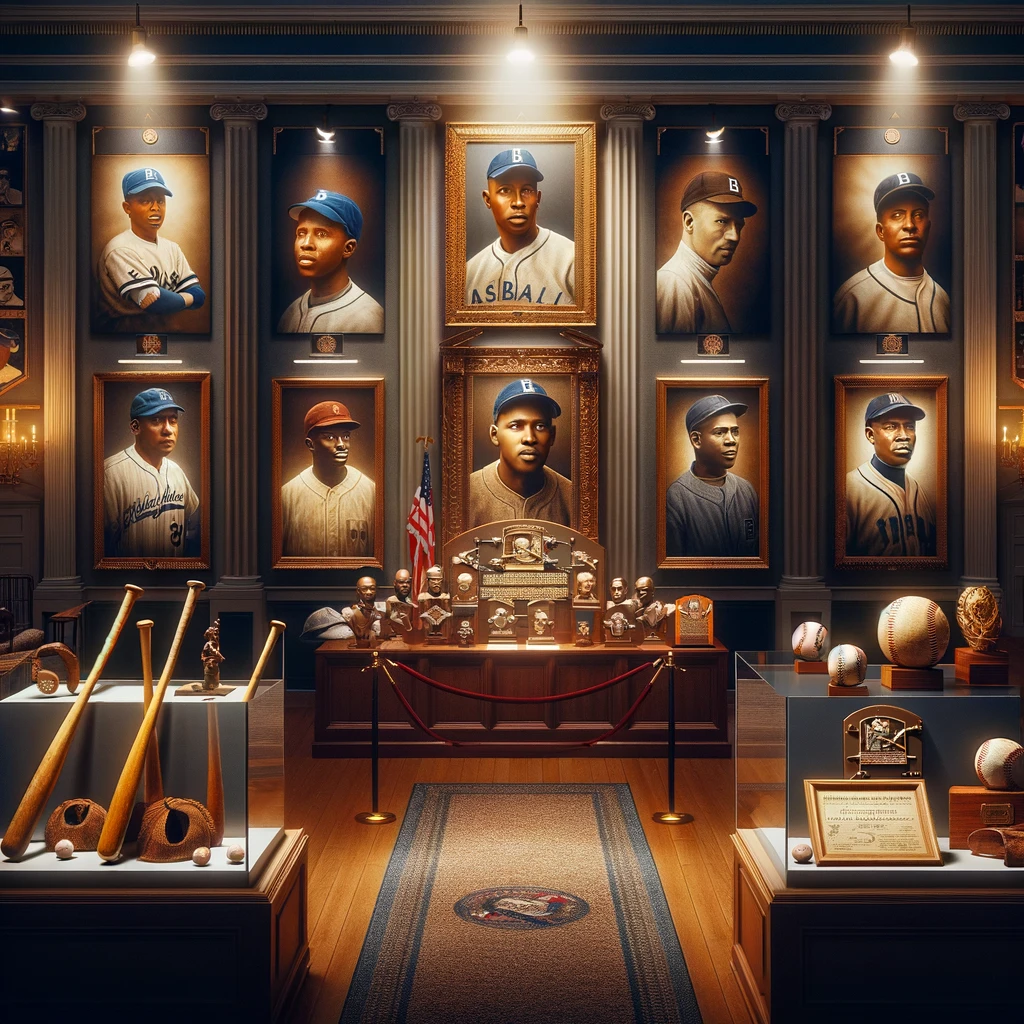
Baseball, often referred to as America’s pastime, is more than just a sport; it’s a narrative of overcoming obstacles, shattering stereotypes, and breaking barriers. The Baseball Hall of Fame in Cooperstown, New York, is not just a repository of great achievements but a testament to those who have fundamentally changed the game. This article celebrates the trailblazers who have left an indelible mark on baseball’s rich history.
Jackie Robinson: Shattering Baseball’s Color Barrier
When talking about trailblazers in baseball, one cannot start without mentioning Jackie Robinson. His debut with the Brooklyn Dodgers on April 15, 1947, marked the end of racial segregation in Major League Baseball (MLB). Robinson’s entry into the MLB was fraught with challenges, from racial slurs to death threats. Yet, his resilience and exceptional talent not only earned him the National League Rookie of the Year award but also paved the way for future generations of African American players. His number 42 jersey is retired across all MLB teams, a fitting tribute to a man who changed the game forever.
Roberto Clemente: The Great One
Roberto Clemente, affectionately known as “The Great One,” was not only known for his extraordinary skills on the field but also for breaking cultural barriers. A Puerto Rican native, Clemente became the first Latin American and Caribbean player to achieve World Series stardom. His career with the Pittsburgh Pirates was marked by accolades, including 12 Gold Glove Awards and the 1966 National League MVP. Clemente’s tragic death in a plane crash while on a humanitarian mission only elevated his legendary status, making him an icon for not just his athletic prowess but his humanitarian efforts as well.
Babe Ruth: The Sultan of Swat
While Babe Ruth is celebrated for his record-breaking home runs and larger-than-life personality, his impact transcends his athletic achievements. Ruth transformed baseball from a strategy-driven, bunt-and-steal game to one focused on power and strength. His charisma and ability to draw crowds helped save baseball after the 1919 Black Sox Scandal, reinstating the public’s trust in the game. Ruth’s legacy as a trailblazer lies in how he changed the way baseball was played and perceived.
Hank Aaron: Home Run King
Hank Aaron’s chase to break Babe Ruth’s home run record was more than just a pursuit of a sports milestone; it was a journey marked by perseverance amidst intense racial hostility. Aaron’s 715th home run on April 8, 1974, was a significant moment in baseball history, symbolizing the triumph of talent and determination over racial prejudice. His quiet dignity and grace under pressure made him an inspiration to many and a hero of the civil rights movement.
Satchel Paige: Age is Just a Number
Satchel Paige’s induction into the Hall of Fame was not only a recognition of his stellar pitching in the Negro Leagues but also a nod to his role in integrating baseball. Paige’s MLB debut at the age of 42 with the Cleveland Indians made him the oldest rookie in MLB history, a testament to his enduring skill and vigor. His career challenged the age norms in sports and inspired many older athletes.
Effa Manley: Breaking Gender Barriers
Effa Manley co-owned the Newark Eagles in the Negro Leagues alongside her husband. She was not just a figurehead; Manley was actively involved in the operations and negotiations, making significant contributions to the team’s success. Her induction into the Hall of Fame in 2006 marked the first time a woman received this honor, highlighting her unique role in a male-dominated sport and her advocacy for the rights of her players.
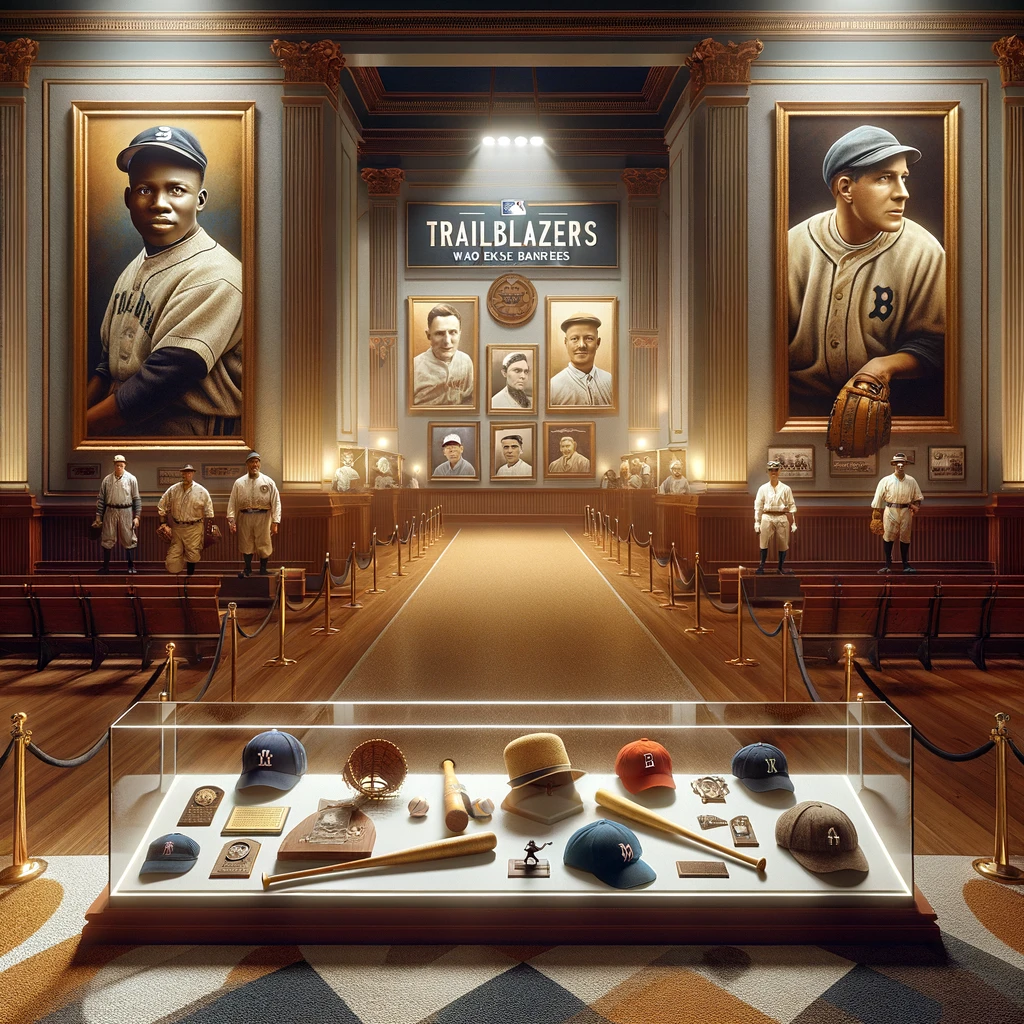
Pioneering Women in Baseball
Ila Borders: Defying Gender Norms
While not in the Hall of Fame, Ila Borders deserves mention for her groundbreaking role in baseball. In 1997, she became the first woman to earn a college baseball scholarship and later, the first to pitch and win a professional men’s baseball game. Borders’ journey in a predominantly male sport challenged traditional gender roles and paved the way for future female athletes in baseball.
Toni Stone, Mamie Johnson, and Connie Morgan: Women in the Negro Leagues
The trio of Toni Stone, Mamie Johnson, and Connie Morgan broke gender barriers in the Negro Leagues. Stone, the first of the three, replaced Hank Aaron on the Indianapolis Clowns and faced significant challenges in this male-dominated league. Johnson and Morgan followed, showcasing their talent and resilience in a challenging environment. Their courage and skill opened doors for future female athletes in professional baseball.
Barrier Breakers in Management and Broadcasting
Frank Robinson: A Leader On and Off the Field
Frank Robinson, known for his illustrious playing career, also became the first African American manager in MLB with the Cleveland Indians in 1975. His transition from player to manager was a significant milestone in baseball history, challenging racial norms in baseball’s leadership roles. Robinson’s success as a manager paved the way for future African American managers in the sport.
Vin Scully: The Voice That Transcended Generations
Vin Scully, the legendary broadcaster for the Los Angeles Dodgers, spent an incredible 67 seasons with the team. His distinctive voice and storytelling ability made him a beloved figure in baseball. Scully broke barriers in broadcasting, bringing the game into the homes of millions and becoming a cultural icon in the process.
International Influence
Ichiro Suzuki: Bridging Continents
Ichiro Suzuki’s entry into MLB was a significant moment for international players. As a phenomenal outfielder and hitter, Ichiro broke the barrier for Japanese players in the Major Leagues. His success opened the door for many Asian players, proving that talent knows no geographical boundaries.
Fernando Valenzuela: Fernandomania
Fernando Valenzuela’s impact on baseball transcended his on-field performance. His arrival with the Los Angeles Dodgers sparked “Fernandomania,” a phenomenon that drew significant attention to the game from Latin American communities. Valenzuela’s success not only inspired a generation of Latin American players but also expanded baseball’s appeal internationally.
The Future of the Hall of Fame
As baseball continues to evolve, the Hall of Fame will undoubtedly see new trailblazers. These future inductees will carry the legacy of those who have broken barriers and shaped the game. From players to managers, broadcasters to executives, the Hall of Fame will continue to honor those who have made significant contributions to this beloved sport.
Conclusion
The Baseball Hall of Fame is a celebration of those who have left an indelible mark on the game. From Jackie Robinson’s historic breaking of the color barrier to Ila Borders challenging gender norms, each trailblazer has contributed to the rich tapestry of baseball’s history. Their stories of resilience, courage, and skill remind us that baseball is more than a game; it’s a reflection of society’s progress and the enduring spirit of those who dare to change the game.
Frequently Asked Questions
1. Who was Jackie Robinson and how did he impact baseball?
Jackie Robinson, born on January 31, 1919, in Cairo, Georgia, was a pioneering figure in the world of baseball and an iconic symbol of racial integration in sports. Robinson was the first African American to play in Major League Baseball (MLB) in the modern era, breaking the color barrier on April 15, 1947, when he debuted with the Brooklyn Dodgers. His courageous step into the MLB not only altered the course of American sports but also played a noteworthy role in the Civil Rights Movement, symbolizing the fight against racial segregation and discrimination. Robinson’s entry into baseball challenged institutional racism head-on. His exceptional talent and resilience in the face of intense racial hostility and segregation demonstrated his outstanding character and made significant cultural and historical impacts. As the first black man to play in a league that previously enforced racial exclusion, Robinson endured prejudice from spectators, opponents, and even his own teammates. Despite immense pressure, he excelled on the field, earning the 1947 Rookie of the Year award, becoming a six-time All-Star, and being named the National League MVP in 1949. Jackie Robinson’s legacy extends beyond his athletic contributions. He opened the doors for countless African American athletes and inspired generations to stand against inequality. His induction into the Baseball Hall of Fame in 1962 underscored his extraordinary achievements and enduring influence, marking him as one of baseball’s greatest trailblazers.
2. Why is the Baseball Hall of Fame considered a tribute to trailblazers?
The Baseball Hall of Fame, located in Cooperstown, New York, serves not only as a prestigious acknowledgment of outstanding athletic achievement but also as a tribute to individuals who have transcended the sport to break new ground. The Hall is a sanctuary for honoring athletes, managers, executives, and umpires who have significantly influenced and advanced the sport of baseball through their actions, feats, and courage. Trailblazers inducted into the Hall include individuals who have broken racial, gender, and cultural barriers, advancing not just the game but also societal norms. This includes icons like Jackie Robinson, whose induction memorialized his struggle and triumph against racial discrimination, and pioneers like Effa Manley, the first woman inducted, who was integral to the advancement of the Negro Leagues and exhibited exceptional leadership and advocacy for racial equality in sports. Each Hall of Famer’s story reflects a journey of overcoming adversity and personal sacrifice. To be enshrined is to be recognized not merely for baseball prowess but for using their platform to challenge conventions and inspire transformative change within the sport and beyond. This transformative legacy ensures that the Hall of Fame remains a vivid and lasting tribute to those who dared to innovate and defy expectations, thereby leaving an indelible mark on baseball’s storied narrative.
3. What contributions did Effa Manley make to the sport of baseball?
Effa Manley, born on March 27, 1897, in Philadelphia, Pennsylvania, was a formidable figure in the history of baseball, particularly noted for her significant contributions to the Negro Leagues. As a co-owner and executive of the Newark Eagles, Manley became one of the most prominent women in baseball, remarkably navigating an industry dominated by men. She managed to earn respect across the league for her shrewd business acumen and unwavering commitment to the Negro Leagues during the 1930s and 1940s. Manley advocated fiercely for the rights and betterment of African American baseball players. She was a trailblazer in negotiating and pushing for fair contracts and salaries, and she worked tirelessly to promote games and market the league, ensuring that the Negro Leagues retained competitive edge and dignity despite systemic racial barriers. Her leadership during World War II, organizing boycotts to protest against discrimination and taking part in civil rights activism, further solidified her legacy as a change agent. In 2006, Effa Manley made history again by becoming the first woman inducted into the Baseball Hall of Fame. Her induction recognized her pivotal role in the success and sustainability of the Negro Leagues and her broader impact on baseball management and the advancement of civil rights. Manley’s legacy is celebrated for breaking gender barriers, championing African American participation in baseball, and her lasting influence in the fight for equality and representation in sports.
4. How has the Baseball Hall of Fame addressed inclusion and diversity over the years?
The Baseball Hall of Fame has progressively evolved to reflect greater inclusion and diversity, honoring those from varied backgrounds who have made substantial contributions to the game. It stands as a powerful symbol of progress and recognition within baseball, acknowledging trailblazers who have triumphed over adversity and biases to reshape the sport. Over the decades, inductees have diversified to include not only extraordinary athletes but also managers, executives, and cultural figures from different racial and ethnic backgrounds. Key developments have included enshrining figures from the Negro Leagues, such as Satchel Paige and Josh Gibson, who played when major league opportunities were barred to them due to segregation. The Hall’s inclusion of Latin American players, like Roberto Clemente, highlighted the increasing global reach and cultural impact of baseball. Additionally, the Hall’s evolving criteria have allowed it to spotlight various roles within baseball, recognizing the contributions of women and racial minorities to the sport’s development and societal influence. The Hall of Fame continuously revisits and expands its narrative strategies to ensure the stories of diverse trailblazers are shared, thus fostering a broader understanding of baseball’s role in social change. Through thoughtfully curated exhibits and educational initiatives, the Hall seeks to preserve and advocate for the rich, multifaceted history of those who have broken new ground and have inspired future generations.
5. Who are some other noteworthy trailblazers in the Baseball Hall of Fame besides Jackie Robinson and Effa Manley?
In addition to Jackie Robinson and Effa Manley, the Baseball Hall of Fame is home to several other trailblazers whose impactful careers revolutionized the sport and society. These individuals, through their remarkable achievements and stories, continue to inspire and educate. One such icon is Larry Doby, inducted in 1998. Doby was the first African American to play in the American League, making his debut with the Cleveland Indians just a few months after Robinson broke into the National League. Doby encountered many of the same challenges as Robinson, enduring racial discrimination and sometimes hostility from fans and fellow players. His successful career, marked by multiple All-Star selections and world championships, paved the way for other African American players. Satchel Paige, an extraordinary pitcher, was inducted in 1971, recognized not only for his dominant presence in the Negro Leagues but also for his delayed yet impactful major league career, starting at age 42. Paige’s legendary prowess and charisma brought significant attention and respect to the ability and perseverance of Negro League players. Roberto Clemente, inducted in 1973, broke new ground as the first Latin American player to win a World Series as a starting player, win a National League MVP Award, and be inducted into the Hall of Fame. Known for his humanitarian work and tragic death while on a relief mission, Clemente left a legacy as both a remarkable player and human rights advocate. These trailblazers, with their varied heritages and paths, underscore the breadth of diversity and resilience woven into the fabric of baseball history, making the Hall of Fame a dynamic testament to those who have significantly shaped and enriched the game.