
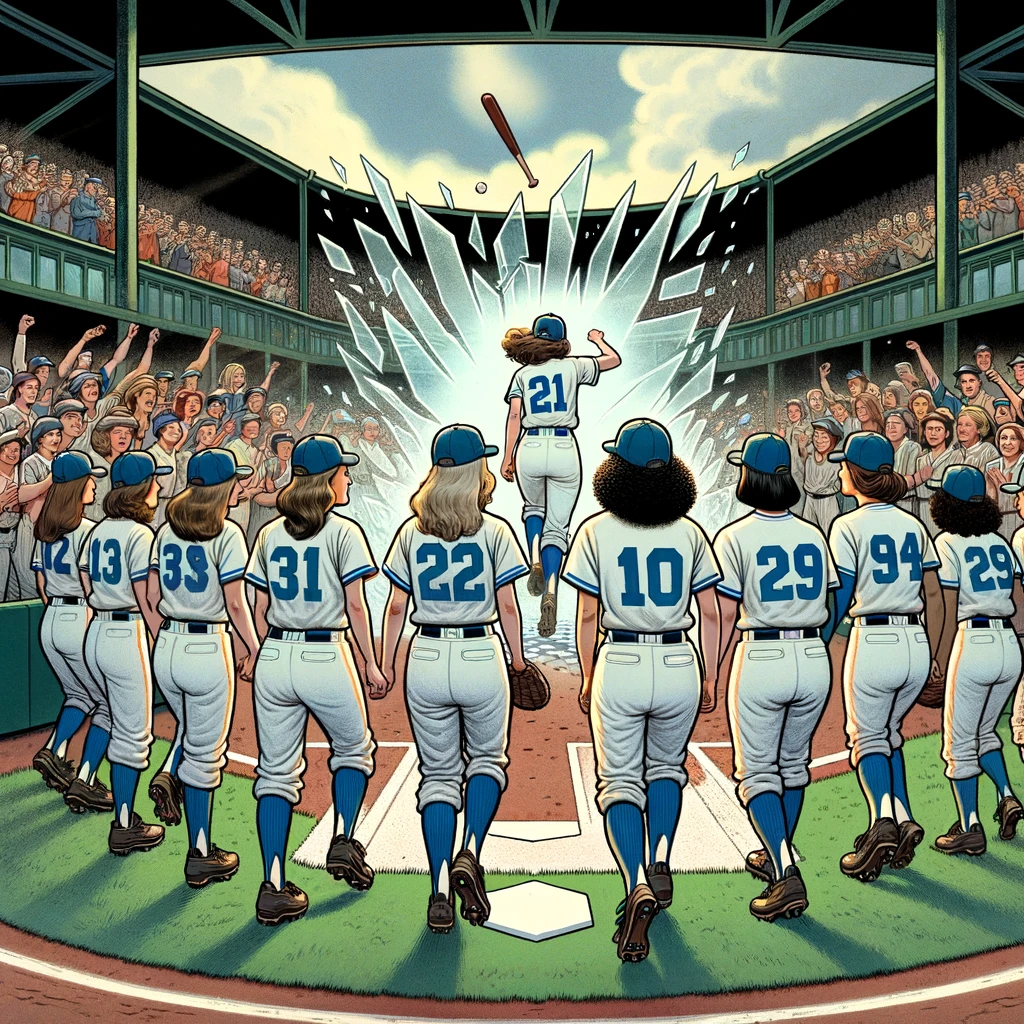
The history of baseball is rich and varied, often reflecting broader societal changes. Among these changes, the inclusion of women in minor league baseball stands as a testament to the sport’s evolving nature and society’s growing appreciation for gender equality in athletics. This article explores the groundbreaking journey of women in minor league baseball, highlighting their struggles, achievements, and the impact they have had on the sport and society.
Early Days and Cultural Resistance
Baseball, traditionally seen as a man’s sport, had a long-standing barrier against the inclusion of women at professional levels. The early 20th century was a time of rigid gender norms, and women participating in baseball were often relegated to exhibition games or novelty acts. Despite these limitations, several women persevered, laying the groundwork for future generations. The All-American Girls Professional Baseball League (AAGPBL), formed during World War II, was a significant step, but it was distinctly separate from the male leagues and eventually disbanded in 1954.
The Pioneers
The real breakthrough in integrating women into men’s minor league baseball occurred in the latter part of the 20th century. One of the first notable figures was Ila Borders, who in 1997 became the first woman to receive a scholarship to play men’s college baseball and later went on to play professionally in the minor leagues. Borders faced considerable opposition, from skepticism about her abilities to outright hostility, but her talent and determination shone through, paving the way for others to follow.
Rising Through the Ranks
Following Borders’ entry into minor league baseball, more women began to make their mark. Players like Tiffany Brooks, who joined the Big Bend Cowboys of the Continental Baseball League, and Eri Yoshida, the first woman to play professionally in Japan and the United States, added to the growing presence of women in the sport. These players not only demonstrated skill but also a resilience in facing the ongoing challenges of playing in a male-dominated field.
Challenges and Triumphs
The journey for these pioneering women was not without its hurdles. They faced not only the physical demands of the sport but also societal and cultural obstacles. Many were subjected to intense media scrutiny, doubting peers, and fans resistant to change. Despite this, their persistence brought about a gradual shift in perceptions, with more people beginning to appreciate and respect the contributions of women in baseball.
Impact and Legacy
The impact of these trailblazing women extends far beyond the diamond. They have inspired countless young girls to pursue their dreams in sports traditionally dominated by men. By breaking barriers in minor league baseball, these women have also contributed to a broader conversation about gender equality in sports, challenging stereotypes and inspiring change.
Continuing the Legacy
Today, the legacy of the first women in minor league baseball lives on. Their pioneering efforts have opened doors and created opportunities for future generations. As more women enter the sport, at all levels, their presence continues to challenge the status quo and redefine what is possible in baseball and beyond.
The Role of Institutions and Leagues
The role of baseball’s governing bodies and leagues has been critical in the integration of women into minor league baseball. Initially, institutions were slow to adapt, often bound by tradition and hesitant to embrace change. However, as societal attitudes shifted, these organizations began to recognize the importance of inclusivity and diversity. Initiatives to support and promote women in baseball, from developmental leagues to coaching and administrative roles, have gained momentum. This institutional support has been vital in providing a platform for women to showcase their talents on a level playing field.
Media Coverage and Public Perception
Media coverage has played a dual role in the journey of women in minor league baseball. On one hand, it has been instrumental in bringing attention to their achievements and struggles, helping to garner support and acceptance among the wider public. On the other hand, media portrayal has sometimes reinforced stereotypes or focused excessively on gender over athletic ability. The evolution of media coverage over the years reflects the changing perceptions of women in sports, from novelty to legitimate athletes deserving of equal recognition and respect.
Key Figures and Their Stories
Several women have been pivotal in shaping the history of women in minor league baseball. Their stories of perseverance and excellence have served as powerful narratives that inspire and motivate. Players like Justine Siegal, who became the first woman to coach a professional men’s baseball team, and Rachel Balkovec, the first woman to serve as a full-time hitting coach in the minor leagues, are notable examples. These women, among others, have not only excelled in their respective roles but have also been vocal advocates for gender equality in sports.
The Future of Women in Baseball
The future of women in minor league baseball, and in the sport more broadly, is a topic of much optimism and potential. The increasing visibility and acceptance of women in baseball suggest a trajectory toward greater inclusivity. Development programs focused on young female athletes, scholarships, and initiatives by major league teams to include women in various capacities are indicators of a positive shift. The goal is no longer just about having women in baseball but about ensuring they have the same opportunities for growth, recognition, and success as their male counterparts.
Challenges Ahead
Despite the progress made, challenges remain. Equal access to resources, overcoming lingering biases, and achieving true inclusivity in all aspects of the sport are ongoing struggles. The battle for equality in baseball mirrors broader societal challenges, where progress often comes with resistance and setbacks. Continued advocacy, policy changes, and cultural shifts are essential to ensure that the strides made by the first women in minor league baseball are not just historical footnotes but catalysts for enduring change.
Conclusion
The story of women in minor league baseball is one of breaking barriers, challenging norms, and redefining what is possible in a sport that has long been a symbol of American culture. These pioneering women have not only carved out a place for themselves in baseball history but have also opened doors for future generations. Their legacy is not just in the records they set or the games they played, but in the broader impact they have had on sports and society. As we look to the future, their journey continues to inspire and remind us that in the face of adversity, perseverance, and passion can indeed change the game.
Frequently Asked Questions
1. How did women first get involved in minor league baseball, and what challenges did they initially face?
Women’s involvement in minor league baseball is a captivating testament to perseverance and breaking barriers. Their journey began with trailblazers who defied societal norms at a time when baseball was deemed a male-only sport. In the early days, women faced significant resistance from both the public and the leagues themselves. Many teams and associations feared that women participating would undermine the competitive nature of the sport. Moreover, societal expectations confined women to traditional roles, discouraging athletic pursuits in favor of domestic duties.
Despite these hurdles, a few tenacious women made headlines, despite overwhelming odds. They had to surpass not just the physical and skill-based demands inherent in baseball but also the prejudice they endured for daring to traverse that seemingly sacrosanct boundary. Cultural resistance didn’t just end with societal attitudes; it also included logistical barriers, such as fewer resources and support, and a lack of available spots on training teams that led to inequitable opportunities for growth.
2. What were some significant achievements by women in the minor leagues, and how did these shape the future of baseball?
Women in minor league baseball charted paths that have become integral in shaping the future landscape of the sport. The most iconic achievements include players like Mamie “Peanut” Johnson, the first female pitcher in the Negro Leagues, who not only dismantled racial barriers but gender ones as well. Moreover, Toni Stone, another remarkable trailblazer, became the first woman to play professional baseball as a regular player. These significant strides opened doors for future generations of female athletes.
Every game played by these pioneering women forged a crack in the glass ceiling, altering public perception and expanding the societal definition of athletes. Their successes didn’t just benefit other women but also sent ripples throughout baseball, encouraging inclusivity and a re-evaluation of talent through a gender-neutral lens. The influence of these accomplishments played a fundamental role in gradually gaining acceptance, further support, and infrastructural development for women in minor and eventually major leagues.
3. How has the involvement of women in minor league baseball evolved over the years?
The evolution of women in minor league baseball is an inspiring narrative of progression toward equality. Initially, women only played in segregated leagues, but as societal perspectives gradually shifted, integration became a tangible outcome. The change has been slow but steady, with more women participating not just as players, but as coaches, managers, scouts, and even league officials.
Over time, educational institutions and grassroots organizations began implementing programs that focus on encouraging young women to pursue baseball, bridging the gap of earlier inequalities. Inclusion in traditional sporting events and the increasing visibility of women in baseball are reflections of society’s changing attitudes. This trend mirrors the growing call for equality and rights for women in sports and beyond.
4. What impact do women in minor league baseball have on society’s perception of gender roles in sports?
The impact of women in minor league baseball on societal perceptions of gender roles is profound. By stepping into a predominantly male-dominated sphere, they challenge antiquated stereotypes and highlight the capacity of women to excel in any field, including sports traditionally reserved for men. Their role in the minor leagues has advocated a broader acceptance of gender equality, proving that skill and determination transcend gender distinctions.
This transformation doesn’t just change perceptions within the sporting context but also inspires women outside of sports to challenge gender roles in various professional and social domains. The visible success of female athletes contradicts long-standing biases and cultivates an environment where young girls can envision a future where their dreams are valid and achievable, reshaping societal norms with each passing season.
5. What are the future prospects and opportunities for women in minor and major league baseball?
The future holds promising prospects for women in baseball, opening up paths previously inconceivable. Modern initiatives are increasingly focusing on creating equitable opportunities for women, elevating their roles within both minor and major leagues. With the growing acknowledgment of the need for diversity and inclusion, the scope is wider than ever for women to partake and thrive in professional baseball.
With past achievements paving the way, prospects now include functional roles such as coaching positions, higher stakes in managerial capacities, and more competitive placements within teams based on merit rather than gender. The continued advocacy for gender parity in sports elevates the focus on necessary systemic changes, propelling interest from sponsors and investors to back women in baseball. As young talents are duly nurtured and given fair grounds to shine, the future of women in baseball seems brighter, and just as invigorating as those early days when a select few dared to dream.