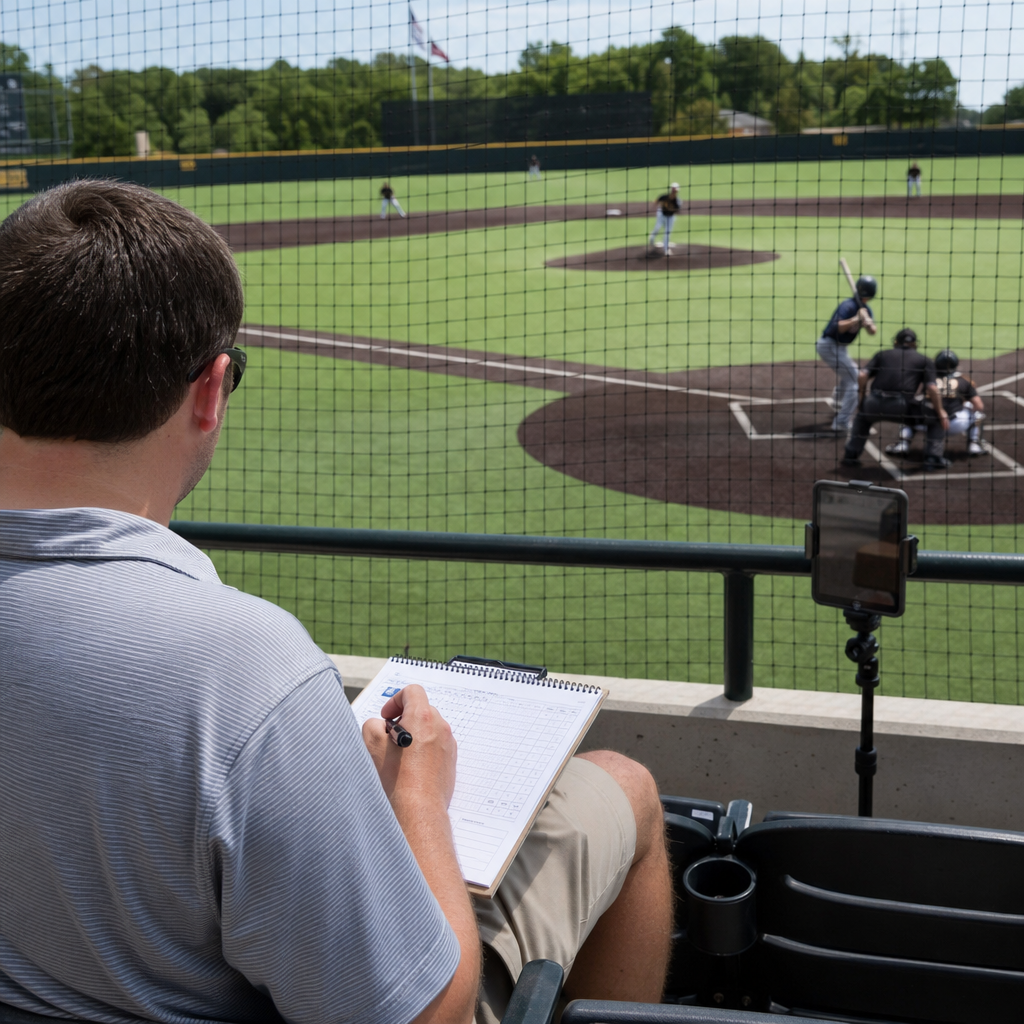
The science of scouting in college baseball blends observation, data analysis, biomechanics, psychology, and projection into one disciplined process that helps coaches, recruiters, analysts, and professional organizations identify players who can succeed beyond today’s box score. In college baseball, scouting means evaluating amateur players for present ability and future value, usually across tools such as hitting, power, running, fielding, throwing, command, and pitch quality. The “science” lies in turning subjective looks into structured decisions by using verified measurements, repeatable grading scales, medical context, and competition-adjusted performance data. This matters because college baseball sits at a pivotal point in the development pipeline: it is where raw high school talent often becomes draftable, where underrecruited players can emerge, and where teams must make resource-heavy decisions with incomplete information.
I have sat behind home plate with a radar gun, watched bullpens from the first-base side, compared TrackMan reports to in-game execution, and learned quickly that good scouting is not simply seeing who throws hardest or who posts the biggest weekend numbers. It is pattern recognition informed by evidence. A pitcher sitting 94 mph on a warm Friday night is interesting, but the scouting question is deeper: does the fastball carry through the top of the zone, can he land a breaking ball for a strike, does his delivery support command, and will his workload hold through a spring schedule? A hitter batting .360 draws attention, but a serious evaluation asks what that average looks like against premium velocity, quality spin, and strong defensive environments. College baseball rewards scouts who can separate performance from sustainable skill.
As a hub within the broader minor leagues and college baseball landscape, this topic covers the miscellaneous but essential pieces that shape player evaluation. It includes traditional in-person scouting, analytics, technology, makeup, medical risk, transfer movement, summer leagues, and the way college performance translates to professional baseball. For anyone trying to understand how players are truly assessed, the core idea is simple: scouting is prediction, not admiration. The best reports describe what a player is now, why he performs that way, what variables could change, and where he is likely to fit in the future. That mix of precision and uncertainty is what makes scouting both difficult and indispensable.
What college baseball scouts actually evaluate
College baseball scouts evaluate tools, performance, body control, decision-making, and projectability. Position players are commonly judged on contact ability, swing decisions, bat speed, power production, run times, defensive actions, arm strength, and positional fit. Pitchers are evaluated on velocity, movement profile, release characteristics, strike throwing, pitch mix, command, deception, durability, and competitive poise. Most evaluators still use variants of the 20-80 scouting scale, where 50 represents major league average and each grade reflects a standard deviation step in projected ability. In college scouting, present grades often matter more than in high school because the player is older and closer to pro ball, but projection still matters, especially for physically immature sophomores or relievers moved into starting roles.
Good scouts also separate raw tools from usable tools. A center fielder may run a 6.5-second 60-yard dash, but if his first step is inconsistent and his routes are inefficient, the game speed may play lower than the timed speed. A pitcher may touch 97, but if he cannot repeat his release point and misses arm side regularly, the practical value of the velocity drops. This is where direct observation remains crucial. Video and metrics can identify traits, but live looks reveal tempo, body language, adaptability, and how the player responds after failure. In one Southeastern Conference series, I watched a third baseman go 0-for-4 on Friday, then make a between-hop adjustment against velocity on Saturday and drive two balls to the opposite-field gap. The adjustment told more than the Friday stat line.
Why data changed scouting without replacing scouts
Modern college baseball scouting depends on data, but data does not eliminate the need for experienced eyes. Technologies such as TrackMan, Hawk-Eye, Rapsodo, Blast Motion, and force-plate testing provide measurable evidence about pitch shape, bat speed, attack angle, exit velocity, vertical jump, sprint efficiency, and other performance markers. These tools help scouts answer questions that once relied mostly on intuition. A fastball is no longer judged only by radar-gun velocity; analysts can examine induced vertical break, horizontal movement, spin efficiency, release height, extension, and approach angle to understand why hitters swing under it or square it up. For hitters, raw exit velocity and sweet-spot contact offer stronger indicators of future power than batting average alone.
Still, data must be interpreted within context. College schedules vary widely by conference strength, park factors, weather, and quality of opposition. A hitter posting loud offensive numbers in a favorable environment may not have the same profile as a player with slightly lower numbers against elite pitching in the Atlantic Coast Conference or the SEC. Likewise, a low ERA can hide poor strikeout-minus-walk indicators, and a high strikeout total can overstate dominance if it comes against weak midweek opponents. The best scouting departments combine objective inputs with live evaluation. They ask whether the movement profile matches the result, whether the body supports more velocity, and whether the player’s decisions under game stress confirm the training data. That combination produces better forecasts than either method alone.
How scouts project college hitters and pitchers forward
Projection is the heart of scouting because the goal is not merely to describe a college player but to estimate what he will become in professional baseball. For hitters, projection starts with swing mechanics and decision quality. Scouts look for adjustability, plate coverage, contact point consistency, and whether power comes from efficient sequencing rather than all-out effort. Wood-bat summer performance in leagues such as the Cape Cod League has long mattered because aluminum bats can inflate certain outcomes, especially for hitters with lower barrel accuracy. A player who drives wood-bat contact against premium arms often reassures scouts that the offensive profile is real. For pitchers, projection considers physical development, pitch design potential, starter-versus-reliever traits, and how the arsenal may play with pro coaching.
One useful framework is to ask what skill will carry the player when conditions get harder. If a hitter relies mostly on beating out ground balls, that advantage may fade in pro ball. If a pitcher succeeds because college hitters chase a fringy slider off the plate, better hitters may force him back into the zone. Scouts therefore look for transferable strengths: bat-to-ball skill against velocity, swing decisions that suppress chase rate, fastballs with life through the zone, breaking balls with two-plane finish, and command that survives fatigue. They also weigh age carefully. A 23-year-old college senior dominating younger competition is a different evaluation than a 20-year-old sophomore holding his own on the same field. Age relative to level changes how performance should be valued.
The role of biomechanics, health, and workload management
Biomechanics has become central to college baseball scouting because movement quality influences both performance and injury risk. Evaluators now consider hip-shoulder separation, scapular load, arm path efficiency, force production, stride direction, deceleration patterns, and recovery markers. For pitchers, the discussion is not as simple as “clean” or “violent” mechanics. Some high-velocity deliveries look unconventional yet remain repeatable and durable, while textbook-looking motions can still create stress if timing is poor. The question is whether the athlete moves efficiently enough to repeat the delivery, command the baseball, and tolerate workload over time. Medical history matters as much as mechanics. Previous elbow or shoulder issues, declining velocity, altered release traits, and inconsistent usage patterns can all change a report significantly.
College programs also manage workloads differently, which affects scouting interpretation. Some Friday starters throw 110 pitches deep into conference play, while others are tightly managed and removed near 90. Relievers may work on back-to-back days, then show reduced stuff the following weekend. Scouts who understand workload context avoid false conclusions. A starter sitting 91 instead of his typical 94 might be pitching through ordinary seasonal fatigue rather than showing permanent decline. Conversely, a short relief burst at 97 may not translate to a starter role. The most reliable evaluations integrate game logs, rest patterns, velocity trends, and medical information when available. Teams increasingly model these factors because pitcher attrition is one of the biggest risks in player development, and college usage can either reveal resilience or expose fragility.
Where scouting information comes from across the college game
Scouting information in college baseball comes from far more than weekend series. Area scouts attend games, practices, scrimmages, and pregame workouts. Crosscheckers compare reports across regions. Video scouts tag swings, deliveries, and defensive actions. Analytics staffs aggregate batted-ball and pitch-tracking data. Summer leagues, fall exhibitions, transfer portal movement, and showcase events all add layers of information. The transfer portal, in particular, has reshaped evaluation because a player’s context can change quickly. A reserve catcher from a deep roster may become an everyday starter at a mid-major program and suddenly produce enough game data to draw pro attention. Scouts now have to track not only talent but also opportunity.
| Source | What it reveals | Common limitation |
|---|---|---|
| Live game looks | Body language, tempo, in-game adjustments, defensive instincts | Small sample, weather and matchup effects |
| Pitch and ball-tracking data | Velocity, movement, release traits, contact quality | Can miss competitive context and deception |
| Summer wood-bat leagues | Performance against strong peers with pro-style bats | Short season and uneven player health |
| Showcases and workouts | Raw tools, athletic testing, arm strength | Controlled settings may inflate tools |
| Medical and workload history | Durability and risk indicators | Information is often incomplete |
The strongest scouting reports synthesize all these sources instead of leaning too hard on one. I have seen prospects rise after a summer of wood-bat success confirmed what spring data hinted at, and I have seen others slide when showcase tools never translated into consistent game performance. The lesson is clear: information gains value when it is cross-checked. If the data says a fastball has elite carry, the live look should show swings underneath it. If a hitter’s exit velocity is exceptional, the game at-bats should still reveal sound decisions and barrel control. Reliable scouting is cumulative, not reactive.
Makeup, baseball IQ, and the limits of measurables
Not every important scouting variable appears on a dashboard. Makeup, coachability, competitiveness, routine, and baseball IQ still matter because player development is not linear. College baseball is full of athletes with comparable tools who separate themselves through preparation and adaptation. Scouts pay attention to how players handle failure, whether they make in-series adjustments, how they communicate, and if they maintain defensive focus when offense slumps. These details are easy to dismiss because they are harder to quantify, yet in practice they often determine who reaches his ceiling. A pitcher who embraces pitch design, understands sequencing, and recovers professionally between outings usually develops faster than one with similar raw stuff but poor habits.
There are limits, however, to how confidently makeup can be assessed from the outside. Public narratives can drift into bias if evaluators overinterpret body language or personality style. Quiet players are not less competitive than vocal ones, and emotional players are not automatically immature. The best scouts seek corroboration from multiple sources, including coaches, strength staff, and player-development personnel who see the athlete daily. They also distinguish between correctable habits and core concerns. Being late to early work once is different from repeated disregard for program standards. In college scouting, where draft decisions can involve significant bonuses and roster planning, this nuance matters. Measurables help narrow the field, but informed judgment about character and learning ability often breaks ties between similar prospects.
How college scouting connects to the professional pipeline
College baseball scouting directly feeds the MLB draft and, by extension, the minor league system. Teams use college evaluations to assign draft boards, bonus values, and development plans long before a player signs. Because college players are generally older, more physically mature, and more tested against structured competition than high school players, they often move faster through the minors. That does not mean they are safer across the board. Older age can compress projection, and heavy mileage can raise injury concerns, especially for pitchers. But many organizations value the relative certainty of college performance, particularly when paired with strong analytical indicators. Recent draft classes have shown how quickly advanced college bats and relievers can reach Double-A or even the majors.
For readers following the wider minor leagues and college baseball ecosystem, this is the practical takeaway: scouting is the bridge between amateur performance and professional opportunity. It influences who gets drafted, where they sign, how they are developed, and why some players become undervalued steals while others struggle despite impressive résumés. The science of scouting in college baseball works best when observation, technology, medical understanding, and human evaluation reinforce each other. If you want to follow this subtopic more intelligently, watch beyond the stat line, study how tools translate, and pay attention to context. That is how scouts do the job, and it is the clearest way to understand where tomorrow’s professional players come from.
Frequently Asked Questions
What does “the science of scouting” mean in college baseball?
The science of scouting in college baseball refers to a structured, evidence-based approach to evaluating players beyond simple stats or surface-level observations. Traditional scouting has always relied on trained eyes, game experience, and intuition, but the modern version adds measurable data, biomechanics, psychology, and long-term projection to create a more complete picture of a player’s value. In practice, that means scouts and coaches are not just asking whether a hitter went 3-for-4 or whether a pitcher struck out eight batters. They are studying how those results were produced, how repeatable the underlying traits are, and how likely those traits are to hold up or improve at higher levels of competition.
For position players, this process often includes evaluating swing decisions, bat speed, contact quality, running speed, arm strength, defensive actions, and how the athlete moves under game pressure. For pitchers, it extends to velocity, pitch movement, spin characteristics, command, release consistency, deception, durability, and the efficiency of their mechanics. Scouts also compare what they see in person with video, tracking data, performance trends, and the level of competition a player is facing. The scientific element is not about replacing judgment; it is about sharpening it. The best scouting blends objective information with expert interpretation so evaluators can identify who a player is now and who that player may become in the future.
How do college baseball scouts evaluate players beyond traditional statistics?
Traditional statistics such as batting average, ERA, RBIs, and wins still matter, but they only tell part of the story. Skilled scouts look underneath those numbers to understand process, tools, and projection. A hitter with modest numbers may still be highly regarded if he shows elite bat speed, disciplined swing decisions, strong contact quality, and the athletic traits that suggest future development. Likewise, a pitcher with a strong ERA may raise concerns if his command is inconsistent, his delivery is hard to repeat, or his stuff does not project well against better hitters.
To evaluate beyond the box score, scouts study how a player competes in different contexts. They want to know how a hitter handles velocity, quality breaking balls, left-on-left or right-on-right matchups, and pressure situations. They assess whether contact is soft or authoritative, whether the player chases out of the zone, and whether his timing and approach adjust from at-bat to at-bat. On defense, they examine first-step quickness, body control, glove actions, arm accuracy, and overall instincts rather than relying only on fielding percentage. For pitchers, scouts focus on pitch shape, strike efficiency, movement profiles, sequencing, composure, and the ability to miss barrels, not just miss bats.
This broader approach helps evaluators separate sustainable skill from temporary production. A player may dominate statistically because of weaker competition, favorable ballpark conditions, or short-term luck. Another player may post ordinary numbers while displaying advanced traits that forecast a much higher ceiling. That is why modern college baseball scouting emphasizes data-supported observation. It helps organizations make better long-term decisions about recruiting, development, and professional potential.
What role do analytics and technology play in modern college baseball scouting?
Analytics and technology have become central to modern college baseball scouting because they give evaluators more precise ways to measure performance and physical traits. Tools such as radar systems, high-speed video, motion capture, ball-tracking technology, force plates, wearable devices, and bat-sensor data can reveal details that are difficult or impossible to detect with the naked eye alone. Instead of simply saying a pitcher has a “good fastball,” scouts can examine velocity bands, induced vertical break, horizontal movement, release height, extension, spin efficiency, and location patterns. For hitters, they can analyze exit velocity, launch angle, chase rate, swing path, attack angle, and contact consistency.
These tools are especially valuable because they improve context. A college pitcher throwing 92 mph may not stand out on velocity alone, but if the fastball has unusual ride, comes from a deceptive release point, and pairs well with a sharp slider, the overall arsenal may project very well. A hitter with average raw numbers may become more interesting if the data shows advanced swing decisions, hard-hit rates, and strong performance against premium velocity. Technology helps scouts move from broad impressions to specific, actionable conclusions.
That said, analytics are most powerful when used alongside live evaluation rather than in isolation. Numbers do not fully capture competitiveness, adaptability, body language, baseball instincts, or how a player responds when a game changes. The best scouts use technology to confirm, challenge, or deepen what they observe in person. In college baseball, where players are still developing physically and mentally, the combination of data and human evaluation is what turns information into true scouting insight.
Why are biomechanics and psychology important in projecting college baseball players?
Biomechanics and psychology matter because scouting is not just about what a player can do today; it is about whether that player’s tools and habits can translate, improve, and remain durable over time. Biomechanics helps evaluators understand how an athlete moves, generates force, transfers energy, and repeats complex actions such as throwing or swinging. A pitcher with strong stuff may still concern scouts if his delivery creates excess stress, limits command, or raises injury risk. A hitter with current power may have even more upside if his movement patterns suggest he can add strength and efficiency without sacrificing contact ability.
Biomechanical evaluation can reveal whether a player’s production is sustainable. It helps scouts identify inefficiencies in movement, opportunities for development, and physical limitations that might affect future roles. For example, a player’s throwing mechanics may indicate whether he can remain on the left side of the infield, move to the outfield, or eventually fit better at another position. For pitchers, body control, timing, posture, and arm action all influence both performance and projection.
Psychology is just as important because baseball is a game of adjustment, failure, and pressure. College scouts pay attention to competitiveness, resilience, coachability, focus, emotional control, and routine. They want to know how a player handles a bad at-bat, a defensive mistake, or a difficult inning. They also value players who make smart in-game adjustments, respond well to instruction, and show maturity in preparation. The mental side often separates talented athletes who plateau from those who continue to develop. When biomechanics and psychology are evaluated together, scouts gain a much clearer sense of both a player’s upside and the likelihood of reaching it.
How do scouts project future value in college baseball prospects?
Projecting future value is one of the most challenging and important parts of scouting because it requires balancing present performance with long-term potential. Scouts begin by evaluating current tools and skills, but they do not stop there. They consider physical maturity, athleticism, body type, age relative to competition, mechanical efficiency, baseball instincts, consistency, and developmental environment. The goal is to estimate not just what the player is now, but what he could become with more experience, physical growth, better coaching, and stronger competition.
For hitters, projection may involve asking whether current contact skills will hold against better pitching, whether raw power can become game power, whether the swing is adaptable, and whether the player can remain at a demanding defensive position. For pitchers, projection includes velocity potential, future command, pitch development, durability, body maintenance, and whether the repertoire can succeed against more advanced hitters. Scouts also weigh how quickly a player processes information and adjusts, since development rarely follows a straight line.
Future value is not based on upside alone. A player with loud tools but major flaws may have high ceiling and high risk, while a more polished player may offer a safer path with slightly less star potential. This is why scouts often discuss both floor and ceiling. They are trying to estimate the most realistic long-term outcome, not just the best-case scenario. In college baseball, where competition levels, player roles, and physical development can vary widely, accurate projection demands patience, repetition, and multiple sources of evidence. The most reliable evaluations come from combining live looks, performance data, medical and physical context, and a deep understanding of player development.