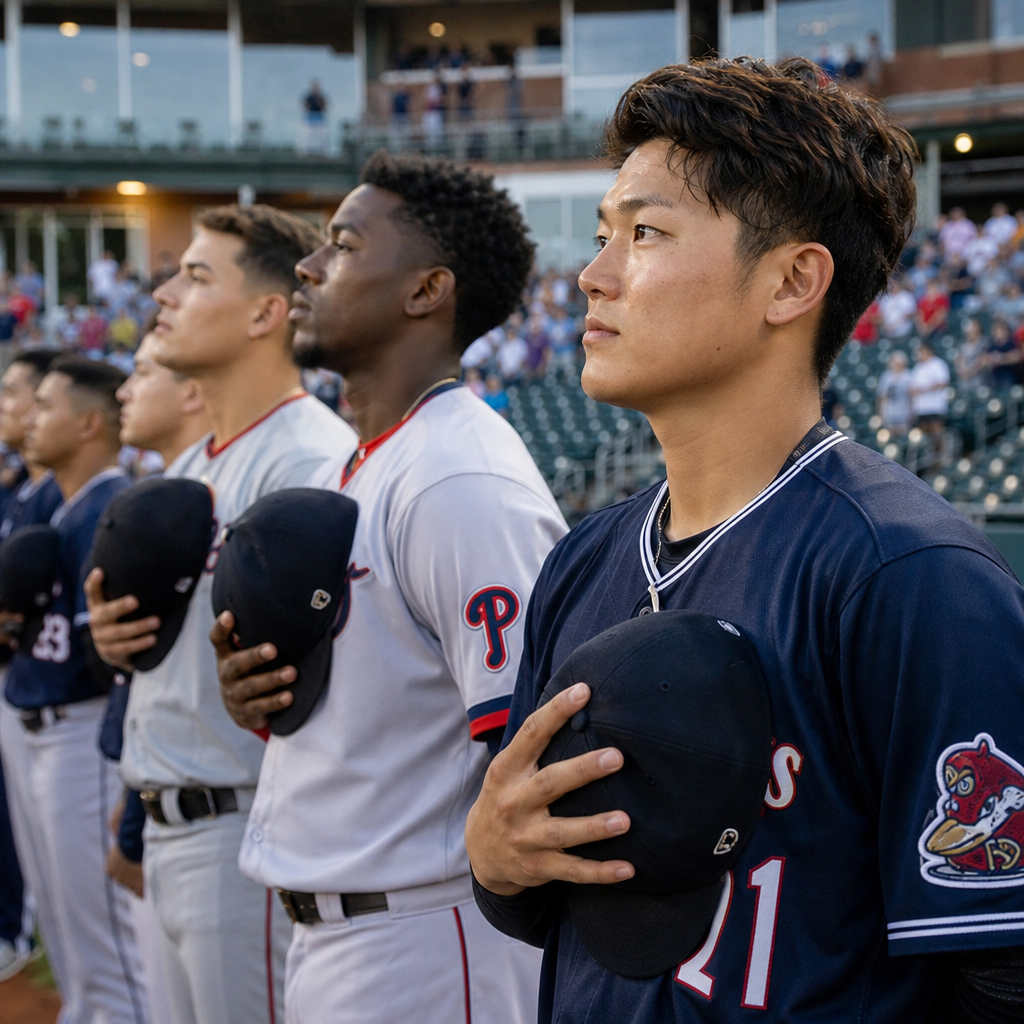
Baseball beyond borders is no longer a niche story inside the minor leagues; it is a defining feature of how professional player development works across North America. International players in minor leagues include teenagers signed in the Dominican Republic and Venezuela, college-aged athletes from Japan, South Korea, Taiwan, Mexico, Colombia, Panama, Curaçao, Australia, and Europe, plus older professionals transitioning from established foreign leagues into affiliated systems. In practical terms, the phrase covers everyone developed outside the traditional American high school and college pipeline who enters rookie ball, Class A, Double-A, Triple-A, or partner circuits connected to professional organizations. This matters because international recruiting reshapes roster construction, coaching methods, academy investments, visa planning, language support, and ultimately the quality of the major league product fans see every season.
Having worked around player development conversations for years, I have seen one constant: teams that understand global talent early create deeper organizations. The modern minor league system is not merely a domestic ladder. It is a multinational training network where scouting, biomechanics, nutrition, education, and cultural adaptation intersect. A shortstop from Santo Domingo may share an infield with a pitcher from Osaka, a catcher from Caracas, and an outfielder from Aruba, all learning the same organizational language while bringing different baseball instincts. For readers exploring minor leagues and college baseball broadly, this hub matters because international development touches every adjacent topic: signing rules, age verification, rookie complexes, winter leagues, housing, NIL-era recruiting comparisons, and how clubs evaluate upside versus polish. Understanding these connections makes every other article in this subtopic easier to place in context.
International players also change how fans should read performance. A 19-year-old who dominates in Low-A after years in a Dominican academy is on a different developmental timeline than a 23-year-old former NCAA star adjusting to wood bats and a full pro schedule. Statistics alone can mislead without age, competition history, training background, and transition factors. Minor league organizations know this, which is why they use layered evaluation tools such as TrackMan, Hawkeye, bat-speed sensors, force plates, high-speed video, and language-specific coaching plans. The growth of international participation is therefore not just a demographic trend. It is a structural shift in how baseball identifies, teaches, and values talent worldwide.
How International Players Enter the Minor Leagues
International players reach the minor leagues through several channels, and each route creates different expectations. The most common path for Latin American prospects is the international amateur signing system, where players become eligible to sign during a designated period once they meet age and residency requirements. Organizations typically scout these players for years before signing, often through team-run academies, independent trainers, and showcase events. Bonuses vary dramatically. A premium shortstop prospect might command several million dollars, while another player with one carrying tool may sign for a fraction of that and still develop into a big leaguer. The Dominican Summer League and Arizona or Florida complex leagues often serve as first stops before full-season affiliates.
Players from countries with stronger domestic professional structures often follow a different route. Japanese and Korean stars are more likely to move through posting systems or free agency at the major league level, but younger players and less established professionals can still appear in affiliated minor league environments. Mexican League arrangements are unique because clubs there retain rights differently than many amateur systems, so transactions often involve purchases or negotiated releases. European and Australian players may come through MLB development events, national team exposure, or college baseball in the United States before signing. In other words, “international player” is not one profile but a set of pathways shaped by local baseball economies.
Visa and legal logistics are an underappreciated part of the process. Before a player can simply report to an affiliate, clubs must navigate immigration paperwork, medical exams, contract registration, and housing coordination. Delays can affect spring training assignments and innings plans. I have watched front offices treat this as seriously as any scouting report, because a missed reporting date can slow development for weeks. Once players arrive, organizations evaluate not just raw skill but readiness for daily professional routines: strength programs, travel demands, nutrition compliance, English instruction, media expectations, and use of performance technology.
Why Latin America Remains the Center of International Minor League Talent
The Dominican Republic remains the most significant international talent source in affiliated baseball, and that is not accidental. The country has dense scouting coverage, a long history of baseball as a social and economic pathway, and a mature network of trainers known as buscones who prepare prospects for showcases and team evaluations. MLB clubs have invested heavily in Dominican academies with dormitories, classrooms, kitchens, fields, and weight rooms. Venezuela has also produced elite talent for decades, though economic and political instability has changed scouting operations and player movement patterns over time. Colombia and Panama have become increasingly important, while Curaçao and Aruba continue to produce polished players with advanced baseball IQ relative to their population size.
Latin American players often enter pro ball younger than American draftees, which creates both opportunity and risk. A 17-year-old infielder may already have thousands of repetitions against quality competition but still need basic strength development and language support. Because these players are younger, clubs can shape mechanics, swing decisions, and defensive positions earlier. At the same time, projection is difficult. Physical maturation, educational gaps, homesickness, and financial pressure back home can all affect outcomes. The best organizations build support systems, not just scouting pipelines, because international player development is never purely about tools.
Winter ball also strengthens Latin America’s importance. Leagues in the Dominican Republic, Venezuela, Puerto Rico, and Mexico expose players to advanced competition, veteran routines, and high-pressure environments. A prospect who spends offseason time around established professionals can accelerate his understanding of preparation and game management. That experience often shows up in spring training through improved situational awareness rather than obvious statistical leaps.
Development Challenges and Organizational Support
Raw talent gets players signed, but support systems determine whether they survive the climb through the minors. Language is the most visible challenge. Clubs now employ bilingual coaches, interpreters, and cultural liaisons because instruction loses value if a player cannot absorb it under game-speed pressure. In my experience, the difference between a generic translation setup and an integrated bilingual development staff is enormous. Players ask more questions, understand correction faster, and build trust with trainers and coordinators.
Nutrition and housing are equally important. A newly signed teenager may be living away from home for the first time while adjusting to a six-day playing schedule and strength program. Teams that provide structured meal plans, host-family options, and financial education reduce preventable setbacks. Mental skills coaching has also become standard. International players commonly carry family expectations, pressure attached to signing bonuses, and the stress of adaptation. Organizations that normalize sports psychology usually see better day-to-day consistency.
Technology adds another layer. Pitchers may be asked to understand induced vertical break, seam-shifted wake tendencies, and release-height consistency. Hitters may review attack angle, chase rate, and swing-decision heat maps. Those concepts are hard enough in one language. Effective clubs translate both the words and the meaning, then tie analytics to drill design. The goal is not to overwhelm a prospect with data but to deliver one usable adjustment at a time.
| Development Area | Common Challenge | Effective Club Response |
|---|---|---|
| Language | Instruction lost in translation | Bilingual coaches, interpreters, English classes |
| Nutrition | Weight loss, inconsistent recovery | Meal plans, academy dining, supplement oversight |
| Mental skills | Homesickness, pressure, confidence swings | Sports psychology, mentorship, routine building |
| Analytics | Metrics feel abstract or intimidating | Translated reports, simple drill-based feedback |
| Logistics | Visa delays, travel confusion, housing stress | Dedicated player services and transition planning |
How Teams Evaluate International Players Differently
Scouting international players requires context-driven evaluation rather than rigid comparison to domestic amateurs. Age relative to competition is critical, especially in complex leagues and the Dominican Summer League. A 20-year-old dominating younger pitching raises different questions than an 18-year-old holding his own in full-season ball. Scouts and player development staff also weigh body projection, hand and wrist speed, arm action efficiency, and athletic adaptability because many prospects are still far from physical maturity. Defensive position is often more fluid internationally as well. A player signed as a shortstop may eventually fit best at second base, center field, or third depending on growth and arm development.
Pitching evaluation has become especially sophisticated. Teams do not simply look at radar-gun readings anymore. They track spin efficiency, extension, vertical approach angle, strike quality, and how a fastball pairs with a breaking ball or changeup. International pitchers sometimes arrive with less formal strength training but natural arm speed and feel for spin. That combination can produce major upside if health and mechanics hold. Hitters are assessed through contact quality, swing decisions, plate coverage, and adjustability against velocity and spin. Bat-to-ball skill alone is no longer enough at upper levels if a player cannot manage the zone.
One persistent misconception is that international prospects are all “raw.” Some are, but many are extremely polished in rhythm, footwork, and game instincts because they have played in competitive baseball cultures from an early age. Conversely, some domestic draftees need just as much developmental work. Smart organizations avoid stereotypes and evaluate the individual in front of them.
Comparing the International Path With the College Baseball Path
Because this hub sits within minor leagues and college baseball, the comparison matters. College players usually enter pro ball older, stronger, and more statistically documented. Teams have access to TrackMan-backed college data, wood-bat summer league looks, and years of video. These players often move faster through lower levels because they are more physically mature and accustomed to structured coaching. International signees usually enter younger and with less public data, but often with more long-term projection. That creates a classic development tradeoff: floor versus ceiling, immediacy versus runway.
Neither route is automatically better. An SEC weekend starter drafted at 21 may reach Double-A quickly because he already commands three pitches and understands game planning. A 17-year-old Dominican outfielder may spend years in lower levels, then suddenly jump after his body, strike-zone judgment, and power all arrive together. Front offices build systems around both timelines. That is why readers interested in draft strategy, college recruiting, and affiliate performance should also understand the international market. The two pipelines compete for resources and complement each other on every roster.
For fans, this comparison helps explain prospect ranking disagreements. Evaluators may prefer a safer college performer, while another club bets on the younger international player with louder tools. Both views can be rational if tied to organizational strengths in coaching and patience.
Why This Topic Connects to Every Other Miscellaneous Minor League Issue
International players in minor leagues serve as a hub topic because they intersect with nearly every “miscellaneous” issue that does not fit neatly into one box. Discussions about salary and living conditions matter more when players are sending money home or adjusting to a new country. Conversations about contraction, complex leagues, and travel matter because early-career international prospects often begin in development-heavy environments rather than traditional city-based affiliates. Debates over automated strike zones, roster limits, and challenge systems matter because players from different baseball cultures must adapt to changing rules at the same time they adapt to professional life.
This topic also links naturally to articles on scouting, independent baseball, winter leagues, sports science, and education programs. Some international players use partner leagues or independent circuits to get noticed after being overlooked. Others return to winter ball for reps, confidence, and visibility. Some leave affiliated ball and thrive in Nippon Professional Baseball, the KBO, or the Mexican League. The movement is multidirectional, not simply a one-way path to MLB. That makes this page a useful hub for readers who want the full map of how baseball development works beyond the draft and beyond the United States.
International players are central to the modern minor leagues because they expand the talent base, force organizations to improve development systems, and connect local affiliates to a global game. The key facts are clear: players arrive through multiple signing pathways, Latin America remains the core talent engine, adaptation requires strong support, and evaluation must account for age, culture, and projection. When fans understand those realities, minor league results make more sense and prospect stories become richer.
The biggest benefit of following baseball beyond borders is perspective. You stop seeing the minors as a simple ladder and start seeing a worldwide network of scouting, education, technology, and opportunity. That perspective helps whether you are tracking your favorite team’s farm system, researching college versus international pipelines, or exploring related topics across this sub-pillar. Use this hub as your starting point, then dig deeper into the linked subjects that shape how international players sign, develop, and reach the highest levels of the sport.
Frequently Asked Questions
How do international players typically enter the minor leagues?
International players reach the minor leagues through several different pathways, and that variety is a major reason global talent has become so important to player development. Many players from Latin America, especially from countries such as the Dominican Republic and Venezuela, sign as international amateurs when they are teenagers and begin their careers in academy settings, rookie-level complexes, or entry-level affiliates. These signings are often the result of years of scouting, training programs, and relationships between clubs and local baseball networks. By contrast, players from countries such as Japan, South Korea, Taiwan, Australia, and many parts of Europe may arrive through amateur signings, college baseball, independent leagues, or direct transitions from professional leagues abroad. Some are younger prospects with long developmental timelines, while others are older and more polished, entering affiliated baseball with substantial competitive experience already behind them.
There is also an increasingly important group of international players who do not fit the traditional teenage-prospect model at all. These include professionals moving from leagues in Mexico, Japan, Korea, or the Caribbean into affiliated systems, as well as players who first develop in international tournaments, academies, or U.S. college programs before signing. In practical terms, the minor leagues serve as a bridge: they allow organizations to evaluate how a player’s tools, approach, and adaptability translate into a new baseball environment. That means international recruitment is not just about finding raw athleticism overseas; it is about identifying players from many baseball cultures and integrating them into a development pipeline that can eventually lead to the major leagues.
Why are international players so important to modern minor league systems?
International players are essential because they expand the talent base far beyond what any one domestic pipeline can provide. Professional organizations are no longer developing players from only U.S. high schools and colleges; they are building systems that pull from multiple countries, styles of play, and baseball traditions. That matters both competitively and structurally. A club that scouts effectively in the Dominican Republic, Venezuela, Colombia, Panama, Mexico, Japan, South Korea, Taiwan, Curaçao, Australia, and emerging European markets has more chances to uncover impact talent, depth pieces, and specialized skill sets. In many organizations, international signees make up a substantial share of lower-level rosters, meaning they are not a side story in development—they are central to it.
Just as importantly, international players influence how teams teach the game. Their presence pushes organizations to invest in multilingual coaching, cultural support, nutrition, housing, education, and individualized training plans. Some players arrive with advanced bat-to-ball skills, elite baseball instincts, or professional-level experience; others bring raw tools that need time and structure. That mix makes minor league systems richer and more complex. It also reflects a broader truth about modern baseball: success increasingly depends on how well teams identify, support, and develop talent from different backgrounds. International players are not simply adding diversity to rosters; they are helping define what effective player development looks like in the current era.
What challenges do international players face when developing in the minor leagues?
For many international players, the baseball adjustment is only one part of a much larger transition. Language can be a daily obstacle, especially in the early stages of a career. Communicating with coaches, understanding scouting reports, processing complex training instructions, handling media expectations, and navigating everyday life all become harder when a player is working in a second language. On top of that, there is the cultural adjustment: food, routines, travel demands, weather, social customs, and even clubhouse dynamics may be very different from what a player experienced at home. Younger signees often enter pro ball while still maturing emotionally, so separation from family and familiar support systems can be especially difficult.
There are also sport-specific adjustments that can be underestimated from the outside. A player moving from an established foreign league may need to adapt to different pitching usage, analytics-driven instruction, strength programs, defensive positioning, or scheduling intensity. Younger players may need to learn professional expectations around recovery, video work, nutrition, and game planning almost all at once. For pitchers, changes in ball composition, mound routines, and strike-zone interpretation can matter. For hitters, velocity profiles, sequencing, and power expectations may be different. Organizations that handle these transitions well tend to treat development as more than mechanics and statistics. They provide language education, interpreters, cultural liaisons, mental skills coaching, and a stable environment so players can focus on improving rather than simply surviving the transition.
Do international players develop differently from U.S.-born prospects in the minor leagues?
They often do, though the differences are not always about ability. Development timelines are shaped by age, experience level, access to prior coaching, physical maturity, and the competitive environment a player came from. A teenage signee from the Dominican Republic may enter affiliated baseball with exciting tools but less formal game-planning experience than a U.S. college player. Meanwhile, a player arriving from Japan, South Korea, or Mexico may already have faced advanced competition and may need less foundational instruction but more adaptation to an organization’s specific systems. As a result, teams cannot rely on a one-size-fits-all model. Two players listed at the same level may be in completely different stages of development.
That is why modern organizations increasingly build individualized plans. For one player, the priority may be English instruction, nutrition, and physical development. For another, it may be pitch-design work, swing decisions, or defensive versatility. Some international players move quickly because their baseball instincts and competitive experience translate immediately. Others require more time because the transition includes both on-field growth and off-field adjustment. The key point is that “international” is not a single developmental category. It includes teenage prospects, polished older professionals, and everything in between. Successful minor league systems recognize those distinctions and create flexible environments where players can develop according to what they actually need, not according to broad assumptions about where they come from.
How have international players changed the identity of the minor leagues?
International players have transformed the minor leagues from a primarily domestic training ground into a truly global development network. Clubhouses now bring together players from across Latin America, Asia, the Caribbean, Australia, Europe, and North America, creating a daily environment shaped by multiple languages, baseball educations, and life experiences. That has changed how teams operate at every level. Coaching staffs are expected to communicate across cultures. Front offices must think globally in scouting and development. Even fans have started to understand that the future of an organization may be taking shape not only in U.S. draft classes, but also in international academies, foreign professional leagues, and emerging baseball countries around the world.
Just as importantly, the presence of international players has broadened what the minor leagues represent. They are no longer only a ladder for domestic prospects; they are a crossroads where different baseball traditions meet and where organizations test how well they can turn global talent into major league contributors. That gives the minor leagues a wider cultural and competitive significance. They reflect the globalization of the sport in real time, from teenager signings out of the Caribbean to experienced professionals adjusting from overseas leagues. In that sense, “baseball beyond borders” is not just a theme or trend. It is an accurate description of what the minor leagues have become: a developmental system powered by international movement, international scouting, and international ambition.