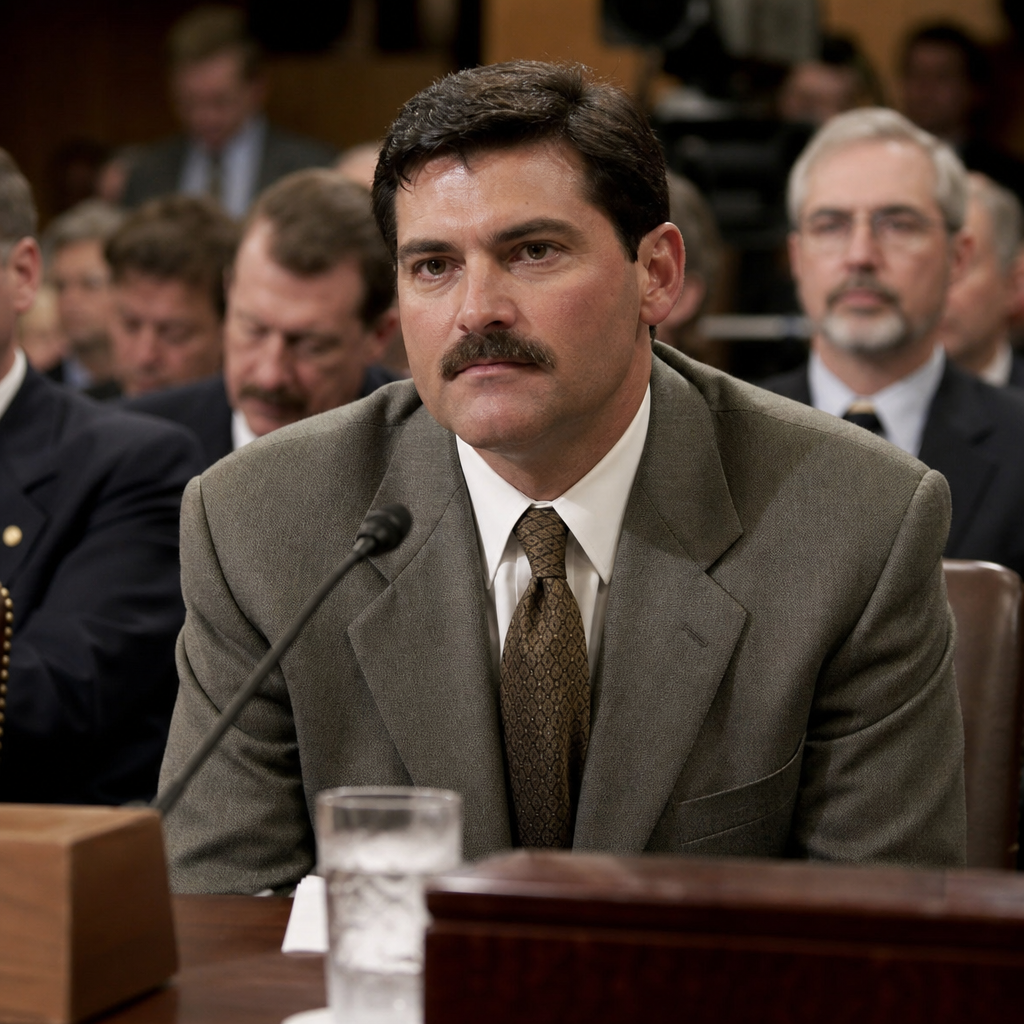
The 2005 Rafael Palmeiro congressional hearing became one of the defining moments of baseball’s steroid era because it condensed years of suspicion, denial, policy failure, and public anger into a few unforgettable minutes on Capitol Hill. For readers exploring scandals and controversies in sports, this hearing sits in the miscellaneous category only because it touches so many overlapping themes at once: performance-enhancing drugs, labor politics, media spectacle, institutional credibility, and the fragility of personal reputation. In practical terms, the hearing refers to the March 17, 2005 appearance of Major League Baseball figures before the U.S. House Committee on Government Reform, where lawmakers examined steroid use in professional baseball. Rafael Palmeiro, then one of the game’s most accomplished hitters, delivered the hearing’s most quoted line when he pointed directly at committee members and declared, “I have never used steroids. Period.”
That statement mattered because Palmeiro was not a fringe player or a retired figure trying to protect a fading legacy. He was an active first baseman and designated hitter with more than 500 home runs and 3,000 hits, a combination reached by only a handful of players. He had built a reputation for durability, steady production, and professionalism across long careers with the Chicago Cubs, Texas Rangers, and Baltimore Orioles. When Congress summoned baseball leaders and selected players, it did so after public confidence had already been shaken by the BALCO investigation, leaked grand jury testimony, and the uneven drug policies that existed in the sport. Fans wanted a clear answer to a basic question: had baseball ignored widespread cheating during one of its most profitable eras?
From my perspective reviewing hearing transcripts, media coverage, league policy documents, and later disciplinary records, the Palmeiro appearance matters less as a single denial and more as a case study in how public institutions handle contested truth. A congressional hearing is not a criminal trial, but it carries symbolic power. Witnesses testify under oath, members perform accountability for cameras, and sound bites often shape public memory more than dense factual records. In Palmeiro’s case, the image of a star player forcefully rejecting accusations became instantly iconic. Yet the hearing cannot be understood in isolation. It emerged from a broader crisis in which Major League Baseball, the MLB Players Association, club executives, and politicians all had incentives to speak selectively. That tension makes this episode essential for anyone mapping the wider landscape of sports scandals.
Understanding the hearing also helps explain why the steroid era remains unresolved in public memory. Some controversies end with a verdict, a confession, or a rule change that closes debate. This one did not. Palmeiro’s later positive test for stanozolol, his continued denials, the role of teammate Miguel Tejada’s contested account about a vitamin B12 injection, and the absence of a universally trusted historical record left the story suspended between certainty and doubt. The result is a controversy that still influences Hall of Fame arguments, media ethics, and discussions about whether Congress should involve itself in professional sports. As a hub topic, the Palmeiro hearing connects to questions about evidence, public testimony, athlete branding, league governance, and the long afterlife of scandal.
What Happened at the 2005 Hearing
The March 2005 hearing was formally focused on steroid use in baseball, but its real purpose was broader: lawmakers wanted to pressure Major League Baseball into adopting a stronger drug policy and to show voters that Congress was responding to concerns about honesty, youth influence, and the integrity of a major cultural institution. The House Committee on Government Reform, chaired by Representative Tom Davis, heard testimony from Commissioner Bud Selig, MLB Players Association executive director Donald Fehr, and several current or former players, including Rafael Palmeiro, Mark McGwire, Sammy Sosa, Curt Schilling, and José Canseco. Each witness represented a different narrative. Canseco presented himself as a whistleblower. McGwire refused to discuss past conduct directly. Schilling argued for accountability. Palmeiro chose categorical denial.
His testimony was striking because it was unqualified. He did not hedge, claim memory problems, or criticize the process before answering. He flatly stated that he had never used steroids or any other banned substance. In a room built for confrontation, that kind of certainty was politically useful and emotionally effective. It gave supporters a line to defend and critics a line to revisit later. Congressional hearings often turn on moments that can be replayed repeatedly on television, and Palmeiro’s finger-pointing declaration supplied exactly that. For many viewers, it sounded less like routine testimony and more like a personal guarantee. That rhetorical force is why the statement endured long after the full hearing faded from ordinary memory.
The context behind his appearance was the 2003 survey testing program and the stronger 2004 collective bargaining agreement provisions that had begun moving baseball toward more formal drug enforcement. At the same time, leaked information from the BALCO investigation had implicated several elite athletes across sports, creating a climate where denial no longer ended scrutiny. Congress sensed that baseball’s internal mechanisms had failed. Lawmakers repeatedly emphasized children, role models, and fairness, but they were also responding to a governance gap. Baseball had relied for years on inconsistent testing, weak penalties, and a culture that often prized home run totals over uncomfortable questions. The hearing was therefore both investigative theater and a policy lever.
Why Rafael Palmeiro Was Central to the Story
Palmeiro’s stature made his testimony more consequential than that of a marginal player would have been. By 2005 he was nearing career milestones that historically signaled automatic Hall of Fame entry. His offensive consistency was elite rather than flashy: he was not merely a slugger, but a complete run producer with plate discipline, power, and remarkable longevity. That profile mattered because the steroid debate often centered on visibly transformed bodies or dramatic late-career surges. Palmeiro presented a different image, one that many fans and even some reporters had treated as comparatively stable and trustworthy. When a player with that résumé and demeanor offered absolute denial under oath, the statement carried unusual weight.
He was also strategically positioned within baseball’s public narrative. Unlike McGwire, who entered the hearing already shadowed by intense suspicion, Palmeiro still had room to persuade. Unlike Canseco, he was not associated with sensational accusations. Unlike Sosa, whose hearing performance was complicated by language and presentation issues, Palmeiro delivered a concise and direct message in plain terms. In crisis communication, clarity can outperform complexity, at least temporarily. His line seemed designed for immediate credibility. It appealed to lawmakers seeking accountability and to fans searching for one clean voice in a muddy debate.
There was another reason Congress and the media focused on him: he had reportedly been named in testimony linked to the BALCO matter, though details available publicly were incomplete and contested at the time. That made his denial more than a general defense of baseball. It was a direct personal rebuttal to an emerging allegation. In controversy analysis, this is the difference between ambient suspicion and targeted contradiction. Once a witness specifically rejects a claim under oath, any later evidence acquires explosive significance. That is exactly what happened months later when Major League Baseball announced that Palmeiro had tested positive for a banned substance, becoming the highest-profile active player disciplined under the league’s new policy.
The Positive Test and the Collapse of the Denial
On August 1, 2005, the Orioles confirmed that Palmeiro had received a 10-day suspension after testing positive for stanozolol, an anabolic steroid that had long been associated with doping cases in sport. The suspension transformed the March hearing from a controversial policy event into a reputational catastrophe. The issue was no longer whether Congress had overreached or whether baseball’s testing regime was fair. The central question became obvious and brutal: how could a player who had emphatically denied steroid use before Congress then fail a drug test in the same season?
Palmeiro denied knowingly taking steroids and suggested he had no explanation for how the substance entered his body. Much of the public discussion then revolved around a story involving teammate Miguel Tejada, who reportedly gave Palmeiro an injection said to be vitamin B12. Tejada later disputed key details, and no version of the account resolved the underlying credibility problem. Under anti-doping logic, athletes are generally held responsible for what enters their systems, a principle mirrored in the World Anti-Doping Agency framework even though MLB operated under its own collectively bargained rules. That standard exists because intent is often difficult to prove. In practical terms, once the positive test was announced, Palmeiro’s hearing testimony became the lens through which every explanation was judged.
| Event | Date | Why It Mattered |
|---|---|---|
| Congressional hearing testimony | March 17, 2005 | Palmeiro publicly denied ever using steroids under oath |
| Positive test announced | August 1, 2005 | Triggered suspension for stanozolol and immediate credibility collapse |
| MLB suspension served | August 2005 | Made Palmeiro the most prominent active player punished under the new policy |
| Career effectively ended | Late 2005 | He never fully recovered his standing or his Hall of Fame trajectory |
The damage was immediate and durable. Although Palmeiro returned after the suspension, he played his final major league game in 2005. His statistical achievements no longer guaranteed celebration. Hall of Fame voting reflected that shift sharply. Despite 569 home runs and 3,020 hits, totals that once would have made induction seem routine, he received limited support and eventually fell off the ballot. In baseball, scandal rarely erases numbers, but it changes what numbers mean. Palmeiro’s case showed that the steroid era had introduced a second ledger, one measuring credibility, context, and trust.
How the Hearing Changed Baseball and Public Trust
The hearing did not create baseball’s drug problem, but it accelerated reform and hardened public expectations. Before the mid-2000s, the league’s approach had been fragmented and often reactive. After the hearing and the wave of embarrassment that followed, MLB and the union moved toward tougher testing, broader banned-substance lists, and steeper penalties. Later policy developments expanded blood testing for human growth hormone, increased offseason testing, and strengthened investigative capacity. These changes were not caused by one witness alone, yet the Palmeiro episode became a cautionary example inside the sport: public denials are fragile when enforcement mechanisms become more robust.
The hearing also reshaped how fans interpreted athlete testimony. In earlier eras, a star’s personal assurance often carried substantial weight. After 2005, audiences became more skeptical of polished denials, especially in doping controversies where laboratory evidence, chain-of-custody rules, and independent investigations matter more than emotional performance. That skepticism spread beyond baseball. Cycling, track and field, mixed martial arts, and even Olympic governance all saw similar shifts toward evidence-centered judgment. Once viewers watched a prominent player deny steroid use before Congress and then fail a test months later, the cultural baseline changed.
Media institutions changed too. Reporters covering performance-enhancing drugs became less willing to rely on clubhouse reputation or traditional access journalism. Investigative methods, document review, legal sourcing, and policy analysis gained importance. The most durable reporting on the steroid era came not from dramatic postgame quotes but from persistent examination of testing rules, federal investigations, supplier networks, and leaked records. The Palmeiro hearing reinforced a simple newsroom lesson: in scandals involving concealed conduct, demeanor is evidence of confidence, not proof of innocence.
What This Controversy Means in the Wider Scandals Landscape
As a hub article within miscellaneous scandals and controversies, the Palmeiro hearing connects multiple recurring patterns. First, it shows how institutions invite crisis when they delay action against an obvious problem. Second, it demonstrates how reputational damage multiplies when an absolute denial collides with later evidence. Third, it reveals that scandals are rarely confined to one person. Congress, the commissioner’s office, the players union, club officials, journalists, and fans all shaped the environment in which steroid use could spread and in which accountability later became performative as well as real.
It also highlights the limits of public hearings as truth-finding tools. Hearings can pressure organizations, frame issues, and surface contradictions, but they are not substitutes for rigorous investigation or scientifically reliable testing. In that sense, the 2005 session succeeded politically more than factually. It raised the cost of inaction and forced baseball toward stronger policy, yet it did not resolve the historical record cleanly. That unresolved quality is why the hearing still matters. It remains a reference point whenever people debate whether sports scandals are driven more by cheating itself, by weak oversight, or by the spectacle of exposure.
The main lesson is clear: the 2005 Rafael Palmeiro congressional hearing was not just a dramatic exchange on Capitol Hill. It was a hinge moment in the steroid era, and its consequences reached far beyond one player’s career. It changed how baseball policed performance-enhancing drugs, how fans evaluate public denials, and how reputations are judged when evidence emerges after forceful testimony. For anyone studying scandals and controversies, this case offers a durable framework for understanding modern sports crises: incentives encourage concealment, institutions delay reform, public statements raise the stakes, and credibility can vanish faster than statistics accumulate. If you are building out coverage in this subtopic, use the Palmeiro hearing as a central reference point and connect it to related articles on the BALCO investigation, MLB drug policy, Hall of Fame debates, and congressional oversight in sports.
Frequently Asked Questions
What happened during the 2005 Rafael Palmeiro congressional hearing, and why did it become so memorable?
The 2005 Rafael Palmeiro congressional hearing took place on March 17, 2005, during a highly publicized session of the U.S. House Committee on Government Reform focused on steroid use in Major League Baseball. Palmeiro appeared alongside several other current and former stars, including Mark McGwire, Sammy Sosa, Curt Schilling, and Jose Canseco. What made Palmeiro’s testimony unforgettable was the forceful way he denied ever using steroids. He famously pointed his finger toward lawmakers and declared, “I have never used steroids. Period.” That moment became instantly iconic because it projected certainty, moral indignation, and confidence at a time when the public was already deeply suspicious of baseball’s drug problem.
The hearing itself was not just about one player. It was part of a broader national reckoning over whether baseball had failed to police performance-enhancing drugs, whether the players’ union and league leadership had allowed the problem to grow, and whether Congress had to intervene because the sport was unwilling to clean itself up on its own. Palmeiro’s testimony mattered because he was not a fringe figure. He was a respected veteran, a member of the 500 home run and 3,000 hit club, and someone widely seen as a model of consistency and professionalism. His public denial therefore carried unusual weight.
The hearing became memorable because it condensed the entire steroid era into a single piece of political theater. There was celebrity, accusation, denial, institutional pressure, and a crisis of trust all in one room. Palmeiro’s statement seemed designed to end the conversation around him, but in hindsight it did the opposite. Once he later tested positive for a banned substance, the hearing was reinterpreted as a defining example of how fragile credibility had become in baseball. That is why the moment remains one of the central images of the era.
Why was Rafael Palmeiro called to testify before Congress in the first place?
Rafael Palmeiro was called to testify because Congress wanted answers from some of baseball’s most recognizable figures as public pressure mounted over the sport’s handling of steroids. By 2005, concerns about performance-enhancing drugs had moved far beyond clubhouse gossip or sports-page speculation. The issue had become a national story tied to youth sports, public health, labor policy, and the integrity of one of America’s most visible institutions. Lawmakers believed Major League Baseball had not acted aggressively enough, and bringing star players to Capitol Hill was a way to force accountability in public.
Palmeiro was a logical witness because he was one of the game’s most accomplished and prominent players. He had built a Hall of Fame-caliber statistical resume and was viewed by many fans as a durable, productive veteran rather than a controversial personality. That made his presence useful to Congress. If lawmakers only questioned already notorious or openly accused figures, the hearing might have seemed narrow or theatrical. By including a player like Palmeiro, they broadened the scope and suggested the steroid issue touched the core of the sport, not just its margins.
There was also the practical reality that baseball’s steroid controversy had been fueled by investigations, media reporting, and the publication of the BALCO-related allegations discussed in books such as “Game of Shadows.” Even when direct evidence against every player was not available publicly, suspicion was widespread. Congress was less interested in litigating every individual case than in exposing the larger systemic failure: weak testing, inconsistent enforcement, evasive public relations, and a culture in which everyone seemed to know there was a problem while few were willing to address it directly. Palmeiro’s testimony fit that larger objective, which is why his denial became so significant later.
Did Rafael Palmeiro test positive after the hearing, and how did that change public perception?
Yes. In August 2005, only a few months after his emphatic denial before Congress, Rafael Palmeiro was suspended by Major League Baseball for testing positive for stanozolol, an anabolic steroid. The positive test transformed the meaning of his congressional testimony almost overnight. Before the suspension, his finger-pointing denial had been treated by some as a bold defense of his reputation. After the suspension, that same moment was widely seen as one of the most damaging and embarrassing denials of the steroid era.
The public reaction was so strong because the contrast was stark. Palmeiro had not offered a cautious answer, a legalistic non-response, or a claim about not knowingly breaking rules. He had delivered an absolute denial in one of the most formal and visible settings possible: under oath before Congress, with cameras rolling and the entire baseball world watching. When the positive test became public, many fans, commentators, and lawmakers viewed it as evidence not just of steroid use, but of a deep credibility crisis in the sport. It reinforced the belief that baseball’s stars, teams, and institutions could not be trusted to tell the truth about performance-enhancing drugs.
Palmeiro disputed the result and suggested he never intentionally used steroids, raising the possibility of contamination or accidental ingestion. But by that point, the damage to his public standing was severe. In scandals like this, public perception is often shaped less by technical defenses than by the broader narrative. The narrative here was devastating: a prominent star had forcefully denied steroid use in Congress and then failed a drug test months later. That sequence cemented the hearing’s legacy and became a cautionary example of how quickly denial could collapse under evidence.
How did the Palmeiro hearing affect Major League Baseball’s reputation and steroid policy?
The Palmeiro hearing was part of a larger turning point for Major League Baseball, and its impact on the sport’s reputation was profound. By 2005, baseball was already struggling with questions about whether the home run boom of the late 1990s and early 2000s had been artificially inflated by performance-enhancing drugs. The congressional hearing put those questions on a national political stage and made it impossible for the league to treat the issue as an internal matter. Palmeiro’s later positive test made the hearing especially damaging because it suggested that even direct, under-oath denials from elite players could not restore public trust.
In reputational terms, the episode deepened skepticism about the legitimacy of player achievements, team success, and league oversight. Fans began revisiting statistics, awards, and records through the lens of suspected drug use. The hearing also intensified criticism of Commissioner Bud Selig, club owners, and the Major League Baseball Players Association, all of whom were accused in different ways of allowing the problem to grow. The league had testing in place by then, but many critics saw the policy as too weak, too late, and too vulnerable to loopholes. Congress effectively shamed baseball into recognizing that symbolic gestures would no longer be enough.
On the policy side, the broader steroid controversy, amplified by hearings like this one, helped drive stricter testing and tougher penalties. Over time, MLB expanded its drug program, increased suspensions, improved detection, and tried to create a more credible enforcement structure. No single hearing solved the problem, but the Palmeiro moment became part of the pressure campaign that forced baseball to evolve. It remains significant because it showed how public scandal, media exposure, and political scrutiny can accelerate institutional reform when a sports league appears unable or unwilling to police itself effectively.
Why does the 2005 Rafael Palmeiro congressional hearing still matter in discussions about sports scandals today?
The 2005 Rafael Palmeiro congressional hearing still matters because it serves as a case study in how modern sports scandals unfold at the intersection of competition, celebrity, media, politics, and public trust. This was not merely a drug-testing controversy. It became a referendum on whether elite athletes tell the truth, whether leagues protect their own interests ahead of integrity, whether unions can resist reform too long, and whether outside institutions eventually step in when a sport loses credibility. In that sense, the hearing remains relevant far beyond baseball.
It also matters because it captured the mechanics of the steroid era in unusually vivid form. There was a celebrated athlete with a polished reputation, a highly visible public denial, a governmental setting that raised the stakes, and a later development that radically altered the story. That sequence has become one of the clearest examples of how denial can amplify scandal rather than contain it. For journalists, historians, and fans, the Palmeiro hearing is a reference point whenever a sports figure responds aggressively to allegations that later gain evidentiary support.
More broadly, the hearing remains important because it illustrates how institutional failure often develops gradually and then becomes undeniable all at once. Baseball’s steroid problem was not created in one hearing, and it was not solved by one suspension. But the Palmeiro episode crystallized years of drift, avoidance, and selective enforcement into a moment the public could easily understand. That is why it continues to appear in discussions of sports ethics, Hall of Fame debates, athlete accountability, and the long-term consequences of credibility lost. Even today, it stands as one of the defining cautionary tales in American sports culture.