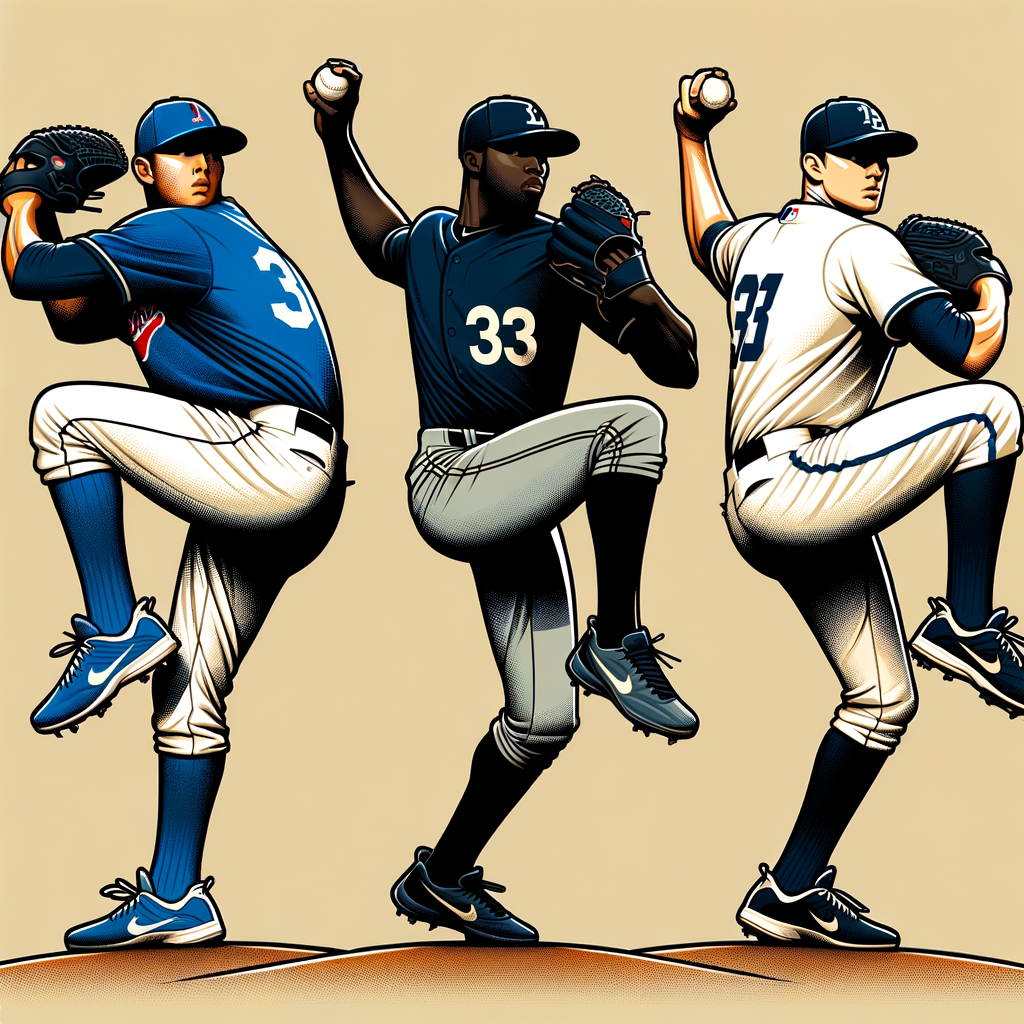
When you think about the sport of baseball, certain archetypes immediately come to mind—those towering sluggers, esteemed catchers, and, of course, the diligent pitchers who control the game. Particularly intriguing are the southpaw pitchers, the left-handed maestros who have graced the pitcher’s mound with an artful delivery and cunning skill over baseball’s enduring history. This article delves into the world of these legendary lefties, exploring their influence on the game and what makes southpaw pitchers uniquely essential to the rich tapestry of professional baseball. These players have demonstrated a remarkable ability to dominate a sport in which right-handed participants are the majority. In professional baseball, southpaws constitute less than a third of all pitchers—a stark minority—but their impact isn’t a fraction lessened. In fact, their scarcity only adds to their mystique and efficacy on the field.
The innate rarity of left-handed athletes, combined with their unique mechanics and angles, often gives lefty pitchers an advantage that is both strategic and psychological. Batters, who predominantly face right-handed pitchers, often find themselves at a tactical disadvantage when standing against a left-handed opponent. Moreover, lefties provide teams with invaluable versatility, particularly when deploying strategic plays or mitigating threats from especially skilled right-handed batters. To understand how these athletes wield such influence, it is essential to explore some of the most iconic southpaw pitchers in history, examining their careers, achievements, and the enduring legacy they leave behind.
While right-handed pitchers control a vast majority of gameplay, left-handed pitchers have carved out a unique legacy full of legendary performances, numerous record-setting feats, and moments that defy odds, cementing their place in baseball’s storied history. The contribution of these athletes extends beyond the statistics and enhances the strategic element of the game. In the upcoming sections, we will examine these “Legendary Lefties” and break down why they remain enigmatic figures of interest not only for staunch baseball loyalists but for enthusiasts of sports at large.
Lefty Legends: A Phenomenal Few
To begin this exploration, consider Sandy Koufax, a Hall of Famer whose career with the Los Angeles Dodgers in the 1950s and 60s epitomized what it means to be a dominant southpaw. Koufax’s dual control of speed and precision turned many outings into exhibitions of pitching excellence. His remarkable achievements include four World Series titles, three Cy Young Awards, and an MVP award. Perhaps more impressive are his perfect game and four no-hitters—feats that secure his legacy as one of the game’s greatest. Despite retiring early due to arthritis, his brief yet brilliant career glows as a testament to southpaw prowess.
Then there’s Warren Spahn, who holds the record for most career wins by a left-handed pitcher with a remarkable 363. Spanning from his debut in the 1940s to his final innings in the early 1960s, Spahn’s consistency and staunch competitive spirit made him a formidable force on the mound. Known for his exceptional curveball and sharp understanding of hitters, Spahn was synonymous with during an era when the game was defined by hard-nosed discipline.
Randy Johnson, affectionately known as “The Big Unit,” is another modern representation of left-handed mastery. Standing at an imposing 6’10”, his height and unique delivery were intimidating to say the least. A testament to his skill, Johnson not only achieved over 300 wins but also led the league in strikeouts multiple times and secured five Cy Young Awards. His devastating slider and blistering fastball defined a new era for left-handed pitching in the late 20th century.
Another southpaw worthy of the spotlight is Steve Carlton. Carlton collected four Cy Young Awards, an impressive feat for any pitcher. “Lefty,” as he was fondly dubbed, amassed 329 career victories and contributed effectively to the Philadelphia Phillies, with whom he rose to World Series glory in 1980. His pitching was characterized by a sweeping slider that mystified batters, earning him a lasting reputation as one of the game’s strategic maestros.
The Left-Handed Advantage
The discussed champions showcase the advantages inherent to southpaw pitchers—defined by traits that give them an edge on the diamond. Left-handed pitchers, by virtue of their writing and throwing arms being on opposite sides of the body, are a rare breed in baseball, leading to a different ball trajectory that can be challenging for batters used to right-handed throws. This delivery angle can make off-speed pitches, such as sliders and curveballs, even more effective against batters who are conditioned to face right-handed intimidation.
It is the subtleties in pitching that separate elite southpaws from their right-handed counterparts. As a general rule, lefties have a natural advantage when facing left-handed batters, due to the ball’s trajectory and angle of delivery. This aspect often encourages managers to pit a left-handed pitcher against challenging left-handed batters during tight situations. Beyond pitch direction and strategy, these pitchers harness mental toughness, a unique grit cultivated over careers often punctuated with challenges and a relentless need for adaptability.
Historical Impact of Southpaw Pitchers
Over the years, southpaw pitchers have changed the strategic landscape of baseball itself. In the early years, the game’s rules and formations varied, leaving much room for innovation on the pitcher’s mound. Concerning left-handed pitchers, they have pushed forward boundaries dealing with reformulation of batting lineups to counter these left-handed duels by strategic innovations inside the game’s tactics and formations.
With pitchers like Eddie Plank and Herb Pennock paving the way in the early 20th century, southpaws established themselves as critical assets to any competitive team. Teams began to value these specific pitching strengths, often substituting lefties mid-game for dynamic defensive plays. This strategic use added an exciting layer to the game, shaping it into a sophisticated mind sport driven by acute managerial vigilance.
In the modern era, this legacy continues with pivotal contributions from southpaws such as Clayton Kershaw and CC Sabathia, both of whom have redefined the standards of pitching excellence in the 21st century. They embody how a left-handed pitcher’s skillset extends beyond physical talent, encompassing mental acumen and a deeper understanding of the game’s innate strategic elements.
Lefties in the Next Generation
The impact of southpaw pitchers—past and present—only becomes more apparent when considering emerging pitchers on the scene. As baseball continues to evolve, new norms take hold, and lefties are positioned to play crucial roles in the sport’s evolution. Young talents are conditioned not only to replicate the success of predecessors but to surpass new benchmarks set by players like Chris Sale and Hyun-Jin Ryu, who promise to continue and expand the lefty legacy into new realms.
These burgeoning left-handed prodigies mirror their hall-of-fame predecessors, adopting and improving upon historic techniques and introducing modern dynamic methodologies to their kit, ensuring the left-handed going capacity surges with each encounter on the field. In essence, southpaws will continue to mark the space they occupy with the unmistakable stamp of excellence that has come to symbolize their influence in baseball.
Conclusion
In summary, the world of baseball shows us time and again that left-handed pitchers hold a revered place within its intricate fabric, influenced by legends whose trails burn brightly through history. Through distinct capability, strategic applications, and their effect on team dynamics, southpaws have indelibly etched themselves into the legacy of America’s pastime. Whether looking back at history’s greats or forward to the next wave of promising talents, left-handed pitchers will remain central to baseball’s allure, promising excitement, unbeatable displays of tenacity, and matches that capture the imagination of generations.
The prowess and depth of ability embodied in these athletes continue to be appreciated by fans and managers alike, reminding us that baseball thrives on diversity, complexity, and the magical touch of the unexpected—in this case, the power of a left hand with the world of potential at its fingertips. Their story encompasses the broader narrative of baseball, a testament to the beautiful unpredictability of sports, the joy of competition, and the relentless pursuit of excellence that lies at its heart.
For the aspiring pitchers of tomorrow, the legacy of these legendary lefties stands both as a testament and a benchmark—a reminder that even within the framework of a game ruled by numbers and averages, the capacity to astonish and impress is timeless and that heroes, no matter the predominant hand doing the work, captivate where it counts most: on the pitcher’s mound.
Frequently Asked Questions
1. Why are left-handed pitchers, or ‘southpaws’, seen as unique in baseball?
Left-handed pitchers hold a special place in baseball lore for several reasons. Firstly, their mere presence disrupts the balance of the game. Most batters are right-handed, and hitting off a left-handed pitcher can be treacherous due to the difference in pitch angle and spin. This asymmetrical matchup gives lefties a distinct strategic edge, allowing them to leverage their natural movement to deceive hitters. Additionally, there is a general rarity of left-handed pitchers in comparison to right-handed ones, which makes lefties a treasured commodity. Historically, some of the most gifted athletes to grace the sport have been left-handed pitchers. Their ability to control the game through strategic thinking, skillful pitching, and unsettling batters has made them an influential force in baseball’s history. Famous lefties like Sandy Koufax, Randy Johnson, and Steve Carlton have set records and achieved accolades, highlighting the unique contribution that southpaws bring to the game.
2. What qualities make left-handed pitchers stand out in the history of baseball?
Left-handed pitchers, or southpaws, are often celebrated for their exceptional qualities that distinguish them from their right-handed counterparts. One defining characteristic is their natural physical pitch spin, which adds an element of unpredictability to their throw. The rotation can make the ball break late, often puzzying batters and disrupting timing. Along with physical attributes, it’s the mental game that enhances their legacy. Southpaw pitchers are adept strategist, keen on exploiting mismatched weaknesses. Their approach often involves meticulously studying hitters to refine gameplans tailored for dismantling any offensive threats. Another significant aspect is their adaptability – the ability to embrace evolving game dynamics and intrepid adjustments within seasons highlights their enduring contribution. Baseball is not just a display of raw physical prowess; it’s a chess match of mind and muscle, and southpaws have mastered this blend to cement their legendary roles in baseball history.
3. Could you name a few legendary southpaw pitchers throughout baseball history?
Certain left-handed pitchers have left an indelible mark on Major League Baseball due to their extraordinary skills and achievements. Sandy Koufax, renowned for his six-year dominance that culminated in three Cy Young Awards, is often cited among the greatest due to his fastball and curveball combination, which left batters in awe. Likewise, Randy “The Big Unit” Johnson, standing at an intimidating 6’10”, commanded the mound with raw power and fiery emotion, earning five Cy Young Awards and 4,875 career strikeouts. Another prolific southpaw is Lefty Grove, who impressed with his 31 wins in a single season and held an intimidating earned run average (ERA). Whitey Ford, known as “The Chairman of the Board,” possessed calm under pressure, resulting in his record-setting World Series success with the New York Yankees. These pitchers, among others, not only excelled statistically but also were trailblazers who redefined pitching roles and challenged the status quo of what a pitcher could achieve.
4. How does the playing style of a left-handed pitcher differ from a right-handed one?
The primary distinction between left-handed and right-handed pitchers lies in delivery mechanics and strategic advantages. Southpaw pitchers often enjoy a surprise element due to their rarity and unique arm angles, providing a different visual zone for hitters. A left-handed pitch often generates more sweeping breaks or late dips, owing to the natural tendency of the ball to move differently due to their grip and orientation. This can be especially potent against left-handed batters or in specific matchup scenarios where their curveballs and sliders break away from the batter. The tactical battle on the mound involves minimizing the batter’s comfort, and lefties use angles, deception, and unconventional delivery to create added difficulty for opposing teams. Pitchers like Greg Maddux and Tom Glavine also highlighted the merits of cerebral planning, using a blend of speed, precision, and mental acuity regardless of handedness, but southpaws, with their distinct blend of skills, have an unrivaled effectiveness due to their inherent play-style contrast.
5. What impact have legendary left-handed pitchers had on the development of baseball?
Legendary southpaw pitchers have significantly shaped the course of baseball’s evolution through their innovative techniques and game-changing strategies. These athletes have introduced and popularized pitch types, such as the devastating slider, that would become mainstays in pitching arsenals. Their varied delivery mechanics have influenced coaching paradigms and brought attention to the science of pitching biomechanics, encouraging more holistic approaches to training and injury prevention. On-field successes of southpaws like Whitey Ford, Steve Carlton, and Warren Spahn cultivated an allure to develop ambidextrous pitching capabilities, inspiring new generations to emerge equipped with diverse skill-sets. Moreover, their transcendent records and charismatic personalities have added rich chapters to baseball’s storied legacy. Beyond statistical prowess, legendary left-handed pitchers injected a spirit of creativity, which propelled the game beyond traditional boundaries and helped to craft a narrative of baseball that balances art and science, strategic thinking, and physical precision.