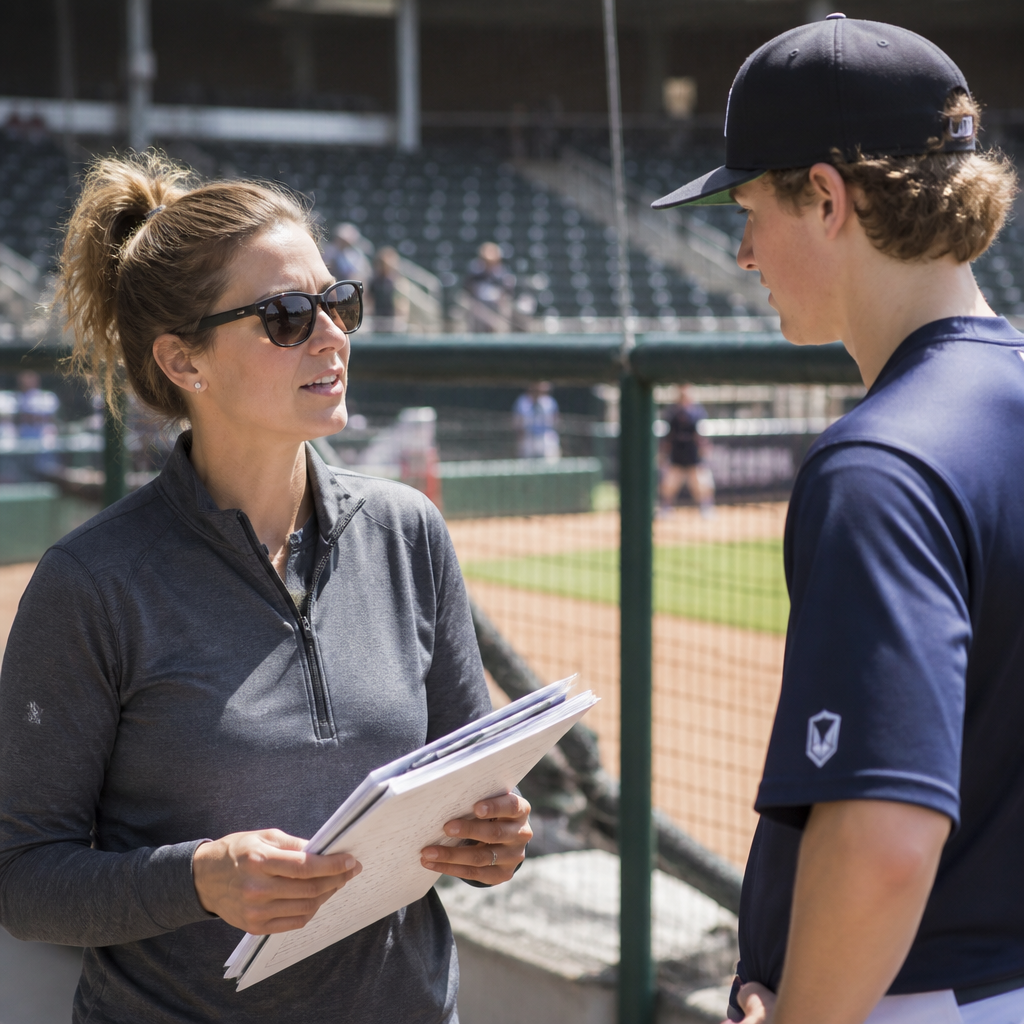
The growing influence of women in college baseball recruiting is reshaping how programs evaluate talent, build relationships, and define leadership across the sport. In practical terms, college baseball recruiting includes every step a program takes to identify players, assess fit, communicate with families, verify academics, and decide whom to pursue with roster spots, admissions support, or scholarship aid where rules allow. For years, those tasks were handled mostly by men because baseball operations, scouting pipelines, and coaching staffs were overwhelmingly male. That pattern is changing. More women now work as recruiting coordinators, operations directors, analytics specialists, player development staffers, and coaches whose evaluations directly affect recruiting decisions.
This shift matters because recruiting is the front door of a college program. Whoever organizes visits, studies video, tracks metrics, communicates standards, and advises the head coach shapes the future roster. I have seen programs tighten their process almost immediately when a skilled staff member brings stronger organization, clearer communication, and better cross-checking of evaluations. In many cases, women entering baseball recruiting have done exactly that. They have expanded where coaches look for players, improved how information is documented, and raised expectations for professionalism with prospects and parents.
Women in college baseball recruiting are influencing the sport in visible and less visible ways. Some are on the road at tournaments and showcases, filing reports and identifying underrecruited players. Others build recruiting boards, manage transfer portal workflows, coordinate camps, run background research, and align coaches around measurable criteria. Their influence also reaches branding and retention. Prospects notice when a program has a broader talent base on staff, communicates respectfully, and reflects a modern workplace. Parents notice too. In a competitive environment where many schools chase the same athletes, those details can help separate one program from another.
As a hub for the miscellaneous side of women in baseball, this article covers the broad landscape: why more women are entering recruiting roles, what jobs they hold, how they affect evaluations, where barriers remain, and what the trend means for players, families, and programs. It also connects the topic to operations, analytics, leadership, and culture, because recruiting never happens in isolation. It is tied to every part of roster building. Understanding that bigger picture is the best way to understand why women are becoming more influential in college baseball recruiting and why that influence is likely to keep growing.
Why women are gaining ground in college baseball recruiting
The biggest reason is simple: college baseball has become more complex, and complexity rewards specialized skill. Modern recruiting is not just a coach with a stopwatch behind home plate. Programs now blend traditional scouting, video review, analytics, academic screening, transfer portal management, compliance tracking, social media evaluation, visit logistics, and long-term roster modeling. As these demands increased, programs began hiring beyond the narrow traditional mold. Women with backgrounds in softball operations, baseball analytics, sports administration, player development, event management, and communications have stepped into those openings and proven their value.
Technology accelerated the shift. Tools such as TrackMan, Rapsodo, Synergy, Blast Motion, and data dashboards allow staff members to assess traits with more precision than old-school eyeball scouting alone. That widens access to influence because authority comes from insight and process, not only from former playing experience in men’s baseball. A recruiting coordinator who can compare fastball shape, bat speed, swing decisions, and strike-throwing patterns across hundreds of prospects has real decision-making power. Several programs now depend on staff members who may never have played NCAA baseball but can organize information better, identify hidden value, and guide coaches toward stronger decisions.
Another reason is visibility. As women have entered front offices in professional baseball, worked in college operations, and appeared in player development and analytics roles, athletic departments have become more comfortable hiring them into baseball-specific positions. Success creates legitimacy. When one school sees another school operating effectively with women in recruiting or operations, resistance weakens. The pipeline is still small, but it is larger than it was a decade ago, and each hire makes the next one easier.
What roles women hold and how those roles shape recruiting outcomes
Women influence recruiting through several titles, and the title does not always capture the real scope of the job. A director of operations may coordinate camps, unofficial visits, official visit schedules, travel, and communication systems that determine whether a prospect has a smooth or confusing experience. A recruiting coordinator may maintain the master board, schedule evaluations, prioritize follow-up, and ensure that coaches contact the right players at the right time under NCAA rules. An analytics staffer may flag pitchers with elite induced vertical break or hitters with unusual contact quality that traditional scouting might undervalue. A coach may act as the final relationship builder who turns interest into commitment.
In practice, these jobs overlap. On many staffs, the person who is most organized becomes the connective tissue of recruiting. I have watched staffs rely heavily on a woman in operations or analytics because she knew the board better than anyone else, remembered which family had concerns about academics or distance from home, and could tell the head coach exactly where each recruitment stood. That kind of command influences decisions even if the public sees only the head coach making offers.
These roles also matter because recruiting is a trust business. Families want prompt communication, honest timelines, and clarity about roster expectations. Staff members who answer questions thoroughly and professionally reduce uncertainty. That can improve yield with top targets and reduce costly mistakes with poor fits. In a sport where roster sizes are finite and scholarship distribution is carefully managed, preventing one bad fit can be nearly as valuable as landing one great player.
How women improve scouting, evaluation, and recruiting process
The strongest programs use multiple lenses before making recruiting decisions, and women have become important contributors to that layered approach. They often improve process discipline first. Rather than relying on scattered notes and gut feel after a long tournament weekend, effective recruiters build standardized reports, assign grades consistently, and revisit evaluations with fresh video and performance data. That structure reduces recency bias, helps compare players across events, and creates a clearer audit trail when staff members debate prospects months later.
Women also broaden where programs look. Because some came into baseball from adjacent pathways rather than traditional travel-ball networks, they may question assumptions about which showcases matter most or which regions are undercovered. That can uncover value. A program that sends one recruiter to a major national event and another to a less publicized regional tournament may find a command-oriented left-hander or high-contact middle infielder before larger programs engage. Smart recruiting staffs win by finding players early, not merely by confirming consensus opinions.
Communication quality is another advantage. The best recruiters gather complete information: academic readiness, family expectations, social fit, work habits, injury history, and willingness to develop patiently. Baseball development is rarely linear. A physically talented player who rejects coaching or struggles with structure may be a weaker long-term bet than a slightly less tooled player with elite habits. Staff members who ask better questions and document answers carefully improve roster decisions.
| Recruiting function | How women commonly add value | Program impact |
|---|---|---|
| Scouting coverage | Cross-checking video, data, and live looks across more events | Fewer missed prospects and stronger regional reach |
| Evaluation systems | Standardized reports, shared grading language, cleaner databases | More consistent decisions and less bias |
| Prospect communication | Faster follow-up, clearer expectations, organized visit planning | Better family trust and higher commitment rates |
| Roster planning | Tracking class balance, transfer needs, admissions factors, timelines | Smarter scholarship and roster management |
| Analytics integration | Using pitch data, batted-ball metrics, and performance trends | Earlier identification of undervalued talent |
Why this trend matters for players, families, and program culture
For players, the main benefit is a more complete evaluation. When staffs use multiple evaluators with different strengths, prospects have a better chance of being seen for what they actually are. A late-maturing pitcher may be appreciated for projection and pitch characteristics, not dismissed because his velocity has not fully arrived. A catcher may be valued for receiving skill, leadership, and game management rather than just raw arm strength. More voices can lead to fairer recruiting, especially when those voices are disciplined and evidence-based.
For families, women in recruiting often improve the day-to-day experience. Good recruiting is organized, respectful, and transparent. Parents are trying to understand admissions timelines, development plans, costs, travel expectations, transfer realities, and academic support. Staff members who answer those questions directly make the process less stressful. That does not mean women are automatically better communicators than men; it means many programs are hiring women into roles that reward communication excellence, and those hires are raising the standard for everyone.
Program culture also changes. A baseball office that includes women in meaningful recruiting discussions signals that competence matters more than old habits. That can improve staff behavior, meeting quality, and accountability. It can also help players prepare for the professional world, where they will work with diverse colleagues and authority structures. Culture is not branding alone. It is how decisions are made, how respectfully people are treated, and whether useful perspectives are heard. Recruiting is one of the clearest places where those values show up publicly.
Barriers that still limit women in college baseball recruiting
Progress is real, but barriers remain. The first is pipeline depth. Because women have had fewer opportunities in baseball coaching, scouting, and operations, the candidate pool is still smaller than it should be. Schools often hire through trusted networks, and those networks historically excluded women. That creates a loop: fewer opportunities lead to fewer résumés with baseball-specific experience, which leads to more conservative hiring. Breaking that loop requires intentional internships, graduate assistant roles, and entry-level positions tied to actual advancement paths.
The second barrier is role confinement. Some women are hired into administrative jobs but kept away from live evaluations, strategic meetings, or final recruiting decisions. Programs may praise organizational skill while limiting authority. That slows career progression. Influence matters, but formal authority matters too. Staff members need chances to present evaluations, travel, build relationships with coaches and families, and own measurable outcomes.
Workplace bias still exists as well. On the road, women in baseball may face skepticism from travel coaches, parents, or even event staff who assume they are not decision-makers. Inside some departments, they may need to prove expertise repeatedly in ways male counterparts do not. Those realities are not abstract. They affect retention. Talented professionals will leave if every advancement requires unnecessary friction. Schools that want the benefits of broader recruiting staffs must address climate, not just hiring optics.
Where the influence is heading next
The next phase will be defined by integration, not novelty. Women in college baseball recruiting are no longer a talking point only because they are present; the more important question is how much strategic responsibility they hold. Expect growth in three areas. First, more women will lead recruiting operations that merge high school recruiting, transfer portal evaluation, and NIL-related communication within institutional rules. Second, more will sit at the intersection of analytics and scouting, helping staffs translate movement profiles, approach metrics, and biomechanical indicators into recruiting priorities. Third, more will move from coordinator and support roles into on-field coaching positions that directly influence both recruitment and retention.
This miscellaneous hub should be understood as a starting point for the broader women in baseball conversation. The subject connects to leadership, player development, front office pathways, media visibility, and workplace design. College recruiting is where many of those threads meet. It reveals who is trusted, which skills programs reward, and whether baseball is willing to modernize its talent systems. The schools that adapt fastest will not do so out of symbolism. They will do it because better recruiting processes produce better rosters.
The growing influence of women in college baseball recruiting is ultimately a competitive story. Programs are discovering that wider expertise leads to better information, sharper evaluation, stronger communication, and healthier culture. Those improvements help identify overlooked players, build trust with families, and make roster planning more precise. The trend does not erase the barriers that remain, but it clearly shows where the sport is moving. If you follow women in baseball, use this hub as your foundation, then explore related topics such as operations, analytics, coaching pathways, and leadership development to understand how recruiting fits into the larger transformation.
Frequently Asked Questions
Why is the growing influence of women in college baseball recruiting important?
The growing influence of women in college baseball recruiting matters because recruiting is one of the most important functions inside any college program. It shapes the roster, the culture, the academic profile of the team, and the long-term competitiveness of the program. When more women take active roles in identifying talent, evaluating fit, communicating with athletes and families, and helping guide roster decisions, programs benefit from a wider range of experience, leadership styles, and perspectives. That can lead to more complete evaluations and stronger recruiting operations overall.
It is also important because recruiting is not just about measuring tools like exit velocity, arm strength, or speed. It includes understanding how a player handles pressure, how he communicates, whether he fits a team’s standards, and whether the school is the right academic and personal match. Women working in recruiting often help broaden the conversation beyond narrow assumptions about what baseball leadership is supposed to look like. Their increasing presence reinforces the idea that strong baseball judgment, organizational skill, relationship-building ability, and strategic thinking are not limited by gender.
On a larger level, this shift reflects a more modern version of college baseball administration. Programs are becoming more sophisticated in how they manage scouting databases, family communication, admissions coordination, academic checks, and long-term roster planning. As these responsibilities expand, schools are recognizing that talent in recruiting comes from many backgrounds. The increased visibility of women in those roles helps normalize more inclusive leadership pipelines across the sport and can encourage athletic departments to think differently about staffing, advancement, and decision-making.
What roles do women play in college baseball recruiting today?
Women contribute to college baseball recruiting in a variety of ways, and their impact often extends well beyond a single job title. In some programs, women work directly as recruiting coordinators, operations staff members, player development specialists, or administrative leaders who help organize prospect evaluation, campus visits, communication schedules, and database management. In others, they may serve in broader baseball operations or athletic department roles that still influence recruiting strategy in meaningful ways.
Practically speaking, recruiting includes every stage of the process: identifying prospects, reviewing video, collecting performance data, coordinating outreach, tracking academic records, arranging unofficial and official visits, communicating with high school and travel coaches, and helping a staff determine which players are realistic fits for roster spots, admissions support, or scholarship opportunities where applicable. Women may be involved in any or all of those areas. Their work can be highly visible, such as direct communication with recruits and families, or more behind the scenes, such as building systems that help coaches evaluate talent more efficiently.
Many women also play key roles in relationship management. Recruiting often depends on trust, consistency, and attention to detail. Families want timely answers, recruits want clarity, and coaching staffs need organized information before making decisions. Professionals who can connect those pieces are invaluable. In addition, women in recruiting and operations roles may help programs present a more polished and professional experience during the process, from visit planning to follow-up communication to coordinating academic support and compliance information.
As college baseball evolves, these roles are becoming more strategic. Recruiting is no longer just about seeing players in person and making a gut call. It requires structured evaluation, communication systems, data interpretation, and long-range roster planning. Women are increasingly contributing at all of those levels, helping programs recruit smarter and operate more effectively.
How are women changing the way college baseball programs evaluate and recruit players?
Women are helping change college baseball recruiting by contributing to a more comprehensive and disciplined evaluation process. Historically, some recruiting decisions were driven heavily by traditional scouting habits or limited viewpoints. Today, many programs are combining in-person observation with analytics, video review, academic screening, character assessment, and detailed communication tracking. Women working in recruiting and baseball operations are often part of that modernization, helping staffs create systems that are more organized, balanced, and less dependent on instinct alone.
One major area of change is relationship-building. Strong recruiting is not just about finding talented players; it is about understanding the person behind the player. Women in recruiting roles often bring strengths in communication, follow-through, and trust-building that improve interactions with families, coaches, and prospects. That can help programs gather better information and create a more positive experience for everyone involved. Families especially tend to appreciate clear communication about timelines, expectations, academics, roster realities, and the actual fit between player and school.
Another area is internal decision-making. A broader mix of voices in recruiting conversations can challenge assumptions and improve the quality of debate within a staff. When programs include women in talent discussions, they may gain different observations about maturity, coachability, campus fit, or long-term development potential. That does not mean women evaluate players in a fundamentally separate way; it means more diverse perspectives can lead to more complete evaluations. In recruiting, even small improvements in judgment can have major long-term effects on roster quality.
Women are also influencing how recruiting departments function operationally. Better prospect tracking, cleaner communication workflows, stronger visit planning, and more consistent academic verification all contribute to smarter recruiting. These operational strengths are often overlooked by outsiders, but they can directly affect outcomes. A program that communicates clearly, responds professionally, and evaluates efficiently is often more competitive in landing the right players. In that sense, women are not just participating in recruiting; they are helping redefine what effective recruiting looks like.
What challenges do women still face in college baseball recruiting?
Even with growing influence and visibility, women in college baseball recruiting still face several challenges. The most obvious is that baseball has historically been male-dominated, especially on the coaching and scouting side. That history can shape hiring patterns, networking opportunities, advancement pathways, and assumptions about who belongs in baseball decision-making spaces. In some cases, women may still have to work harder to establish credibility in rooms where their expertise is unfairly questioned simply because of gender.
Another challenge is access. In many sports, professional advancement depends on mentorship, trusted referrals, and inclusion in informal networks. If those networks have traditionally centered on men, women may have fewer opportunities to be recommended for influential recruiting or operations roles, even when they are highly qualified. That can affect not just entry into the field, but also long-term career growth into senior positions where final recruiting strategy and roster construction decisions are made.
There can also be practical barriers tied to job structure. Recruiting often involves long hours, heavy travel, late-night communication, and constant schedule changes. Those demands are difficult for anyone, but in environments that have not thoughtfully adapted workplace culture, they can become barriers to retention and advancement. Programs that want to benefit from a broader talent pool need to make sure their staffing models, expectations, and support systems are sustainable and professional.
Perhaps the most persistent challenge is visibility. Because much recruiting work happens behind the scenes, women who contribute in meaningful ways are not always publicly recognized for their influence. Fans tend to notice head coaches and top assistants, but they may not see the operations leaders, coordinators, or recruiting professionals who play central roles in evaluations and communication. As more women enter and succeed in these positions, greater recognition can help create momentum, open doors for others, and reinforce that their presence in college baseball is not an exception but an important part of the sport’s future.
What does this trend mean for the future of college baseball recruiting?
This trend suggests that college baseball recruiting is becoming more professional, more inclusive, and more sophisticated. As women continue to gain influence, programs are likely to place even greater value on comprehensive evaluation systems, strong communication practices, and collaborative decision-making. That matters because recruiting has grown more complex. Coaches must balance talent evaluation with academic standards, transfer movement, roster limits, admissions realities, and the need to build a healthy team culture. Programs that use a wider range of capable voices are often better positioned to manage that complexity.
It also points toward a broader redefinition of leadership in baseball. For a long time, leadership in the sport was often imagined in narrow terms tied to traditional playing or coaching backgrounds. The growth of women in recruiting challenges that idea by showing that elite program-building depends on far more than a conventional baseball résumé. Strategic organization, relationship management, player assessment, communication skill, and operational discipline are all essential to recruiting success, and women are increasingly demonstrating high-level impact in those areas.
For recruits and families, this is generally a positive development. A more diverse and professional recruiting environment can lead to better conversations, clearer expectations, and more thoughtful evaluations. It can also help athletes see that successful programs value many kinds of expertise and leadership. For athletic departments, this trend may encourage more intentional hiring and stronger internal development pathways for women who want careers in baseball administration, recruiting, and operations.
In the long run, the increasing influence of women in college baseball recruiting is likely to strengthen the sport. Programs that embrace broader leadership perspectives often make better decisions, communicate more effectively, and create healthier institutional cultures. That does not just improve recruiting outcomes in the short term. It helps build a more forward-looking version of college baseball, one where the best ideas and the best professionals have more opportunity to shape the future of the game.