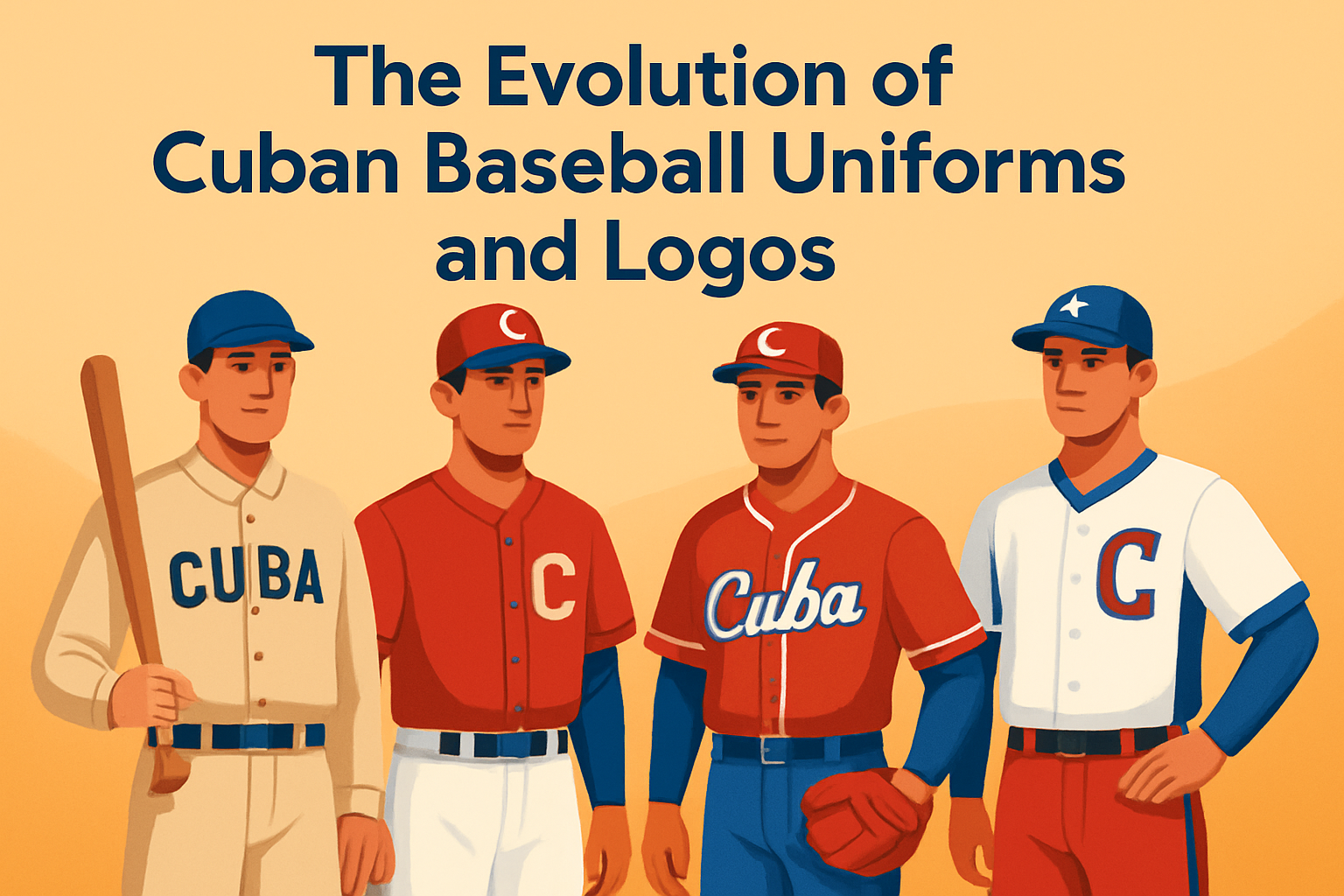
Cuban baseball possesses a rich history that intertwines the cultural tapestry of the Caribbean with the dynamic evolution of the sport. From the early days of baseball on the island to the recognition of Cuban talent on the international stage, the transformation of uniforms and logos tells a story of pride, identity, and cultural expression. In this article, we delve into the intricate history and evolution of Cuban baseball uniforms and logos, exploring how these elements have evolved over time, their cultural significance, and their impact on the sport at large.
Uniforms act as a bridge, connecting teams to their storied past while representing their present ideals. Logos, meanwhile, serve as visual trademarks that imbue a sense of identity to a team. Together, they not only symbolize the essence of a team but also resonate with fans, players, and the broader community. Understanding the changes in Cuban baseball uniforms and logos provides insight into the socio-political dynamics that have shaped Cuba and the sport’s role within the island.
Early Beginnings – The Birth of Cuban Baseball Uniforms
The introduction of baseball to Cuba in the late 19th century coincided with a burgeoning national identity. Initially, baseball was a game introduced by American missionaries and quickly adopted by Cubans as a demonstration of modernity and resistance against colonial rule. Early Cuban baseball uniforms mirrored the styles prevalent in the United States, primarily composed of flannel material with basic designs.
At this time, uniforms were very simple. Most Cuban teams sported plain white or grey with minimal embellishment, possibly featuring the team name or initials. Caps were basic, often a single color, reflecting functionality over style. A notable example is the Almendares Club, one of Cuba’s oldest teams, whose uniforms were simple blue with a distinctive white “A” representing Almendares and their aspiration towards American baseball prowess.
Professionalization and Unique Design – The 1920s through 1950s
As baseball gained professional status in Cuba, teams began to distinguish themselves through unique uniform designs. The period between the 1920s and 1950s marked a vibrant era for Cuban baseball, with teams like the Cuban Stars and the Havana Lions, a nod to the National League franchises. Uniforms became more elaborate, sporting pinstripes and vibrant colors that reflected team identities and cultural significance.
This era also saw the birth of more distinctive logos, which started taking central roles on jerseys. A classic example is the Havana Sugar Kings, who incorporated vibrant red colors in their logos and uniforms to symbolize the strength and spirit of the Cuban society. Their lion crest became synonymous with pride and resilience, elements seen as crucial to both the Cuban people and the players themselves.
The Revolutionary Shift – 1960s to 1980s
The Cuban Revolution of 1959 significantly altered the landscape of national baseball, with amateurism becoming the governing principle. Team uniforms underwent radical changes as the government exerted control over design aspects to align sports with national socialist ideals. During this phase, a shift towards simpler, more uniform designs symbolized collectivism and ideological solidarity.
Instead of commercial branding, national emblems and patriotic colors became prevalent. For example, teams were required to use the colors of the Cuban flag—red, white, and blue—more prominently. Logos from this era often featured revolutionary symbols such as stars and stripes. The Industriales, a successor to the Habana team, exemplified this transformation with solid blue uniforms and a simple yet bold “Industriales” script logo.
In addition to the material design, logos began incorporating cultural symbols representing regional pride. Unifying symbols emerged across provincial teams, each with a distinct logo but related color schemes that indicated national unity while celebrating regional identities.
Contemporary Evolution and International Appeal – 1990s to Present
Since the 1990s, Cuban baseball has witnessed a resurgence in diversity for uniforms and logos. Increased sports exchange and an open market for baseball trades have influenced Cuban designs toward more modern aesthetics while retaining cultural heritage.
Today’s Cuban baseball uniforms reflect a fusion of traditional and contemporary styles. While maintaining the patriotic colors, teams freely experiment with innovative designs that cater to modern spectators. Logos have developed greater complexity and storytelling capacity, often involving scripts, more varied motifs, and dynamic depictions that reflect forward motion.
- Industriales: Known as the “Blue Lions,” their modern uniforms are a vibrant blue with white pinstripes, and their logo is a stylized roaring lion.
- Santiago de Cuba: Often referred to as the “Wasps,” their black and gold uniforms feature a stinger motif, representing fearlessness and agility.
- Ciego de Ávila: Called the “Tigers,” their sleek orange and black design incorporates tiger stripes as part of both the uniform and cap design.
The influence of global baseball dynamics has encouraged Cuban teams to adopt branding strategies seen across the world. For instance, logos have become central elements for marketing and merchandise, resulting in increased personalization and appeal. Today, Cuban baseball jerseys and caps are worn internationally, representing an enduring legacy of resilience and excellence.
The Cultural and Social Ramifications of Uniforms and Logos
Cuban baseball uniforms and logos transcend sports, serving as cultural artifacts that narrate the island’s story and resonate deeply with its people. They foster a sense of unity, pride, and identity at a national level while personifying regional characteristics in their designs.
Moreover, these designs have social implications, reflecting historical milestones such as economic shifts, technological advancements, and the oscillating tides of cultural exchange. The cyclical nature of design—from simple to complex and back—reflects broader patterns of Cuban socio-political evolution. Uniforms and logos have journeyed from purely utilitarian designs to expressive forms that invoke discussion and celebration of Cuban heritage.
Conclusion: Celebrating Cuban Baseball’s Legacy Through Design
The evolution of Cuban baseball uniforms and logos is not merely a reflection of the game’s history but a testament to Cuba’s cultural journey and identity. Each design iteration, from the plain jerseys of colonial contention to the contemporary vibrant ensembles that grace today’s stadiums, encapsulates facets of national pride, cultural resilience, and an overarching spirit of unity.
Understanding this evolution aids fans, historians, and designers in appreciating the stories conveyed through colors and emblems. At its heart, Cuban baseball celebrates a love for the game and the community it fosters. Embracing this historical evolution encourages us to cherish diversity while fostering unity—a narrative much needed in a globally connected world.
Next time you see a Cuban baseball jersey, take a moment to appreciate the rich history and cultural persistence imbued in its fibers. Consider exploring more about Cuban baseball’s heritage by attending a game or researching your favorite team’s past. Let the designs inspire you, much like they have inspired generations of baseball enthusiasts.
In the ever-evolving world of sports, the story of Cuban baseball uniforms and logos endures—testament to a legacy that is always ready to embrace the next inning.
Frequently Asked Questions
1. How have Cuban baseball uniforms evolved over time?
The evolution of Cuban baseball uniforms is a vibrant journey that reflects the island’s rich cultural heritage, its political changes, and the influences of international baseball trends. Initially, in the early days of baseball in Cuba, players wore simple and practical uniforms, often devoid of logos and minimal in design. These early uniforms were predominantly white, reflecting the practicality needed in a tropical country where comfort and practicality were paramount.
As baseball gained popularity in Cuba and began to develop a unique identity, uniforms started to take on more distinctive features. By the mid-20th century, colors began to reflect national pride, with shades of red, blue, and white prominently used, mirroring the Cuban flag. The material also evolved for better performance and comfort, shifting from wool to lightweight cotton blends that were more suitable for Cuba’s climate.
In the 1960s and 70s, after the Cuban Revolution, baseball uniforms started reflecting the socialist ideology embraced by the state, with a noticeable emphasis on collective identity over individual distinction. Logos became more standardized, representing national symbols or the identity of a particular province rather than individual teams. As Cuba began participating more prominently in international competitions, further adjustments were made to meet global standards, incorporating modern materials and more refined design elements.
2. What role did political and cultural changes play in the design of Cuban baseball logos?
Baseball logos in Cuba have served as a powerful emblem of the island’s cultural, social, and political movements. In the early stages, logos were simple or non-existent as the focus was more on the sport rather than the branding of teams. However, as Cuban baseball grew, logos started to appear more prominently on uniforms, often embodying cultural pride and local symbolism.
With the rise of the socialist government after 1959, there was a significant shift in how baseball projects its identity. The government centralized sports, and baseball logo design was used to reinforce unity and shared identity. Logos often included national symbols such as stars, flags, and other motifs that aligned with the ideals promoted during this period. This was an era when sport and national identity were closely linked, and baseball became an instrument for expressing Cuban solidarity and pride.
Through this lens, logos were not just team markers but cultural icons used to communicate political values and national pride to both domestic fans and international audiences. Even as these elements became more refined and artistic with the adoption of modern methods over decades, their roles as cultural and political storytellers remained intact, linked fundamentally to Cuba’s identity on the global stage.
3. How do Cuban baseball uniforms compare with those of other countries?
Cuban baseball uniforms have always held a distinctive place in the global context of the sport. Compared to other countries, they often carry elements both of practical necessity and cultural representation. In the early years of baseball, Cuban uniforms were not vastly different from those worn in North America, as teams sought to emulate the successful American baseball traditions.
However, over time, Cuban uniforms began to distinguish themselves through their use of colors and symbolism. The Cuban national flag’s prominent colors – red, white, and blue – frequently feature in the uniforms, emphasizing national pride, a quality less common in places where club or regional identities are prioritized. Additionally, uniform designs began to incorporate local patterns and symbols that reflect the diverse cultural makeup of the Caribbean, setting Cuban teams apart visually.
In terms of material and functionality, Cuban uniforms have kept pace with international standards, particularly as the country participates in global competitions. The focus has been on durability and comfort, especially given Cuba’s warm climate. Thus, while retaining unique cultural identifiers, Cuban uniforms represent a blend of traditional influence and modern performance standards comparable to some of the more advanced baseball nations globally.
4. Have Cuban baseball logos influenced team spirit and fan engagement?
Absolutely, Cuban baseball logos have played a significant role in fostering team spirit and engaging fans, serving as emblems of unity and pride among players and supporters alike. Each logo symbolizes more than just an affiliation; it is a badge of collective identity and local pride, resonating deeply with both players and spectators.
The meticulous design of these logos often draws from historical, cultural, and social narratives, seamlessly connecting fans to the stories and communities they represent. They help create a sense of belonging and pride that transcends the game itself, fostering a robust community spirit that is palpable in stadiums and beyond.
Moreover, the adoption and evolution of these logos over time have mirrored societal changes, thereby maintaining a dynamic conversation with fans. This interaction extends beyond the field, with fans frequently donning merchandise bearing the logos to show support, create personal connections with the teams, and celebrate Cuban heritage both at home and abroad. Consequently, logos have become integral to the enduring enthusiasm that defines Cuban baseball culture.
5. In what ways have Cuban baseball uniforms and logos impacted the sport globally?
Cuban baseball uniforms and logos have significantly impacted the global sports landscape by promoting a strong sense of cultural identity and excellence. Cuban baseball has long been respected for its technical prowess and passionate play style, and its uniforms and logos are visual manifestations of these elements, often embodying the Cuban spirit and dedication to the sport.
On the international stage, Cuban uniforms and logos serve as icons of the country’s sporting legacy, showcasing a fierce national pride and a commitment to excellence that is recognized worldwide. Their distinct visual style and culturally rich symbolism contribute to Cuba’s reputation as a baseball powerhouse and influence international designs, often inspiring styles that emphasize cultural narratives.
Furthermore, Cuban baseball uniforms and logos have paved the way for conversations about the role of cultural expression in sport globally, influencing how teams on other continents appreciate and incorporate cultural and political narratives into their branding. Whether through striking colors, meaningful logos, or innovative design, Cuban baseball continues to leave an indelible mark on the global perception of what sporting uniforms and logos can represent.