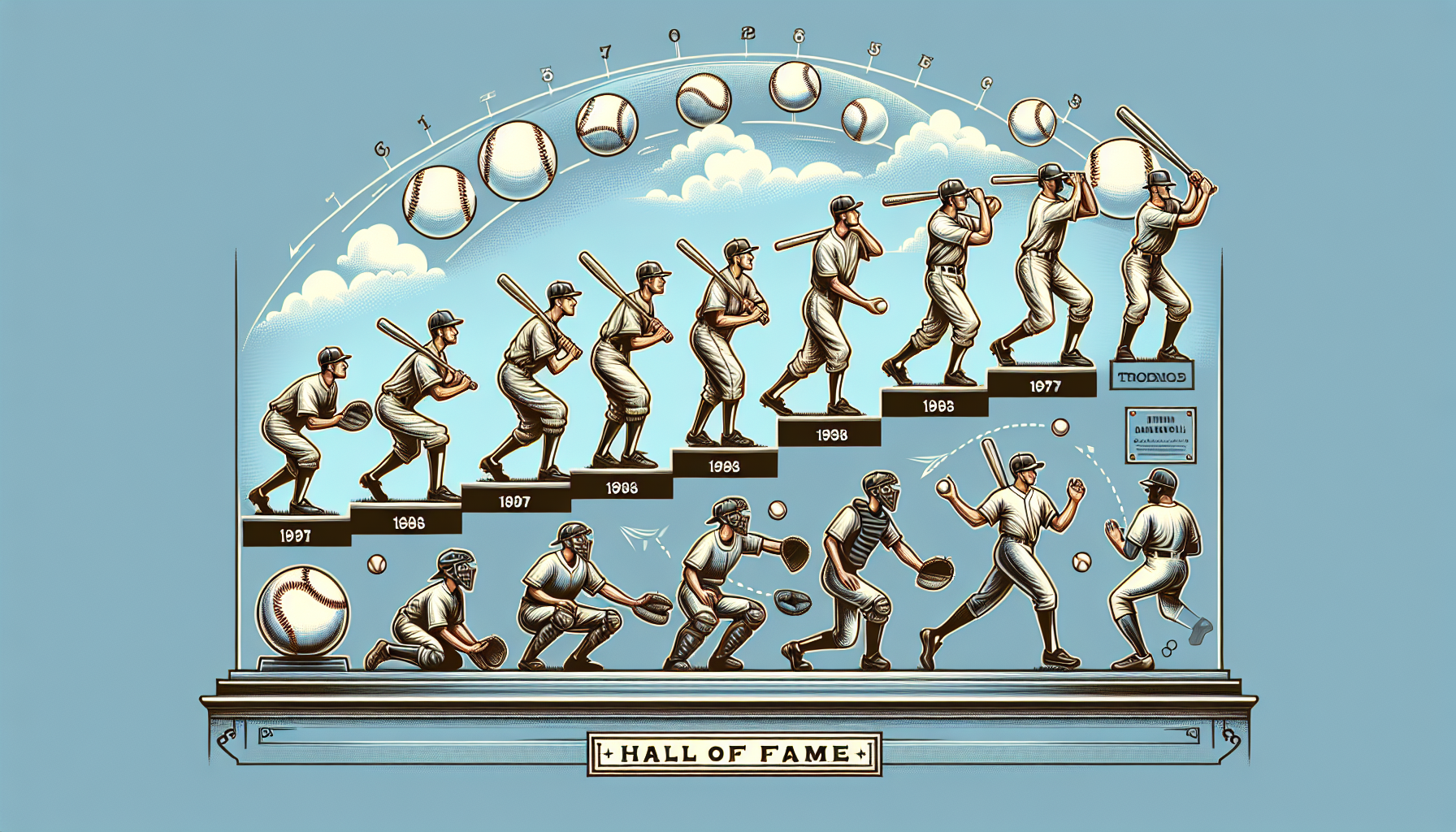
Baseball training has changed as dramatically as the game itself, and the Hall of Fame offers the clearest record of that evolution. From the dead-ball era to modern player development labs, the methods used to build hitters, pitchers, catchers, and fielders reveal how baseball learned to treat skill as something measurable, teachable, and constantly refined. In this context, baseball training means the full system of preparation: practice design, conditioning, recovery, nutrition, scouting feedback, mental routines, and technology. Looking through Hall of Fame careers makes those shifts easier to understand because Cooperstown preserves players from every period, allowing direct comparison across generations.
I have spent years studying Hall of Fame archives, coaching notes, oral histories, and modern development plans, and one lesson stands out: great players were rarely accidental. Early stars often trained through repetition, barnstorming, and game volume. Later stars added structured offseason work, video analysis, biomechanics, and individualized strength programs. The Hall of Fame matters here because it does more than celebrate legends; it documents what excellence looked like in each era. That record helps players, coaches, parents, and fans answer practical questions. How did pitchers build durability before pitch labs existed? Why did hitters once swing differently? When did weight training become accepted? Which old methods still work today? Understanding baseball training through Hall of Fame examples turns history into a useful guide instead of nostalgia.
This miscellaneous hub page serves that purpose. It connects the broad story of baseball development across eras, roles, and philosophies while highlighting the tradeoffs behind each change. Some old-school methods built instincts that modern systems sometimes overlook. Some new-school methods prevent injuries and accelerate learning in ways earlier generations could not. The most important insight is not that one era trained better than another. It is that baseball training evolved by layering new information onto timeless fundamentals: bat control, command, footwork, anticipation, resilience, and disciplined repetition.
From Sandlots to Spring Camps: How Early Hall of Famers Learned the Game
The earliest Hall of Fame players developed in environments with little formal instruction. In the late nineteenth and early twentieth centuries, most learning happened on sandlots, semipro clubs, factory teams, and long game schedules. Players such as Honus Wagner, Ty Cobb, and Tris Speaker sharpened skills through constant competition rather than isolated drills. They learned to read hops on uneven fields, handle bad weather, improvise baserunning angles, and adjust to inconsistent equipment. That kind of training produced adaptable athletes with sharp baseball instincts. It also meant many habits were self-taught, uneven, and dependent on opportunity.
Spring training existed, but it was far less scientific than today. Managers focused on getting players into shape through repeated fielding practice, long throwing sessions, batting practice, and exhibition games. Conditioning often meant running poles, taking infield until legs burned, and playing your way into readiness. There was little distinction between skill work and conditioning; baseball activity itself was supposed to provide fitness. For durable stars like Speaker or Eddie Collins, that approach could work because they built stamina through heavy seasonal workloads. The downside was obvious: overuse, poor recovery, and inconsistent preparation for players who needed targeted development.
Even in that early period, certain principles still hold. Repetition under game-like conditions remains one of the best teachers in baseball. Coaches today call it representative design: practice that mirrors the decisions and timing of competition. Early Hall of Famers lived inside representative design because they played constantly. What they lacked was a framework for measuring fatigue, sequencing drills, or correcting mechanics with precision. Their development was rich in feel and adaptability, but weak in standardization.
The Rise of Structured Instruction and Position-Specific Coaching
By the middle decades of the twentieth century, baseball organizations became more intentional about teaching. The farm system, expanded by executives such as Branch Rickey, changed player development permanently. Instead of hoping prospects arrived polished, clubs created layers of instruction in the minors. Hall of Fame figures connected to this period, including Jackie Robinson, Stan Musial, Willie Mays, and Roberto Clemente, came through systems that increasingly separated raw talent from refined professional skill. Coaches worked more deliberately on bunting, relay positioning, cutoff responsibilities, pitch sequencing, and situational hitting.
Position-specific coaching became a major milestone. Catchers learned receiving, blocking, and game calling as specialized crafts. Infielders drilled double-play feeds and footwork from precise angles. Outfielders practiced first-step reads and wall play. Pitchers began receiving more deliberate instruction on grips, holding runners, and changing eye levels. This period did not yet have motion-capture labs or bat sensors, but it did have an important breakthrough: the acceptance that baseball skills could be broken into components and taught systematically.
Hall of Fame catchers illustrate the point clearly. Yogi Berra succeeded with unusual personal style, yet his preparation behind the plate reflected disciplined repetition in receiving and pitcher management. Johnny Bench later represented a more modern catcher prototype, combining arm strength, mobility, and leadership with highly refined technique. Bench’s generation also benefited from broader coaching specialization, including bullpen sessions with defined goals rather than simply throwing to stay loose. Once organizations recognized that each defensive role demanded different movement patterns, training became more efficient.
This era also reinforced a truth still relevant in youth baseball: general athleticism is not enough on its own. A great athlete can survive in the short term, but Hall of Fame careers usually reflect technical detail. Foot placement on a pivot, target presentation by a catcher, or the wrist angle on a breaking ball can separate average players from elite ones. Structured instruction did not replace talent; it multiplied it.
Strength Training, Conditioning, and the End of Old Myths
For decades, baseball carried deep suspicion toward weight training. Many coaches feared lifting would make players stiff, shorten swings, or reduce touch. That belief lasted longer than many people realize. Hall of Fame players from earlier eras often relied on manual labor, calisthenics, sprinting, and sheer game volume to stay strong. Some remained exceptional athletes, but there was little organized understanding of force production, mobility, or periodized conditioning. By the 1970s and 1980s, that started to change.
Reggie Jackson, Nolan Ryan, and later Rickey Henderson helped normalize serious physical preparation. Ryan, in particular, became famous for endurance work, long-distance running early in his career, and eventually more advanced attention to leg strength and shoulder maintenance. His durability was not accidental. He treated conditioning as part of pitching, not separate from it. That mindset became foundational in modern baseball development. Strength training, when tailored to baseball demands, improves rotational power, sprint speed, deceleration control, and resilience across a long season.
Today, accepted best practice combines strength, mobility, and energy-system training. Lower-body force drives both hitting and pitching. Scapular stability supports throwing health. Rotational medicine ball work can improve sequencing if integrated properly. Sprint work matters because baseball depends on explosive acceleration, not marathon endurance. The old myth that lifting ruins touch has been replaced by a more accurate standard: poor programming ruins movement, but intelligent strength work improves performance. Hall of Fame careers across eras show the difference between naturally durable players and those who extended greatness through smarter preparation.
| Era | Common Training Method | Main Benefit | Main Limitation |
|---|---|---|---|
| 1900s–1930s | Game volume, calisthenics, manual labor | Instincts and general toughness | Little recovery science or targeted conditioning |
| 1940s–1960s | Team drills, spring conditioning, farm instruction | Better technical teaching | Limited individualized physical planning |
| 1970s–1990s | Strength training, running programs, video review | Improved durability and power | Programs often generic by position |
| 2000s–present | Biomechanics, data tracking, individualized plans | Faster skill gains and injury prevention | Risk of overload and over-coaching |
Video, Data, and Biomechanics Changed What Coaches Can See
The next major leap in baseball training came from better information. Once video became easy to capture and review, players could compare feel against reality. Hall of Famers in the late twentieth century increasingly used tape to study swings, deliveries, and defensive movement. Tony Gwynn famously studied video with unusual discipline, building one of the best contact profiles in baseball history. His preparation was not guesswork. He looked for posture, barrel path, timing, and how pitchers attacked him in different counts. Video gave hitters a repeatable feedback loop.
Modern systems expanded that loop with technologies such as TrackMan, Rapsodo, Hawk-Eye, Edgertronic cameras, K-Vest, and force plates. These tools measure pitch shape, spin efficiency, exit velocity, attack angle, ground-reaction force, and movement sequencing. Used well, they help answer direct development questions. Why is a pitcher losing ride on a four-seam fastball? Why does a hitter produce weak contact despite good bat speed? Is a catcher’s pop time limited by transfer mechanics or lower-half inefficiency? Data makes training more precise because it identifies causes instead of just symptoms.
But the Hall of Fame perspective also warns against blind dependence on numbers. Not every great player fit a textbook model. Rod Carew, Wade Boggs, and Ichiro Suzuki, though not all Hall of Famers at the same time in public memory, demonstrated that elite hitters can solve pitching with different shapes of contact, timing, and bat path decisions. The lesson I return to when evaluating training plans is simple: data should clarify instruction, not replace it. Players compete with bodies, eyes, decisions, and confidence, not spreadsheets.
Mental Skills, Recovery, and the Hidden Side of Greatness
One of the biggest shifts in baseball training is the recognition that performance depends on mental routine and recovery, not just physical skill. Earlier Hall of Fame players certainly had toughness, concentration, and confidence, but teams rarely taught those areas directly. Today, breathing work, visualization, pre-pitch routines, journaling, sleep tracking, and sports psychology support are common in elite programs. That change reflects reality. Baseball is a failure-heavy sport, and emotional regulation can determine whether talent holds up over 162 games.
Hall of Fame pitchers provide strong examples. Greg Maddux built success on command, sequencing, and constant adjustment. His training was intellectual as much as physical. He studied swings, umpire zones, and hitter tendencies. Mariano Rivera, another Hall of Fame great, repeated a simple weapon under pressure because his routine and conviction never wavered. These careers show that mental training is not motivational fluff. It is a competitive skill involving attention control, decision-making, and repeatable preparation.
Recovery has followed the same path from afterthought to essential pillar. Modern players use soft-tissue work, hydration plans, nutrition protocols, sleep targets, workload monitoring, and return-to-throw progressions. Standards from organizations such as Major League Baseball’s medical staffs and research from the American Sports Medicine Institute have influenced how teams manage arms and soft-tissue risk. Recovery is training because adaptation happens between sessions, not during them. Hall of Fame longevity often reflects this principle, whether players understood it formally or simply discovered effective routines through experience.
What the Hall of Fame Still Teaches Modern Players and Coaches
The Hall of Fame offers more than stories; it offers a blueprint for balanced baseball training. First, fundamentals never disappear. Bat control, strike-zone judgment, defensive footwork, and command remain decisive despite every technological advance. Second, development must fit the player. A power hitter, contact specialist, sinkerball pitcher, and elite defender should not train from the same template. Third, context matters. Travel schedules, age, injury history, and competitive level all shape what effective practice looks like.
The best modern programs borrow from every era. They keep the old demand for repetition, accountability, and game feel. They add the newer benefits of individualized strength work, biomechanics, and recovery science. They avoid two common mistakes: romanticizing the past and worshipping technology. Hall of Fame history makes both errors easy to spot. Old methods produced instinctive, resilient players, but they often wasted bodies. New methods produce sharper feedback and safer workloads, but they can bury athletes under too many cues.
For anyone exploring the broader Baseball Hall of Fame miscellaneous topic, training is one of the most useful entry points because it connects equipment, strategy, scouting, medicine, and culture. Study how Hall of Famers prepared, and the history of the sport becomes practical. The clearest takeaway is that great baseball training is never random. It is intentional, progressive, and anchored in the demands of the game. Use this hub as a starting point, then dig deeper into the players, eras, and methods that shaped excellence. The past still has something very current to teach.
Frequently Asked Questions
How has baseball training evolved from the dead-ball era to the modern game?
Baseball training has moved from a largely experience-based, informal system to a highly structured, evidence-driven process. In the dead-ball era, players often built their skills through repetition, game experience, and advice passed down from veterans rather than through standardized development plans. Conditioning was basic by modern standards, and many players relied on general labor, offseason barnstorming, or personal routines to stay in shape. Hitting instruction emphasized bat control, contact, bunting, situational execution, and stamina, while pitching development focused heavily on endurance, command, and learning how to navigate lineups without the benefit of modern analytics or pitch design technology.
As the game progressed through the live-ball era and into the postwar decades, training became more specialized. Strength and conditioning entered the picture more intentionally, coaches began breaking down mechanics by role, and organizations invested more seriously in player development systems. By the late twentieth century, video analysis, dedicated offseason programs, sports medicine, and position-specific drills were becoming common. In the modern era, training has expanded into a full ecosystem that includes biomechanics, bat-speed measurement, pitch-tracking data, force plates, sleep science, nutrition planning, workload management, and recovery protocols.
The Hall of Fame helps illustrate this progression clearly because its players represent distinct developmental eras. Earlier generations often succeeded through instinct, repetition, and durability, while later generations benefited from increasingly refined coaching methods and scientific support. What has remained constant is the core goal: helping players perform game skills more consistently. What has changed is how precisely those skills can now be identified, measured, taught, and improved.
What does the Hall of Fame reveal about the way hitters have been trained over time?
The Hall of Fame shows that hitter development has always reflected the offensive demands of each era. Early great hitters were often trained, whether formally or informally, to prioritize contact, bat control, strike-zone judgment, situational awareness, and the ability to use the whole field. In lower-scoring periods of baseball history, a hitter’s value often came from advancing runners, handling the bat intelligently, and putting pressure on defenses. Training methods therefore revolved around repetition, timing, hand-eye coordination, and learning pitchers through direct competition rather than through extensive scouting databases or swing diagnostics.
As offensive philosophies shifted, so did training. During the rise of power baseball, more attention was paid to leverage, strength, rotational force, and the mechanics of driving the ball. Coaches and instructors increasingly worked on launch position, weight transfer, bat path, and lower-half engagement. In the modern game, those same concepts have become even more refined through tools that measure exit velocity, attack angle, swing decisions, chase rate, and contact quality. Hitting is no longer taught only through visual observation and feel; it is also trained through measurable feedback that helps players understand what their swing is producing and why.
The Hall of Fame’s record makes one thing especially clear: elite hitting has never been one-size-fits-all. Great hitters from different eras succeeded with different stances, rhythms, approaches, and physical profiles. Modern training has become more sophisticated not because it forces everyone into a single model, but because it allows coaches to customize instruction around the player’s strengths. In that sense, the evolution of hitter training is not just about technology. It is about improving the ability to turn individual talent into repeatable performance.
How have pitching and throwing programs changed throughout baseball history?
Pitching development has undergone one of the most dramatic transformations in baseball training. In earlier eras, pitchers were expected to throw more often, complete more games, and rely heavily on efficiency, resilience, and tactical intelligence. Training focused less on maximizing raw stuff and more on building stamina, repeating delivery patterns, locating pitches, changing speeds, and reading hitters. There was limited understanding of arm care compared with today, and many pitchers learned through workload, trial and error, and mentorship from older players or managers.
Over time, organizations began to treat pitching as both an art and a science. Bullpen sessions became more purposeful, role specialization increased, and coaches paid closer attention to mechanics, release point, and pitch movement. In the contemporary game, throwing programs are meticulously planned. Teams monitor pitch counts, recovery windows, stress levels, mobility, strength output, and biomechanical efficiency. High-speed cameras, motion capture, and ball-tracking systems allow coaches to study spin rate, vertical and horizontal movement, extension, seam effects, and how specific pitches interact within an arsenal.
The Hall of Fame perspective is especially valuable because it shows that greatness on the mound has always depended on adaptation. Some legendary pitchers thrived through command and deception, others through velocity and intimidation, and others through durability and constant adjustment. Modern throwing programs aim to develop those traits more safely and intentionally. They also reflect a larger shift in baseball: training is no longer just about doing more work, but about doing the right work at the right intensity and recovering well enough to sustain elite performance over time.
Why are conditioning, recovery, and nutrition now considered essential parts of baseball training?
Conditioning, recovery, and nutrition have become central because baseball performance is no longer viewed as separate from the body that produces it. For much of baseball history, players trained their skills extensively but often approached physical preparation in broad, inconsistent ways. Some players were naturally strong or durable, some used offseason labor as conditioning, and some followed routines based more on personal habit than on sports science. While many Hall of Fame players achieved remarkable longevity under those conditions, modern baseball has recognized that physical readiness can be developed much more deliberately.
Today, conditioning is designed to support baseball-specific movement patterns such as rotational power, sprint acceleration, deceleration, lateral agility, shoulder stability, and lower-body force production. Recovery is treated as a performance tool rather than an afterthought, which is why sleep, hydration, soft-tissue work, mobility sessions, load management, and postgame protocols are taken so seriously. Nutrition has also become more individualized, with teams paying attention to meal timing, body composition, energy availability, inflammation control, and the demands of long travel schedules and daily competition.
The Hall of Fame helps frame this shift by reminding us that players have always searched for an edge, even if earlier generations had fewer resources to support that search. Modern players benefit from a broader understanding of how the body responds to stress and how small physical advantages can compound over a season. Better conditioning can improve bat speed and defensive range, better recovery can preserve consistency, and better nutrition can support both health and performance. Together, these elements have transformed training from simple practice into a complete preparation system.
How do scouting data and player development systems shape baseball training today compared with the past?
In the past, scouting and development were driven primarily by observation, intuition, and firsthand baseball knowledge. Scouts evaluated players by watching them compete, reading their body language, assessing their tools, and projecting what they might become with experience. Development plans were often less formal, and coaching could vary widely from one organization to another. Players improved through repetition, instruction, and the accumulated wisdom of managers, minor league coaches, and veteran teammates. That system produced many all-time great players, but it also depended heavily on subjective judgment.
Today, scouting data and player development are tightly connected. Organizations still rely on experienced evaluators, but they also build training plans around measurable information. A prospect may be assessed not only on how he looks on the field, but also on sprint speed, swing decisions, bat speed, throwing efficiency, pitch characteristics, reaction time, and biomechanical markers. That information feeds directly into development, allowing teams to target specific weaknesses and build programs that are far more individualized than in earlier periods.
The Hall of Fame perspective is useful here because it highlights both continuity and change. The continuity is that baseball has always tried to identify teachable traits and turn potential into production. The change is that teams now have far more precise tools for doing that work. Instead of broadly telling a hitter to “see the ball better” or a pitcher to “finish his delivery,” coaches can pair traditional instruction with video, tracking data, and objective benchmarks. The result is a training environment in which improvement is monitored continuously, communicated more clearly, and adjusted faster than ever before. That does not replace baseball instincts or human coaching; it strengthens them by giving development a more complete information base.