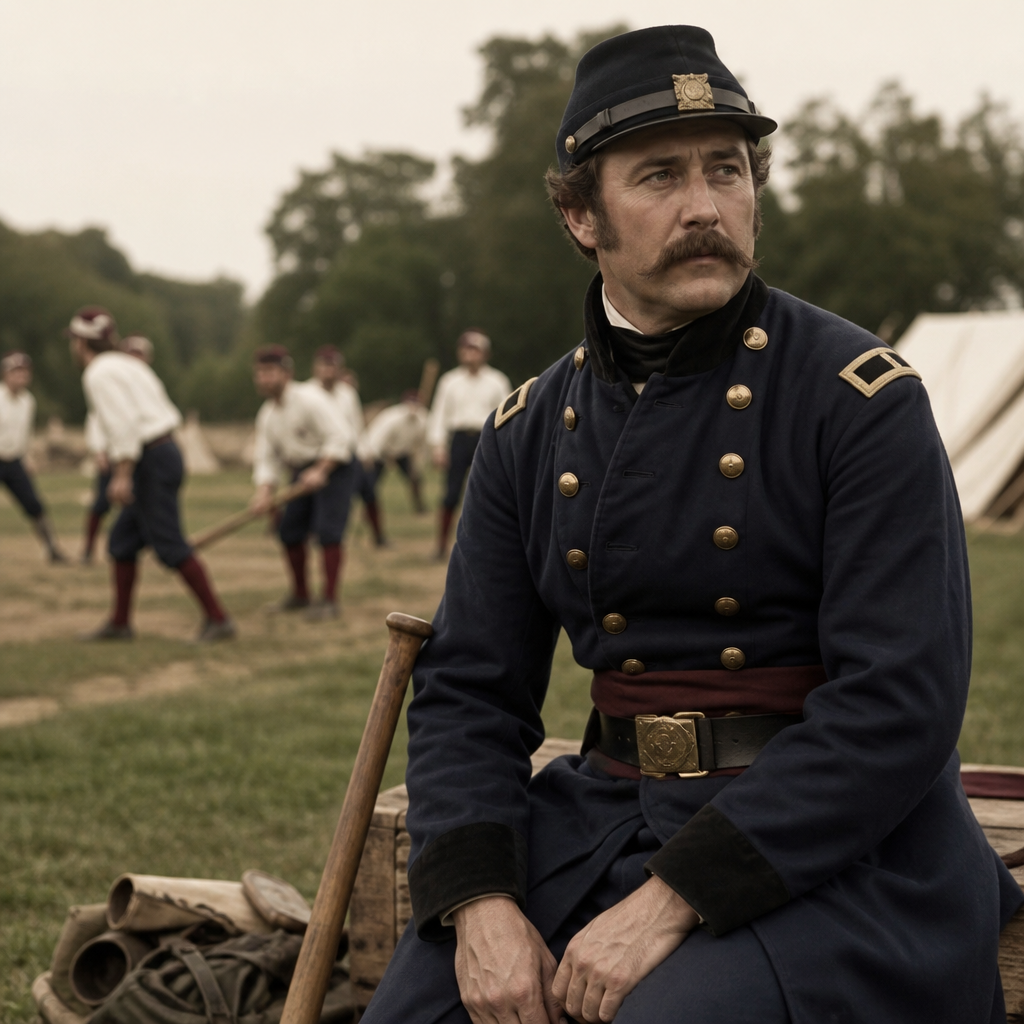
Baseball did not spring fully formed from the mind of Abner Doubleday in Cooperstown in 1839, and the persistence of that story reveals as much about American culture as it does about the game itself. The Abner Doubleday myth is the false claim that a future Civil War general invented baseball in a single moment, giving the United States a clean founding legend for its national pastime. In practice, baseball emerged gradually from older bat-and-ball games played in Britain, Ireland, and North America, then developed through local experimentation, urban club culture, and eventually written rules. I have worked through nineteenth-century rulebooks, commission reports, newspaper accounts, and club records on this subject, and the evidence is remarkably consistent: baseball has ancestors, not a lone inventor. That matters because the origins of baseball shape how we understand its rules, its early spread, and its deep connection to migration, schooling, military life, and city recreation. For readers exploring early history of baseball, bat-and-ball origins are the essential starting point, since games such as rounders, cricket, stoolball, town ball, and one-old-cat all contributed pieces of what became modern baseball. If you want to understand why baseball uses a diamond, why outs can be force plays or tags, why foul territory matters, and why the Knickerbocker rules became so influential, you have to begin before professional leagues, before the Civil War, and well before Doubleday entered the story. This hub explains where the myth came from, what the historical record actually shows, and how bat-and-ball origins connect the many strands of baseball’s earliest development.
Why the Doubleday Story Took Hold
The Doubleday myth gained traction because it satisfied a national desire for a distinctly American origin story. In 1905, sporting goods magnate Albert G. Spalding backed the Mills Commission, a panel formed partly to settle a public dispute over whether baseball descended from English games. The commission relied heavily on a letter from Abner Graves, who claimed that he saw Doubleday devise baseball in Cooperstown, New York, in 1839. Historians quickly noted the problems. Doubleday was at West Point in 1839, not Cooperstown, and there is no contemporary evidence linking him to baseball. Graves’s testimony came decades after the alleged event and conflicted with the timeline of Doubleday’s life. Even so, the commission declared Doubleday the inventor.
The appeal was obvious. A game as important as baseball seemed to deserve a heroic founder, preferably American, military, and respectable. Spalding also had practical motives. If baseball could be presented as entirely native, it strengthened the game’s cultural prestige and commercial identity. This was a period when the United States was defining national traditions aggressively, and a tidy creation story fit the mood. The problem is that tidy stories often fail historical scrutiny. Baseball’s development was messy, regional, and collaborative. The absence of one inventor is not a weakness in the game’s history; it is the clearest sign that baseball evolved the way many enduring cultural practices evolve.
The Doubleday story persisted further because Cooperstown benefited from it. The town became symbolically linked to baseball’s birth, and that association later supported the creation of the National Baseball Hall of Fame. Tourism, local pride, and repetition in popular media gave the myth unusual durability. Once a founding legend is embedded in museums, schoolbooks, and ceremonial language, debunking it becomes slow work. Yet modern scholarship from researchers such as Harold Seymour, David Block, John Thorn, and others has thoroughly dismantled the claim. The historical question is no longer whether Doubleday invented baseball. He did not. The productive question is how older bat-and-ball games combined into a recognizable baseball code.
Bat-and-Ball Games Before Baseball
Bat-and-ball origins stretch back centuries. The core pattern is simple: a batter strikes or deflects a ball, runners advance toward safe places, and fielders try to retire them by catching, tagging, throwing, or forcing them out. That pattern appeared in many games long before organized baseball. English stoolball, documented in the early modern period, involved defending a target and striking a ball, and it shows how deeply rooted striking games were in rural recreation. Cricket, formally codified in the eighteenth century, contributed concepts such as innings, organized fielding positions, and scoring through completed runs. Rounders, associated strongly with Britain and Ireland, resembled baseball more closely in its circuit of bases and underhand pitching tradition.
Children’s and informal adult games mattered just as much as formal sport. One-old-cat and two-old-cat were compact bat-and-ball games well suited to schoolyards and open lots. They required fewer players than cricket and taught quick exchanges between batter, pitcher, and fielders. Town ball, a broad label rather than one fixed game, was played in parts of the United States with varying local rules. In some versions runners could be retired by being hit with the ball, a practice known later as soaking or plugging. These games were adaptable, easy to organize, and portable across communities. That adaptability is one reason baseball could emerge from them so effectively.
Migration spread these traditions widely. British settlers, soldiers, merchants, and sailors carried familiar recreations across the Atlantic. In North America, local conditions encouraged modification. Urban spaces were smaller than cricket grounds. Players often had irregular numbers. Communities preferred rules that allowed faster contests and easier participation. Informal play therefore rewarded games with fewer fixed positions, shorter equipment lists, and flexible layouts. Baseball’s ancestors succeeded because they could be improvised. A stick could replace a shaped bat. Marked stones or hats could serve as bases. The result was not a single line of descent but a family tree of related games whose shared logic made later standardization possible.
What Evidence Historians Use
Claims about baseball’s origins stand or fall on evidence quality. The strongest sources are contemporary: diaries, letters, newspaper reports, printed rulebooks, club constitutions, court records, and illustrations that can be dated securely. Historians also compare terminology carefully. When an eighteenth- or nineteenth-century source mentions “base ball,” it does not always mean the modern sport, but it often indicates a recognizable bat-and-ball game involving bases and running. Context matters. Who played it? What equipment was named? Was the ball thrown at runners? Was there a pitcher’s area, foul ground, or a fixed number of players? These details help separate vague references from meaningful evidence.
One of the most important early references appears in a 1744 British children’s book, A Little Pretty Pocket-Book, which includes an illustration and rhyme for “Base-Ball.” That source alone does not prove direct continuity to modern baseball, but it establishes that a game by that name existed in Britain long before 1839. In North America, an often-cited 1791 Pittsfield, Massachusetts, bylaw prohibited playing baseball near the town meeting house, showing that the game was known well before the Knickerbockers. By the early nineteenth century, diaries and memoirs from American schools and communities mention baseball or baseball-like games with enough detail to show broad familiarity.
Good historians also weigh silence. If Doubleday truly invented baseball in a dramatic act, why is there no contemporary record from him, from his friends, or from Cooperstown? Why do nineteenth-century baseball writers who were otherwise eager to trace the game’s past fail to mention such an achievement? By contrast, evidence for gradual evolution appears repeatedly across time and place. That is why the consensus is strong. Baseball history is not built on one sensational testimony but on converging records. The method is the same one used in legal history and textual scholarship: privilege contemporary documentation, compare independent sources, and distrust memories produced after fame or nostalgia distorts recollection.
How Early Games Shaped Modern Baseball
Modern baseball inherited elements from several predecessors rather than copying one wholesale. The base-running circuit almost certainly owes much to rounders and related games, while the culture of club organization and formal scoring shows cricket’s influence. Town ball contributed the American habit of local variation, which explains why early baseball had many competing rule sets. Even discarded features matter. Soaking runners with a thrown ball disappeared because it was unsafe and awkward in urban club play, but its earlier presence tells us that retirement methods were not yet standardized. The eventual preference for tags and force plays marks a transition toward precision, fairness, and skilled infield coordination.
The diamond itself was an innovation of system rather than invention from nothing. Earlier games used posts, goals, or markers in different arrangements, but baseball’s square infield created balanced distances and repeated tactical situations. Foul territory also became crucial. Unlike rounders, which often emphasized all-around hitting into fair space without the same geometric distinction, baseball developed strict fair and foul lines that rewarded directional batting and organized field coverage. Pitching evolved from a delivery intended to start action into a specialized duel. Early pitchers served the striker; later pitchers attacked hitters through speed, movement, and deception. That shift changed the sport profoundly and happened gradually over decades.
Written rules accelerated convergence. The 1845 Knickerbocker Rules did not invent baseball, but they became a landmark because they selected among existing practices and rejected others. They reduced rougher elements, fixed key procedures, and made club-to-club play more reliable. I often explain it this way: the Knickerbockers were editors, not originators. Their achievement was standardization. Once clubs in New York and nearby cities adopted similar rules, competition could expand, newspapers could report games consistently, and players could compare performance across matches. That standardization is a major reason the New York game outcompeted rival forms such as the Massachusetts game.
Key Bat-and-Ball Ancestors at a Glance
Because this page serves as a hub for bat-and-ball origins, the most useful approach is to compare the major ancestor games directly. Each supplied ideas, habits, or structures that fed into baseball’s rise, even when the relationship was indirect.
| Game | Region | Shared Feature with Baseball | Important Difference |
|---|---|---|---|
| Rounders | Britain and Ireland | Running a circuit of bases after a hit | Often fewer formalized field dimensions and different out rules |
| Cricket | Britain and empire | Club organization, scoring culture, innings structure | Rectangular pitch, wickets, and continuous striking area |
| Stoolball | England | Batting against a thrown ball toward a defended target | No baseball-style diamond or base circuit |
| Town ball | United States | American local bat-and-ball play with bases and runners | Rules varied widely, including plugging runners out |
| One-old-cat | United States and Britain | Compact batter-pitcher-fielder interaction | Training game rather than full club sport |
This comparison makes the central point clear. Baseball did not descend neatly from one parent. It drew from a cluster of related games, then became distinct when rulemakers, clubs, and newspapers reinforced one version over others. That pattern is common in sport history. Rugby and association football separated from a shared culture of school games in a similarly evolutionary way, though with different institutions and timelines.
The Knickerbockers, New York Rules, and Standardization
When people ask who really created baseball, the most accurate answer is that many players shaped it, but the New York clubs standardized the version that survived. The Knickerbocker Base Ball Club, founded in the 1840s, is central because Alexander Cartwright and his fellow members wrote down rules that influenced broader adoption. Some older popular accounts exaggerated Cartwright into a lone founder just as they once exaggerated Doubleday, but the better view recognizes club collaboration. The Knickerbockers, Gothams, Eagles, and other clubs participated in a shared process that turned neighborhood recreation into an organized sport.
The New York rules differed from rival codes in ways that mattered. They favored ninety-foot basepaths, three-out innings, foul territory, and retiring runners by tag or force rather than by plugging them with the ball. Those choices made the game safer, more orderly, and more appealing to adult clubs in crowded urban settings. They also created a sport better suited to spectators and reporting. Journalists could summarize innings, putouts, and runs under a stable framework. By the 1850s, convention meetings among clubs further formalized rules and governance. That is the real institutional birth of baseball as a standardized game.
The spread of this code accelerated through transport and communication networks. Railroads allowed clubs to travel. Expanding newspapers transmitted box scores and rules disputes. Commercial sporting goods firms sold increasingly standardized equipment. The Civil War did not invent baseball either, but soldiers carried versions of the game across regions, broadening familiarity. After the war, the New York game’s momentum was difficult for alternatives to overcome. Standardization, not invention, explains why baseball emerged as the dominant American bat-and-ball sport.
Why the Myth Still Matters Today
The Doubleday myth remains important because origin stories influence memory, tourism, education, and even the questions fans ask about the sport. If people believe baseball appeared in one inspired instant, they miss the multicultural and transatlantic history that made it possible. They also misunderstand how sports usually develop: through informal play, experimentation, negotiation, and codification. For students of early history of baseball, bat-and-ball origins are not trivia. They explain why the sport balances individual confrontation with team coordination, why rules became so central, and why different communities claimed partial ownership of the game.
There is also a broader lesson in how the myth was constructed. It shows how commissions can be shaped by prior assumptions, how commercial interests can reward patriotic conclusions, and how repetition can overpower weak evidence. That does not mean every cherished tradition is false, but it does mean historical claims deserve sourcing. In my experience, readers usually find the true story more interesting than the legend. Baseball was built by children in schoolyards, workers on open commons, urban clerks in clubs, immigrants carrying old games, and organizers writing rules to make competition possible. That is a richer national story than solitary invention.
The key takeaway is simple: Abner Doubleday did not invent baseball, and baseball never needed an inventor. It needed ancestors, players, rules, and institutions, and those are exactly what the record provides. As you continue exploring early history of baseball, use this hub as the starting point for deeper pages on rounders, town ball, cricket influence, the Knickerbocker rules, and pre-Civil War clubs. Follow those threads, compare the evidence, and the game’s real origins come into sharp focus.
Frequently Asked Questions
Did Abner Doubleday really invent baseball in Cooperstown in 1839?
No. Historians overwhelmingly agree that Abner Doubleday did not invent baseball in Cooperstown in 1839. The story became famous because it offered a neat, patriotic origin tale for the American game, but the evidence behind it is extremely weak. There is no contemporary record showing Doubleday created baseball, wrote down its rules, organized its first game, or even claimed any connection to inventing the sport. In fact, Doubleday was attending school at West Point around that period, and nothing in his papers suggests he played the role later assigned to him.
The myth gained traction largely through early 20th-century efforts to establish baseball as a purely American creation, separate from older British games such as rounders and cricket. A commission investigating the game’s origins relied heavily on a recollection given decades after the supposed event, rather than on documentation from the 1830s. That testimony was inconsistent and unsupported, but it helped create a compelling national legend. In reality, baseball evolved over time from a family of bat-and-ball games already being played on both sides of the Atlantic.
If Doubleday did not invent baseball, where did the myth come from?
The myth largely came from the Mills Commission, a panel formed in the early 1900s to settle a debate over whether baseball had American or English roots. At the center of the story was a man named Abner Graves, who claimed many years later that he had seen Doubleday lay out a baseball field and establish the game in Cooperstown in 1839. His account arrived long after the alleged event, contained factual problems, and was never backed by independent evidence. Even so, it gave the commission what many people wanted: a distinctly American founding moment.
The timing mattered. Baseball was becoming more than a pastime; it was being celebrated as the national game. A homegrown origin story fit perfectly with that image. Saying baseball descended gradually from older European games was historically more plausible, but much less emotionally satisfying than naming a single inventor, a specific year, and a picturesque village. Cooperstown benefited from the legend, too, eventually becoming home to the National Baseball Hall of Fame. The myth survived not because it was well proven, but because it was simple, memorable, and useful.
How did baseball actually develop if it was not invented in one moment?
Baseball developed gradually over many decades from a broad tradition of bat-and-ball games played in Britain, Ireland, and North America. Games such as rounders, stoolball, and cricket shared certain features that later appeared in baseball, including striking a ball, running to designated points, and recording outs. As people moved, settled, and adapted familiar games to local conditions, different versions emerged. Rather than appearing fully formed in one place, baseball took shape through repeated experimentation, informal play, and eventually formal rule-making.
By the mid-19th century, urban clubs in the United States began standardizing the game. One of the most important steps came with the Knickerbocker Rules in 1845, often associated with Alexander Cartwright and the Knickerbocker Base Ball Club of New York. Those rules did not create baseball from nothing, but they helped organize and regularize an already developing sport. Over time, clubs agreed on field dimensions, methods of putting runners out, innings structure, and other features that made competition more consistent. So the real history of baseball is not about a lone genius. It is about evolution, codification, and the blending of older traditions into something recognizably modern.
Why did Americans want baseball to have a single inventor?
Americans were drawn to the idea of a single inventor because founding myths are powerful. They provide clarity, identity, and a sense of destiny. In the case of baseball, assigning the sport to Abner Doubleday turned a messy, gradual history into a clean national origin story. It made the game seem uniquely American, born on domestic soil rather than shaped by older European influences. That was especially appealing during a period when the United States was defining its cultural independence and celebrating symbols of national character.
There was also something emotionally satisfying about connecting the game to a respected military figure and a specific location. Doubleday’s later reputation as a Civil War general added prestige, while Cooperstown offered a picturesque small-town setting that felt almost mythic. The story made baseball seem inevitable, wholesome, and deeply tied to the nation’s identity. Even when the evidence failed to support the claim, the legend endured because it met a cultural need. It told Americans not just where baseball came from, but what they wanted the game to mean.
What does the Abner Doubleday myth reveal about baseball history and American culture?
The Abner Doubleday myth reveals that sports history is often shaped as much by memory, nationalism, and storytelling as by documented fact. Baseball’s actual development was gradual, collective, and transatlantic, but that kind of history can feel diffuse and unsatisfying to the public. A myth like Doubleday’s offers a dramatic beginning, a hero, and a sacred birthplace. It shows how strongly people prefer stories with clear origins, especially when those stories reinforce national pride.
More broadly, the legend highlights how cultural institutions are built around symbols as well as evidence. Cooperstown’s place in baseball culture, the popularity of origin stories, and the long afterlife of the myth all show how powerful a good narrative can be. At the same time, correcting the record does not make baseball’s past less interesting. In many ways, the true story is richer. It shows the sport emerging from shared traditions, local adaptations, and organized rule-making, reflecting immigration, urbanization, and changing leisure habits in the 19th century. The myth matters not because it is true, but because its persistence tells us how Americans have wanted to understand their national pastime.