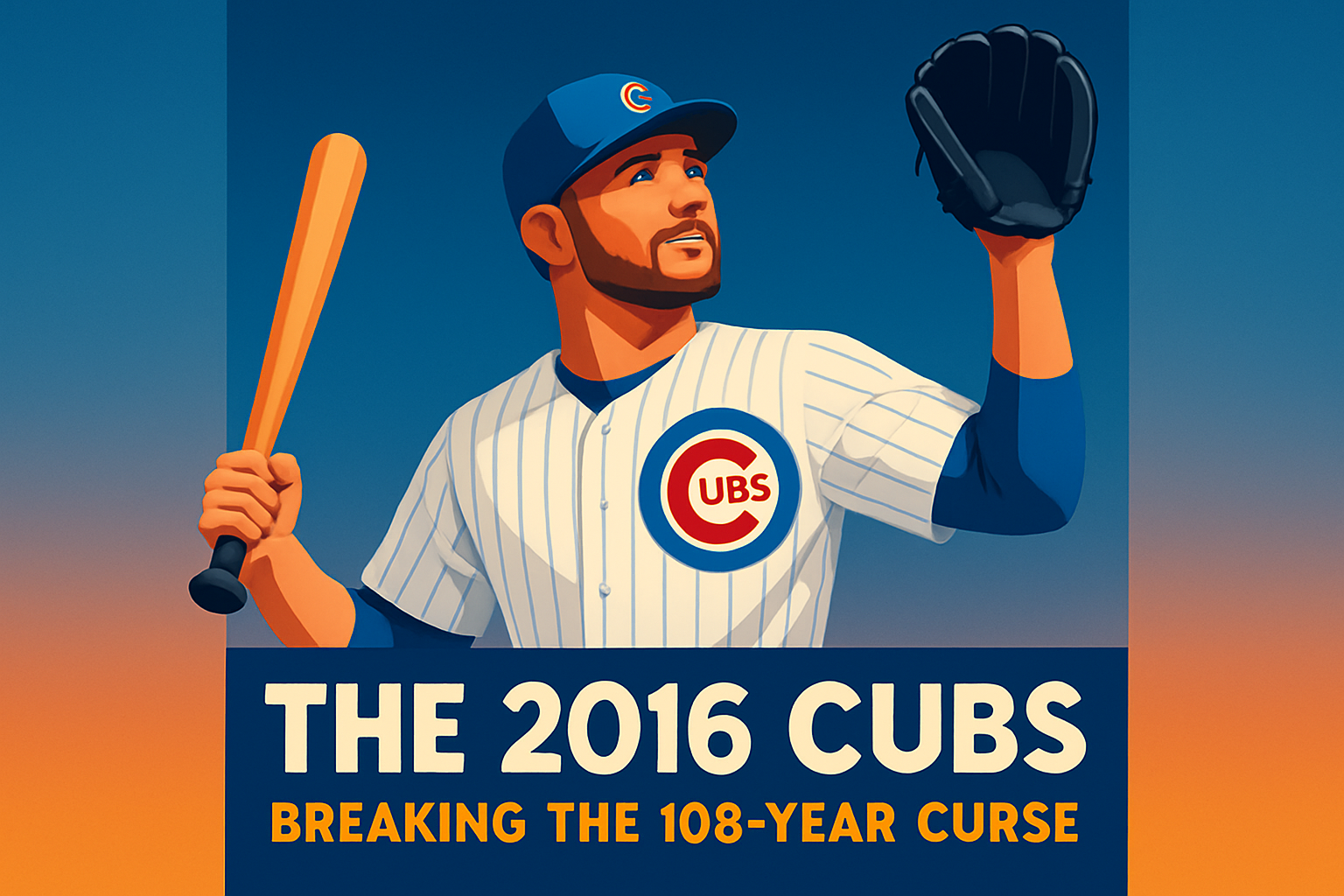
The saga of the Chicago Cubs is one of the most captivating stories in baseball history. In 2016, the Cubs achieved what was once thought impossible: they broke a 108-year championship drought and won the World Series. This triumph was not merely an addition to the record books; it symbolized the shattering of the “Curse of the Billy Goat,” a superstition that had haunted the team for decades. Understanding the significance of this victory requires a deep dive into the team’s historical struggles, the pivotal 2016 season, and the players and management who defied the odds. This story matters because it is not just about a sports victory; it is about perseverance, breaking barriers, and the power of community and teamwork. Fans and sports enthusiasts alike can draw inspiration from the Cubs’ journey, understanding that even the longest of waits can end with a remarkable triumph.
The Curse of the Billy Goat
The tale begins in 1945 when a man named Billy Sianis, owner of the Billy Goat Tavern, brought his pet goat to Game 4 of the World Series at Wrigley Field. Though initially allowed entry, Sianis and his goat were later ejected, allegedly because the goat smelled bad. In frustration, Sianis declared, “Them Cubs, they ain’t gonna win no more.” This offhand comment evolved into the “Curse of the Billy Goat,” a legend that grew with each passing year that the Cubs failed to win the championship.
While many dismissed the curse as mere superstition, its impact on the psyche of Cubs fans, players, and management was profound. It became a symbol of the Cubs’ long-standing misfortunes, from missed opportunities and near misses to inexplicably poor performances at critical times. For decades, breaking the curse became the ultimate goal, often feeling like an insurmountable task.
Building a Championship Team: Theo Epstein and Joe Maddon
The turning point for the Cubs began with the restructuring of the team’s management. In 2011, Theo Epstein, known for ending the Boston Red Sox’s 86-year championship drought in 2004, was hired as President of Baseball Operations. Epstein brought a strategic vision focused on building a team for sustained success rather than short-term gains. Central to this strategy was investing in player development, scouting, and analytics.
In 2014, Joe Maddon was recruited as the team’s manager. Known for his unorthodox methods and dynamic leadership style, Maddon was the perfect fit for the Cubs’ evolving ethos. Under his guidance, the team began to cultivate a culture of winning that emphasized discipline, creativity, and resilience. Maddon’s leadership was instrumental in shifting the team’s mindset from one of perpetual underdog to one of legitimate contender.
The Assembling of Talent: Kris Bryant and Anthony Rizzo
Under Epstein’s leadership, the Cubs focused on drafting and acquiring key players who would become the cornerstone of their success. Two of the most pivotal figures in this rebuilding process were Anthony Rizzo and Kris Bryant.
- Anthony Rizzo: Acquired in 2012, Rizzo became a cornerstone of the team both on and off the field. His consistent performance at first base and leadership in the clubhouse solidified his role as a team leader.
- Kris Bryant: Drafted in 2013, Bryant quickly rose through the ranks to become one of the most promising talents in MLB. His addition to the roster in 2015 brought a new level of dynamism and power to the Cubs’ lineup.
Together, these players embodied the youthful energy and talent the Cubs needed to break the cycle of past failures. Their synergy, both defensively and offensively, was a crucial element in the team’s path to success.
The 2016 Regular Season: Laying the Groundwork
The regular season of 2016 saw the Cubs dominating in a way that hadn’t been witnessed in decades. They finished the season with an impressive 103-58 record, the best in Major League Baseball that year. The team’s performance was characterized by exceptional pitching, solid defense, and an explosive offense.
| Category | Record |
|---|---|
| Win-Loss | 103-58 |
| Home Runs | 199 |
| ERA (Earned Run Average) | 3.15 |
This season’s success was a testament to the meticulous planning and execution by both the players and management. Under Maddon’s watchful eye, the team adhered strictly to their game plan, demonstrating a blend of youth and experience that overwhelmed their competitors.
The Postseason Journey: A Rollercoaster Ride
The postseason journey was anything but smooth for the Cubs, filled with highs and heart-stopping moments. In the National League Division Series (NLDS), they faced off against the San Francisco Giants. The Cubs won the series in four games, showcasing their ability to come through in the clutch.
Next, in the National League Championship Series (NLCS), the Cubs faced the strong Los Angeles Dodgers. Despite losing the first game, the Cubs rallied to win the series in six games. This victory marked their first National League pennant in 71 years, pushing them forward into the World Series with great momentum.
The World Series: Facing the Cleveland Indians
The World Series confrontation against the Cleveland Indians was a battle for the ages. Both teams had long-standing championship droughts, making it a historic matchup. The Cubs found themselves down 3-1 in the series, a position from which few teams have ever come back.
Determined not to let their incredible season go to waste, the Cubs fought back. They won Game 5 in Chicago, keeping their hopes alive. Back in Cleveland for Game 6, they delivered a resounding victory to force a decisive Game 7.
Game 7 was arguably one of the most thrilling contests in World Series history. Played on November 2, 2016, it featured dramatic twists, including a rain delay that only added to the suspense. In the 10th inning, the Cubs scored twice, taking the lead and eventually securing an 8-7 victory. This win ended a 108-year wait and broke the infamous curse—an achievement that resonated well beyond the game itself.
The Aftermath and Legacy
The celebration following the Cubs’ World Series win was unprecedented. Millions of fans gathered for the victory parade in Chicago, marking it as one of the largest public gatherings in US history. The triumph proved that no curse, no matter how deeply embedded, could withstand the relentless pursuit of success driven by strategic leadership, talent, and teamwork.
The impact of this victory reached beyond baseball. It invigorated a city, bonded a community, and inspired countless individuals. For sports teams and fans worldwide, it reinforced the power and possibility inherent in perseverance and belief.
Conclusion: Lessons from the 2016 Chicago Cubs
The story of the 2016 Chicago Cubs breaking the 108-year curse is a testament to the power of hope, strategy, and resilience. At its core, it is about overcoming seemingly insurmountable challenges through careful planning, leadership, and unyielding belief. The Cubs’ journey reminds us that no challenge is too great when backed by a cohesive vision and dedicated execution.
For every sports fan, athlete, or individual facing their own curses or challenges, the Cubs’ victory serves as an exemplar of what can be achieved with dedication, teamwork, and perseverance. The Cubs’ story is about more than baseball; it’s a narrative of triumph over adversity that can inspire us all to pursue our dreams, no matter how distant they may seem.
As we reflect on this remarkable achievement, let it inspire us to pursue our own goals, encourage us to work as a team, and remind us that, with enough determination, any curse can be broken. Whether you’re a baseball fan or not, the Cubs’ 2016 triumph is a powerful reminder of what we can accomplish when we refuse to give up.
Take the first step today toward breaking your own personal curse or achieving a long-awaited goal—because, as the 2016 Chicago Cubs showed us, persistence and teamwork can turn the impossible into reality.
Frequently Asked Questions
1. What was the “Curse of the Billy Goat,” and how did it affect the Chicago Cubs?
The “Curse of the Billy Goat” refers to a superstition started in 1945 when Billy Sianis, a Chicago tavern owner, was asked to leave a World Series game at Wrigley Field because the smell of his pet goat, Murphy, was bothering other fans. Insulted, Sianis allegedly declared, “Them Cubs, they ain’t gonna win no more,” which many believe hexed the team from winning another pennant or World Series. The Cubs’ subsequent performance seemed to validate this curse, comprising decades of disappointment and near-misses that became emblematic of the franchise’s struggles. This superstition grew in magnitude as the team continuously came close to championships but faltered at critical moments, leading fans to accept the curse as a definitive factor in the Cubs’ history. By 2016, the saga of the curse had deeply ingrained itself into the team’s culture, creating a narrative that intertwined baseball’s fate with superstition. These events and the idea of a lingering curse haunted the Cubs for over a century, shaping the mindset of players and fans alike as they faced each new season.
2. How did the Chicago Cubs break their 108-year championship drought in 2016?
Breaking the 108-year championship drought was a result of meticulous planning, assembling a talented roster, and having a solid organizational structure. Under the presidency of Theo Epstein, who had already broken an 86-year curse with the Boston Red Sox, the Cubs focused on building a team through a combination of drafting and acquiring key players like Kris Bryant, Anthony Rizzo, and Javier Baez. Their pitching staff, bolstered by the addition of Jake Arrieta, saw significant improvements in consistency and strength. Manager Joe Maddon, known for his strategic thinking and ability to inspire confidence, brought a fresh mindset to the team, emphasizing a balance between performance and maintaining composure under pressure. The 2016 World Series itself was a dramatic showdown against the Cleveland Indians, with the Cubs facing elimination multiple times. However, they displayed undeterred resilience, culminating in a climactic Game 7 that went into extra innings after a rain delay. The game ended in a 8-7 victory, handing the Cubs their first World Series title since 1908. It was not only a physical triumph but a mental one, as the team overcame the weight of their history and the so-called curse to achieve victory.
3. Why was the 2016 victory so important for the city of Chicago?
The 2016 victory was monumental for the city of Chicago as it transcended sports, becoming a cultural and emotional milestone for the community. The Cubs’ fanbase, known for their loyalty despite prolonged adversity, was finally rewarded with a triumphant celebration. For generations of Cubs fans, witnessing the team win the World Series was a dream come true; many fans had lived and died without ever seeing a championship in their lifetime. The win symbolized hope, perseverance, and the power of belief in achieving goals despite significant challenges. Fans from all walks of life united in joyous celebrations, showcasing an unparalleled spirit of community and solidarity. The win also had a substantial economic impact, as it boosted local businesses with increased tourism, merchandise sales, and memorabilia unique to this historic event. The Cubs’ victory served as a poignant reminder of the impact and sheer joy that sports can have on communal identity, healing old wounds and solidifying the long-standing love affair between the team and the city.
4. What role did Theo Epstein play in the 2016 Chicago Cubs’ success?
Theo Epstein, as President of Baseball Operations, played an instrumental role in the Cubs’ 2016 success by transforming not just the team but the organizational culture. Epstein’s approach was anchored in valuing both data-driven analytics and traditional scouting, ensuring the Cubs had a well-rounded roster ripe with young talent and experienced leadership. His tenure began with a clear vision and systematic plan to “break the curse,” demanding patience, developing a homegrown core through the draft, and strategically acquiring key free agents and trades. Epstein brought in manager Joe Maddon and made several pivotal player acquisitions, including Jon Lester and Aroldis Chapman, who brought skill and experience crucial for the postseason. His ability to foster a healthy, winning culture where players thrived on camaraderie, resilience, and fun was vital. Beyond player decisions, Epstein’s efforts to unify all levels of the organization under a focused and winning mindset were profound, ultimately turning the Cubs into championship contenders. By guiding the team strategically and maintaining sharp attention to both present and future goals, Epstein solidified his legacy as one of the premier architects of baseball success.
5. How did the 2016 team compare to previous successful Cubs squads?
Comparing the 2016 Cubs to earlier successful squads is a journey through time showcasing evolution in player capability, strategy, and resilience. While earlier teams, such as the storied 1908 squad, were hailed for their dominant pitching and defense in an era emphasizing such attributes, the 2016 team was lauded for its depth, versatile athleticism, and dynamic approach to the game. This late-century team harnessed modern analytics and player lifestyle management, paving new paths to maintain peak performance levels throughout a grueling 162-game season and postseason marathon. Unlike some past squads that failed under postseason pressure, the 2016 team distinguished themselves through winning key games under intense pressure – like coming back from a 3-1 deficit in the World Series. They boasted a deep roster bolstered by up-and-coming stars who brought a blend of youthful enthusiasm and seasoned veterans contributing wisdom and steadiness. Such balance ensured the team could adapt to varying opponent strategies and thrive in different game scenarios, proving pivotal in their championship quest. While past teams were celebrated for individual achievements, the 2016 team crafted a narrative hinged on unyielding teamwork, a decisive factor that etched them into the annals of baseball greatness.