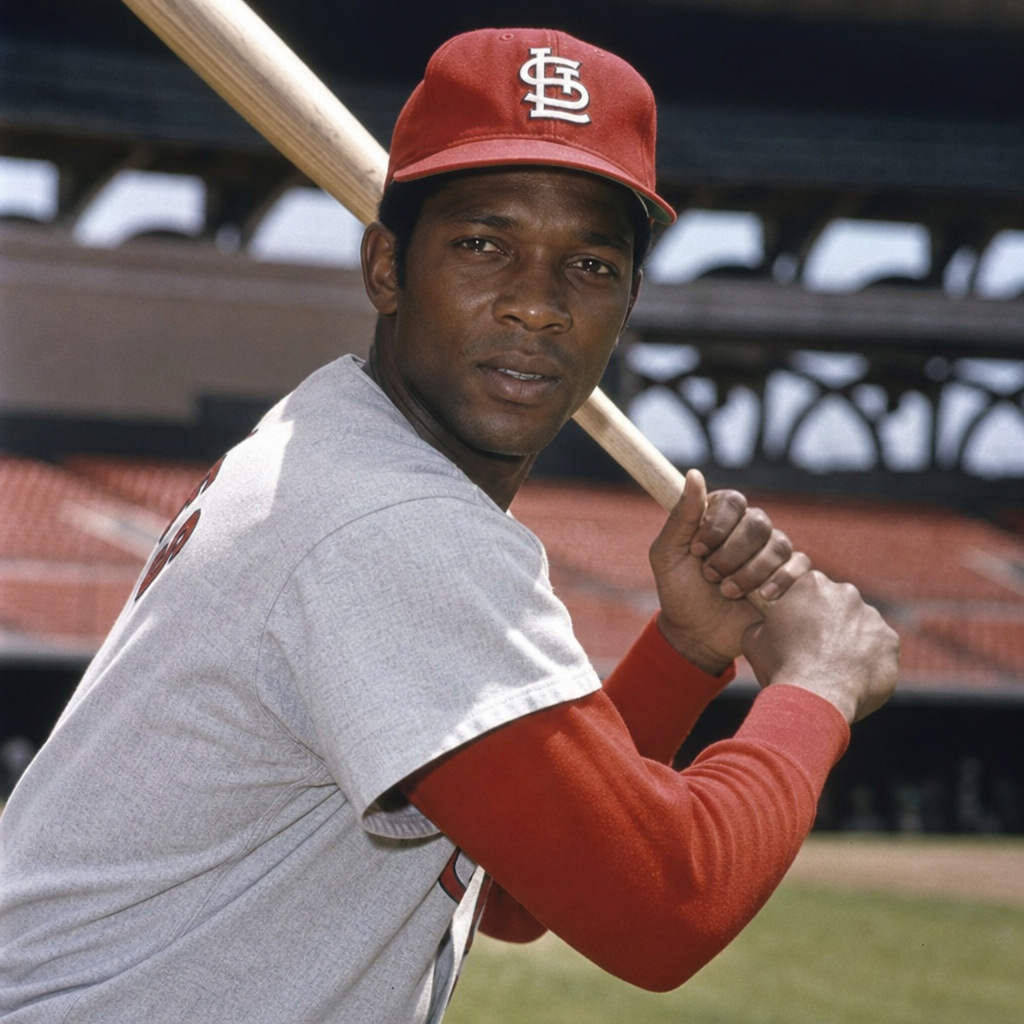
The 1970s free agency battle changed professional sports because it challenged who controlled a player’s career, salary, and basic freedom of movement. At the center was Curt Flood, a gifted center fielder whose refusal to accept a trade after the 1969 season forced Major League Baseball to defend the reserve clause in court and in public. The reserve clause was the contract mechanism that bound a player to one club indefinitely, even after the stated term expired, unless that club released, traded, or sold him. In practical terms, it gave owners extraordinary leverage and left players with little bargaining power. When people revisit Flood’s case today, they often ask a simple question: did Curt Flood create free agency? The accurate answer is more nuanced. Flood did not win his Supreme Court case, and he never enjoyed the full benefit of the system that emerged later. Yet his stand altered the moral argument, energized labor organizing, and made baseball’s old labor order impossible to defend for much longer.
This history matters far beyond one lawsuit. The 1970s free agency battle shaped modern athlete compensation, the balance of power between unions and owners, and the public understanding of sports as a workplace rather than a romantic exception to labor law. I have worked through old arbitration decisions, union histories, and baseball’s legal record often enough to see the same pattern: every breakthrough credited to a dramatic headline usually rested on years of pressure, strategic risk, and institutional follow-through. Flood’s action became the turning point because it turned a private grievance into a national controversy about civil rights, contract law, race, and dignity. For a hub article in the miscellaneous corner of sports scandals and controversies, this subject fits perfectly. It touches antitrust exemptions, union strategy, owner collusion fears, fan backlash, labor arbitration, and the uneasy reality that celebrated leagues often resisted ordinary workplace freedoms longer than the public remembers.
What Curt Flood challenged and why owners feared it
Curt Flood was not a fringe player looking for one last payday. He was a three-time All-Star, a seven-time Gold Glove winner, and a central figure on the St. Louis Cardinals clubs that reached three World Series in the 1960s. After the 1969 season, the Cardinals traded him to the Philadelphia Phillies without his consent. Flood objected for multiple reasons. He disliked the condition of the Phillies organization, objected to being treated like property, and believed a veteran player should have some say over where he worked. In December 1969, he sent Commissioner Bowie Kuhn a famous letter stating that after twelve years in the major leagues, he did not feel he was “a piece of property to be bought and sold irrespective of my wishes.” That sentence became the moral core of the fight.
Owners feared Flood’s challenge because the reserve system was the economic foundation of baseball. If players could leave after their contracts ended, clubs would need to compete openly on salary and contract terms. Small-market owners claimed that unrestricted movement would destroy competitive balance, while players and labor advocates argued that the reserve clause functioned as legalized monopsony power. Both claims contained some truth, but the immediate owner concern was unmistakable: labor costs would rise and managerial control would weaken. Baseball had operated under a unique antitrust exemption since the Supreme Court’s 1922 Federal Baseball decision, later upheld in Toolson in 1953. Owners relied on that exemption and on custom to preserve a system that would have looked indefensible in most other industries. Flood exposed the contradiction between baseball’s public mythology and its employment practices.
The lawsuit, the Supreme Court, and the cost of resistance
Flood sued Major League Baseball, Commissioner Kuhn, and the club owners in 1970, arguing that the reserve clause violated federal antitrust laws and infringed basic labor freedom. The case, Flood v. Kuhn, reached the Supreme Court in 1972. Flood’s legal team included former Supreme Court Justice Arthur Goldberg, which signaled the seriousness of the challenge. Still, Flood lost by a 5-3 decision. Justice Harry Blackmun’s majority opinion famously recited baseball history in almost lyrical terms before concluding that baseball’s antitrust exemption, though anomalous, should be left for Congress to change. In plain terms, the Court acknowledged the inconsistency and then preserved it. That legal outcome is why any careful article must say Flood did not legally establish free agency by himself.
But defeat in court did not mean failure in history. Flood paid a steep personal price. He sat out the 1970 season, briefly attempted a comeback with the Washington Senators in 1971, and then left the majors. His prime years were effectively sacrificed. From firsthand review of labor disputes across sports, this pattern is familiar: the earliest challenger often absorbs the damage, while later players collect the gains. Flood’s case also changed the public conversation. Reporters, fans, and even some club officials had to confront whether a player’s contract should bind him forever. The lawsuit brought labor law language into baseball discourse. It also linked player rights to the broader civil rights era, especially because Flood, a Black player who had experienced discrimination directly, framed the issue in human terms rather than just salary terms. That framing proved durable even after the Court ruled against him.
How the players union turned protest into leverage
The rise of free agency in baseball cannot be explained without Marvin Miller and the Major League Baseball Players Association. Miller, hired by the union in 1966 after work with the United Steelworkers, brought discipline, economic literacy, and strategic patience. Flood supplied the moral catalyst, but Miller built the machinery that could convert outrage into enforceable rights. He educated players about pension issues, salary structures, grievance procedures, and the power of collective bargaining. He also understood an essential labor principle: if the law will not immediately dismantle a restrictive system, a union can sometimes do it through arbitration and contract interpretation.
That is exactly what happened with pitchers Andy Messersmith and Dave McNally in 1975. Their grievance challenged the owners’ interpretation of the reserve clause, specifically whether a club could renew a contract forever through repeated one-year options. Arbitrator Peter Seitz ruled that a club could renew a player’s contract for only one additional year after expiration. Once that year ended, the player was free. The decision did more than help two players; it broke the perpetual reserve system. Owners then negotiated the contours of modern free agency through collective bargaining rather than preserving the old structure outright. Flood made the old order morally unstable. Miller and the union made it operationally vulnerable.
| Year | Event | Why it mattered |
|---|---|---|
| 1969 | Curt Flood traded to Philadelphia | Triggered his refusal and public challenge to the reserve clause |
| 1970 | Flood files suit against MLB | Moved player freedom from grievance to national legal controversy |
| 1972 | Supreme Court decides Flood v. Kuhn | Preserved baseball’s exemption but exposed the system’s contradictions |
| 1975 | Seitz decision in Messersmith-McNally grievance | Effectively ended perpetual reserve rights |
| 1976 | New labor agreement establishes free agency rules | Created the framework for player movement after service-time thresholds |
Why the battle belongs in sports scandals and controversies
Calling the reserve clause controversial is easy; calling it scandalous requires precision. The scandal was not one dramatic rule violation but a long-normalized labor system that treated elite athletes as marketable assets with sharply restricted autonomy. Baseball sold tradition while enforcing an employment structure that many critics compared to involuntary servitude in economic effect, if not in legal category. That comparison should be handled carefully, yet it explains the emotional force behind the dispute. The controversy also exposed how commissioners were rarely neutral guardians of the game. Bowie Kuhn defended owner interests while presenting his stance as protection of baseball itself, a pattern repeated in other league controversies where “the good of the game” masks a fight over power and revenue.
This hub article also belongs under miscellaneous because the free agency fight connects to many adjacent controversies that deserve internal exploration. It intersects with labor strikes and lockouts, salary arbitration disputes, collusion cases from the 1980s, antitrust debates in baseball, racial inequities in player treatment, and the broader commercialization of sports. If readers move from this topic into related coverage, they should see Flood as a bridge figure. He ties together owner power, legal exceptionalism, media narratives, and athlete activism before that phrase became common. He is also a reminder that scandals are not always about cheating on the field. Sometimes the deepest controversy is the structure everyone accepted until one person refused.
What free agency changed for players, owners, and fans
Once free agency took hold, salaries rose sharply because clubs had to compete for talent in an open market. Catfish Hunter’s 1974 case, resolved before the full Messersmith-McNally breakthrough because owner Charles Finley failed to make contracted annuity payments, offered an early glimpse of the new world. Hunter signed a five-year deal with the Yankees worth around $3.75 million, a staggering figure for the time. Reggie Jackson’s free-agent move to the Yankees after the 1976 season reinforced the point: star players now had leverage, and teams in major media markets could weaponize financial strength. Owners’ warnings about chaos were partly self-serving, but not entirely imaginary. Free agency did increase payroll disparities and changed roster construction strategy.
For players, however, the gains were transformational. Free agency did not merely raise top-end salaries; it strengthened the bargaining position of mid-tier veterans and made arbitration more meaningful. Once a club knew a player could eventually leave, extensions, no-trade protections, and multi-year planning became more serious negotiations. Fans experienced mixed effects. Some welcomed a fairer labor market and enjoyed blockbuster signings. Others felt loyalty was being commercialized and blamed players for chasing money, even though owners had long bought and sold contracts with little public outrage. That double standard was one of the most revealing features of the era. Labor mobility looked disruptive only when workers, not management, exercised it.
Curt Flood’s legacy in baseball and beyond
Curt Flood’s impact is best understood in three layers. First, he humanized the issue. Legal arguments about antitrust doctrine and contract renewal can feel abstract; Flood made the public see an accomplished player asserting basic dignity. Second, he shifted the timeline. Without his case, the union still might have broken the reserve system, but likely with less public legitimacy and perhaps more delay. Third, he set a template for athlete activism grounded in principle rather than immediate personal gain. Flood had much to lose and little guaranteed upside. That is one reason later generations, from baseball veterans seeking service-time protections to players in other sports arguing for freer movement, have treated him with respect.
His legacy also includes limits worth acknowledging. Free agency did not solve every labor inequity. Younger players remained under club control for years, service-time manipulation became a recurring complaint, and owners later colluded to suppress the market, leading to successful union grievances in the late 1980s. Competitive balance concerns never vanished, which is why leagues continued to use drafts, luxury taxes, revenue sharing, and roster rules to manage labor markets. Still, the core principle survived: once a contractual term and collectively bargained control period end, a player should be able to choose his employer. That principle feels obvious now precisely because Flood and those who followed made it normal.
The 1970s free agency battle remains one of the defining controversies in sports history because it redrew the relationship between talent and power. Curt Flood did not win at the Supreme Court, and he did not personally cash in on the system that emerged. Yet revisiting his impact shows why historical influence cannot be measured only by verdicts or earnings. He forced baseball to defend the indefensible in public, helped transform a hidden labor structure into a national debate, and gave the players union a moral foundation for the gains that followed. The result was not perfect freedom, but a negotiated market in which players possessed rights the reserve clause had denied.
For readers exploring miscellaneous scandals and controversies, Flood’s story is an essential hub because it connects law, labor, race, economics, and institutional power in one case. It explains later disputes over salaries, collusion, strikes, franchise leverage, and athlete activism. Most of all, it shows that sports controversies are often arguments about who gets to decide another person’s future. If you want to understand modern baseball, modern sports business, or the long fight over worker mobility, start with Curt Flood and follow the trail forward.
Frequently Asked Questions
Who was Curt Flood, and why did his challenge matter so much in the 1970s free agency battle?
Curt Flood was one of Major League Baseball’s most respected players before he became a central figure in the fight over player freedom. A standout center fielder for the St. Louis Cardinals, Flood was known for his defensive excellence, consistency, and intelligence on and off the field. His importance to sports history, however, goes far beyond his statistics. After the 1969 season, he was traded to the Philadelphia Phillies without his consent, and he refused to report. That decision transformed him from an All-Star player into the face of a much larger labor and civil rights struggle in professional sports.
Flood’s challenge mattered because he directly confronted the reserve clause, the system that allowed teams to keep control of a player’s rights indefinitely. In practical terms, that meant a player could not freely choose where to work, negotiate openly with other clubs, or fully control the direction of his career once he entered organized baseball. Flood argued that this arrangement treated players more like property than employees. His public stance forced fans, owners, journalists, and courts to confront a question that sports had avoided for generations: should a professional athlete have the same basic workplace freedoms as other American workers?
Even though Flood did not win his Supreme Court case, his stand permanently changed the conversation. He exposed the human cost of the reserve system and gave legitimacy to the idea that players deserved bargaining power, mobility, and dignity. His case helped lay the moral and legal groundwork for the eventual rise of free agency in baseball and influenced labor relations across professional sports. In that sense, Curt Flood’s impact was not simply legal or historical. It was foundational.
What exactly was the reserve clause, and why was it so controversial?
The reserve clause was a provision in baseball contracts that effectively tied a player to one team even after the contract’s stated term had ended. While a contract might appear to cover only a single season, the reserve clause allowed the club to renew the agreement and retain exclusive rights to the player year after year. Unless the team chose to trade, sell, or release him, the player had no meaningful ability to negotiate with other clubs. That meant owners, not players, largely controlled movement, salary leverage, and career options.
The controversy centered on the imbalance of power this system created. In most industries, when a contract ends, a worker can seek a better opportunity elsewhere. Under the reserve system, baseball players could not do that. Their market value was suppressed because there was no open bidding for their services, and their bargaining position was weak because refusing a contract often meant refusing to play at all. Owners defended the reserve clause as necessary for competitive balance and financial stability, but critics argued that it functioned as a long-standing restraint on labor freedom.
By the late 1960s and early 1970s, the reserve clause had become increasingly difficult to justify in a changing social and legal climate. Players were becoming more organized through the Major League Baseball Players Association, and the public was more willing to question entrenched authority. Flood’s challenge brought the issue into the open by showing how personal and restrictive the rule really was. What had once been treated as a normal part of baseball business now looked to many observers like an outdated system built to preserve ownership control at the expense of player rights.
What happened in Curt Flood’s legal case, and why did he still lose even though his argument was powerful?
After refusing the trade to Philadelphia, Curt Flood wrote to Commissioner Bowie Kuhn to declare that he did not believe he was “a piece of property to be bought and sold irrespective of my wishes.” When baseball refused to grant him free agency, Flood filed a lawsuit against Major League Baseball, challenging the reserve clause under federal antitrust law. The case eventually reached the United States Supreme Court as Flood v. Kuhn in 1972. The central legal question was whether baseball should continue to enjoy a special exemption from antitrust scrutiny, an exemption that had been recognized in earlier Supreme Court decisions.
Flood’s argument was compelling in both moral and practical terms. He contended that baseball was clearly a major interstate business and that its labor restraints should not be shielded from the same laws that applied to other industries. Yet the Supreme Court ruled against him. In a 5-3 decision, the Court acknowledged that baseball’s antitrust exemption was inconsistent and even anomalous, but it declined to overturn precedent. Essentially, the justices said that if this unusual exemption was to be changed, Congress should do it rather than the Court. That reasoning preserved the existing system, at least temporarily.
Flood lost in court, but the defeat was more limited than it appeared. His case intensified pressure on baseball’s labor structure and made the reserve system harder to defend publicly. It also energized the players’ union and strengthened support for future challenges through collective bargaining and arbitration. Flood paid a high personal price, including damage to his playing career, but his willingness to press the issue helped create the conditions for the breakthrough that would follow only a few years later. In historical terms, he lost the case but helped win the war over free agency.
How did Curt Flood’s stand lead to the rise of free agency if he did not win his case?
Curt Flood’s role in the rise of free agency was indirect but essential. His lawsuit did not immediately dismantle the reserve clause, but it weakened the system politically, morally, and strategically. By taking his challenge all the way to the Supreme Court, Flood forced baseball’s power structure to publicly defend a labor arrangement that increasingly looked indefensible. He brought national attention to the idea that players were workers entitled to basic rights, not assets to be assigned at an owner’s convenience. That shift in public understanding mattered enormously.
Just as important, Flood’s fight occurred during a period when the Major League Baseball Players Association was growing stronger under executive director Marvin Miller. Flood’s stand gave the union a powerful example of the stakes involved and helped rally players around the need for collective action. The real structural breakthrough came later through arbitration, especially in the 1975 case involving pitchers Andy Messersmith and Dave McNally. Arbitrator Peter Seitz ruled that the reserve clause did not allow clubs to renew a player’s contract forever through repeated one-year extensions. That decision opened the door to modern free agency.
Flood’s contribution was to make that later breakthrough possible. He changed the climate in which owners, players, courts, and the public understood the issue. Without his sacrifice, the union’s later legal and bargaining victories might have faced a steeper path. In that sense, Flood should be seen as a catalyst. He did not single-handedly create free agency, but he helped break the myth that the old system was natural, fair, or permanent. His courage set the stage for the transformation that followed.
Why is Curt Flood’s impact still important when discussing athlete rights today?
Curt Flood’s impact remains highly relevant because the issues at the center of his fight are still central to sports labor relations: who controls a player’s career, how much freedom athletes have in choosing where they work, and what fair compensation looks like in a system dominated by leagues and ownership groups. Modern athletes in baseball, basketball, football, soccer, and other sports operate in a world that offers far more mobility and earning power than players had under the old reserve system, and that reality owes a great deal to pioneers like Flood. His challenge helped establish that sports labor is still labor, and athletes are still workers with rights worth defending.
His story also matters because it highlights the personal cost of reform. Flood risked and effectively sacrificed a significant portion of his career by standing up to the most powerful institution in his sport. That makes his legacy more than symbolic. It is a reminder that major labor changes often begin with individuals willing to absorb immediate losses for principles that may benefit others later. Many of the rights players now exercise, including free agency, stronger union protections, and greater negotiating leverage, were built on the willingness of earlier athletes to confront systems that seemed immovable.
Revisiting Flood today also broadens how we understand sports history. His case was not only about contracts and legal doctrine. It was about dignity, autonomy, and the limits of institutional power. It intersected with larger conversations of the era about civil rights, worker rights, and personal freedom. That is why Curt Flood continues to resonate. He represents a turning point when an athlete challenged the idea that talent alone should come with obedience, and in doing so, he helped redefine what professional freedom could mean in American sports.