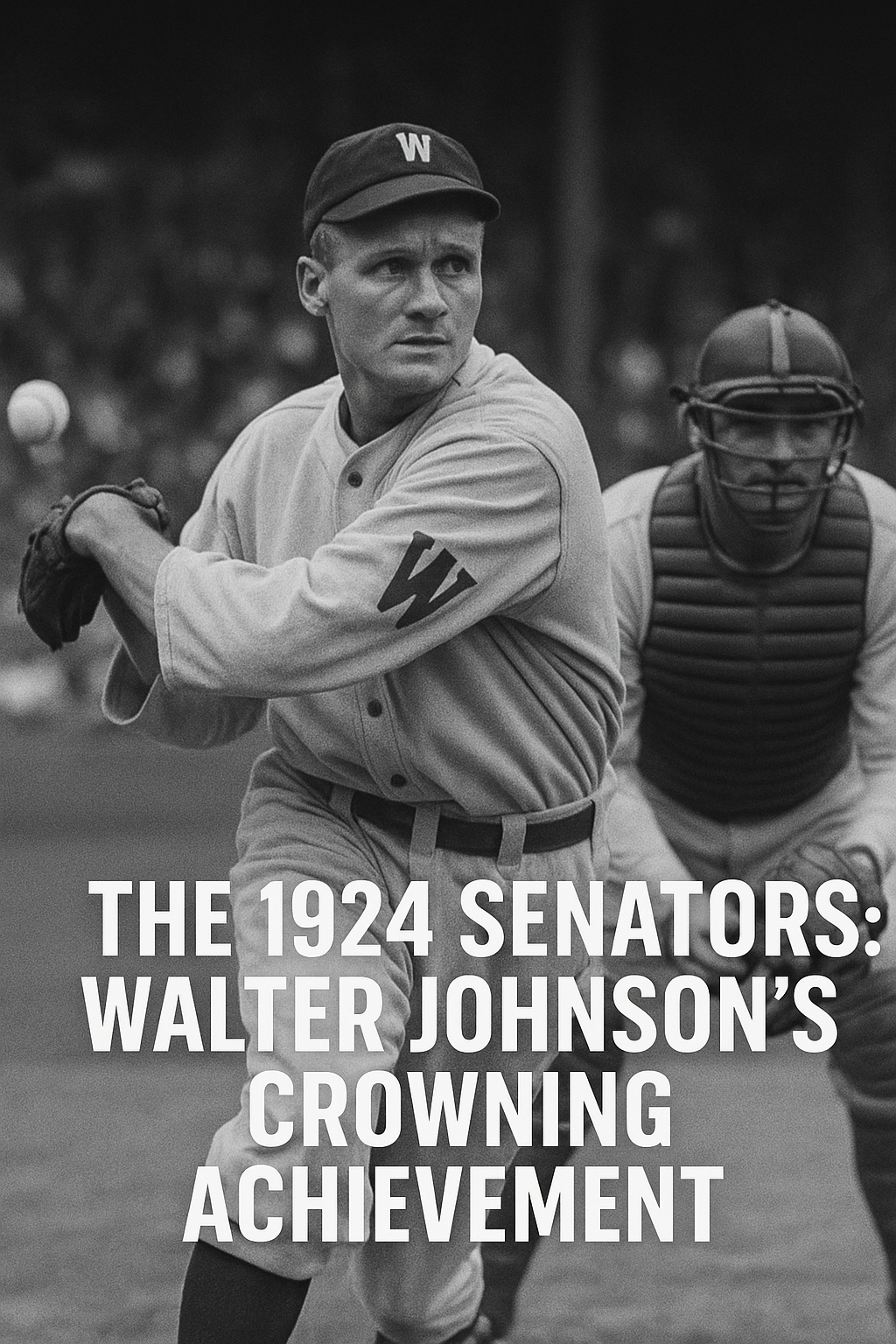
The 1924 Washington Senators’ remarkable season remains etched in the annals of Major League Baseball history, celebrated for the team’s resilience, skill, and determination. Key to their success was the legendary Walter Johnson, a formidable pitcher known for his speed and precision. That year marked a crowning achievement in his career, as he led his team to their first ever World Series title. This article delves into the significance of the 1924 season for both the Senators and Walter Johnson, highlighting the pivotal moments and strategies that played a role in clinching the championship. The legacy of the 1924 Senators and Johnson’s contribution extended beyond the triumph of that season, influencing the shape of the sport and the city’s fervor for baseball. In understanding this season, we not only appreciate the achievement but also the historical context that made it possible and the inspiring narrative of perseverance that it embodies. This was an era when baseball was among the prime entertainments for Americans, and the Senators’ success provided hope and joy, becoming an iconic chapter in the game’s rich tapestry.
The Road to the World Series
The Washington Senators, long considered an underdog in Major League Baseball, entered the 1924 season with a renewed sense of purpose. Under the leadership of player-manager Bucky Harris, the team honed its strategy, blending seasoned veterans with ambitious rookies. Their journey to the World Series was marked by a fiercely competitive American League, featuring formidable opponents like the New York Yankees, fortified by the presence of Babe Ruth. However, the Senators’ consistency and unwavering dedication allowed them to finish the regular season with a 92-62 record, clinching the American League pennant. Central to their success was Walter Johnson, whose performances that year were instrumental in inspiring confidence and momentum within the team. Known for his fearsome fastball and characterized by an admirable work ethic, Johnson’s talent shone brightly throughout the season, featuring in critical matchups that often tilted the balance in favor of the Senators.
Walter Johnson’s path to the World Series was a story of grit and perseverance. Having joined the Senators in 1907, he had endured numerous disappointing seasons, even as he established himself as one of baseball’s premier pitchers. By 1924, Johnson had accumulated multiple award-winning seasons but was yet to taste championship glory. The Senators’ ascent was not attributed solely to Johnson; the ingenuity of Bucky Harris as player-manager provided strategic depth. Harris often made pivotal decisions, such as shuffling pitching rotations and strategically utilizing player substitutions, to maximize the team’s output. The team, laden with talent, included star players like Goose Goslin, Joe Judge, and Sam Rice, who provided essential support both offensively and defensively. The confluence of these factors set the stage for a prosperous postseason.
The atmosphere surrounding the Senators during the 1924 postseason was electric. Fans, who had long supported the team through lean years, filled Griffith Stadium, sporting team regalia and holding banners of encouragement. Excitement and anticipation mounted as the Senators prepared to face the New York Giants in the World Series, with Walter Johnson tasked as one of the main pitching weapons in their arsenal. The series was a nail-biter, featuring closely fought games, dramatic comebacks, and heroic feats. It would prove to be one of the most memorable championships in baseball history, with every game showcasing the resilience and skill of both the Senators and their fierce opponents.
The World Series Showdown
The 1924 World Series was a thrilling faceoff between the Washington Senators and the New York Giants. Over the course of seven games, the series delivered what fans and critics alike would remember as a historic showdown. The Senators showcased their prowess early on, with Walter Johnson commanding the mound and striving to set the tempo. He was supported by a strong defense and a lineup capable of timely hitting. Yet, the Giants, experienced and robust, were prepared to counter the Senators’ strategies at every turn.
The series opened to a sellout crowd, with fans eagerly anticipating the performances of the two teams. The games fluctuated between dominating displays and intense back-and-forth battles, with neither team willing to concede ground easily. Key players such as Goose Goslin and Bucky Harris delivered clutch plays that elicited loud ovations from the rowdy Washington crowds. Each victory ignited celebrations, while losses were met with stoic determination to rebound stronger.
The critical moment arrived in Game 7, staged at Griffith Stadium, in front of a raucous home crowd. The series stood tied at three games apiece. Walter Johnson continued to be central to the Senators’ hopes. Despite early setbacks, with the Giants securing a lead, the Senators maintained their composure. Aided by crucial interventions from team members, Johnson took the mound once more in the ninth inning, ultimately forcing the game into extra innings.
As the night wore on, the tension in Griffith Stadium was palpable. Fans held their breath with every pitch, every throw, and every hit. In a demonstration of strategic acumen, the Senators capitalized on a crucial error by the Giants in the twelfth inning. Muddy Ruel got on base via an error, and Bucky Harris hit a high bounder to Lindstrom, which hit a pebble and went for a double. Finally, Earl McNeely hit a grounder which hit another pebble and got past Lindstrom, driving in the winning run and securing the Senators’ first World Series victory. It was an ecstatic moment for Walter Johnson and the Washington Senators, a celebration of their determination and skills, and an occasion that remains unrivaled in the history of Washington baseball.
Walter Johnson’s Legacy
Walter Johnson’s triumph in the 1924 season was not just a personal victory but a seminal moment in the history of baseball. With this win, Johnson cemented his legacy as one of the game’s greatest pitchers. Over the years, his 110 shutouts remain a Major League record, a testament to his dominance on the mound. Known affectionately as the “Big Train,” Johnson’s fastball left an indelible mark on baseball, influencing future generations of pitchers who aspired to emulate his speed and control.
The emotional significance of the victory for Johnson cannot be overstated. After many years of performing without major recognition in terms of team successes, the championship affirmed his place in baseball lore. His career had been a testimony to resolve and excellence – traits that resonated deeply within his team and fans. The 1924 championship did more than add a title to the Senators’ record and Johnson’s career. It uplifted the spirit of the entire city of Washington, drawing attention to the thriving baseball culture within the nation’s capital.
Johnson’s impact went beyond his on-field achievements. As a leader and a teammate, he inspired camaraderie and commitment among the Senators. The relationships he cultivated with his team members were based on mutual respect and an indefatigable love for the game. His influence continued long after he retired, serving as a role model for players entering the league and transforming the perception of a pitcher in baseball.
The Lasting Impact of 1924
The 1924 Washington Senators’ victory stands as a cornerstone of Major League history, representing what can be achieved through perseverance, unity, and strategic excellence. For the city of Washington, it was a moment of immense pride, a narrative of underdogs prevailing over more established teams, and a source of communal joy. The season also redefined expectations for the franchise and its fans, infusing the organization with a competitive spirit that dictated its approach in subsequent seasons.
Beyond the borders of Washington, the triumph resonated across the baseball landscape. Teams around the league took inspiration from the Senators’ approach, recognizing the value of strong leadership, player development, and strategic foresight. It was a season that encapsulated the enthralling unpredictability of baseball, and the passionate display of sportsmanship and effort won the admiration of baseball enthusiasts nationwide.
The memories of 1924 endure, with the championship setting a benchmark for teams pursuing their historic feats. The sense of nostalgia that accompanies discussions of this season is tinged with warmth and admiration for the players who turned their childhood dreams into a reality. Walter Johnson and his team exemplified the spirit of baseball, leaving a legacy that continues to inspire and captivate. The courage and tenacity displayed by the Senators provides a lasting reminder of the possibilities inherent in the sport and serves as a beacon of hope for those who dare to dream.
Conclusion
The 1924 season remains a defining chapter in the history of the Washington Senators and an emblematic tale in the career of Walter Johnson. A journey marked by determination, skill, and fortitude, it represents the ultimate success story of a team and player who personified the spirit of baseball. Walter Johnson’s contribution to the Senators’ first World Series championship was a crowning achievement, embedding his legacy as a legend who not only excelled on the field but transcended the sport as an icon of inspiration.
The victory in 1924 exemplified how a synergy of talent, leadership, and strategy could overcome adversity and establish timeless legacies. For fans, it became a cherished memory, symbolizing the thrill of victory and the pride of rooting for a team that encapsulated the underdog story. The Senators’ triumph resonated throughout the city, becoming a testament to the power of sports to unify and uplift communities.
In commemorating the 1924 Senators and Walter Johnson’s invaluable role in their success, we celebrate the enduring spirit of baseball. Their story serves as a reminder of the passion, commitment, and teamwork required to achieve greatness, not only in sport but in all of life’s pursuits. As the years continue to pass, the legacy forged in 1924 will persist, immortalizing those who achieved glory on the field and those who cheered for them in the stands, inspiring generations of baseball fans and players alike.
Frequently Asked Questions
1. Who was Walter Johnson and why was he significant to the 1924 Washington Senators?
Walter Johnson was a legendary pitcher for the Washington Senators and is considered one of the greatest pitchers in Major League Baseball history. Known as “The Big Train” for his powerful arm and exceptional speed, Johnson was a key figure during the 1924 season, when he helped lead the Senators to their first World Series title. Before 1924, the Senators had not been a prominent team in the league, and Johnson’s performance that year cemented his legacy as a cornerstone in baseball history. His experience, stamina, and sheer talent were integral in the Senators’ journey to glory. Johnson had been with the Senators since 1907 and had previously faced many trials and tribulations with the team, but the 1924 season allowed him to showcase his talent on the grandest stage, ultimately earning him and the team a place in baseball history.
2. What made the 1924 World Series such a remarkable achievement for the Senators?
The 1924 World Series was a dramatic and intense showdown that pitted the Washington Senators against the New York Giants, an established powerhouse in baseball at the time. This series is renowned for its excitement and competitiveness, lasting seven games and featuring several memorable moments. The Senators’ victory was not only significant because it marked their first World Series championship but also because they triumphed over the Giants, who were heavily favored. The Senators demonstrated resilience and skill, particularly in the seventh game, which featured a thrilling 12-inning battle and concluded when a bad bounce led to a game-winning hit. This victory was a historic landmark for the franchise and those fans who had long supported the team through challenging seasons.
3. How did Walter Johnson perform during the 1924 World Series?
Walter Johnson’s performance in the 1924 World Series was a testament to his exceptional talent and unwavering determination. Though he lost his first two starts, his resilience and elite skill were on full display in the decisive Game 7. On short rest and entering the game in relief, Johnson pitched four standout innings, allowing the Senators to hold on and eventually secure the championship. His perseverance and ability to deliver under pressure earned him widespread respect and acclaim. This performance not only capped Johnson’s career with his long-awaited World Series win but also highlighted his status as a clutch performer, further solidifying his legacy in baseball history.
4. What impact did the 1924 victory have on the future of the Washington Senators?
The 1924 victory had a lasting positive impact on the Washington Senators and Major League Baseball. It elevated the team’s profile, enhancing its reputation and popularity among fans. The Senators followed up with a strong performance in subsequent years, reaching the World Series again in 1925 and 1933, although they did not win. For the city of Washington, D.C., the championship provided a source of pride and unity, cementing the Senators as an integral part of the community’s fabric. The team’s perseverance and ultimate success inspired future generations of players and fans, adding to the rich tapestry of baseball history.
5. How is Walter Johnson’s legacy remembered today in the context of the 1924 season?
Walter Johnson’s legacy endures as one of baseball’s all-time greats, with the 1924 season standing out as the pinnacle of his illustrious career. Johnson’s influence on the game is celebrated through various honors, including his induction into the Baseball Hall of Fame in its inaugural class in 1936. The 1924 season is often highlighted in discussions of his career due to his contributions to the Senators’ historic title run and his defining role in their victory. Johnson represents the archetype of elite pitching, characterized by his unmatched speed, control, and sportsmanship. Today, he is remembered not only for his impressive statistics and accolades but also for his character and the indelible mark he left on the history of baseball through that memorable 1924 season.