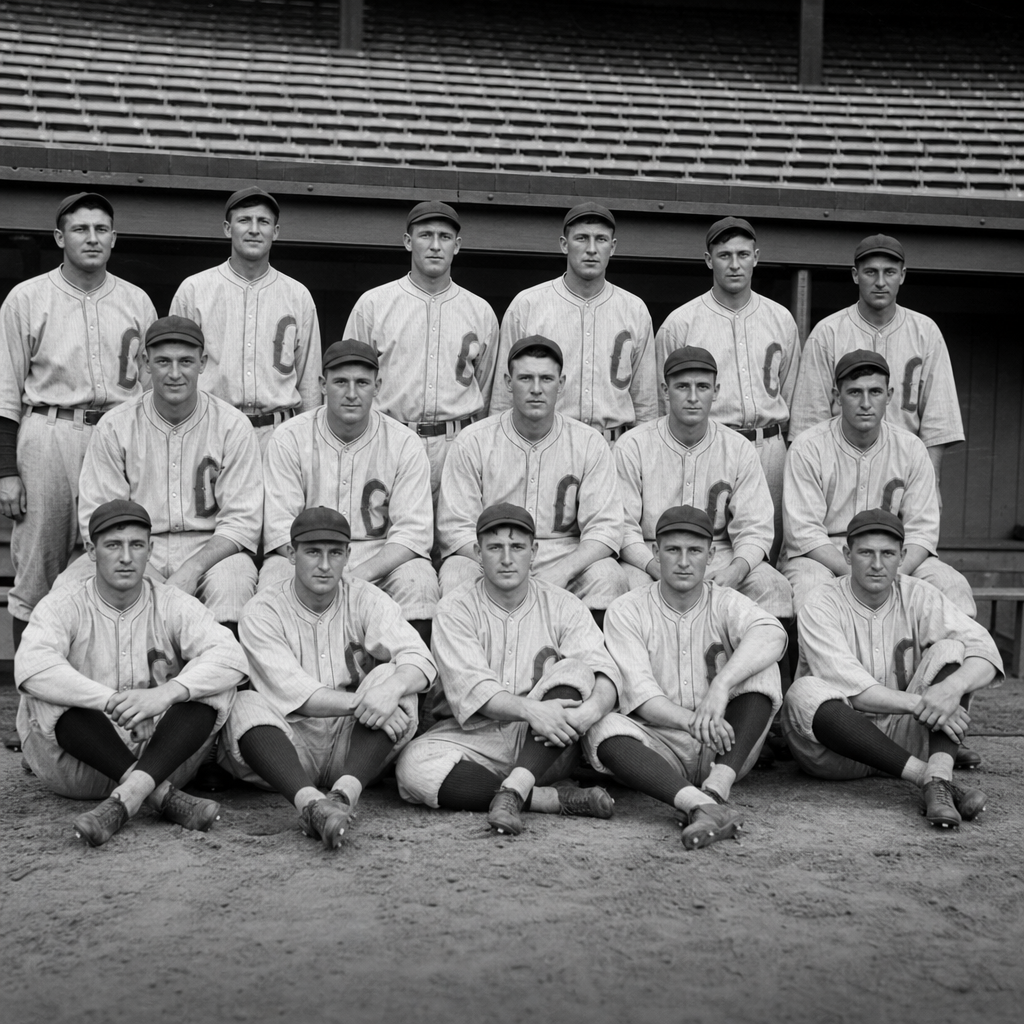
The 1914 Boston Braves remain one of baseball’s most dramatic reversal stories, but the phrase “Miracle Braves” has always carried a second, quieter implication: when a team rises this fast, people start asking whether something improper happened behind the curtain. In scandal history, that suspicion matters as much as any proven offense. This hub article reconsideres the 1914 Miracle Braves through the lens of controversy, rumor, and historical context, while also mapping the wider “Miscellaneous” branch of baseball scandals and controversies that do not fit neatly into gambling, steroids, labor battles, or sign stealing.
To understand why the 1914 club attracts this kind of scrutiny, it helps to define the terms. A scandal is a controversy involving alleged deception, corruption, unfair advantage, or conduct that damages public trust. A baseball controversy is broader: it may involve disputed eligibility, ownership maneuvering, secret payments, clubhouse mutiny, suspicious injuries, biased umpiring accusations, or media campaigns that reshape reputations without producing formal charges. The 1914 Braves sit in that gray area. Their surge from last place on July 4 to a National League pennant and then a sweep of Connie Mack’s heavily favored Philadelphia Athletics looked almost unnatural to observers at the time, especially in an era when rumor traveled faster than verification and club finances were opaque.
I have spent years working through old baseball controversy files, and the Braves case keeps resurfacing because it exposes how easily extraordinary performance becomes a moral mystery. The 1914 season occurred before modern injury reporting, before transparent transaction logs, and before robust league investigations became standard practice. Newspapers often blurred reporting with insinuation. Owners floated stories to protect leverage. Rivals used whispers to explain losses they could not comfortably explain on the field. Looking back, the central question is not whether the Braves were caught in a major scandal; they were not. The better question is why their achievement produced scandal language at all, and what that reveals about how baseball fans process shock, luck, money, and power. As a hub for miscellaneous controversies, this article places the Miracle Braves inside that broader pattern and directs readers toward the kinds of disputes that history tends to misfile as either miracle or myth.
Why the 1914 Braves Looked Suspicious to Contemporaries
The facts of the turnaround are stark. Managed by George Stallings, Boston was 26-40 on July 4, 15 games behind the New York Giants. From that point forward, the Braves played at a dominant pace, finishing 94-59 and taking the pennant by 10.5 games. They then swept the Athletics in the World Series. In any era, a swing that large invites suspicion. In 1914, it invited more than that because baseball culture was already primed for talk of fixes, owner collusion, contract jumping, and hidden physical conditions.
Several practical factors fueled the whispers. First, Boston’s roster had matured in ways standings did not yet reflect. Johnny Evers brought leadership and infield precision. Rabbit Maranville was an elite defensive shortstop. Hank Gowdy gave the club strong catching. Bill James, Dick Rudolph, and Lefty Tyler anchored a deep pitching staff. Second, Stallings platooned and matched players aggressively for the period, squeezing value from role players. Third, the club moved into the larger Braves Field late in the season, and the park suited its run prevention profile. These are baseball reasons, but baseball reasons often fail to satisfy audiences when the result looks cinematic.
At the time, critics raised softer suspicions rather than clear accusations. Was another club easing up? Were opposing teams distracted by the Federal League war for players and salaries? Did pennant rivals misjudge Boston because of early standings? Those questions were easier to ask than to answer. They show how a remarkable comeback can be framed as controversy even without evidence of cheating.
The Real Historical Context: Federal League Chaos, Finances, and Information Gaps
The single most important context for reconsidering the Miracle Braves is the unstable baseball economy of 1914. The Federal League declared itself a major league and attacked the National and American Leagues by luring players with better contracts. That move disrupted rosters, owner strategies, and media narratives across the sport. When historians revisit suspicious seasons from this period, the first step is not to hunt for a hidden fix; it is to study how off-field instability altered on-field expectations.
Owners guarded financial information closely. Player contracts were not transparent to the public. Injury details were partial at best. Travel conditions were demanding, and scouting was uneven. In practical terms, fans and writers often did not know why a club suddenly improved or declined, so they filled gaps with moral explanations. A team that underperformed might be called lazy or divided. A team that surged might be called lucky, manipulated, or suspiciously timed.
The Athletics themselves added to the mood. Connie Mack’s club had been a powerhouse, but owner-manager economics shaped roster decisions in ways the public only partly understood. Within months, Mack would begin dismantling the dynasty for financial and competitive reasons tied to player salaries, Federal League pressure, and internal tensions. Because that collapse followed so closely after the Braves sweep, later readers sometimes overconnect the two events and imply hidden arrangements. No credible evidence supports a fix. What the record supports is a baseball industry under stress, where extraordinary outcomes felt illegible to those living through them.
| Factor | How it shaped perception in 1914 | Modern historical reading |
|---|---|---|
| Federal League competition | Made club motives and player focus seem unstable | Explains volatility without proving misconduct |
| Opaque contracts and finances | Encouraged rumor about secret deals or selloffs | Shows why speculation spread so easily |
| Limited injury reporting | Turnarounds looked mysterious or suspicious | Hidden health changes likely influenced performance |
| Newspaper partisanship | Amplified insinuation and local grievance | Requires careful source criticism today |
| Braves Field dimensions | Made Boston’s late success seem sudden | Supports a tactical explanation tied to run prevention |
Was There Actually a Braves Scandal? The Evidence Says No
The clearest answer searchers need is direct: there is no established evidence that the 1914 Boston Braves won the pennant or World Series through a known scandal, fix, payoff, or league conspiracy. That statement holds up under mainstream baseball historiography. No official investigation uncovered a scheme. No major participant produced a credible confession. No documentary trail shows bribery, thrown games, or manipulated outcomes tied specifically to Boston’s rise.
What does exist is the familiar architecture of retrospective suspicion. The Braves won too suddenly for some tastes. The Athletics lost too cleanly in October. Newspaper culture rewarded colorful theories. Later generations, trained by the Black Sox scandal of 1919 and other genuine betrayals, became more likely to project criminal structure onto earlier surprises. That projection is understandable, but it is not proof.
When I review scandal cases, I separate three categories: proven misconduct, plausible but unverified allegations, and myth built from improbability. The Miracle Braves belong in the third category unless new evidence appears. Their story does intersect with controversy, though, because the label “miracle” often obscures the labor, tactics, and context behind performance. In that sense, the reconsideration is not about debunking a real plot but about debunking lazy suspicion. The Braves were excellent in the second half because their pitching, defense, deployment, and confidence aligned at the same time their rivals faltered. Extraordinary is not the same as corrupt.
How Media Narratives Turn Miracles into Controversies
One reason this topic belongs in a scandals and controversies hub is that public memory is built by media habits. Early twentieth-century sports pages thrived on personality, innuendo, and rivalry. Writers openly rooted for local clubs. Editors knew that controversy sold papers. As a result, baseball history from this period contains many episodes where a dispute feels bigger in print than it does in surviving evidence.
The Miracle Braves fit that pattern perfectly. “Impossible” stories need explanatory language, and journalists often default to three frames: destiny, genius, or trickery. Destiny flatters the winner, genius flatters the manager, and trickery comforts the defeated. Stallings received praise for discipline and tactical control, but the trickery frame never fully disappeared because it solved an emotional problem for skeptics. If the Braves were merely better over three months than anyone expected, then pundits had badly misread the league. If something strange happened, the experts could preserve their authority.
This dynamic appears across miscellaneous controversies. A disputed age claim, a rumor of doctored baseballs, a bench-clearing feud inflated by editors, or a supposed front-office betrayal may begin as uncertain information and harden into “history” through repetition. The lesson for readers is practical: always distinguish contemporary noise from documented fact. With the 1914 Braves, the noise was loud; the documented case for scandal remains weak.
The Miracle Braves as a Hub for Miscellaneous Baseball Controversies
As a sub-pillar hub, this page should help readers understand what “miscellaneous” means in scandal research. These are controversies that fall outside the sport’s most famous categories but still matter because they shape trust in competition and governance. The Miracle Braves serve as an ideal anchor because their case sits at the border between wonder and suspicion.
Key subtopics in this branch include ownership interference, disputed player eligibility, hidden injuries, tampering accusations, clubhouse revolts, relocation threats, scoring disputes, unofficial blacklist practices, exhibition game incidents, press-manufactured feuds, and postseason scheduling controversies. Another important category is reputational scandal without formal punishment, where a player, manager, or club acquires a tainted legacy through rumor alone. The Braves illustrate how powerful that category can be. Their achievement is celebrated, yet the very scale of the comeback keeps generating whispered alternatives to the baseball explanation.
For internal coverage planning, this hub naturally connects to deeper articles on the Federal League’s destabilizing effect, Connie Mack’s post-1914 dismantling of the Athletics, the role of sportswriters in manufacturing baseball myths, and other pennant races shadowed by allegation rather than proof. Readers exploring “Miscellaneous” are usually trying to answer a practical question: was this a real scandal, a misunderstood controversy, or simply an unlikely baseball outcome? The 1914 Braves help teach that distinction better than most cases.
What the 1914 Season Still Teaches About Baseball Integrity
Reconsidering the Miracle Braves sharpens a broader point about integrity in sports history: skepticism is healthy, but skepticism without standards becomes its own distortion. Baseball has produced genuine scandals, and historians should not romanticize the past. At the same time, not every upset requires a hidden hand. The strongest historical method is comparative. Ask what evidence exists, who benefited from the rumor, what structural conditions shaped perception, and whether baseball explanations fit the record before scandal explanations do.
By that standard, the Braves look less like a suppressed conspiracy and more like a team whose late-season strengths converged at the exact moment a chaotic baseball world made people distrust simple answers. Their pitching allowed few runs, their defense converted balls in play efficiently, and their manager optimized the roster well. The World Series sweep over Philadelphia was startling, but short series often magnify matchup edges and timing. Modern analysts, armed with better statistical literacy, are less shocked by the possibility that a good underlying team could transform its public image quickly once results catch up.
The lasting value of this case is not that it uncovers a forgotten crime. It is that it teaches readers how scandal memory forms. Start with an improbable result. Add poor information, financial anxiety, partisan coverage, and retrospective mythmaking. Soon the event is discussed as suspect even when hard proof never emerges. That pattern recurs constantly across miscellaneous baseball controversies.
The 1914 Miracle Braves deserve to be remembered first as a brilliant baseball turnaround and second as a cautionary study in how scandal language attaches itself to surprise. Their rise from obscurity was real, their excellence was measurable, and the allegations around them remain largely atmospheric rather than evidentiary. For readers navigating the broader “Scandals and Controversies” landscape, that distinction is essential. Some baseball scandals are documented betrayals. Others are reputational storms created by context, resentment, and narrative need. The Miracle Braves belong closer to the second group.
If you are building a serious understanding of miscellaneous baseball controversies, use this story as your reference point. Ask for records, not just rumors. Compare contemporary reporting with later scholarship. Track the economic and media incentives behind every accusation. Then continue through the rest of this subtopic with a sharper eye for what was proven, what was plausible, and what was simply too astonishing for observers to accept at face value.
Frequently Asked Questions
Why do some people connect the 1914 Miracle Braves to scandal in the first place?
The connection comes less from hard evidence than from a familiar pattern in sports history: when a team goes from ordinary to unstoppable in a very short span, suspicion naturally follows. The 1914 Boston Braves were in last place deep into the season before launching one of the most remarkable surges baseball had ever seen, eventually winning the National League pennant and then sweeping the heavily favored Philadelphia Athletics in the World Series. That kind of reversal invites retrospective scrutiny, especially from later readers who are used to associating sudden success with hidden causes such as gambling influence, dishonest play, secret agreements, or league-level favoritism.
In the Braves’ case, the “scandal” angle is best understood as a historical question rather than a solved crime. Contemporary baseball culture was already saturated with rumors, informal influence networks, loose enforcement, and widespread public cynicism. Fans and writers did not need proof to entertain possibilities; they only needed an improbable outcome. Because baseball in the 1910s existed in an atmosphere where gambling concerns, player instability, and behind-the-scenes maneuvering were common topics, the Braves’ rise could easily be folded into a broader language of suspicion. Reconsidering that suspicion is useful, not because it confirms wrongdoing, but because it shows how quickly extraordinary achievement can be reframed as possible controversy when it occurs in a sport already shadowed by mistrust.
Is there actual evidence that the 1914 Miracle Braves cheated or fixed games?
No definitive evidence has established that the 1914 Braves cheated, fixed games, or engineered their championship through any proven improper scheme. That distinction matters. In scandal history, rumor and proof are not the same thing, and responsible historical analysis has to preserve that line. The Braves’ turnaround was dramatic enough to generate doubt, but dramatic performance alone does not constitute evidence. No widely accepted documentary trail, confession, league finding, or credible contemporary investigation has demonstrated that the club’s pennant run was the product of corruption.
What historians do find is a landscape full of conditions that make suspicion understandable. Early twentieth-century baseball was not a pristine environment. Gambling circulated around the game, owners and league officials often operated through opaque relationships, and the press could amplify innuendo without modern standards of verification. That means the Braves’ story sits near scandal culture even if it does not resolve into scandal fact. The strongest modern interpretation is that the Braves were beneficiaries of a real competitive improvement driven by pitching, defense, health, timing, and momentum, while the rumors around them reflect the era’s distrustful mindset. In short, the scandal is historically significant as a narrative and perception problem, but not as a proven criminal or sporting offense.
How can historians explain the Miracle Braves’ turnaround without relying on conspiracy theories?
There are several grounded baseball explanations for the turnaround, and they become more persuasive the closer one looks at the season rather than just its headline result. The Braves improved because they got healthier, stabilized their pitching, and played at an extraordinary level over the second half. Their staff, led by strong arms such as Dick Rudolph and Bill James, gave the club consistency and reduced the volatility that had defined its early struggles. The team also benefited from stronger defensive play and a lineup that, while not historically overwhelming, became more efficient and timely. In an era with lower scoring and different roster dynamics, a club did not need to mash its way to dominance; it needed to prevent runs, stay organized, and capitalize on opportunities.
Another important factor is that baseball seasons often look more mysterious in hindsight than they did in real time. Slumps, injuries, uneven schedules, roster settling, and confidence swings can produce dramatic changes, especially in dead-ball era baseball where margins were thinner. Once the Braves got hot, they did not merely improve—they sustained a level of play that changed how every previous result was interpreted. The miracle became a legend because it compressed months of development into a single unforgettable storyline. Historians reconsidering the “scandal” question often conclude that the real lesson is not that hidden manipulation must have occurred, but that baseball variance, team maturation, and context-specific strengths can produce outcomes that later audiences mistake for implausibility.
What does the phrase “a scandal reconsidered” really mean in the context of the 1914 Miracle Braves?
It means revisiting not just whether a scandal happened, but how scandal language gets attached to famous events. In this context, “reconsidered” signals a broader historical method: instead of asking only, “Were the Braves guilty of something?” it asks, “Why did this story become vulnerable to suspicion, and what does that reveal about baseball culture?” That shift matters because many sports controversies live in the space between documented wrongdoing and durable public doubt. The Braves’ season is a perfect example. Their achievement was so dramatic that it generated a parallel interpretive track, one where people looked behind the scoreboard for hidden causes.
Seen this way, the article’s title is less an accusation than an invitation to examine rumor, memory, and the mechanics of historical reputation. The “scandal” may reside partly in the surrounding discourse: the whispers, the retrospective skepticism, the way later generations retrofit controversy onto extraordinary success. That makes the Braves useful within a larger “miscellaneous scandals” framework. Not every scandal story culminates in guilt; some reveal how quickly sports culture turns amazement into suspicion, especially in periods when institutions were weak and trust was limited. Reconsideration, then, is about restoring nuance. It neither blindly celebrates the Miracle Braves nor casually condemns them. Instead, it places them in the murky middle ground where legend, doubt, and historical context intersect.
Why does the 1914 Miracle Braves story still matter in broader discussions of baseball scandal history?
It matters because scandal history is not only about confirmed transgressions like game-fixing, betting conspiracies, or rule violations. It is also about the social conditions that make people expect hidden wrongdoing. The Miracle Braves occupy that important threshold space. Their story shows how a team can become historically famous for success while also attracting a quieter afterlife of suspicion. That dual identity helps scholars and readers understand that scandal is often as much about perception, plausibility, and trust as it is about legal or league-proven misconduct.
The Braves also matter because they sit in a formative era of professional baseball, before many of the sport’s modern regulatory norms were firmly developed. Studying them alongside better-known controversies helps map a wider landscape of uncertainty in early baseball culture: loose governance, the influence of rumor, the pressure of sensational sportswriting, and the public’s readiness to believe that outcomes might be manipulated. In that sense, the 1914 Braves are a valuable case study in how legends become contested. Their season reminds us that improbable success can inspire admiration and suspicion at the same time, and that both reactions become part of the historical record. For readers interested in baseball’s wider “miscellaneous scandals” universe, the Braves are compelling precisely because they force a disciplined distinction between what can be proven, what was believed, and why those beliefs endured.