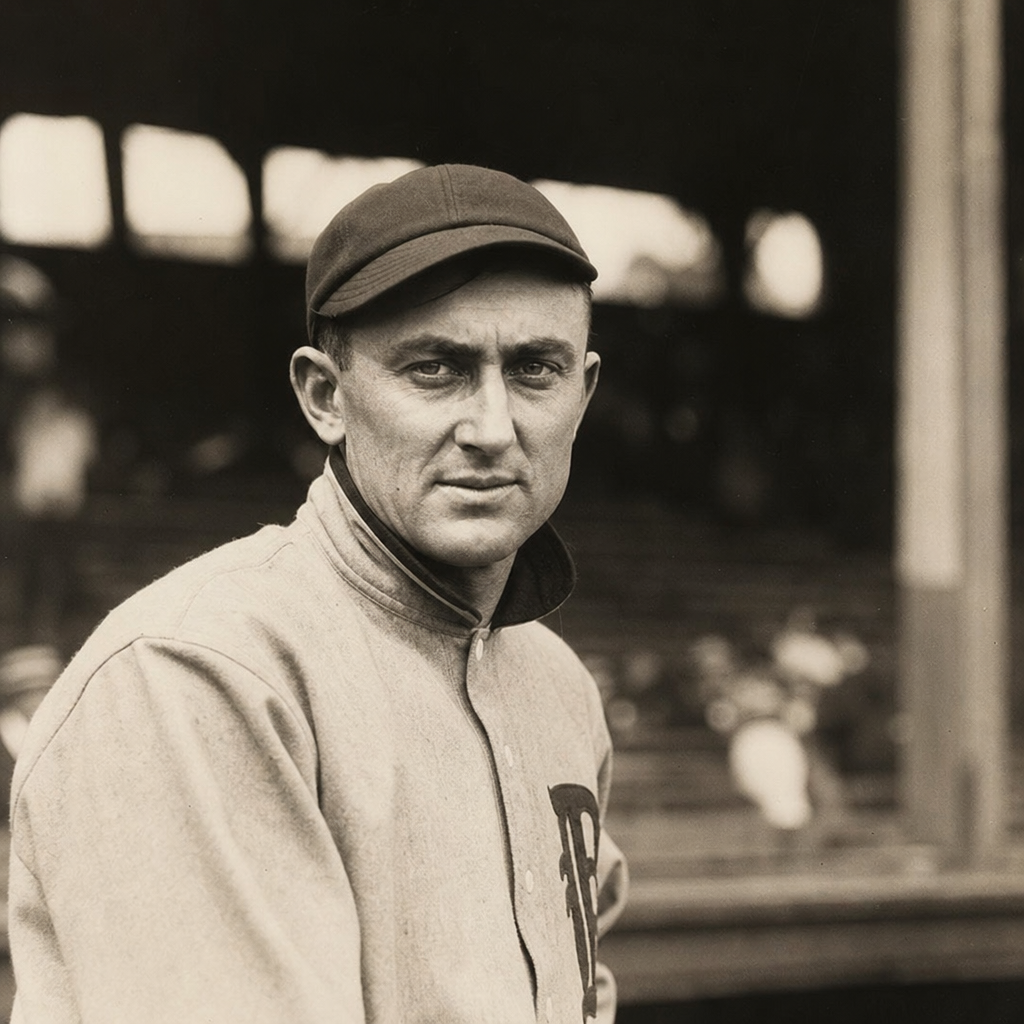
The 1912 Ty Cobb assault incident remains one of baseball’s starkest examples of how a superstar’s talent, temper, and the sport’s weak governance could collide in public view. In May 1912, Detroit Tigers outfielder Ty Cobb entered the stands in New York and beat spectator Claude Lueker after enduring verbal abuse that reportedly included insults about Cobb’s late mother and anti-disability slurs directed at Lueker himself. The episode became a flashpoint because it was not merely a player-fan altercation. It exposed the permissive culture of early professional baseball, the unstable boundaries between crowd and field, and the uneasy relationship between club owners, league presidents, players, and the press. When historians discuss violence in baseball, they often begin with beanballs, bench-clearing fights, or assaults involving umpires. Cobb’s attack on a fan demands equal attention because it tested whether the game could police its biggest stars at all.
Understanding the 1912 Ty Cobb assault incident requires more than repeating the familiar image of Cobb climbing into the stands. The key terms matter. “Assault” here refers to Cobb’s deliberate physical attack on a spectator during a game at Hilltop Park on May 15, 1912. “Violence in baseball” refers not only to on-field retaliation but also to off-field or in-stands physical force connected to competition, status, and crowd behavior. “Miscellaneous” controversies, the category this hub covers, includes incidents that do not fit neatly into gambling, doping, labor disputes, or game-fixing, yet still shaped baseball’s ethics, rules, and public legitimacy. In my work reviewing early baseball controversies, this incident consistently stands out because nearly every layer of the sport failed at once: stadium security was minimal, fan conduct went largely unchecked, and discipline depended heavily on personalities rather than codified standards.
The incident matters today for three reasons. First, it illuminates Ty Cobb himself, a player of extraordinary skill whose legacy cannot be separated from repeated aggression and hostility. Second, it explains why baseball eventually moved toward stronger league discipline, better crowd control, and clearer expectations for player behavior. Third, it serves as a hub topic for broader “miscellaneous” scandals and controversies, because it connects to several recurring themes: abusive spectators, player retaliation, labor solidarity, media mythmaking, and the gap between official punishment and practical enforcement. If readers want to understand how baseball scandals work outside the usual categories, the Cobb assault offers a compact case study with lasting relevance.
What happened on May 15, 1912
The essential facts are clear. During a game between the Detroit Tigers and New York Highlanders, Claude Lueker, a spectator described in contemporary accounts as having lost one hand and several fingers on the other, heckled Cobb from the stands. Heckling was normal in the Deadball Era, but this exchange escalated beyond routine abuse. Reports differ on the exact wording, as newspaper coverage in 1912 was inconsistent and often sensationalized, yet multiple sources agree that Cobb reacted after repeated personal insults. He went into the stands, knocked Lueker down, and struck him. Witnesses and later retellings note that bystanders warned Cobb that Lueker was disabled, to which Cobb allegedly replied that he did not care if the man had no feet. That line became central to the legend because it encapsulated Cobb’s fury and the public’s sense that his rage overrode any restraint.
League president Ban Johnson responded by suspending Cobb indefinitely, later setting the suspension at ten days and imposing a $50 fine. For 1912, that was serious discipline, though not transformative. Detroit players then staged a protest, refusing to play without Cobb. Team owner Frank Navin and manager Hughie Jennings fielded replacement players, including local amateurs, to avoid a forfeit. The result was a lopsided 24-2 loss to the Philadelphia Athletics on May 18. American League president Johnson then threatened harsher punishment, and the player protest quickly collapsed. The sequence matters because it turned an assault case into a labor and governance controversy. Cobb’s teammates did not defend his conduct so much as resist what they saw as selective, owner-driven authority. That distinction reveals how unstable discipline was in the early major leagues.
Why Ty Cobb reacted so violently
Any serious article on the 1912 Ty Cobb assault incident has to address motive without excusing behavior. Cobb was famously combative long before May 1912. Teammates, opponents, and sportswriters described him as thin-skinned, suspicious, fiercely competitive, and quick to interpret insults as challenges to his dignity. He also carried deep personal grief after his mother killed his father in 1905 under tragic circumstances. Some biographers argue that this trauma amplified his volatility. That may be true, but it does not change the central point: Cobb had a well-established pattern of using intimidation and physical aggression as tools of self-assertion.
Deadball Era baseball also normalized a level of hostility that would be unacceptable in modern professional sports. Fans sat closer to players, barriers were weaker, alcohol-fueled abuse was common, and league security procedures were underdeveloped. Players regularly fought on the field, sharpened spikes, and used racial, ethnic, and personal insults as part of the competitive environment. Cobb did not invent that culture, but he pushed it to an extreme. In practical terms, the crowd environment at Hilltop Park gave him direct access to the heckler, and the absence of immediate intervention made escalation easier. When evaluating violence in baseball, context explains opportunity; it does not erase accountability.
How the press and public framed the incident
Newspapers in 1912 did not speak with one voice. Some accounts condemned Cobb as uncontrollable and dangerous, while others framed Lueker as having provoked the attack through relentless abuse. That split reflected a larger media pattern in early baseball coverage. Star players were both moral subjects and circulation drivers. Editors could denounce Cobb’s conduct while also benefiting from the spectacle of his notoriety. In later decades, Cobb’s reputation became even more distorted by selective storytelling, especially after Al Stump’s controversial portrayals painted him as almost pathologically violent in every context. Modern scholarship has corrected some exaggerations about Cobb, but the assault on Lueker is not one of the dubious tales. It is well documented and broadly accepted by historians.
The public reaction also revealed class and cultural assumptions. Many fans believed heckling came with the price of admission, while others insisted spectators should never expect physical retaliation from a player. That debate still appears in modern sports controversies, but in 1912 the line was far less settled. Baseball presented itself as a respectable national pastime, yet it often functioned like a rough entertainment business with limited formal oversight. The Cobb incident forced that contradiction into the open.
Discipline, player protest, and the limits of league power
Ban Johnson’s suspension of Cobb is often presented as decisive, but the aftermath shows the limits of centralized authority. The Detroit players’ walkout demonstrated a crude form of collective action before players had a union capable of sustained bargaining. Their message was not refined, and their target was narrow, but it signaled that star discipline could disrupt league operations. Owners depended on player labor and star power, yet they also needed visible control. Johnson therefore had to punish Cobb enough to preserve legitimacy without destabilizing the American League further.
The replacement game offered a revealing precedent. When Detroit used amateurs and semi-pro substitutes against Connie Mack’s Athletics, the competitive integrity of the contest collapsed. That game is remembered partly as a novelty, but its deeper significance is administrative. It showed that weak labor relations, inconsistent punishment, and ad hoc roster decisions could damage the league’s product instantly. In other words, the Cobb assault was not only about one violent act. It became a stress test for baseball’s institutional structure.
| Issue exposed | What happened in 1912 | Long-term significance |
|---|---|---|
| Fan misconduct | Abusive heckling escalated without effective removal | Supported stronger crowd control and stadium security practices |
| Player violence | Cobb physically attacked a disabled spectator | Raised expectations for league discipline beyond informal club handling |
| Labor solidarity | Tigers players refused to play during Cobb’s suspension | Anticipated later collective resistance to unilateral league decisions |
| Governance weakness | Ban Johnson improvised discipline under public pressure | Highlighted need for clearer standards and enforcement mechanisms |
| Media influence | Coverage alternated between condemnation and provocation narratives | Shaped Cobb’s legacy and how baseball scandals were remembered |
Ty Cobb’s legacy and the broader history of violence in baseball
Cobb’s greatness on the field complicates but does not soften the historical judgment. He retired with a .366 batting average, won twelve batting titles, and redefined aggressive baserunning. Yet the 1912 assault remains essential to any balanced account of his career because it demonstrates how elite performance can coexist with behavior that damages the sport. Baseball history contains many forms of violence: intentional hit batters, fights between players and umpires, attacks in clubhouses, and fan-related incidents. What makes Cobb’s assault especially significant is that it involved a direct crossing of the field-stands boundary by the game’s most famous active player.
There are useful comparisons. Babe Ruth had confrontations, but his scandals centered more on lifestyle and authority clashes than physical attacks on spectators. Juan Marichal’s 1965 bat attack on Johnny Roseboro is one of baseball’s most infamous on-field assaults; unlike Cobb’s case, it occurred within competitive action and led to immediate nationwide condemnation. Ron Artest’s 2004 NBA crowd incident is outside baseball, yet it offers a modern lens on player-fan boundaries, security failures, and provocation. Cobb’s episode sits earlier in this lineage, showing that sports institutions have long struggled to define when verbal abuse becomes a safety issue and how far athletes may go in response. The answer, then and now, is simple: players may report abuse, but they cannot administer punishment themselves.
Why this incident belongs in a “Miscellaneous” scandals hub
Some baseball controversies fit tidy labels. The Black Sox scandal belongs under gambling and game-fixing. The Biogenesis case belongs under performance-enhancing drugs. The reserve clause fights belong under labor relations. The 1912 Ty Cobb assault incident belongs in a broader miscellaneous category because it intersects several themes without being reducible to one. It is a conduct scandal, a governance dispute, a crowd-control failure, and a legacy-shaping public relations crisis. That makes it an ideal hub entry for readers exploring baseball’s less easily categorized controversies.
From this hub, related topics include player attacks on umpires, fan interference controversies, clubhouse hazing scandals, sign-stealing incidents that predate electronic systems, and ownership decisions that triggered public backlash without fitting classic corruption models. What links these stories is not a single rule violation but a recurring institutional question: how does baseball respond when behavior threatens the game’s legitimacy even if it falls outside the most famous scandal categories? Cobb’s assault helps answer that question because it forced baseball to confront conduct, accountability, and image at the same time.
The 1912 Ty Cobb assault incident endures because it captures baseball at a moment when brilliance, brutality, and weak oversight existed side by side. Cobb was one of the greatest players the sport has produced, but his attack on Claude Lueker is not a footnote to be minimized. It is a defining episode in the history of violence in baseball and a reminder that talent has never excused misconduct. The event also matters beyond Cobb’s biography. It revealed how poorly early professional baseball managed abusive spectators, protected participants, and enforced discipline consistently.
As a hub within scandals and controversies, this case helps organize a wider set of “miscellaneous” baseball disputes that shaped the sport without fitting standard categories like gambling or steroids. It connects fan behavior, league punishment, media framing, labor solidarity, and historical memory in one incident. For readers building a deeper understanding of baseball history, that combination is invaluable. Study this episode closely, then use it as a gateway to the broader record of baseball controversies where governance, ethics, and public trust were all tested under pressure.
Frequently Asked Questions
What happened in the 1912 Ty Cobb assault incident?
In May 1912, Ty Cobb, the Detroit Tigers’ star outfielder and one of the most famous players in baseball, climbed into the stands during a game in New York and physically attacked a spectator named Claude Lueker. The confrontation followed repeated verbal abuse from the crowd, with reports stating that Lueker had taunted Cobb with deeply personal insults, including remarks about Cobb’s late mother. Accounts from the time also noted that Lueker had a physical disability, and the incident drew even more attention because Cobb allegedly continued the assault after realizing the man had only one hand. That detail became central to public outrage and helped define the episode in newspaper coverage.
The event quickly became more than a simple player-fan altercation. It exposed the volatility of Cobb’s public image, which already included a reputation for aggression, combativeness, and a willingness to respond violently to provocation. It also highlighted how loosely regulated baseball could be in the early twentieth century, when crowd control, player discipline, and league authority were far less developed than they are today. Because Cobb was not just any player but one of the game’s biggest stars, the assault became a major test of whether baseball leadership would discipline elite talent in a meaningful way.
Why did Ty Cobb attack Claude Lueker?
The immediate cause was sustained verbal abuse. According to widely repeated accounts, Claude Lueker shouted insults at Cobb from the stands, and those insults crossed well beyond ordinary heckling. Reports said Lueker mocked Cobb in intensely personal terms, including references to Cobb’s deceased mother. In the rough-and-tumble atmosphere of early baseball, heckling was common, but this incident stood out because the taunts were described as unusually cruel and inflammatory. Cobb, already known for a fierce temper and a hair-trigger response to perceived disrespect, reacted by leaving the field and entering the stands.
Understanding why Cobb attacked Lueker also requires looking at Cobb’s broader personality and the baseball culture of the time. Cobb played with relentless intensity and often treated conflict as an extension of competition. He had a long-standing reputation for fighting opponents, umpires, and critics, and he did not separate public insults from personal combat the way modern athletes are expected to. That does not excuse the assault, but it helps explain why the situation escalated so quickly. In Cobb’s mind, the abuse appears to have been intolerable and answerable by force. In the eyes of many observers, however, his decision to attack a fan in the stands showed a dangerous failure of restraint, especially because the target was not another player engaged in the game.
How did baseball authorities respond to the incident?
American League president Ban Johnson responded by suspending Ty Cobb indefinitely, a major decision given Cobb’s star status and importance to the league. The suspension was intended to demonstrate that even the game’s biggest names could not physically attack spectators without serious consequences. In an era when league discipline could be inconsistent and heavily influenced by personality, business concerns, and the absence of modern governance structures, Johnson’s move was significant. It showed that the incident was viewed as a threat not just to order at the ballpark but to baseball’s public reputation.
The response also triggered one of the most unusual labor-related moments in early baseball history. Cobb’s Detroit teammates, outraged by the suspension and loyal to their superstar, went on strike rather than take the field without him. Team owner Frank Navin and league officials scrambled to keep games going, and the Tigers hastily fielded replacement players, reportedly drawing from local amateurs and semi-professionals. The result was chaotic and embarrassing for the club and the league. The strike ended quickly, but the episode revealed how much influence a major star could exert and how fragile baseball’s disciplinary system really was. In that sense, the official response punished Cobb, but it also exposed the league’s limited ability to impose discipline cleanly and consistently.
Why is the 1912 Ty Cobb assault incident historically important?
The incident matters because it sits at the intersection of celebrity, violence, and institutional weakness in early professional sports. Ty Cobb was not a fringe player acting out in obscurity; he was one of baseball’s defining figures, a generational talent whose fame made the assault impossible to dismiss as a minor disturbance. When a player of that stature charged into the stands and beat a fan, it forced baseball to confront difficult questions about authority, accountability, and the limits of star power. The scandal showed that the sport’s governance structure was still immature, especially when dealing with behavior that threatened the game’s legitimacy in public.
It is also historically important because it reflects the rougher social norms of baseball in the Deadball Era. Ballparks were more chaotic environments, fan conduct was less controlled, and players often operated with fewer protections and fewer behavioral boundaries. Even so, Cobb’s actions were shocking enough to stand out in a violent age. The case continues to attract attention because it illustrates how early baseball tolerated intense aggression while lacking clear systems to manage it. For historians, the episode is a revealing window into how personality, fame, and weak oversight could collide in front of thousands of spectators, creating a scandal that still shapes discussions of Cobb’s legacy.
How did the incident affect Ty Cobb’s legacy and public image?
The 1912 assault reinforced and amplified Ty Cobb’s image as one of baseball’s most brilliant but most combustible figures. Cobb’s greatness on the field was never in doubt; he was an extraordinary hitter, a ferocious competitor, and one of the defining stars of his generation. But incidents like the attack on Claude Lueker ensured that his legacy would never rest on statistics alone. The assault became part of a larger portrait of Cobb as a man whose intensity frequently tipped into cruelty, violence, and personal hostility. For many readers and historians, the episode serves as one of the clearest examples of the darkness that accompanied his genius.
At the same time, the incident has remained complicated in historical memory because some accounts emphasize the extreme verbal abuse Cobb endured before attacking. That context has led some defenders to argue that the event should be understood as an explosive response to unbearable provocation rather than as random violence. Still, most modern evaluations place the emphasis where it belongs: verbal abuse, however vile, did not justify a player leaving the field to beat a spectator. As a result, the 1912 incident remains central to Cobb’s reputation. It captures both the intensity that made him legendary and the lack of control that made him one of baseball’s most controversial figures.
What does the Ty Cobb assault incident reveal about violence and fan behavior in early baseball?
The episode reveals that early baseball operated in a much looser and more confrontational environment than modern fans are used to. Spectators often heckled players aggressively, ballpark security was relatively limited, and the boundaries between athletes and the crowd were less tightly enforced. Abuse from the stands could be personal, relentless, and deeply offensive. Players, meanwhile, were expected to absorb a great deal without the institutional support that modern leagues now provide, such as strong security measures, clearer codes of conduct, and more formal disciplinary procedures. The Cobb-Lueker incident shows what could happen when those weak boundaries collapsed entirely.
Just as important, the incident reveals that violence in baseball was not limited to bench-clearing fights or on-field disputes between competitors. It could spill into the stands, involve spectators directly, and test the sport’s ability to preserve public order. The scandal underscored the need for more serious governance, both in controlling fan behavior and in setting firm limits on player conduct. In retrospect, the event can be read as an early warning about the risks of tolerating abuse, volatility, and inconsistent discipline. It demonstrated that when a sport lacks strong systems of authority, both players and fans can become participants in spectacles of escalation rather than the game itself.