
In the annals of Major League Baseball’s storied history, certain names are etched with a sense of reverence that transcends generations. Among these illustrious figures stands Ted Lyons, a name synonymous with perseverance, mastery, and unrivaled longevity on the pitcher’s mound. Born in Lake Charles, Louisiana, in 1900, Theodore Amar Lyons pitched his way into baseball history with an extraordinary career that epitomized resilience and finesse. For the better part of his 21-year tenure with the Chicago White Sox, Lyons exemplified the very essence of a workhorse, executing a mastery of pitching that saw him become one of the greatest and most dependable southpaws of his era.
Ted Lyons was not just a pitcher but an institution whose longevity and consistent performances were hallmarks of his career. While modern baseball often focuses on fastball velocity and strikeout rates, Lyons’ legacy is a reminder that pitching is as much an art form as it is a physical contest. His career, spanning from 1923 to 1946, included a plethora of remarkable achievements, underscoring not just his skill but also his exceptional durability and adaptability. This article delves into the career of Ted Lyons, examining the attributes that made him a legendary figure in baseball, and exploring the various facets of his remarkable journey in the Major Leagues.
Early Years and Entry into the Major Leagues
Ted Lyons’ early years were shaped by his dual interests in academics and athletics. Studying at Baylor University, he excelled not only on the baseball field but also in the classroom, earning a degree in law. However, it was his prowess on the diamond that eventually drew the attention of Major League scouts. Signed by the Chicago White Sox in 1923, Lyons embarked on what would become a storied MLB career.
Lyons’ entrance into the Major Leagues was marked by a distinctive strategy that would characterize his approach throughout his career: control and craftiness over sheer power. As a rookie, he displayed a composure and maturity beyond his years, quickly earning a reputation as a reliable arm in the White Sox rotation. By 1925, his breakout season, Lyons led the American League with a 2.84 ERA and threw over 200 innings, cementing his status as a foundational piece of the White Sox pitching staff.
The transformation from promising talent to ace pitcher was swift. Lyons showcased an ability to adapt and evolve, critical traits that would underlie his longevity. He refined his command, developed a keen understanding of hitter tendencies, and expanded his repertoire, incorporating an array of pitches that bewildered batters. Lyons didn’t just rely on a blazing fastball; he used his intellect and guile to outmaneuver opponents, a theme that would persist throughout his career.
Prime Years and Notable Achievements
The prime years of Ted Lyons’ career, predominantly throughout the late 1920s and 1930s, were characterized by his consistency and durability. During this period, Lyons became not only an ace for the White Sox but also one of the premier pitchers in the American League. He regularly threw well over 200 innings each season, demonstrating an exceptional level of endurance and stamina.
One of Lyons’ most notable achievements came on August 21, 1926, when he pitched a no-hitter against the Boston Red Sox. This feat solidified his place among the elite pitchers of his time, showcasing his ability to dominate the opposition on any given day. His performance was not merely a flash of brilliance but part of a broader pattern of excellence that saw him consistently delivering quality starts.
Throughout the 1930s, Lyons continued to accumulate milestones. In 1930, he led the American League in wins with a career-high 22 victories, further underscoring his role as a workhorse for the White Sox. His contributions went beyond personal achievements; Lyons’ stability gave his team a fighting chance in numerous contests, often serving as a stopper who could end losing streaks with a masterful performance.
Despite playing for a team that often found itself in the middle of the pack, Lyons’ individual brilliance shone through. He was selected for the All-Star Game in 1939, a testament to his enduring prowess. His ability to adapt, particularly as he aged, meant that even when his fastball velocity waned, his effectiveness did not. Lyons exemplified the notion that experience and strategic acumen could substitute for youthful vigor.
Later Career and Wartime Service
As Ted Lyons transitioned into his later career stages, the world of baseball was disrupted by global events, most notably World War II. The conflict saw many ballplayers enlist or be drafted into military service, and Lyons was no exception. In 1943, at the age of 42, Lyon enlisted in the United States Marine Corps, putting his athletic career on hold and serving his country with the same dedication he showed on the diamond.
Upon his return to Major League Baseball in 1946, Lyons’ playing days were nearing their end, but he still managed to make an impact. Despite his three-year hiatus, he displayed characteristic tenacity, stepping back onto the mound with purpose. Though his appearances were fewer and his role had shifted more into mentoring younger pitchers, Lyons managed to compile a respectable 2.32 ERA over 5 games.
Lyons’ return was a symbolic gesture of resilience, a fitting epitome of his career-long theme. His World War II service highlighted his multifaceted persona and reinforced his legacy, not just as a great pitcher, but as a great American, balancing professional and patriotic duties seamlessly. Interestingly, Lyons continued to aid the sport after hanging up his cleats, transitioning smoothly into coaching and management roles, where he imparted his vast knowledge to the next generation.
His later career stands as a testament to pillars of longevity and adaptation, qualities that define him as a remarkable figure in baseball history. Even as physical skills started to decline, Lyons’ strategic mind and vast understanding of the game allowed him to contribute meaningfully, embodying the principle that baseball greatness transcends physical prowess.
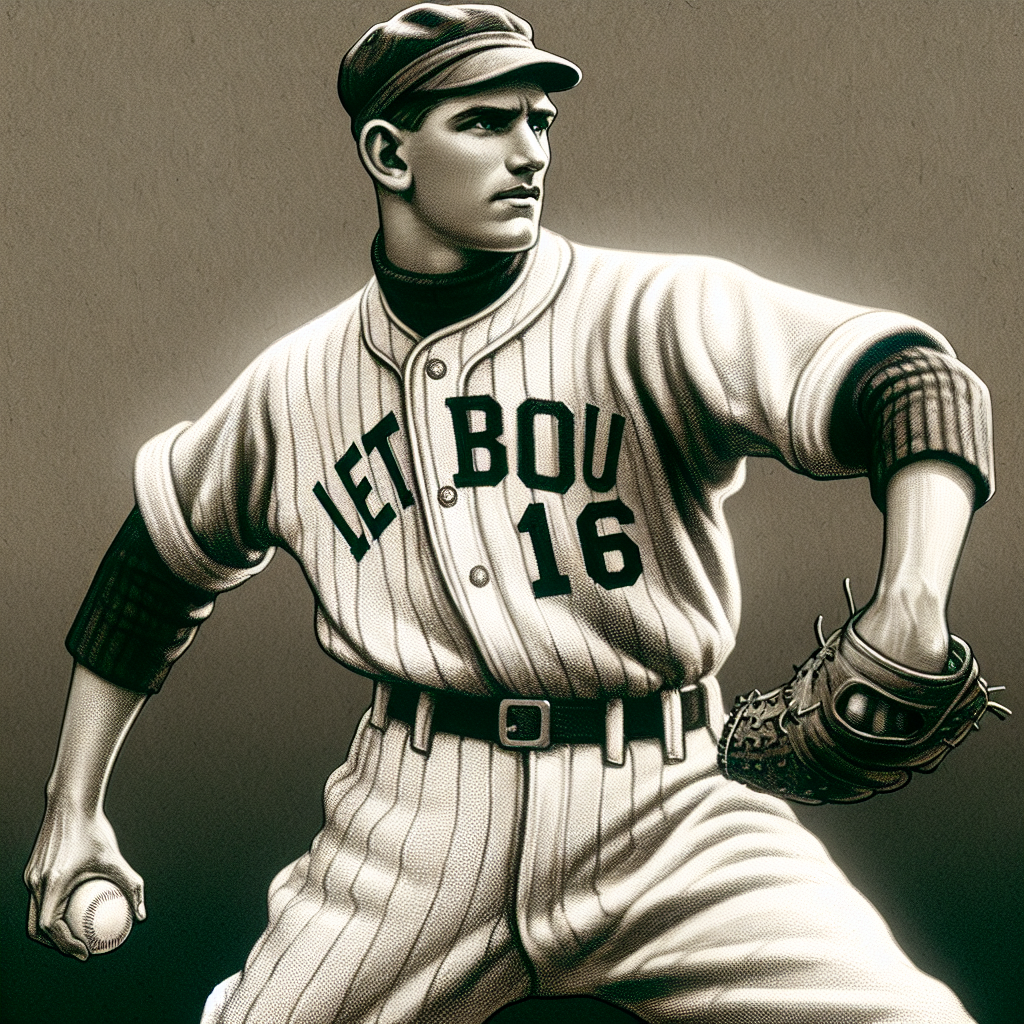
Legacy and Induction into the Hall of Fame
Ted Lyons’ contributions to Major League Baseball did not go unnoticed. In 1955, his illustrious career was enshrined forever when he was inducted into the Baseball Hall of Fame. The induction served as formal recognition of his extraordinary achievements and the lasting impact he had on the sport.
Lyons’ legacy is multifaceted. His career statistics, while impressive, tell only part of the story. He finished with a lifetime ERA of 3.67, 260 wins, and over 1,000 strikeouts, which, while not as flashy as some of his contemporaries, highlighted his consistency and reliability. Beyond the numbers, Lyons was revered for his sportsmanship, work ethic, and cerebral approach to pitching. His career serves as a bridge between eras, spanning distinct phases of baseball history from the 1920s through post-WWII.
Perhaps one of the most significant aspects of Lyons’ legacy is his influence on future generations of pitchers. Whether through his direct mentorship or simply by setting a high standard of pitching excellence, Lyons inspired countless pitchers to approach the game with a mentality focused on control, strategy, and adaptation. His ability to reinvent himself and remain effective over two decades is a blueprint for longevity in professional sports.
Ted Lyons’ impact extends into the modern age with many baseball historians and fans continuing to celebrate and study his career. His achievements and persona have become an integral part of baseball lore, serving as an emblem of enduring excellence and commitment. The Hall of Fame serves as a beacon for the greatest talents, and Ted Lyons certainly epitomizes the qualities expected of those enshrined within its walls.
Conclusion
Ted Lyons remains one of the most enduring figures in the history of Major League Baseball. His career, marked by exceptional longevity, consistency, and adaptability, makes him a standout pitcher whose contributions continue to resonate within the sport. From his early days impressing scouts at Baylor University to his leadership on the mound with the Chicago White Sox, and even to his service during World War II, Lyons’ journey is a testament to determination, skill, and a deep-seated love for the game of baseball.
The legacy of Ted Lyons extends beyond his impressive statistics. It’s found in the way he approached the game, his commitment to excellence, and the respect he garnered from peers and fans alike. Lyons’ ability to adapt his style and maintain his effectiveness over such a prolonged period is a lesson in perseverance and ingenuity. For young pitchers and fans of the game, Lyons stands as a paragon of how cerebral attributes and strategic thinking in pitching can lead to a distinguished career.
As we reflect on the impact of Ted Lyons on Major League Baseball, it’s clear that his contributions went beyond the confines of the pitcher’s mound. His transition into coaching and his influence on future generations of players underscore the profound effect he had on the sport. Lyons’ storied career is a beacon for aspiring athletes and a reminder of the rich, enduring history of baseball.
Whether through his Hall of Fame induction, his celebrated no-hitter, or simply his day-in, day-out reliability, Ted Lyons carved out a place for himself among the greats. His story is emblematic of the commitment, dedication, and passion that define the very best in baseball. Indeed, Ted Lyons stands as a timeless figure, an embodiment of the qualities that make baseball a cherished and enduring sport.
Frequently Asked Questions
1. Who was Ted Lyons and why is he considered a significant figure in Major League Baseball history?
Ted Lyons, born Theodore Amar Lyons in Lake Charles, Louisiana, in 1900, is a legendary figure in the world of Major League Baseball, renowned for his remarkable career that spanned an incredible 21 years with the Chicago White Sox. Lyons was a pitcher whose mastery on the mound captured the admiration of fans and fellow players alike. His significance lies not just in his skill and technique—though those were exemplary—but in his unparalleled longevity and resilience. Over two decades, Lyons stood as a testament to durability and consistency, displaying a remarkable ability to adapt and excel even as the landscape of the game evolved around him. His nickname, “The Steady Southpaw,” reflects his left-handed pitching style, his reliable presence, and the calm, controlled manner in which he approached each game. Inducted into the Baseball Hall of Fame in 1955, Lyons’ legacy is a beacon of perseverance for pitchers across generations.
2. What attributes made Ted Lyons particularly successful as a pitcher despite not having the fastest fastball?
Ted Lyons was famed for his intelligence and strategic approach to pitching, which set him apart despite not possessing the overpowering fastball that many of his contemporaries wielded. His success stemmed from his ability to outthink hitters, relying heavily on finesse, control, and a keen understanding of the game. Lyons excelled at utilizing an array of pitches, including a strong emphasis on his curveball, to keep batters guessing and on their toes. His ability to adapt his pitching strategy based on the situation demonstrated a level of game intelligence few others matched. In a time when the power of the fastball dominated, Lyons’ command of placement and varying speeds highlighted a subtlety and sophistication that made him highly effective on the mound, teaching a valuable lesson that raw speed isn’t the only tool in a pitcher’s arsenal.
3. How did Ted Lyons maintain his longevity in Major League Baseball, and what impact did it have on his career?
Ted Lyons’ extraordinary longevity can be attributed to his meticulous approach to maintaining his health and adopting a strategic style of play that prioritized precision over brute force. Over his 21-year career, he effectively managed his workload and adjusted his style as needed, including adapting to a reduced pitching schedule during the latter part of his career. This intentional pacing kept him healthy and competitive beyond the expected peak years for many pitchers. Lyons’ dedication to conditioning and his ability to continuously refine his pitching technique enabled him to avoid many of the injuries that frequently end the careers of professional athletes prematurely. His longevity had a profound impact on his legacy, allowing him to set numerous records and leave an indelible mark on the sport by becoming one of its most durable and reliable figures—a role model for pitchers aiming for a long-lasting career.
4. What were some of Ted Lyons’ notable achievements and records during his baseball career?
Ted Lyons’ career with the Chicago White Sox was marked by a series of remarkable achievements and records that underscore his exceptional skills and long-standing influence in the game. Throughout his tenure, he amassed 260 wins against 230 losses, a testament to his enduring effectiveness across seasons. In 1942, Lyons achieved a particularly noteworthy feat by completing 20 games, despite pitching only one game per week, a unique approach adopted during the last several years of his career to accommodate wartime schedule modifications. His ability to pitch with endurance and precision into his forties saw him maintain a commendable career earned run average (ERA) of 3.67 over 4,161 innings pitched. His achievements culminated in his induction into the Baseball Hall of Fame in 1955, cementing his status as one of the most esteemed and respected pitchers in baseball history.
5. Why is Ted Lyons’ career still celebrated and discussed by baseball enthusiasts today?
Ted Lyons’ career remains a significant topic among baseball enthusiasts due to his exceptional display of skill, resilience, and the timeless lessons of endurance and adaptability he embodied. His career serves as an inspiring narrative in the annals of baseball history, highlighting the importance of mental acuity and strategic play, alongside physical prowess. Lyons’ story is often recounted as a reminder that a player doesn’t need to rely solely on physical gifts to achieve greatness but can instead leverage experience, intelligence, and precision. His pathbreaking longevity set a standard for pitchers striving for a durable and sustained presence in the sport. Baseball fans and historians continue to honor his legacy, reveling in the tales of his strategic maneuvering on the mound and his unwavering commitment to the game. His story provides a rich tapestry for analysis and admiration, celebrating a unique chapter in baseball’s storied past.