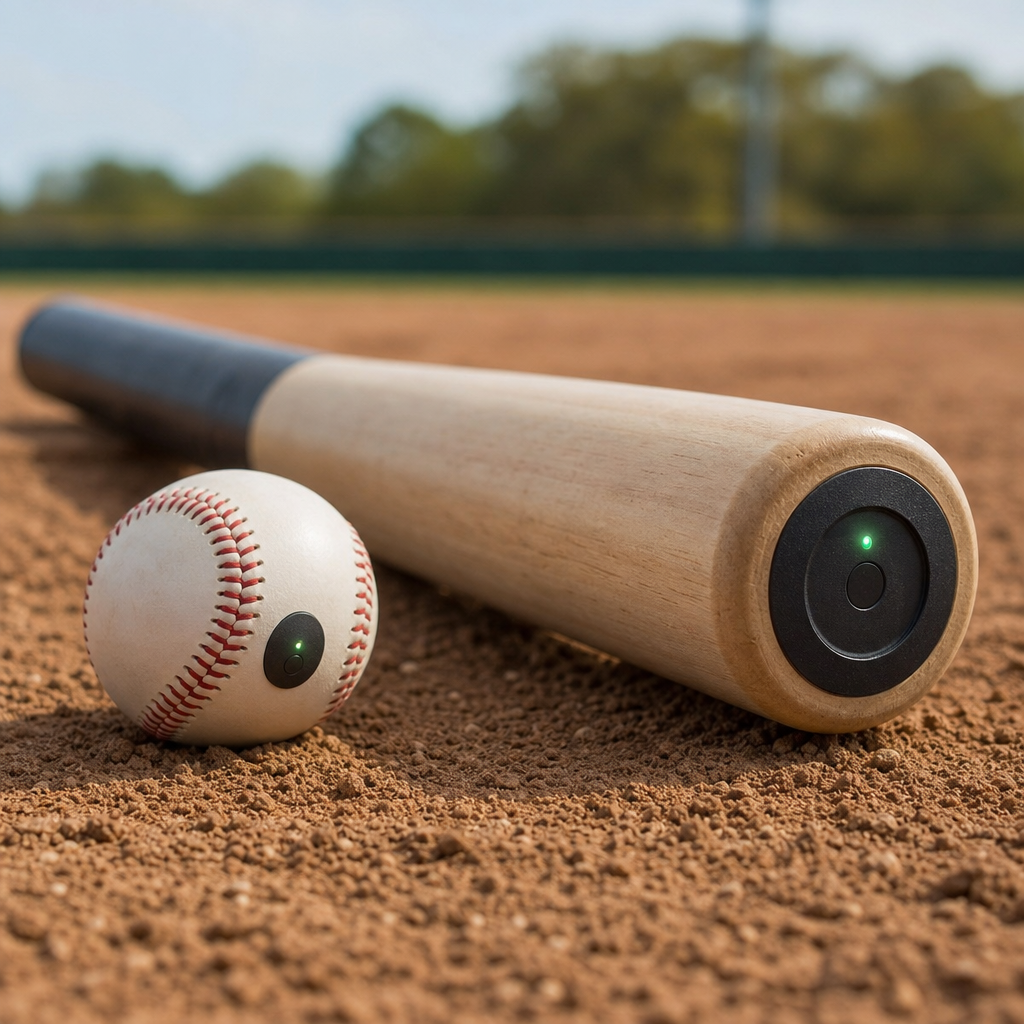
Smart bats and balls are changing baseball from a sport measured mostly by eyesight and intuition into one informed by continuous streams of data, immediate feedback, and connected equipment that records what happened on every swing, throw, and contact. In this context, connected equipment means physical gear embedded with sensors, chips, or communication modules that capture motion, force, spin, location, or impact and send that information to an app, dashboard, or team platform for analysis. The category includes sensor-loaded bats, instrumented baseballs, connected pitching machines, wearable sleeves that sync with bats and balls, and training systems that tie all of that information together. I have worked with player-development staff evaluating these tools, and the key lesson is simple: the best devices do not replace coaching. They sharpen it.
This shift matters because baseball has always been a game of tiny margins. A few degrees of bat angle can turn a line drive into a popup. A small change in spin efficiency can make a fastball play faster or flatten out. For youth programs, connected equipment offers measurable instruction that can speed learning when used correctly. For college and professional clubs, it supports player development, injury management, scouting, and equipment design. For fans and media, it expands understanding of why certain skills translate and others do not. As baseball technology spreads, knowing how smart bats and balls work is becoming essential to understanding the modern game.
The central question is not whether technology belongs in baseball. It already does. The real issue is how connected equipment influences training, competition, fairness, and player decision-making. Some tools help hitters understand bat speed, time to contact, attack angle, and rotational acceleration. Some baseballs track spin rate, spin axis, release metrics, and flight behavior. Others integrate with optical systems such as Hawk-Eye or with radar tools such as TrackMan and Rapsodo to connect what a player felt with what the ball actually did. Used responsibly, connected equipment creates a tighter feedback loop between action and adjustment. Used poorly, it can overwhelm players with numbers that sound precise but lack context.
What Smart Bats and Connected Baseballs Actually Measure
Smart baseball equipment gathers motion and impact data through accelerometers, gyroscopes, magnetometers, pressure sensors, and low-power wireless transmitters. In a bat sensor, these components usually sit in the knob or attach near it, where they can estimate bat speed, hand speed, attack angle, swing plane, rotational acceleration, and time through the hitting zone. Systems such as Blast Motion became common because they translated complex kinematic data into terms players and coaches could act on during a batting session. A hitter can take ten swings, review metrics immediately on a phone or tablet, and adjust setup, timing, or path before the next round begins.
Connected baseballs work a little differently because they must preserve the feel, seam height, weight, and flight characteristics of a regulation ball as closely as possible. Companies such as Diamond Kinetics and Driveline have used instrumented balls in training settings to record spin rate, spin axis, release position, velocity, and pronation or supination tendencies. The data can reveal whether a pitcher’s slider is truly spinning off a tilted axis or if the grip is producing a slurve shape that the athlete did not intend. In my experience, that direct measurement is especially useful for younger pitchers who cannot yet connect finger pressure and wrist position to actual ball movement.
The importance of these measurements lies in how they convert hidden actions into visible information. Traditional coaching could identify outcomes: hard contact, weak contact, strike, ball, swing and miss. Connected gear fills in the middle. It explains how the outcome happened. If a hitter’s bat speed rises but on-plane efficiency drops, more raw speed may not improve results. If a pitcher increases spin rate but also changes axis in a way that reduces deception, the pitch may get hit harder. Good technology in baseball is not about collecting everything. It is about measuring the variables that most directly affect performance and then relating them to game outcomes.
How Connected Equipment Improves Hitting Development
The biggest gain in smart bat training is immediate, objective feedback. Before connected sensors, a coach might tell a player to stay through the ball longer or create a better attack angle, but those instructions could mean different things to different hitters. With connected bats, a player can pair a cue with a number and with video. If the hitter makes an adjustment and attack angle moves from steeply negative to a range that better matches the incoming pitch plane, the athlete sees proof in real time. That accelerates learning, particularly for players who respond well to visual and numerical feedback.
One practical use is monitoring bat speed without encouraging empty effort. Coaches often chase higher bat speed because harder swings can produce more exit velocity, but speed alone is not enough. I have seen hitters gain bat speed simply by losing sequence, pulling off the ball, or creating too much upper-body effort. Smart bat data helps separate efficient speed from reckless speed by showing connection, rotational acceleration, and plane consistency. A youth hitter who increases bat speed by three miles per hour while maintaining a stable path is progressing. A hitter who gains the same speed while spraying mishits and losing time to contact is not.
Connected equipment also helps with return-to-play planning. After wrist, hand, or oblique issues, trainers and coaches can use bat-sensor baselines to track whether the player’s swing intensity and mechanics are returning to normal. Instead of relying only on subjective feel, staff can compare current sessions against prior ranges for bat speed, power, and swing consistency. This is not a substitute for medical evaluation, but it is a practical layer of evidence. For organizations managing dozens of hitters, that kind of standardized benchmark is valuable because it reduces guesswork and keeps rehab conversations grounded in measurable performance.
How Smart Baseballs Change Pitching Instruction
Pitch design has probably benefited more from connected baseballs than any other area of baseball training. In modern pitching labs, coaches use smart balls alongside high-speed video, edgertronic cameras, and ball-flight tools to understand how grip, seam orientation, wrist action, and arm slot influence movement. A pitcher trying to build a sweeper can test several grips in one session and compare spin axis, gyro degree, and velocity tradeoffs instead of relying on visual judgment alone. The result is faster iteration. A pitcher no longer waits weeks to know whether an adjustment is meaningful.
For command work, connected balls can reveal whether a pitcher’s misses come from release inconsistency, finger-pressure changes, or shape variation. That matters because not every command issue is mechanical in the traditional sense. Sometimes the athlete repeats the delivery well but does not impart the same spin or seam orientation. In bullpens, I have seen pitchers believe they are throwing the same changeup repeatedly when the data shows large differences in spin profile and release efficiency. Once they understand that inconsistency, instruction becomes more precise. The coaching cue shifts from generic repetition to specific ball-handling correction.
There is also a strong injury-prevention angle, though this area demands caution. Smart balls and connected throwing systems can help detect workload patterns, declining velocity, altered spin output, or release changes that may indicate fatigue. Those are useful warning signs, not diagnoses. The strongest programs pair throwing data with wellness questionnaires, strength testing, range-of-motion screens, and communication between coaches, athletic trainers, and players. Data should flag questions, not create certainty where none exists. Baseball history is full of examples where athletes performed through discomfort until something failed. Connected equipment can improve visibility, but only if organizations act on what they learn.
Where Smart Equipment Fits Within Baseball’s Broader Technology Stack
Connected bats and balls are most useful when they feed a larger system rather than operating as isolated gadgets. Teams often combine bat-sensor data with batting-practice ball flight from HitTrax, TrackMan, or Rapsodo, then link both to video review and strength data. Pitchers may pair smart ball sessions with Hawk-Eye game information and force-plate testing to compare training intent with competitive execution. This integration matters because no single device can explain baseball performance on its own. A swing metric without batted-ball results is incomplete. A spin reading without movement, command, and hitter response can be misleading.
At the amateur level, integration usually happens through simpler workflows. A coach may film swings on a tablet, sync a bat sensor session, and compare key clips after practice. A pitching instructor may use a connected ball during skill development and a pocket radar during bullpen work. These setups still produce value because they answer practical questions: Is the player moving better? Is the ball coming out differently? Is the adjustment carrying over under fatigue? The best baseball technology does not need to be expensive. It needs to fit the decision being made.
| Tool | Primary Metrics | Best Use Case | Main Limitation |
|---|---|---|---|
| Smart bat sensor | Bat speed, attack angle, time to contact | Hitting development and rehab tracking | Does not measure full ball-flight outcome alone |
| Connected baseball | Spin rate, spin axis, release data | Pitch design and command training | May not perfectly match game ball feel |
| Radar and ball-flight system | Velocity, exit velocity, movement, launch data | Outcome measurement in practice and games | Explains result better than body action |
| High-speed video | Visual mechanics and release or contact frames | Technique analysis and coach communication | Requires interpretation and does not quantify everything |
For a hub page on technology’s impact on the game, this is the core idea that connects every subtopic: innovation matters most when information moves cleanly from device to decision. Whether the next article focuses on automated strike zones, replay systems, biomechanics, or data-driven scouting, the same standard applies. Tools should help players and coaches make better choices, faster and with less noise.
The Business, Rules, and Fairness Questions Around Connected Gear
As smart equipment spreads, baseball faces practical governance issues. Leagues must decide what is legal in games, what belongs only in practice, who owns the data, and how to protect competitive integrity. Most connected bats and baseballs are currently training tools rather than in-game equipment, partly because rules prioritize competitive balance and standardization. Governing bodies such as MLB, NCAA conferences, state associations, and youth organizations often move cautiously when technology could create access gaps or alter the basic contest between pitcher and hitter.
Data ownership is the most underappreciated issue. When a player uses a connected bat at a private facility, who controls that swing history: the athlete, the coach, the school, or the technology company? The answer affects recruiting, player privacy, and even contract leverage in professional baseball. Teams value proprietary development data because it reveals strengths, weaknesses, and training trends. Players should care just as much because those same records can shape evaluations. Clear consent policies, storage standards, and access rules are now part of responsible sports technology management.
Fairness also extends beyond rules into economics. Wealthier programs can buy more devices, hire more analysts, and build better feedback systems. That advantage can compound over time. A well-funded college may identify pitch-shape gains in weeks that a smaller program would never measure. The gap is real, but costs are falling, and simpler tools are improving. Many useful training decisions can be made with one bat sensor, one connected ball, a radar unit, and disciplined coaching. Technology creates advantage, but thoughtful implementation still matters more than having the biggest budget.
What Players and Coaches Should Watch Next
The next phase of connected baseball equipment will center on interoperability, miniaturization, and predictive models. Devices are getting smaller and more accurate, which means better feel and less disruption to normal training. At the same time, software platforms are improving at combining sensor data, video, workload history, and game results into one timeline. That is important because baseball development is longitudinal. Coaches need to know not just what happened today, but how today compares with last month, last season, and the athlete’s healthy baseline.
Artificial intelligence will likely shape this category through pattern recognition and individualized recommendations, but the most useful systems will remain coach-facing rather than coach-replacing. A model may identify that a hitter’s best contact happens within a narrow band of bat speed and attack angle, or that a pitcher’s slider quality drops after a certain workload threshold. Those insights can guide training plans. They should not erase human judgment about confidence, adaptability, game context, and learning style. Baseball is too variable for one-size-fits-all prescriptions, even when the data set is large.
Players and coaches should also expect tighter links between connected equipment and equipment manufacturing. Bat makers can use anonymized swing data to study how balance point, barrel profile, and handle design affect different hitter types. Ball and training-aid companies can refine seam textures, durability, and sensor placement based on real usage. In other words, connected equipment is not only changing player development. It is changing how baseball gear itself gets designed, tested, and improved.
Smart bats and balls represent one of the clearest examples of technology’s impact on baseball because they bring measurement directly into the equipment players use every day. They make invisible parts of performance visible, shorten the gap between action and feedback, and support better decisions in hitting, pitching, rehab, and player development. They also raise important questions about rules, access, privacy, and how much data is actually helpful. The right approach is not blind adoption or stubborn resistance. It is selective use grounded in baseball realities.
For this sub-pillar on innovations and changes in baseball, connected equipment is the hub because it touches nearly every other modern development in the sport. It connects biomechanics to player development, analytics to coaching, and gear design to on-field results. Most importantly, it reminds us that technology works best when it serves the player, the coach, and the competitive integrity of the game. Explore the related articles in this series to see how tracking systems, training science, officiating tools, and data platforms are reshaping baseball from youth fields to the major leagues.
Frequently Asked Questions
What are smart bats and smart balls, and how do they actually work?
Smart bats and smart balls are connected pieces of baseball equipment that use embedded technology to measure what happens during play and practice. Inside the bat, manufacturers may place sensors such as accelerometers, gyroscopes, and impact detectors that track swing speed, bat path, attack angle, point of contact, and timing. In a smart ball, the internal electronics may capture spin rate, spin axis, velocity, release characteristics, and movement patterns. That information is then transmitted through Bluetooth, Wi-Fi, or another wireless connection to a mobile app, tablet, or team analytics platform.
The goal is not simply to collect numbers, but to translate physical actions into useful performance insights. Instead of relying only on what a coach sees with the naked eye, connected equipment creates a digital record of every swing, throw, and hit. A player can review whether the barrel entered the zone too early, whether the ball came off the bat with consistent contact quality, or whether a pitcher’s spin efficiency changed during a bullpen session. This makes smart equipment valuable because it turns subtle movements into measurable patterns that can be tracked over time, compared across sessions, and used to guide development with much greater precision.
What kind of data can connected baseball equipment track?
Connected baseball equipment can track a wide range of metrics depending on the product and its intended use. Smart bats often measure swing speed, hand speed, time to contact, bat angle, attack angle, swing plane, rotational acceleration, and where on the barrel the ball was struck. Some systems also estimate exit velocity or link with other technologies to provide a fuller picture of hitting performance. Smart balls are often designed to capture pitch velocity, spin rate, spin axis, release point, movement profile, and consistency from throw to throw. In training environments, these devices can also reveal fatigue patterns, mechanical drift, and differences between intended and actual execution.
What makes this data especially powerful is the way it connects cause and effect. For example, a hitter may feel that a swing was balanced and on time, but the data might show that the bat entered the zone late or that contact was made off the end of the barrel. A pitcher may think two breaking balls were nearly identical, while the sensor data reveals a meaningful difference in spin direction and release consistency. Over time, this level of measurement helps players and coaches move beyond general impressions and identify specific, repeatable changes that produce better outcomes on the field.
How are smart bats and balls changing coaching and player development?
Smart bats and balls are changing coaching by making instruction more immediate, objective, and individualized. Traditionally, baseball development relied heavily on observation, experience, and player feel. Those elements still matter, but connected equipment adds a layer of evidence that helps confirm what a coach suspects or reveal things that are difficult to see in real time. A coach can now pair video with sensor data to show exactly how a swing changed, when a player’s bat speed dropped, or whether a pitcher maintained the same release characteristics throughout a training session.
This changes player development because adjustments can be made faster and monitored more accurately. Instead of telling a hitter to “stay through the ball” in a broad sense, a coach can use measured attack angle, contact point, and bat path efficiency to explain what needs to improve. Instead of asking a pitcher to “get on top of the ball,” the coach can review spin axis and movement data to see whether the adjustment worked. For youth players, this can make learning more engaging because progress becomes visible. For advanced players, it supports highly tailored training plans built around measurable weaknesses and strengths. In both cases, connected equipment helps transform instruction from opinion-based feedback into a more precise and trackable process.
Are smart bats and balls only useful for elite players and professional teams?
No. While professional teams and high-level training facilities often have the resources to build complete data ecosystems around connected equipment, smart bats and balls are increasingly useful for players at many levels. Youth players can benefit from simple feedback that helps them understand timing, bat control, or throwing consistency. High school and college athletes can use the data to refine mechanics, prepare for showcases, and demonstrate measurable improvement. Recreational players may use connected gear for skill development, motivation, and a deeper understanding of their own performance.
The real value depends less on level and more on how the information is used. Elite players may focus on subtle gains, such as improving efficiency within an already advanced swing or fine-tuning pitch shape. Developing players often benefit from identifying more basic issues, such as inconsistent contact, poor sequencing, or irregular release points. The best smart equipment platforms present data in a way that is accessible rather than overwhelming, making them practical for a wide range of athletes. As costs come down and interfaces become easier to use, connected baseball equipment is becoming less of a niche innovation and more of a mainstream training tool.
What are the biggest benefits and limitations of connected baseball equipment?
The biggest benefit of connected baseball equipment is that it creates immediate, consistent feedback. Players no longer need to guess whether a mechanical change is helping; they can see the effect in measurable terms after each rep. This supports faster learning, more efficient practice, and better long-term tracking. It also improves communication between players, coaches, trainers, and analysts because everyone can work from the same set of objective information. Over time, connected equipment can help identify trends, prevent inefficient training habits, and support smarter decision-making about development priorities.
At the same time, smart bats and balls do have limitations. Data quality depends on sensor accuracy, calibration, proper use, and the reliability of the software platform. Not every metric tells the full story, and raw numbers can be misinterpreted if they are viewed without context. A player can become too focused on chasing a single metric instead of building functional on-field performance. There are also practical concerns, including battery life, durability, device compatibility, cost, and rules governing in-game use at different levels of competition. The most effective approach is to treat connected equipment as a powerful tool rather than a replacement for coaching, experience, and baseball instincts. When used thoughtfully, it enhances human judgment instead of trying to replace it.