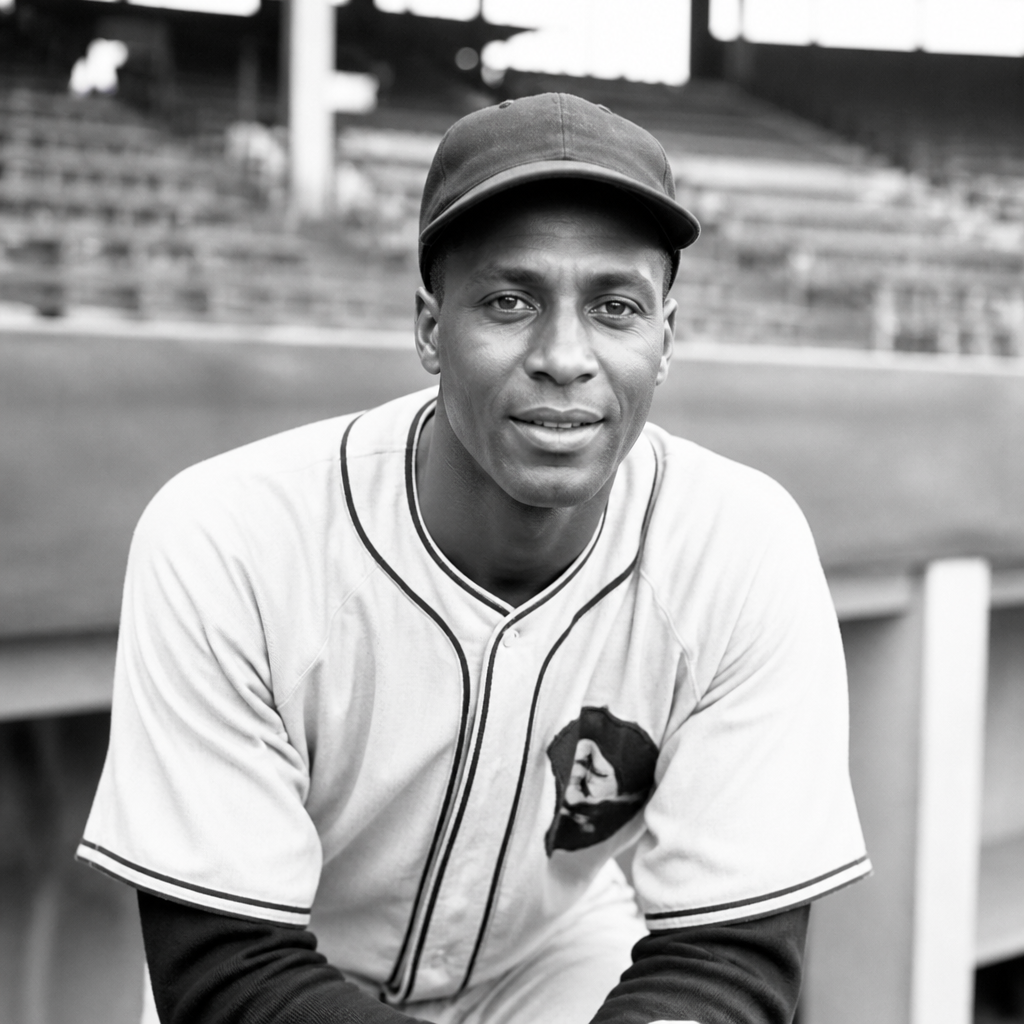
Oscar Charleston stands among baseball’s most gifted all-around players, yet many modern fans know his name only in fragments. For anyone exploring Negro Leagues history, player profiles begin with Charleston because his career touches every major theme in the game’s segregated era: elite athleticism, tactical intelligence, leadership, racial exclusion, and the challenge of reconstructing greatness from incomplete records. As a center fielder, left-handed hitter, baserunner, and field commander, he built a reputation so strong that contemporaries compared his force on the field to Ty Cobb, Tris Speaker, and Babe Ruth at once. That combination was not exaggeration. It was a practical attempt by eyewitnesses to describe a player who could dominate every phase of a game.
In building player profiles for the Legendary Players topic, I always start with a simple test: if a reader watched one athlete for nine innings, would that player explain an entire baseball world? Charleston passes that test better than almost anyone. Born in 1896 in Indianapolis, he rose from military service and semipro ball into a long Negro Leagues career that stretched across dead-ball tactics, the formal league era, winter ball, and player-manager responsibility. Historians, including Hall of Fame researchers and statistical projects such as Seamheads, consistently rank him among the best players in baseball history, not merely among Negro Leagues stars.
Calling Charleston “complete” means more than saying he was good at many things. A complete player creates runs, prevents runs, controls tempo, adjusts to opponents, and elevates teammates. Charleston did all five. He hit for average and power, stole bases aggressively, covered immense ground in center field, threw with authority, and managed clubs with the credibility that only top performers command. This article serves as a hub within Player Profiles by showing how to read Charleston’s career from multiple angles: tools, statistics, context, leadership, and legacy. Once you understand why Oscar Charleston matters, the broader map of legendary Negro Leagues talent becomes much easier to understand.
Why Oscar Charleston belongs at the center of any Negro Leagues player profile hub
Oscar Charleston matters because he is both an individual legend and a gateway figure. A hub article on player profiles should help readers connect one career to a larger ecosystem, and Charleston’s career intersects with nearly every major institution in Black baseball. He played before and during the first Negro National League, starred for the Indianapolis ABCs, Hilldale Club, Harrisburg Giants, Homestead Grays, and Pittsburgh Crawfords, and spent time in high-level integrated settings outside the official major leagues through exhibitions and winter competition. His path lets readers move naturally into related profiles of Pop Lloyd, Buck Leonard, Josh Gibson, Cool Papa Bell, and Satchel Paige.
He also belongs at the center because eyewitness testimony about him is unusually emphatic. Hall of Famer Monte Irvin called Charleston the greatest player he had seen. Cumberland Posey, one of Black baseball’s sharpest evaluators, praised Charleston in terms reserved for inner-circle greatness. When elite players, owners, and managers across decades independently reach similar conclusions, that evidence deserves weight, especially in a historical setting where complete statistical records do not survive. In my experience evaluating old player profiles, consistency of informed testimony is one of the strongest indicators that a player’s reputation rests on substance rather than nostalgia.
Charleston’s game translates cleanly into modern baseball language. He combined on-base skill, slugging, speed, and premium defense at a central position. Today that profile describes an MVP candidate. He was not a one-dimensional power hitter inflated by small parks, nor a slap hitter living on infield grounders. He impacted every inning. That is why serious baseball historians often place him in all-time discussions that include Willie Mays, Cobb, Speaker, and Barry Bonds. The exact ordering varies, but the tier does not.
Hitting skill, power, speed, and defense: what made Charleston a complete player
To understand Oscar Charleston as a complete player, start with the offensive foundation. He hit left-handed with authority and could punish pitches to all fields. Contemporary accounts repeatedly describe line-drive power, not just fence-clearing strength. In an era with larger parks, rougher fields, variable schedules, and inconsistent official scoring, that style mattered. A line-drive hitter with speed could turn singles into doubles, pressure outfielders into mistakes, and maintain production even when conditions suppressed home runs. Charleston did exactly that.
Statistical reconstructions support the eyewitness record. Seamheads data and other Negro Leagues research sources credit Charleston with extraordinary rate production across documented league games, including batting averages over .300 in many seasons and slugging figures that compare favorably with the best hitters of any era. Researchers are careful to note that surviving box scores are incomplete, but incompleteness cuts both ways. It limits precision, yet it does not erase dominance that appears across years, clubs, and independent testimony.
His baserunning was equally destructive. Charleston stole bases, took extra bases on contact, and forced defenders to rush. Speed in historical player profiles is often reduced to raw stolen-base totals, but that misses the point. Before comprehensive play-by-play data, true baserunning value shows up in game stories: scoring from first on doubles, advancing on shallow flies, distracting pitchers, and converting routine hits into chaos. Charleston’s quickness made his power more dangerous because defenders could not play him casually.
Defensively, center field was the right place for him because he had the first step, fearlessness, and throwing strength to control the middle of the outfield. Older descriptions compare his range to Tris Speaker’s and his competitiveness to Cobb’s, though Charleston was more physically imposing than either. He was known for charging balls aggressively and making difficult plays look direct rather than theatrical. That matters when evaluating defense from historical accounts. The best fielders in old reports are not always the ones linked with spectacular catches; often they are the ones whose positioning and speed prevented drama in the first place.
| Skill Area | How Charleston Excelled | Why It Mattered in Negro Leagues Play |
|---|---|---|
| Hit Tool | High averages, hard contact, all-fields approach | Reliable offense despite uneven fields and travel fatigue |
| Power | Extra-base authority from the left side | Produced runs without needing ideal home-run conditions |
| Speed | Base stealing and elite first-to-third instincts | Turned contact into constant defensive pressure |
| Defense | Wide range and confident center-field command | Saved runs in spacious parks where outfield coverage was critical |
| Arm | Strong, accurate throws | Limited extra bases and deterred aggressive running |
| Leadership | Player-manager presence and competitive intensity | Set standards on clubs with unstable schedules and rosters |
The total package is what separates Charleston from excellent peers. Many players hit well. Many ran well. Some defended brilliantly. Few did everything at a level that changed the geometry of a game. Charleston did, which is why the phrase “most complete players” fits him precisely rather than rhetorically.
Career path, military background, and the teams that shaped his legend
Charleston’s road to stardom was shaped by both talent and circumstance. He served in the U.S. Army and played for the all-Black 24th Infantry team, a common proving ground for top Black players in the early twentieth century. Military baseball sharpened discipline and exposed players to strong competition, and Charleston emerged from that environment with a reputation for maturity on the field even when his famous temper flashed off it. By 1915, he had joined the Indianapolis ABCs, one of the leading Black teams in the Midwest, and quickly established himself as a central figure.
His years with the ABCs were especially important because they placed him inside a competitive network that predated formal league stability. Teams barnstormed, traveled constantly, and faced uneven business conditions, yet the quality of play was elite. Charleston became the kind of player who drew crowds on reputation alone. Later stops with Hilldale and Harrisburg reinforced that status. Hilldale, based near Philadelphia, was one of Black baseball’s flagship organizations, known for professionalism and strong rosters. Excelling there meant thriving under scrutiny, not hiding in obscurity.
When Charleston later joined the Homestead Grays and Pittsburgh Crawfords, he connected his own legacy to two of the most storied franchises in Negro Leagues history. The Crawfords in particular became a superteam in the 1930s, associated with stars such as Josh Gibson, Cool Papa Bell, and Satchel Paige. By then Charleston was older, but his presence still mattered. In player-profile terms, this stage of his career shows how legendary players age: they may lose a step, yet their judgment, standards, and strategic influence expand.
He also managed, which is essential to understanding his value. Player-managers in Black baseball handled lineups, egos, travel pressures, and tactical choices under far less stable conditions than white major league managers faced. A player had to command respect instantly. Charleston did because teammates knew he had performed at the highest level himself. That authority is part of his completeness. He was not simply talented; he could organize talent around him.
How historians evaluate Charleston when records are incomplete
A common question in Negro Leagues research is straightforward: how can anyone rank Oscar Charleston accurately when the record book is incomplete? The answer is by combining surviving statistics, contemporary reporting, cross-era testimony, and context about schedule strength. No single source is enough, but together they create a reliable picture. Historians use newspaper box scores, game recaps, winter ball records, exhibition data, and known league games to estimate performance. Projects such as Seamheads Negro Leagues Database have improved this work dramatically by consolidating evidence that once sat scattered across local papers.
There are limits. League schedules were shorter and less standardized than those of the American and National Leagues. Barnstorming games varied in competition level. Official scorers were not always consistent. Some seasons survive only in part. Those are real constraints, and careful writers should say so plainly. At the same time, uncertainty should not be mistaken for emptiness. If a player leads available records, dominates eyewitness accounts, stars for major teams over many years, and is revered by other great players, historians can reach firm conclusions even without perfect totals.
That is exactly Charleston’s case. Analyst Bill James ranked him extremely high in historical evaluations. Hall of Fame researchers treated him as an obvious selection, and he was inducted in 1976. Modern major league recognition of Negro Leagues statistics has also strengthened public understanding by placing Black baseball achievement inside the official historical framework rather than outside it. Charleston benefits from that shift because his numbers, incomplete as they are, look extraordinary whenever they can be documented.
As a practical reading guide for player profiles, readers should ask three questions. What do the surviving numbers show? What did informed contemporaries say? How portable were the player’s skills across settings? Charleston scores at the highest level on all three. His documented offense was elite. His reputation among experts was towering. And his skills, hitting, speed, fielding, arm strength, and leadership, would translate in any era.
Legacy, Hall of Fame standing, and where to go next in Player Profiles
Oscar Charleston’s legacy rests on more than rankings. He represents the standard for seeing Negro Leagues players in full rather than through a narrow lens of exclusion. Too often, Black baseball stars are introduced only as men denied a chance in the majors. That injustice is real, but it is not the whole story. Charleston should also be understood positively: as a center field great, a tactical force, a feared hitter, an aggressive baserunner, and one of the strongest player-managers in the history of Black baseball. He was not important merely because history wronged him. He was important because he was brilliant.
For a Player Profiles hub, that distinction matters. Charleston is an ideal starting point because his career opens pathways to broader subjects: the Indianapolis ABCs and early Midwestern powerhouses; Hilldale and eastern Black baseball; the Crawfords as a concentration of superstar talent; the role of military teams in player development; and the challenge of comparing segregated-era greatness with integrated major league careers. Readers who understand Charleston will be better prepared to evaluate other legends with proper context rather than with simplistic major league-only benchmarks.
The key takeaway is clear. Oscar Charleston was one of the Negro Leagues’ most complete players because he combined impact skills that usually appear separately: average, power, speed, defense, arm strength, and leadership. He belongs in any serious all-time baseball conversation, and he deserves a central place in Legendary Players coverage. Use this hub as your launch point, then continue through related player profiles to build a fuller picture of Black baseball’s deepest stars and richest competitive history.
Frequently Asked Questions
Who was Oscar Charleston, and why is he considered one of the Negro Leagues’ greatest all-around players?
Oscar Charleston was one of the most dominant and complete players in baseball history, not just in the Negro Leagues. Born in 1896, he built a reputation as an elite center fielder, powerful left-handed hitter, disruptive baserunner, and fierce competitor whose game combined athletic brilliance with exceptional baseball intelligence. Historians, former players, and researchers consistently place him among the very best because he influenced games in every possible phase. He could hit for average, drive the ball with authority, steal bases, take extra bases aggressively, cover enormous ground in center field, and lead teams with a commanding presence.
What makes Charleston especially important is that his career captures so much of what defined Black baseball during segregation. He was a superstar whose prime unfolded in a world that denied him entry into Major League Baseball because of race, forcing his greatness to be displayed in the Negro Leagues, independent clubs, winter ball, and exhibition games. Even with incomplete records, the surviving evidence paints a remarkable picture: he starred against top Black competition, excelled in interracial contests, and earned extraordinary praise from contemporaries who saw him play firsthand. Many compared his overall impact to a blend of power, speed, toughness, and defensive excellence rarely found in one player. That combination is why Charleston is remembered not merely as a great center fielder, but as one of the most complete players the sport has ever produced.
What made Oscar Charleston such a special center fielder compared with other stars of his era?
Charleston’s excellence in center field came from more than raw speed. He had the athleticism to chase down deep drives and close gaps quickly, but what separated him was his anticipation, first step, route efficiency, and fearlessness. Center field in his era demanded range, stamina, and the ability to organize the outfield, and Charleston handled all of it at a very high level. Accounts from teammates, opponents, and sportswriters describe a player who could turn difficult plays into routine ones because he read balls off the bat so well and moved decisively. That instinctive feel allowed him to play aggressively, often taking away hits that less confident fielders would never reach.
He also brought a physical edge and competitive intensity to the position. Charleston was not a passive defender; he played with urgency and authority, turning center field into a place where his team could gain momentum rather than merely prevent damage. In an age when ballparks varied widely and field conditions were not always ideal, that kind of adaptability mattered enormously. He was expected to cover large spaces, support his corner outfielders, and contribute as a vocal on-field leader. Charleston did all of that while remaining a major offensive force, which is one reason his reputation became so large. His defensive value was not a side note to his game; it was a central part of why he was viewed as a complete baseball player of the highest order.
How do historians evaluate Oscar Charleston’s greatness when Negro Leagues records are incomplete?
Evaluating Charleston requires careful historical reconstruction because the statistical record from the Negro Leagues is incomplete and uneven. Researchers rely on surviving box scores, newspaper accounts, season summaries, exhibition results, league records, and testimony from players, managers, and journalists. That means Charleston’s legacy is built from both measurable production and the overwhelming consistency of firsthand praise. While modern fans are often most comfortable with neat statistical totals, Negro Leagues history demands a broader approach. In Charleston’s case, that broader approach still leads to the same conclusion: he was one of the era’s dominant forces.
Importantly, the numbers that do survive are impressive enough on their own, but they gain even more meaning when placed alongside the quality of his competition and the context in which he played. Negro League schedules were not as standardized as Major League schedules, and elite Black teams often mixed league games with exhibitions, barnstorming tours, and contests against white semi-pro or major league talent. Charleston’s reputation remained extraordinary across those environments. Historians also pay close attention to peer evaluation, and Charleston stands out there as well. Some of the most respected voices in Black baseball regarded him as one of the finest players they had ever seen. So while incomplete records limit precision, they do not create serious doubt about his stature. If anything, the challenge is not proving he was great, but appreciating just how great he may have been.
Why doesn’t Oscar Charleston have the same name recognition as legends from Major League Baseball?
The biggest reason is racial exclusion. Charleston played during the segregated era, when Black players were barred from Major League Baseball regardless of ability. As a result, he was denied the media exposure, statistical preservation, and institutional promotion that helped turn white major league stars into household names. Many fans learn baseball history through Major League record books, official milestones, and long-celebrated narratives, and Charleston was excluded from that system during his playing career. That exclusion had lasting consequences. It shaped not only where he played, but also how his achievements were recorded, remembered, and taught to later generations.
Another factor is the fragmentary nature of Negro Leagues documentation. Incomplete schedules, inconsistent recordkeeping, and the loss of many local newspapers and archives made it harder for later audiences to grasp the full scale of Charleston’s excellence. By contrast, major league legends benefited from a more centralized historical apparatus that preserved every season in detail. Even so, Charleston’s profile has risen significantly as Negro Leagues scholarship has expanded and public interest in Black baseball history has deepened. Museums, researchers, documentaries, and modern statistical projects have helped restore him to the conversation where he belongs. The more seriously baseball history is studied, the harder it becomes to overlook him. His relative lack of mainstream fame reflects historical injustice and archival gaps, not any shortage of talent or accomplishment.
What should modern fans understand first when learning about Oscar Charleston’s legacy?
Modern fans should begin with the idea that Charleston was not simply a neglected star from a separate baseball world; he was a central figure in the larger history of the sport. His legacy matters because it forces a fuller understanding of baseball excellence beyond the boundaries that segregation tried to impose. When historians place Charleston among the greatest players ever, they are not making a symbolic gesture. They are responding to a substantial body of evidence showing that he possessed rare all-around ability and impacted games in every dimension. He was the kind of player who could alter an inning with his bat, pressure a defense with his speed, save runs in the field, and set a competitive tone for an entire club.
Fans should also understand that Charleston represents a broader truth about the Negro Leagues: some of baseball’s greatest talents developed and thrived outside the major league structure because they were forced to. Learning about him means engaging with both brilliance and injustice at the same time. His story is about athletic greatness, but it is also about what baseball lost when racial barriers prevented players like him from competing on the game’s most visible stage. That is why Charleston remains such a powerful figure in historical discussions. He is a window into the quality, complexity, and significance of Negro Leagues baseball, and he reminds modern audiences that recovering this history is not about adding footnotes. It is about restoring some of the game’s finest players to their rightful place in the story of baseball.