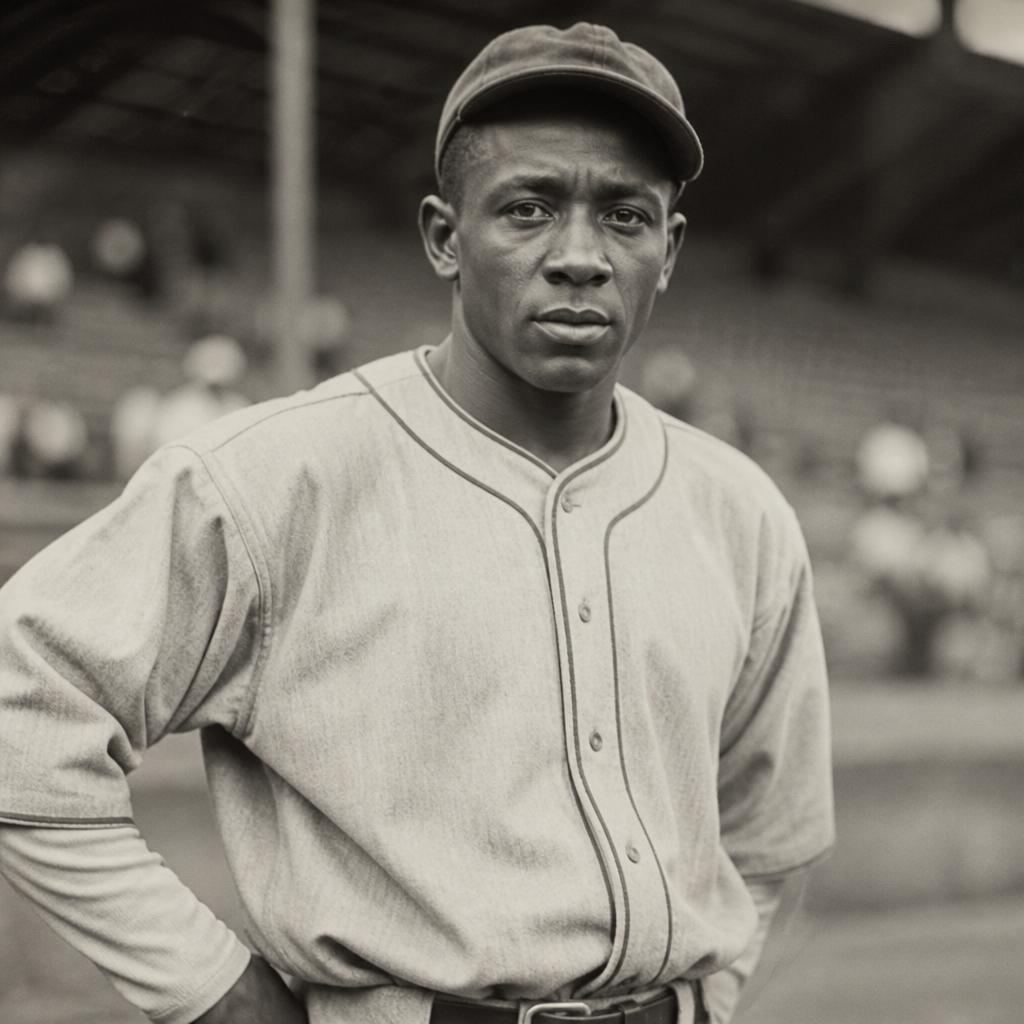
John Henry “Pop” Lloyd stands among the greatest shortstops in baseball history, yet his name still reaches many readers as a discovery rather than a fixture. In any serious discussion of Negro Leagues legends, Pop Lloyd belongs near the top because he combined elite defense, line-drive hitting, speed, leadership, and unusual longevity. He was often compared to Honus Wagner, the Pittsburgh Pirates superstar widely treated as the gold standard for shortstops in the early twentieth century, and that comparison was not casual praise. Players, managers, sportswriters, and historians used it to express Lloyd’s complete game: strong hands, balance, range, baseball intelligence, and a bat that produced in every situation.
This player profile matters because Negro Leagues history is still being restored, interpreted, and connected to the larger baseball record. Many fans know Satchel Paige and Josh Gibson, but fewer understand how foundational Lloyd was to winning clubs across multiple cities and eras. A player profile hub should do more than list dates and teams. It should explain what made the player exceptional, where he fits in baseball history, why scouts and opponents respected him, and how modern readers can evaluate a career built before integrated Major League Baseball gave Black stars equal stage and statistical visibility.
Pop Lloyd was born in 1884 in Palatka, Florida, and developed into one of Black baseball’s most admired infielders during the dead-ball era and beyond. The nickname “Pop” reportedly came from his habit of saying “Pop goes the weasel,” though by the time most people heard it, the name also fit his status as a wise veteran. He played for major Black professional clubs including the Cuban X-Giants, Philadelphia Giants, Leland Giants, Chicago American Giants, Lincoln Giants, and Brooklyn Royal Giants. He was not tied to one franchise in the way modern fans expect because early Black baseball was organized through independent clubs, barnstorming schedules, shifting ownership, and unstable leagues.
Understanding Lloyd requires a few key terms. The Negro Leagues were the top professional circuits for Black players and clubs excluded from white organized baseball by segregation. Barnstorming meant traveling to play exhibitions against local teams, semipro clubs, and sometimes white professionals. A shortstop in Lloyd’s era had to handle uneven fields, heavy travel, aggressive baserunning, and small-ball tactics that demanded quick decisions on bunts, hit-and-runs, and stolen-base attempts. In that environment, reliability was not glamorous; it was essential. Lloyd earned admiration because he made difficult plays look routine and contributed at the plate without wasting outs.
Why Pop Lloyd Was Compared to Honus Wagner
The comparison to Honus Wagner centered on substance, not myth. Wagner was bigger and more widely documented because he played in the National League, but Lloyd drew similar praise for all-around excellence. Contemporary observers described him as a complete shortstop with sure hands, a strong throwing arm, advanced positioning, and the ability to hit for average while also using bunts, hit-and-runs, and smart baserunning. In plain terms, if a manager wanted one infielder who could stabilize a defense and ignite an offense, Lloyd fit the job as well as almost anyone in his generation.
I have always found the Wagner comparison most useful when broken into skills. First, both men were instinctive defenders who anticipated the ball before contact. Second, both hit line drives rather than selling out for power, which matched the run-scoring environment of the time. Third, both led by example and were trusted by teammates. Historians such as John B. Holway and James A. Riley preserved many of these assessments through interviews and biographical research, and the consistency of the testimony matters. When praise comes from opponents, peers, and later analysts, it carries more weight than a single colorful anecdote.
There were, of course, limits to the comparison. Wagner’s major league record is better documented, while Lloyd’s surviving statistics are fragmented because Black baseball schedules mixed league games, exhibitions, and independent contests. That does not weaken Lloyd’s reputation; it changes how we evaluate it. For Negro Leagues stars, the strongest case often combines documented box scores, seasonal records reconstructed by researchers, Hall of Fame testimony, and eyewitness description. By that broader standard, Pop Lloyd clearly qualifies as an inner-circle great.
Career Path Across Black Baseball’s Leading Clubs
Lloyd’s professional rise began in the first decade of the twentieth century, when top Black teams operated as high-level independent powers. He played for the Cuban X-Giants and Philadelphia Giants, two of the era’s most important clubs, before joining Frank Leland’s teams and eventually Rube Foster’s Chicago American Giants orbit. These organizations were not minor operations. They traveled extensively, drew strong crowds, and featured many of the best Black players in the country. Moving among them exposed Lloyd to elite competition and helped build his reputation as a dependable star.
One reason his career can look complicated on paper is that early Black baseball careers rarely followed a neat franchise arc. Players changed teams because owners split, leagues collapsed, better financial offers emerged, or regional opportunities shifted. Lloyd also played winter ball and spent time in Cuba, where Black American players often found high-caliber competition and relatively better compensation. Cuban baseball provided an important proving ground because the quality was strong and the audiences were knowledgeable. Players who thrived there enhanced their standing back home.
By the 1910s, Lloyd had become one of the best-known infielders in Black baseball. He played for the Lincoln Giants in New York, one of the flagship eastern teams, and later appeared with the Brooklyn Royal Giants. He remained productive into his late thirties and beyond, which says a great deal about both his conditioning and his style of play. Speed ages quickly, but baseball instincts, efficient footwork, and bat control often last longer. Lloyd’s longevity was evidence that his greatness rested on deep skill rather than youthful athleticism alone.
How Pop Lloyd Played: Defense, Contact, and Baseball Intelligence
At shortstop, Lloyd was praised for soft hands, smooth transfers, and calm under pressure. On rough infields, fielders needed to read bad hops and charge slowly rolling balls without panic. Lloyd excelled at both. He positioned himself intelligently, came through the ball under control, and completed plays without unnecessary motion. Teammates and opponents repeatedly emphasized how easy he made the position look. That kind of praise usually signals elite footwork. Great shortstops save outs before the crowd notices by taking cleaner angles and setting their feet earlier.
Offensively, Lloyd was built for winning baseball in the dead-ball and early live-ball transition years. He could bunt, slash the ball through openings, move runners, and score from first on a gap hit. Researchers compiling Negro League and independent records have credited him with high batting averages in documented league play, and contemporary accounts regularly called him one of the toughest outs in Black baseball. He was not a home-run hitter in the modern sense, but that was not his job. His value came from on-base skill, contact quality, and constant pressure on the defense.
Baseball intelligence ties the full picture together. Managers trusted Lloyd because he understood game state: inning, score, baserunner speed, hitter tendencies, and field conditions. That awareness separated stars from merely talented players in an era with less standardized coaching and more improvisation. He could read when to take the extra base, when to deke a runner, and when to play for the sure out. Those choices win close games, and close games defined barnstorming schedules where teams often played top opponents on consecutive days with little margin for error.
| Trait | What contemporaries praised | Why it mattered |
|---|---|---|
| Fielding | Sure hands, balance, smooth pivots | Reduced errors on poor infields and preserved tight leads |
| Arm strength | Quick, accurate throws | Finished plays from deep in the hole and on bunts |
| Hitting | Line drives, bat control, tough at-bats | Created runs without depending on power |
| Speed | Smart baserunning rather than reckless stealing | Took extra bases and pressured defenses |
| Leadership | Steady presence, respected veteran | Improved team discipline over long travel schedules |
| Longevity | Productive well into later years | Confirmed that his value came from refined skill |
Reputation, Statistics, and the Challenge of Measuring Greatness
Any honest Pop Lloyd profile has to address the statistical record directly. Negro Leagues data has improved dramatically through the work of Seamheads, the Negro Leagues Researchers and Authors Group, historians such as Gary Ashwill, and Major League Baseball’s recognition of Negro Leagues statistics as major league records for specific leagues and seasons. Even so, surviving numbers remain incomplete because many games were not preserved in full, newspapers covered clubs unevenly, and independent contests made recordkeeping inconsistent.
That means Lloyd’s case rests on both numbers and context. The available records show a high-average hitter with excellent run creation for his position, while the historical testimony places him among the best players of his era. This combination is common in Negro Leagues evaluation. We should not pretend the dataset is perfect, but we also should not downgrade players simply because segregation denied them the same archival infrastructure white major leaguers received. A balanced approach weighs documented performance, level of competition, consistency across sources, and longevity.
One practical way to think about Lloyd is to ask what type of player every championship-caliber club wants. The answer is an up-the-middle defender who controls innings, reaches base, avoids mistakes, and raises the floor of the entire team. That description fits Lloyd precisely. It also explains why he was talked about with such reverence long after his prime. Baseball people remember players who make winning repeatable, and Lloyd did that for years.
Legacy in the Hall of Fame and in Modern Baseball History
Pop Lloyd was elected to the National Baseball Hall of Fame in 1977 by the Negro Leagues Committee, a recognition that confirmed what earlier generations had said for decades. Hall of Fame status matters here not as a final argument by itself, but as a sign that the sport’s historical gatekeepers concluded his impact was undeniable. He belongs in the same broad historical conversation as other Negro Leagues infield greats and as the best pre-integration shortstops anywhere.
His legacy also reaches beyond honors. Lloyd serves as a bridge figure when explaining Negro Leagues player profiles to modern readers because his game translates easily across eras. Every fan understands the value of a steady shortstop who hits for average, thinks one step ahead, and plays winning baseball without drama. When I have seen researchers, broadcasters, and museum curators introduce Negro Leagues history to new audiences, Lloyd is often one of the best examples because his strengths are universal and his reputation was affirmed by so many independent voices.
For a Legendary Players hub focused on player profiles, Lloyd’s story points to a larger truth. Greatness is not always preserved first by highlight reels or complete databases. Sometimes it survives through consensus built by those who saw the player, competed against him, and tried to measure him honestly afterward. Pop Lloyd’s profile rewards that kind of reading. The more carefully you examine his career, the harder it becomes to leave him out of any serious list of baseball’s greatest shortstops.
Pop Lloyd remains essential reading for anyone exploring legendary players because he represents excellence that segregation tried, but failed, to hide. He was a master shortstop, a high-level contact hitter, a disciplined baserunner, and a respected leader across multiple top Black clubs. The comparison to Honus Wagner captured his completeness, while his long career and Hall of Fame recognition confirmed that the praise was deserved. Even with incomplete records, the historical case is strong, consistent, and convincing.
The main benefit of studying Lloyd is perspective. He helps modern fans understand that baseball greatness did not develop in one league or one archive. It existed wherever elite players met strong competition, adapted, and won. If you are building out knowledge within the Player Profiles branch of Legendary Players, start with Pop Lloyd, then continue to related profiles on Negro Leagues stars, dead-ball era shortstops, and Hall of Fame infielders. The deeper you go, the clearer his place becomes.
Frequently Asked Questions
Who was Pop Lloyd, and why is he considered one of the greatest shortstops in baseball history?
John Henry “Pop” Lloyd was one of the defining stars of Black baseball in the late nineteenth and early twentieth centuries, and he is widely regarded as one of the finest shortstops the game has ever produced. Born in 1884, Lloyd built a reputation that rested on more than one standout tool. He was admired for his smooth and dependable defense, his ability to hit for average, his intelligence on the field, his speed on the bases, and his calm leadership in the clubhouse. In an era when complete statistical records for Negro Leagues and independent Black teams were often inconsistent or incomplete, Lloyd’s greatness was preserved through the testimony of teammates, opponents, sportswriters, and historians who saw him play or studied his career closely.
What makes Lloyd especially important is that he was not simply a regional favorite or a short-term star. He excelled over a long period and on many prominent clubs, proving himself against top Black competition and in interracial exhibitions. His game was often described as polished, efficient, and fundamentally sound, which helped him stand out in a baseball culture that deeply respected reliability and winning play. Even among Negro Leagues legends, Lloyd’s name consistently appears near the very top because he could impact a game in every phase. For readers discovering him today, the simplest way to understand his stature is this: Pop Lloyd was not just a great Negro Leagues player; he was one of baseball’s all-around masters at the shortstop position, regardless of league.
Why was Pop Lloyd so often compared to Honus Wagner?
The comparison to Honus Wagner emerged because Wagner represented the ideal early twentieth-century shortstop in the white major leagues, and Pop Lloyd displayed many of the same qualities in Black baseball. Both men were known as complete players rather than specialists. They could field at a high level, hit with authority and consistency, run well, and lead their teams with intelligence and confidence. In a period when cross-league comparisons depended heavily on scouting reports, eyewitness accounts, and exhibition performances, Lloyd’s skill set made Wagner the natural benchmark.
That comparison was also meaningful because it reflected genuine respect. Honus Wagner was not just another star; he was one of the most celebrated players in the sport. To say that Lloyd was the Black baseball equivalent of Wagner was to place him in the very highest class of player. Observers saw in Lloyd the same type of broad excellence that made Wagner famous: strong instincts, steady hands, smart baserunning, and an ability to influence games without needing flashy theatrics. The comparison does not mean they were identical players in every detail, but it does show how highly Lloyd was regarded by people who understood the game. In practical terms, being compared to Wagner signaled that Pop Lloyd belonged in any conversation about the best shortstops of his era, even though segregation denied him the platform of the major leagues.
What kind of player was Pop Lloyd on offense and defense?
Pop Lloyd was the kind of player managers trusted because he contributed everywhere. On offense, he was known more for precision and consistency than for headline-grabbing power. He was a line-drive hitter who could spray the ball, make solid contact, and keep innings moving. He understood how to use the whole field, which made him difficult to defend, and he brought a disciplined, intelligent approach to at-bats. He was also a dangerous baserunner, capable of taking extra bases and pressuring defenses with speed and awareness. In an era when manufacturing runs mattered greatly, Lloyd’s offensive style was ideal: he got on base, advanced runners, and created opportunities without wasting plate appearances.
Defensively, he earned enormous praise for his steadiness at shortstop. Contemporary descriptions emphasized his hands, footwork, range, and baseball intelligence. He was not remembered merely as a showman but as a fielder who made difficult plays look controlled and natural. Shortstop has always been one of baseball’s most demanding positions, requiring quick reactions, sure judgment, arm strength, and leadership in the infield. Lloyd brought all of those traits. He was the kind of defender pitchers loved to play behind because he turned chaos into outs and positioned himself well. Taken together, his offensive reliability and defensive excellence explain why his reputation endured for decades. He was not a one-dimensional star; he was a complete shortstop in the fullest sense.
How did Pop Lloyd’s leadership and longevity shape his legacy in the Negro Leagues?
Lloyd’s legacy is strengthened not only by how well he played, but by how long he remained a respected presence in Black baseball. Longevity matters in any historical evaluation because it separates brief brilliance from sustained excellence. Lloyd played across multiple teams and seasons, adapting as the structure of Black baseball evolved from loosely organized circuits and independent clubs into more formal Negro League competition. Remaining valuable over that span required physical skill, mental discipline, and the ability to adjust to changing teammates, competition, and travel demands. Lloyd did all of that while maintaining his standing as one of the game’s most admired figures.
His leadership also became a central part of his reputation. The nickname “Pop” itself suggests the trust and respect he inspired. He was seen as a veteran presence, someone who carried himself with professionalism and understood how to guide a team. In the Negro Leagues, leadership had added importance because players often dealt with difficult travel conditions, financial uncertainty, and the daily burdens of segregation. A composed, reliable star could help stabilize a club in ways that went beyond box scores. Lloyd’s reputation for maturity and intelligence made him influential on and off the field. That combination of durability and leadership is a major reason historians continue to rank him so highly. He was not simply a gifted player passing through his era; he was one of the men who helped define what greatness looked like in Black baseball.
Why isn’t Pop Lloyd as widely known today, and why does his story still matter?
Pop Lloyd is less widely known than many white major league stars of his time for a simple but deeply important reason: segregation limited both his opportunities and the preservation of his fame. He played in a baseball world where Black athletes were barred from the major leagues, which meant they were denied the sport’s largest stage, its most powerful publicity machine, and the full statistical recordkeeping that helped shape later Hall of Fame memory. As a result, many Negro Leagues legends reached future generations through oral history, newspaper fragments, barnstorming accounts, and the work of dedicated researchers rather than through the uninterrupted mainstream coverage that immortalized major league icons.
His story still matters because it expands and corrects the history of baseball. Learning about Lloyd challenges the idea that greatness only existed inside the segregated major leagues. It reminds readers that some of the finest players in the sport built extraordinary careers under unfair conditions and still earned the admiration of everyone who saw them. Lloyd’s career also helps modern audiences understand how rich, skilled, and competitive Negro Leagues baseball truly was. When historians place him alongside all-time shortstops and note the repeated comparisons to Honus Wagner, they are not making a symbolic gesture. They are recognizing real excellence that deserves to be remembered on equal terms. In that sense, Pop Lloyd’s story is not just about one underrated player; it is about restoring a more honest picture of baseball history itself.