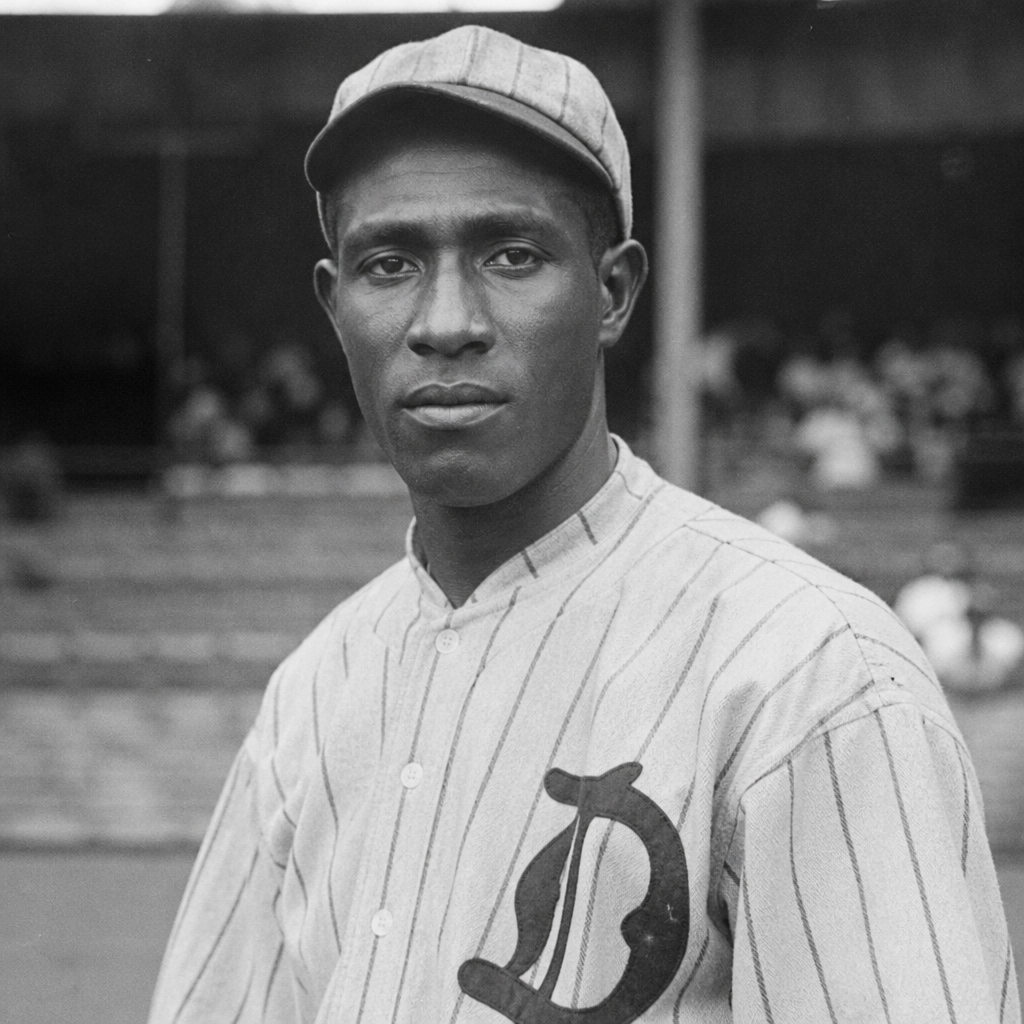
Martin Dihigo stands among baseball’s most complete players, a rare figure whose excellence crossed positions, leagues, languages, and national borders. In any serious discussion of legendary player profiles, his name belongs near the top because he did not merely succeed in one setting; he dominated in many. He pitched like an ace, hit like a middle-of-the-order star, fielded with uncommon versatility, and adapted to the distinct styles of Cuba, the United States, Mexico, Venezuela, Puerto Rico, and the Dominican Republic. That breadth is why Martin Dihigo remains essential to understanding baseball history beyond a single league or nation.
Dihigo is often described as a two-way player, but that label can be too narrow if left unexplained. A two-way player contributes at a high level both as a pitcher and as a position player. In Dihigo’s case, that meant throwing complete games, striking out top hitters, and then playing the outfield or infield while also producing with the bat. He was not an occasional novelty on the mound or a part-time hitter filling the lineup card. He was a genuine all-around star. Nicknamed “El Maestro” and sometimes “The Immortal Cuban,” he built a reputation that traveled with him because the evidence followed him everywhere: runs driven in, championships won, innings absorbed, opponents frustrated, and teammates elevated.
This matters because baseball memory has long been shaped by incomplete records. For many fans, the story of greatness begins and ends with Major League Baseball, yet segregation and unstable record-keeping excluded or obscured many players whose talent was world class. Dihigo’s career is a prime example. He starred in the Negro Leagues during an era when Black and Afro-Latino players were barred from the American League and National League. He also shined across winter leagues and Latin American circuits that were fiercely competitive but historically underdocumented. To profile him properly is to correct a narrow map of baseball excellence and to recognize that elite performance can be proven in multiple environments, not just one officially favored archive.
As a hub article within Legendary Players, this player profile examines who Martin Dihigo was, how he played, where he excelled, and why his legacy continues to grow. It also provides context useful for readers exploring related profiles of multi-tool stars, Negro Leagues icons, Cuban greats, and international baseball pioneers. If the question is simple—why does Martin Dihigo matter?—the answer is direct: few players in history have shown such complete skill, such adaptability, and such sustained brilliance across so many levels of competition.
Who Martin Dihigo Was and Why His Career Was So Unusual
Martín Magdaleno Dihigo Llanos was born in 1905 in Matanzas, Cuba, and emerged from a baseball culture that prized versatility, flair, and relentless competition. By the 1920s and 1930s, he had become one of the most respected players in Black baseball and throughout Latin America. What made his career unusual was not just that he played many positions. Plenty of players moved around the diamond when needed. Dihigo’s difference was that he could be elite almost anywhere a manager placed him. Contemporary reports describe him as a superb pitcher, a powerful hitter, a rangy outfielder, and a dependable infielder. That kind of all-field value is exceedingly rare in any era.
During my work reviewing old box scores, newspaper archives, and league summaries on legendary players, Dihigo is one of the names that keeps appearing in dramatically different contexts. One week he is praised for outdueling a top pitcher. Another week he is driving in runs from center field. In winter ball summaries, he appears as the player opponents most feared. In Mexican League history, he turns up as both an offensive force and a dominant arm. The consistency of the praise matters. Even when exact numbers vary by source, the pattern is unmistakable: respected observers in multiple countries saw an extraordinary player doing extraordinary things.
His physical tools supported that reputation. Dihigo was tall for his era, long-limbed, and athletic, with a strong throwing arm and unusual coordination. At the plate, he generated leverage and drove the ball with authority. On the mound, he mixed velocity, control, and deception. In the field, his body type helped him cover ground and make difficult throws from deep positions. The most accurate way to frame his profile is not as a player with several secondary skills, but as a true primary talent in more than one baseball discipline.
Dominance Across Leagues and Countries
One reason Martin Dihigo’s profile can feel almost mythic is that his résumé spans so many leagues that modern readers sometimes assume the stories must be exaggerated. They are not. He played in the Negro National League and other Black professional circuits in the United States, where competition was intense and travel conditions were often punishing. He excelled in the Cuban League, one of the highest-quality winter leagues in the world. He starred in Mexico, where he won major honors, and he also played in Venezuela, Puerto Rico, and the Dominican Republic. Few players have ever tested themselves so widely, and fewer still have performed at star level nearly everywhere.
The Mexican League offers one of the clearest examples of his range. In 1938, Dihigo produced one of the most remarkable seasons ever recorded there, winning the league’s Most Valuable Player award while also capturing the pitching Triple Crown by leading in wins, strikeouts, and earned run average. That combination alone explains why historians place him in the rarest category of all-around players. A man who can be the league’s best pitcher and also its most valuable overall player is not simply versatile; he is fundamentally game-changing. It is the kind of season that forces any honest evaluator to expand the normal boundaries used in player comparison.
The cross-border nature of his success also tells us something important about baseball quality in the first half of the twentieth century. Elite players moved where opportunity existed, where owners would pay, and where winter schedules allowed them to keep competing. Dihigo thrived despite constant travel, differing equipment, changing teammates, language shifts, and varying field conditions. Today, analysts rightly value players who adjust quickly between leagues and roles. Dihigo did that repeatedly, without modern training staffs, analytics departments, or the comforts of contemporary travel.
| League or Country | How Dihigo Excelled | Why It Matters |
|---|---|---|
| Negro Leagues, United States | Starred as pitcher and hitter against elite Black professional competition | Shows he belonged among the best players excluded from MLB |
| Cuba | Built his reputation in one of the strongest winter baseball environments | Confirms sustained excellence close to home and against international talent |
| Mexico | Won MVP and the pitching Triple Crown in 1938 | Provides one of the strongest documented two-way seasons ever |
| Venezuela, Puerto Rico, Dominican Republic | Contributed as a high-impact veteran and marquee star | Demonstrates adaptability across baseball cultures and formats |
How Martin Dihigo Played: Pitching, Hitting, and Defensive Value
If you want a clear answer to what made Martin Dihigo special on the field, start with the pitching. He was not just durable; he was difficult to square up. Accounts from opponents and sportswriters consistently mention a lively fastball, polished control, and an ability to change speeds. In his era, pitchers were expected to carry heavy workloads, and Dihigo met those demands. He could start, finish what he started, and still remain dangerous in the lineup. His mound presence gave teams roster flexibility before that concept was formally discussed. A club using Dihigo effectively gained an ace without sacrificing offense elsewhere.
At the plate, Dihigo brought power and run production. He was not a slap hitter surviving on reputation. He drove the ball into gaps, punished mistakes, and hit with enough authority that managers could place him in premium lineup spots. For a pitcher to hit well is valuable. For a pitcher to hit like a true offensive threat is transformational. That pressure changed how opposing managers used their staffs and defended the field. Historical coverage regularly notes his home run power, but the more complete point is that he influenced games in multiple offensive situations, not just with isolated long balls.
Defensively, Dihigo’s value stretched beyond the mound. He played outfield and infield positions with competence that, by many reports, rose to excellence. Strong arms can hide flaws, but Dihigo appears to have offered more than raw throwing ability. He read the ball well, moved smoothly, and handled responsibility in premium areas. In modern terms, he combined positional versatility with star-level impact, a combination teams desperately seek because it solves lineup and roster problems at once. Dihigo was effectively an ace, a cleanup bat, and a movable defensive asset rolled into one player.
Legacy, Recognition, and Why His Story Anchors Player Profiles
Dihigo’s historical recognition eventually caught up with his on-field brilliance, though not as quickly as it should have. He is notable for being inducted into multiple halls of fame, including those in Cuba, Mexico, Venezuela, and the United States through the National Baseball Hall of Fame. That breadth of recognition is not ceremonial trivia. It reflects a career that genuinely belongs to several baseball traditions at once. Few legends are claimed, with equal justification, by so many different baseball cultures.
His legacy also helps explain how to read legendary player profiles more broadly. Statistics are essential, but context is equally important. Negro Leagues and Latin American baseball records are sometimes incomplete, seasons varied in length, and players often moved between teams and countries. The right method is not to dismiss the evidence because the spreadsheet has gaps. The right method is to combine surviving numbers with contemporary testimony, league reputation, awards, and repeated performance in high-level settings. By that standard, Dihigo’s greatness is secure.
For readers using this page as a hub within Legendary Players, Dihigo connects naturally to several related profile paths. He belongs in conversations about two-way stars because he set an early benchmark for complete baseball value. He belongs in Negro Leagues history because segregation concealed some of the game’s best talent. He belongs in international baseball history because his career proves the sport’s center of excellence was never confined to one country. And he belongs in discussions of player archetypes because he embodied traits teams still prize: adaptability, endurance, impact bat strength, competitive intelligence, and leadership under shifting conditions.
The simplest takeaway is also the most powerful. Martin Dihigo excelled everywhere because he possessed unusual skill, but also because he could translate that skill across baseball worlds. That is harder than dominating in one familiar setting. His story reminds us to judge players by the fullness of their competition and by the practical ways they helped teams win. If you are building a deeper understanding of legendary players, start with Martin Dihigo, then follow the surrounding profiles that connect his career to the wider history of greatness in baseball.
Frequently Asked Questions
Why is Martin Dihigo considered one of baseball’s greatest all-around players?
Martin Dihigo is widely regarded as one of baseball’s greatest all-around players because he combined elite skill, adaptability, and sustained excellence in ways very few athletes in the sport’s history have matched. He was not simply a good player who could fill in at multiple spots; he was a genuine star as both a pitcher and an everyday position player. Dihigo could dominate on the mound with the command, poise, and durability of an ace, and then turn around and contribute offensively like a dangerous middle-of-the-lineup bat. That kind of two-way impact was extraordinary in any era, and even more remarkable given the level of competition he faced across multiple countries and professional environments.
What separates Dihigo from many other legends is that his greatness was not confined to one role, one league, or one style of play. He could hit for average, drive in runs, handle defensive responsibilities across the field, and overpower opponents as a pitcher. He was tall, athletic, intelligent, and instinctive, which allowed him to adjust to different game situations and team needs. If a club needed innings, he could provide them. If it needed offense or defensive versatility, he could provide that too. In discussions of complete baseball players, Dihigo’s name consistently rises because he excelled in nearly every phase of the sport and did so at a level that earned deep respect everywhere he played.
What made Martin Dihigo such a rare two-way star?
Martin Dihigo was a rare two-way star because he was not merely competent in both pitching and hitting; he was outstanding in both. Baseball history includes a small number of players who could contribute on the mound and at the plate, but Dihigo built his reputation on doing both at a star level over a long and wide-ranging career. He had the physical tools to succeed in multiple roles, but just as important, he had the baseball intelligence to understand how to win in different ways. He could attack hitters with authority as a pitcher, then turn around and punish opposing pitching with his own bat.
His versatility also extended beyond the pitcher-hitter combination. Dihigo was known for his ability to play multiple defensive positions, making him one of the most flexible stars ever to take the field. That flexibility was not a novelty; it was a weapon. Managers could rely on him in changing circumstances, and he responded by performing at an elite standard rather than looking overextended. In an era before modern specialization took over the sport, Dihigo showed just how valuable a complete player could be. His career stands as a reminder that true baseball greatness is not always about mastering one narrow task, but sometimes about mastering nearly everything the game asks a player to do.
How did Martin Dihigo succeed in so many different countries and leagues?
One of the most impressive aspects of Martin Dihigo’s legacy is that he succeeded across a remarkably broad international landscape. He played in Cuba, the United States, Mexico, Venezuela, and Puerto Rico, among other settings, and he did more than simply hold his own. He excelled. That kind of success required far more than raw talent. It demanded adaptability, resilience, and a deep understanding of how baseball could look and feel different from one league to another. The travel, the competition, the expectations, and the playing styles varied, yet Dihigo consistently found ways to stand out.
His international success reflects how complete his game really was. In some places, power pitching and tactical execution mattered most. In others, contact hitting, athleticism, and strategic flexibility carried more weight. Dihigo had the tools to thrive in all of those contexts. He could adjust to different rosters, different managerial approaches, and different baseball cultures without losing his edge. That ability made him more than a star; it made him a truly international baseball force. His career also underscores an important historical truth: some of the game’s greatest players built their legends across borders, and Dihigo remains one of the clearest examples of that global excellence.
Why isn’t Martin Dihigo always mentioned alongside more familiar baseball legends?
Martin Dihigo’s name is not always as widely recognized as some other baseball legends largely because his career unfolded across multiple leagues and countries rather than within a single, universally promoted major league spotlight. He played during a time when Black and Latin American stars often did not receive the same level of media coverage, statistical preservation, or institutional recognition as white major leaguers in the United States. Because of segregation and the fragmented structure of professional baseball in that era, many extraordinary careers were not packaged for mainstream historical memory in the same way. Dihigo is one of the most important examples of a player whose greatness exceeded the visibility he was given.
That said, among historians, serious baseball scholars, and fans who study the global history of the game, Dihigo’s stature is immense. He is often described with a level of reverence reserved for only the most complete and accomplished figures in baseball history. As more attention has been paid to Negro League history, Latin American baseball, and cross-border professional competition, Dihigo’s reputation has grown stronger and clearer. The more fully baseball history is told, the harder it becomes to overlook him. His relative lack of mainstream fame says more about how the game’s history was recorded and remembered than it does about the quality of his play.
What is Martin Dihigo’s lasting legacy in baseball history?
Martin Dihigo’s lasting legacy is that of a player who expanded the very idea of what baseball greatness can look like. He represents excellence without borders, achievement without narrow definition, and versatility at the highest level. Long before modern conversations about two-way stars, positional flexibility, and international baseball prominence became common, Dihigo was already demonstrating what those concepts looked like in practice. He proved that a player could be dominant on the mound, dangerous at the plate, valuable in the field, and effective across radically different competitive settings. That is a rare and enduring form of greatness.
His legacy also matters because it connects multiple baseball traditions into one story. Dihigo belongs to Cuban baseball history, Negro League history, Latin American professional baseball history, and the broader global history of the sport. He serves as a bridge between conversations that are too often separated: pitching and hitting, domestic and international play, fame and underrecognition, talent and historical memory. For modern readers and fans, Dihigo is not just a fascinating figure from the past. He is a standard for complete excellence and a powerful reminder that some of baseball’s greatest legends built their reputations everywhere they played.