
To the realm of iconic ballparks in baseball history, Montreal’s Olympic Stadium holds a unique position. Unlike the revered nostalgic charm of Fenway Park or the historic significance of Wrigley Field, Olympic Stadium stands out due to its bold architectural design, a testament to a different era and ambition. Opened in 1976, this grand structure came into being as the centerpiece for the Summer Olympics held in Montreal, and it later became the home of the Montreal Expos, welcoming baseball fans from all walks of life. The stadium’s towering presence and unique design symbolize a time when bigger often meant better, and when innovation in architecture sought to leave a lasting legacy.
Under the creative eyes of architect Roger Taillibert, Olympic Stadium was birthed as a futuristic vision, combining utilitarian needs with grandiose aesthetics. Its design incorporated a massive inclined tower—one of the tallest leaning towers in the world—intended to support a retractable roof, which, albeit plagued with mechanical issues throughout its life, aimed at providing a versatile and modern sports venue. This article takes a deeper look at the historical significance, architectural ambitions, and legacy of Olympic Stadium, a structure often shrouded in mixed sentiments and fascinating anecdotes.
Montreal’s civic pride rode high in the 1970s, with the idea of hosting the Olympic Games viewed as a monumental step for the city on the world stage. Amidst this atmosphere of excitement, Olympic Stadium was envisioned not just as a baseball field, but as a multi-purpose marvel, aimed at representing the pinnacle of 20th-century Canadian architecture. Let’s delve into its creation, the importance it held during its peak, its role as the home of the Expos, and evaluate the legacy it has left behind for generations to ponder.
Construction and Architecture
Superb in both ambition and scope, the construction of Olympic Stadium was anything but straightforward. Designed by the celebrated French architect Roger Taillibert, the project faced formidable challenges from the outset. Meant to be an architectural triumph reflecting Montreal’s modernist aspirations, the stadium’s construction was rife with delays and cost overruns, transforming what was meant to be a national pride into a subject of public scrutiny.
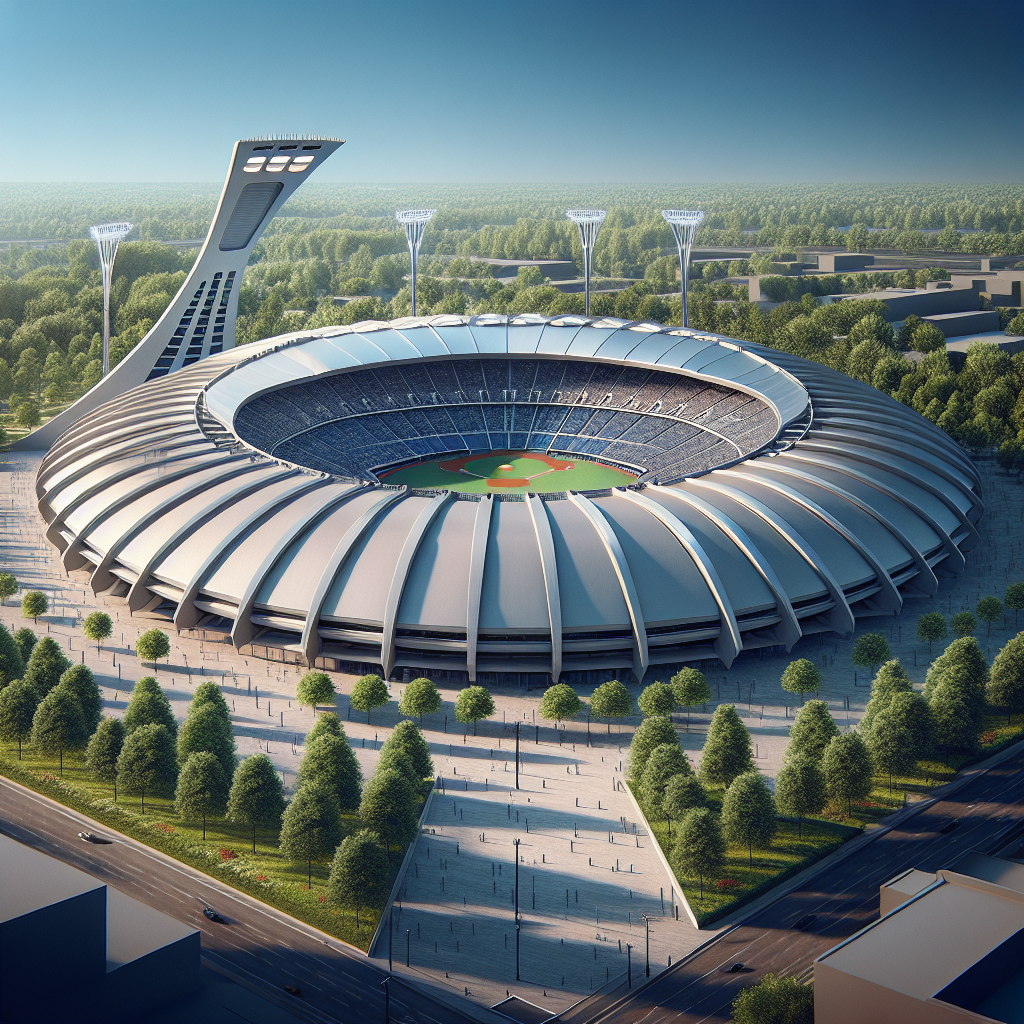
The stadium was built using pre-cast concrete sections, a move that was innovative at the time, if fraught with complexities. The defining feature was its 175-meter tower, sloped at a bold 45-degree angle, intended to support a retractable roof that would allow for versatile use irrespective of the weather. Despite the originality, the retractable roof faced a plethora of mechanical hurdles, rendering it inoperative for significant periods. The complexity and intricacy required for such an ambitious retractable roof design proved problematic, and it wasn’t until 1987—more than a decade after the stadium’s opening—that the roof fully functioned as intended.
From an external viewpoint, Olympic Stadium truly stands out for its audacity. It’s like a dramatic piece of art amid the skyline, a concrete beast that lays bare the compelling vision of its creators while also indicating the turbulent effort behind its construction. This multi-purpose giant was more than just a sports venue; it was an embodiment of an era’s aspiration towards futuristic design and grand architectural statements.
Beyond baseball, it hosted various sporting events, concerts, and exhibitions, standing as a versatile venue, though with contemporary reflections, its utility sometimes came across as less than perfect. The story of its construction remains both a testament to human will and a cautionary tale of being overambitious without anticipating practical hurdles on the horizon.
Olympic Games and Grand Opening
When Montreal was chosen to host the 1976 Summer Olympics, it took on the monumental task of building facilities that would showcase the city’s potential on the global stage. Olympic Stadium was the crown jewel of these facilities, a symbol of architectural prowess and urban progress. Tens of thousands filled the stands during the opening ceremony on July 17, 1976, their excitement palpable in the air. Despite delays and cost overruns, the moment was electric. The stadium finally came to life, albeit unfinished in some aspects, capturing both the nation’s and the world’s attention.
The Olympic Games allowed Montreal to shine in unparalleled ways, and the stadium was at the heart of it, hosting the opening and closing ceremonies, alongside some of the most significant track and field events and soccer matches. For many Canadians, this was an unforgettable moment of national pride that, though costly, left an indelible mark on the country’s sporting and architectural history.
There were, however, significant criticisms regarding the financial burden the stadium placed on the city and its taxpayers. Costing nearly $1.6 billion (adjusted for inflation), the complex became known as ‘The Big O’, a play on words reflecting both its circular shape and the financial ‘Big Owe’ it represented for Montreal.
Despite these financial strains, the Olympics were a resounding triumph on a human scale, and Olympic Stadium’s legacy as a critical venue in that success is unquestionable. The games passed, the athletes departed, but the structure remained, transitioning into its subsequent role as the home for Montreal’s Major League Baseball team, the Expos.
Home of the Montreal Expos
The Montreal Expos was Canada’s first Major League Baseball team, debuting in 1969. Initially playing at Jarry Park, the Expos moved to Olympic Stadium in 1977, hoping to attract larger crowds and offer a superior game-day experience. The stadium became the heart of baseball in Montreal, drawing fans across the province and beyond to witness their teams compete at an impressive facility.
The layout of Olympic Stadium provided ample seating, with a capacity exceeding 65,000 at its peak, although it was later adjusted to better suit baseball configurations. The vast outfield dimensions and the astroturf playing surface offered a distinct game experience, unique to fans and players alike.
Throughout the years, Olympic Stadium saw its fair share of baseball glory. Memorable moments included the Expos winning the National League East Division title in 1981, led by stars such as Gary Carter, Andre Dawson, and Tim Raines. The structure, however, was not without its critics. Fans often lamented the stadium’s less-than-intimate atmosphere, the far-reaching seats, and the mechanical issues with the retractable roof, which was much anticipated but sporadically functional.
Ultimately, despite its grandeur and capacity, Olympic Stadium struggled to provide the ideal baseball ambiance that smaller, purpose-built ballparks offered. Attendance issues plagued the Expos during their later years, as did ownership and financial struggles. In 2004, the Expos played their final season in Montreal before relocating to Washington D.C., leaving Olympic Stadium without its perennial baseball tenant.
Post-Expos Era
Following the departure of the Montreal Expos, Olympic Stadium faced significant identity reconfiguration. While still an architectural landmark, its primary tenant was gone, leaving a void in its regular use. The stadium became a multipurpose venue, hosting various events, from soccer matches to concerts, exhibitions, and other sporting events.
Among the notable uses in the post-Expos era was as the venue for international soccer matches and as the occasional home for the Montreal Alouettes of the Canadian Football League (CFL). However, the absence of a consistent primary tenant meant that the stadium frequently faced periods of heightened activity followed by dormancy.
The maintenance of such a grand structure, especially one with mechanical intricacies like the retractable roof, posed challenges. Financial considerations continued to be a focal point for city administrators, who grappled with cost-effective ways to manage and utilize the stadium. Various proposals for repurposing or renovating the space periodically surfaced, reflecting both the desire to preserve the historic structure and the practical need to justify its continued expense.
Despite these challenges, Olympic Stadium remained a favored site for large-scale events unable to be hosted by other venues in Montreal, enduring as a multipurpose colossus standing as both a relic and a monument to the city’s ambitious past.
Future Prospects and Legacy
The future of Olympic Stadium is subject to ongoing debate, with opinions divided on the best path forward. While some advocate for complete renovations to modernize the stadium, others push for demolishing the structure to make room for new development. Each perspective accounts for the stadium’s historical value, financial implications, and potential future uses.
Notable renovation proposals include updating the infrastructure to meet contemporary standards, possibly reintroducing a form of the retractable roof, and enhancing the surrounding amenities to invigorate the stadium’s appeal. Such efforts aim to transform the venue into a more versatile and attractive location for events and sporting activities.
Meanwhile, advocates for demolition argue that the costs associated with maintaining and refurbishing the aging structure are unsustainable. They propose that the land could be more efficiently used to develop new public spaces, residential areas, or commercial hubs that better serve the city’s future needs.
However, Olympic Stadium’s iconography and historical significance make this decision far from straightforward. It stands as a testament to Montreal’s bold architectural choices and its role on the international sporting stage in 1976. The stadium’s legacy endured various phases, representing the dreams, challenges, and achievements of an era, encapsulating the spirit of a city reaching towards greatness.
Conclusion
In the context of iconic ballparks, Olympic Stadium’s story is as multifaceted as its architecture. It stands apart, not for its baseball-centric charm or historical baseball glory, but as an embodiment of lofty ambition and relentless pursuit amidst practical challenges. For Montrealers and sports enthusiasts, it is a beacon of a transformative time, an era when hosting the Olympics meant reshaping a city’s architectural landscape forever.
It remains a place where history was made and witnessed, where the Montreal Expos played out their highs and lows, where athletes showcased their prowess during the Olympics, and where Montreal’s community gathered time and again. The structure will always arouse wonderment and debate, whether discussing its futuristic design, the storied events it hosted, or contemplating its future.
Olympic Stadium, Montreal’s architectural experiment in baseball, continues to stand tall. It may no longer echo with the regular cheers of baseball aficionados, but its legacy endures through the memories it holds and the unique space it occupies in Canada’s sporting history. As Montreal forges its future, Olympic Stadium remains a compelling chapter in the city’s narrative, reminding us of an age where architectural dreams pushed boundaries, for better or for worse.
Frequently Asked Questions
1. What makes Montreal’s Olympic Stadium architecturally unique?
Montreal’s Olympic Stadium, designed by French architect Roger Taillibert, is an architectural marvel that stands out due to its modernist design and ambitious scope. Constructed as part of Montreal’s preparation for hosting the 1976 Summer Olympics, the stadium features a distinct and daring design symbolized by its massive inclined tower—the world’s tallest inclined structure at 165 meters. The stadium’s fully retractable roof, supported by cables from the tower, was revolutionary at the time, giving it a spaceship-like silhouette which broke free from traditional ballpark designs. The use of concrete was dominant, presenting a stark contrast to the brick and ivy-covered parks in America, embodying the grand aspirations and innovative spirit of the era.
2. How did Olympic Stadium become associated with baseball and the Montreal Expos?
Following its debut in the 1976 Olympics, Olympic Stadium became linked with baseball when it became the home of the Montreal Expos, Canada’s first Major League Baseball team, in 1977. Prior to this, parks like Jarry Park had to be expanded to accommodate MLB standards. Olympic Stadium offered an expansive venue that could host over 58,000 fans. It provided a futuristic and large-capacity environment which was quite unconventional for a baseball setting at the time, distinguished by its massive concrete architecture and unique, albeit sometimes controversial, ambiance. The stadium served as the Expos’ home for over two decades, witnessing moments of baseball history, such as when the Expos reached the playoffs in 1981.
3. What were some challenges Olympic Stadium faced during its time as a baseball venue?
While the stadium’s innovative design was impressive, it faced several functional challenges for baseball use. The retractable roof, meant to protect attendees from inclement weather, experienced numerous mechanical issues, culminating in incidents where small pieces even fell into the stands. The cavernous design, coupled with the vast concrete structures, impacted acoustics, making the environment less intimate compared to classic baseball parks. Seating, with vast expanses far from the field, coupled with the stadium’s size, often seemed to diminish the game-day atmosphere, especially when attendance was low. Over time, critiques also focused on the logistical costs and maintenance of the structure, ultimately fueling debates over its future and suitability as a baseball venue.
4. Why is Olympic Stadium considered an important part of Montreal’s sports history?
Aside from its architectural value, Olympic Stadium holds a pivotal place in Montreal sports history as a symbol of both achievement and ambition. Hosting the Olympics in 1976 was an audacious move that put Montreal on the international sports map, and the stadium was at the heart of it. As the home of the Montreal Expos, it saw many iconic moments, including the prime years of baseball legends like Gary Carter and Andre Dawson. Its storied history is marked by the exuberant fans of “Nos Amours,” showing the city’s passion for baseball. Despite its challenges, the stadium remains a cherished civic monument with a legacy intertwined with Montreal’s identity and its pursuit of grandiose international stature.
5. What is the current status and future of Olympic Stadium?
As of today, Olympic Stadium remains a versatile venue despite the Montreal Expos’ relocation to Washington, D.C., in 2005. It now hosts a variety of events, from concerts to trade shows, continuing to contribute to the city’s cultural and sporting activities. Efforts have been made consistently to preserve the structure’s architectural integrity while addressing its operational shortcomings. Proposals and discussions about its future use are ongoing with a focus on improving facilities and accessibility. A significant investment has been made to retrofit and upgrade the aging infrastructure, so it remains relevant and beneficial to Montreal, reflecting both respect for its historical significance and a vision for its future role.