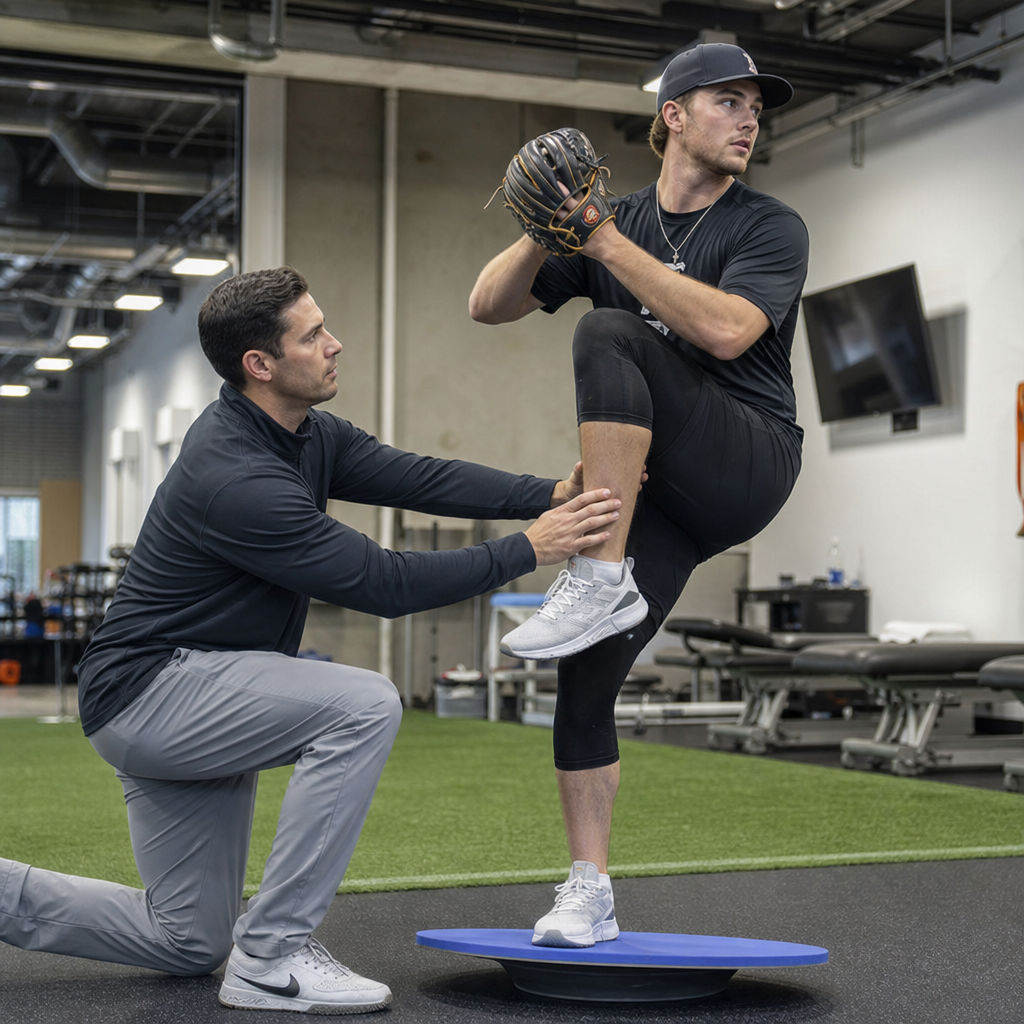
Baseball has always been a game of repetition, force, and adaptation, but the modern era has changed how teams protect players from the physical cost of those demands. Innovations in injury prevention and rehabilitation in baseball now sit at the center of the sport’s broader technology shift, connecting biomechanics, workload monitoring, medical imaging, wearable sensors, force-plate testing, nutrition, sleep science, and data-driven return-to-play planning. In practical terms, this means clubs are no longer reacting only after a pitcher’s elbow flares up or a hamstring strain sidelines an outfielder. They are building systems designed to identify risk earlier, reduce avoidable stress, and guide recovery with more precision. As someone who has worked around performance departments and seen how quickly small movement flaws can become months-long absences, I can say the biggest change is not one device or one app. It is the integration of tools into daily decision-making. This hub article explains how baseball technology intersects with injury prevention and rehabilitation, why it matters to teams at every level, and which innovations are shaping the way players train, compete, recover, and extend their careers across professional, college, youth, and international baseball environments.
Why injury prevention and rehabilitation have become a technology story
Baseball places unusual stress on the body because its signature actions are both explosive and asymmetrical. Pitching combines rapid shoulder external rotation, violent trunk rotation, elbow valgus load, and abrupt deceleration. Hitting requires high-speed rotational sequencing, hand speed, and repeated exposure to oblique, wrist, and back stress. Fielding and baserunning add sprinting, diving, cutting, and collision risk. Historically, trainers relied on observation, player honesty, manual testing, and experience. Those inputs still matter, but they are now reinforced by systems that quantify what the eye can miss.
The technology story matters because availability is one of baseball’s strongest competitive advantages. A healthy ace starter, durable catcher, or everyday shortstop changes roster construction, payroll efficiency, and postseason odds. Major League Baseball injury reports have consistently shown significant time lost to shoulder, elbow, hamstring, and oblique injuries, while public research has tied increasing velocity and year-round play to heightened stress on tissues that recover slowly. In response, clubs have invested in motion capture labs, markerless biomechanics platforms, high-speed cameras, wearable sleeves, force plates, and athlete management software to turn prevention into an operational process rather than a slogan.
This shift is also broadening access. What began in elite professional settings is moving into college baseball, private training facilities, and some high school programs. Affordable radar units, smartphone video analysis, and cloud-based monitoring tools now give smaller organizations entry points that did not exist a decade ago. The result is a more connected ecosystem in which medical staff, strength coaches, pitching coaches, hitting coordinators, and front offices can work from the same evidence base.
Biomechanics, motion capture, and the search for efficient movement
Biomechanics is the foundation of modern baseball injury prevention because many injuries begin with movement inefficiency, compensation, or overload. In pitching, analysts examine variables such as shoulder rotation timing, trunk tilt, stride length, arm slot consistency, hip-shoulder separation, and lead-leg blocking. In hitting, they study ground-force production, pelvis rotation, bat path, and how sequencing affects stress on the back, wrists, and obliques. The goal is not to force every athlete into one idealized model. It is to identify whether a player’s pattern is both effective and sustainable.
Teams use optical motion capture, inertial measurement units, and increasingly markerless systems to gather this information. Kinatrax has been widely used in professional baseball to capture mound biomechanics in game settings, while Hawk-Eye provides tracking data that can support movement analysis. In lab environments, organizations often combine high-speed video with 3D motion data to study how a pitcher creates velocity and where stress spikes occur. A pitcher returning from a UCL reconstruction, for example, may show altered trunk timing or reduced lead-leg force that shifts load up the kinetic chain. Without measurement, that compensation can be mistaken for normal rust.
In practice, biomechanics works best when paired with coaching language players understand. Telling an athlete his pelvic rotation is late is less useful than showing him video, force output, and a drill progression that changes the pattern. The best performance departments translate data into cues, constraints, and training plans. That is why technology improves outcomes only when experts connect numbers to movement solutions.
Workload management and wearable technology
One of the clearest intersections of baseball and technology is workload management. Pitch counts remain useful, but they are incomplete. Two outings of 85 pitches can create very different tissue stress depending on velocity, effort, mechanics, recovery status, temperature, and the number of high-intensity throws made before the game. Modern programs therefore track total throwing volume, acute-to-chronic workload ratios, high-effort throws, bullpen intensity, lifting loads, jump counts, sprint exposure, sleep quality, and subjective readiness.
Wearable technology helps turn that idea into daily practice. Motus has been one of the best-known names in baseball for measuring throwing workload through sleeve-based sensors, estimating arm stress and throw counts. Catapult and similar systems are more common in field sports but the underlying principle applies: sensors provide objective data about movement intensity and external load. Recovery wearables such as WHOOP and Oura are also used by some athletes to monitor sleep, resting heart rate, heart rate variability, and recovery trends. These devices do not diagnose injury, but they can flag fatigue patterns that deserve attention.
The key lesson from working with workload data is that context matters more than dashboards. If a pitcher’s arm stress rises after a mechanical adjustment intended to improve command, staff need to decide whether the change is temporary adaptation or a red flag. If a position player’s sprint load drops because of minor groin tightness, that information should alter batting practice volume, strength work, and game availability. Technology is valuable because it supports earlier decisions, not because it replaces judgment.
| Technology | What it measures | Baseball use case | Main prevention value |
|---|---|---|---|
| Markerless motion capture | Joint angles, sequencing, timing | Pitching and hitting mechanics review | Find inefficient movement before pain escalates |
| Wearable throwing sensors | Throw count, arm stress estimates, intensity | Bullpen and long-toss monitoring | Manage cumulative throwing load |
| Force plates | Ground reaction force, asymmetry, power | Jump testing, lead-leg force, rehab benchmarks | Spot fatigue and side-to-side deficits |
| High-speed video | Rapid movement frames invisible to the naked eye | Pitch release, swing mechanics, landing pattern | Clarify technical faults linked to overload |
| Athlete management software | Readiness, soreness, sleep, session data | Daily staff communication and planning | Connect medical, coaching, and training decisions |
Force plates, strength diagnostics, and return-to-play benchmarks
Force plates have become essential because they provide objective insight into how an athlete produces and absorbs force. In baseball, lower-body power and symmetry influence throwing velocity, bat speed, sprinting, and deceleration ability. After injury, force-plate testing helps determine whether an athlete is merely pain-free or truly ready for baseball demands. That distinction is critical. Many reinjuries happen when a player can perform basic tasks in the training room but cannot tolerate game-speed loading.
Common assessments include countermovement jumps, squat jumps, drop jumps, and isometric mid-thigh pulls. Staff examine peak force, rate of force development, eccentric braking, and left-right asymmetry. For a hitter recovering from an oblique strain, force-plate trends may reveal persistent hesitation in rotational loading. For a pitcher coming back from a knee issue, the data may show reduced lead-leg acceptance force, which can alter sequencing and increase upper-body stress. These measurements give rehabilitation staff clearer milestones than time alone.
Technology is changing strength diagnostics beyond force plates as well. Dynamometers can quantify grip strength and shoulder rotation strength. NordBord systems assess hamstring force, while VALD platforms track multiple return-to-play indicators. What matters is not collecting every metric possible. It is selecting measures tied to baseball function and repeating them consistently enough to detect meaningful change.
Medical imaging, regenerative medicine, and smarter rehabilitation pathways
Injury rehabilitation in baseball has also advanced through better imaging and more individualized medical planning. MRI and ultrasound remain central for diagnosing muscle strains, tendon damage, labral issues, and ligament injuries. Ultrasound offers the practical advantage of dynamic, repeatable imaging, making it useful for monitoring tissue healing over time. Clinicians can compare symptoms, strength data, and imaging findings rather than relying on one source alone.
Regenerative approaches such as platelet-rich plasma have drawn major attention in baseball, especially for tendon and ligament conditions. The evidence is mixed and highly condition-specific, which is exactly why reputable medical staffs present these treatments as tools rather than miracles. PRP may support healing in selected cases, but it does not replace progressive loading, movement correction, or patient compliance. Stem cell interventions are even more variable in evidence quality, and responsible programs remain cautious.
The strongest rehabilitation pathways are staged. Early phases calm symptoms and restore baseline range of motion. Middle phases rebuild strength, tissue tolerance, and movement quality. Late phases reintroduce baseball-specific speed, volume, and unpredictability. A throwing progression after shoulder injury, for example, usually moves from flat-ground catch play to longer distances, then controlled mound work, then pitch design and competitive intensity. Technology improves these stages by providing objective checks at each step.
Pitch design, bat tracking, and the hidden injury conversation
Some of the most influential baseball technologies were created for performance, not health, but they have injury implications. Pitch design tools such as TrackMan, Rapsodo, and edgertronic cameras help pitchers shape arsenals through spin efficiency, induced vertical break, release characteristics, and seam effects. Bat-tracking systems and swing sensors provide similar detail for hitters. The upside is obvious: players can improve results faster and with more targeted practice. The risk is that chasing output can push workloads and movement changes beyond safe adaptation windows.
I have seen this firsthand with pitchers trying to add velocity or sweep to a breaking ball. A new grip or intent cue may raise elbow stress even while the pitch grades better analytically. Hitters making launch-angle adjustments sometimes increase lumbar extension or rotational strain if mobility and trunk control are not developed alongside swing changes. This does not make performance technology harmful. It means health and performance must be discussed together. The best organizations ask two questions at once: does this change help the player win, and can his body support it repeatedly?
That integrated mindset is increasingly important in youth baseball, where showcase culture, velocity training, and year-round specialization can expose immature tissue to adult-style demands. Technology should guide safer development, not accelerate risk.
How baseball organizations build integrated prevention systems
The most effective clubs do not treat injury prevention as the responsibility of one department. They build integrated systems linking scouting, coaching, sports science, athletic training, physical therapy, nutrition, and psychology. A daily readiness report may include soreness scores, sleep duration, force-plate output, recent throwing load, and notes from the athletic trainer. Coaches then adjust bullpen plans, cage volume, sprint work, or defensive reps based on that full picture.
A practical example is managing an outfielder with recurrent hamstring tightness. GPS-style sprint metrics may show reduced max-speed exposure. Force-plate tests may reveal lower eccentric braking on one side. Video may show altered running mechanics after a previous strain. Nutrition staff may identify under-fueling on travel days, and recovery data may show poor sleep after night games. None of those pieces alone explains the issue completely. Together, they create a prevention plan that changes warm-up structure, lifting emphasis, sprint dosage, hydration, and game usage.
This is why the intersection of baseball and technology is bigger than gadgets. It is a workflow challenge. The tools only matter if the right people see the information at the right time and act on it consistently.
The limits of technology and what comes next
Technology has made baseball smarter, but it has not eliminated uncertainty. Injury prediction remains imperfect because human tissue adapts differently across athletes, and many injuries arise from interacting factors rather than one measurable cause. Data can also create false confidence. A clean force-plate score does not guarantee a healthy elbow, and a wearable recovery score should never overrule symptoms or clinical judgment. Privacy, data ownership, and player trust are also real concerns, especially as organizations collect more personal information.
Still, the direction is clear. Expect better markerless biomechanics in live environments, more individualized workload algorithms, wider use of computer vision, and rehabilitation models that combine objective testing with skill-specific simulations. Artificial intelligence will help surface patterns across large datasets, but the most valuable programs will remain human-led. The future belongs to staff who can interpret technology, communicate clearly, and adapt plans to the individual rather than the average.
Innovations in injury prevention and rehabilitation in baseball are reshaping the sport because they keep players available, improve decision-making, and connect medical care with performance development. For teams, coaches, and athletes exploring the intersection of baseball and technology, the main lesson is simple: use data to support better questions, better collaboration, and better timing. Build systems that measure movement, monitor workload, benchmark recovery, and respect the limits of prediction. If you are developing your own baseball technology strategy, start with one need, choose tools that answer it clearly, and create a process your staff will actually use every day.
Frequently Asked Questions
How are modern baseball teams using technology to prevent injuries before they happen?
Modern baseball teams are moving far beyond the old model of simply reacting to pain or waiting for a player to miss time. Injury prevention now starts with collecting baseline information on how an athlete moves, produces force, recovers, and responds to workload over time. Teams use motion capture, high-speed video, wearable sensors, force plates, and biomechanical analysis to study throwing mechanics, sprint patterns, deceleration, rotational power, and asymmetries between the left and right side of the body. That information helps performance and medical staff identify red flags early, such as changes in hip rotation, reduced lower-body force output, altered arm slot, slower recovery between outings, or declining neuromuscular readiness.
Workload monitoring is another major innovation. Pitch counts alone are no longer enough, because two athletes can throw the same number of pitches and experience very different levels of stress. Teams increasingly look at pitch intensity, velocity trends, recovery windows, acute versus chronic workload, bullpen volume, game usage, and total throwing exposure across practice and competition. Position players are monitored as well, especially for sprint load, throwing volume, travel fatigue, and soft-tissue stress. By combining this information with sleep tracking, nutrition data, and subjective wellness reports, clubs can make more informed decisions about rest, training modifications, and recovery interventions before a minor issue becomes a major injury.
The biggest change is that prevention is now individualized. Instead of applying one generic program to every pitcher or hitter, teams can tailor warmups, strength work, mobility plans, throwing progressions, and recovery routines based on the athlete’s specific risk profile. That proactive approach is one of the clearest examples of how innovation is reshaping baseball medicine and performance.
What role do biomechanics and force-plate testing play in baseball rehabilitation?
Biomechanics and force-plate testing have become essential tools because they give objective insight into how a player generates, transfers, and absorbs force. In baseball, injuries often result from repeated inefficiencies rather than a single dramatic event. A pitcher may place extra stress on the elbow because of poor lower-body timing. A hitter may develop oblique or back problems because of limited trunk control or uneven force production. A fielder returning from a hamstring injury may appear healthy in basic drills but still lack the braking strength needed for aggressive cuts and accelerations. Biomechanical testing helps uncover those hidden issues.
Force plates are especially useful because they measure how an athlete interacts with the ground. Staff can assess jump performance, asymmetry, rate of force development, balance strategies, landing control, and fatigue-related changes in output. During rehabilitation, these measurements provide a clearer picture of whether the athlete is truly regaining function or simply compensating well enough to get through a workout. That distinction matters because compensation patterns often increase reinjury risk once the athlete returns to full-speed baseball activity.
When biomechanics and force-plate data are paired with video review and on-field performance metrics, rehabilitation becomes much more precise. Rather than saying a player “looks good,” clinicians can verify whether movement quality, power output, and sequencing are returning to pre-injury levels. That objective framework improves communication between physical therapists, strength coaches, athletic trainers, physicians, and coaches. It also makes return-to-play decisions more defensible, because they are based on measurable recovery markers instead of guesswork.
How have medical imaging and data-driven diagnostics improved treatment for baseball injuries?
Medical imaging has advanced significantly in both resolution and practical use, allowing teams to diagnose injuries earlier and with greater accuracy. MRI, ultrasound, and other imaging tools help physicians evaluate soft-tissue damage, joint irritation, tendon integrity, ligament stress, and structural changes that may not be obvious during a standard physical exam. In baseball, where overuse injuries to the shoulder, elbow, forearm, back, and lower half are common, that level of detail can dramatically improve treatment planning.
The innovation is not just in the imaging itself, but in how imaging is integrated with performance data and clinical evaluation. A scan alone does not tell the full story. Some athletes can show structural changes without symptoms, while others may report pain before major damage appears. Teams now combine imaging results with strength testing, range-of-motion measures, throwing data, force production profiles, and athlete feedback to create a more complete diagnosis. This reduces the chance of overreacting to incidental findings or overlooking meaningful dysfunction.
Data-driven diagnostics also help with trend analysis. Clubs can compare current readings to historical baselines to detect subtle decline in shoulder rotation, elbow torque tolerance, trunk power, or recovery patterns. That longitudinal perspective is valuable because it allows staff to intervene earlier with modified workloads, mechanical adjustments, treatment plans, or targeted strength work. In practical terms, players benefit from faster identification of problems, more personalized rehab strategies, and better-informed timelines for recovery instead of broad, one-size-fits-all estimates.
Why are sleep, nutrition, and recovery science now considered part of injury prevention in baseball?
Sleep, nutrition, hydration, and recovery practices are now seen as core injury-prevention pillars because baseball places unique stress on the body across a very long season. Players deal with frequent travel, late games, inconsistent meal timing, repeated high-effort movements, and limited recovery windows. Even when game action seems less explosive than some other sports, the cumulative physical toll is enormous. Without proper recovery, tissue quality declines, reaction time worsens, coordination drops, and the body becomes less capable of handling repetitive throwing, sprinting, swinging, and rotational stress.
Sleep science has become especially important because it affects nearly every aspect of performance and healing. Poor sleep can impair hormone regulation, slow muscle repair, reduce cognitive sharpness, and increase fatigue, all of which raise injury risk. Teams now monitor sleep quantity and quality more closely, educate players on travel recovery, and adjust schedules or routines when possible to support better rest. Nutrition has evolved in a similar way. Rather than focusing only on calories, clubs pay closer attention to protein timing, carbohydrate availability, hydration status, electrolyte balance, inflammation management, and body composition goals tailored to the athlete’s position and workload demands.
Recovery science also includes tools such as soft-tissue treatment, mobility work, cold and heat strategies, active recovery sessions, and individualized post-game protocols. The key shift is that these elements are no longer treated as extras. They are integrated into the same performance system as strength training, biomechanics, and workload monitoring. In today’s game, keeping a player healthy is not just about fixing a shoulder or protecting an elbow. It is about supporting the athlete’s full recovery capacity so the body can withstand the demands of the season.
How has return-to-play planning changed for baseball players recovering from injury?
Return-to-play planning in baseball has become much more structured, progressive, and evidence-based. In the past, an athlete might be cleared once pain decreased, range of motion improved, and basic functional tests were passed. That approach often missed a crucial question: is the player actually ready for the specific stress of baseball competition? Today, teams are more careful about bridging the gap between clinical recovery and sport readiness. A pitcher may feel healthy in the training room but still not be prepared for game-intensity mound work, high-stress innings, or recovery between outings. A position player may pass strength tests but still lack the rotational explosiveness, acceleration capacity, or throwing tolerance needed in live play.
Modern return-to-play planning is typically phased. It begins with tissue healing and pain control, then progresses to restoring mobility, strength, and force production. From there, athletes move into baseball-specific drills such as hitting progression, defensive movement, sprint work, long toss, bullpen sessions, or controlled live reps. Throughout the process, staff use measurable checkpoints, including biomechanical markers, force-plate outputs, range-of-motion comparisons, workload tolerance, and athlete-reported confidence. Psychological readiness matters too, because hesitation or fear of reinjury can alter movement and performance even when the body is physically prepared.
One of the most important improvements is collaboration. Physicians, athletic trainers, physical therapists, strength coaches, biomechanists, nutrition staff, and coaches all contribute to the decision-making process. Instead of relying on a single clearance moment, clubs now build a return-to-play pathway that accounts for the athlete’s position, injury history, competitive role, and game demands. That leads to smarter pacing, fewer setbacks, and a better chance that the player will not only return faster, but return capable of sustaining performance over the long term.