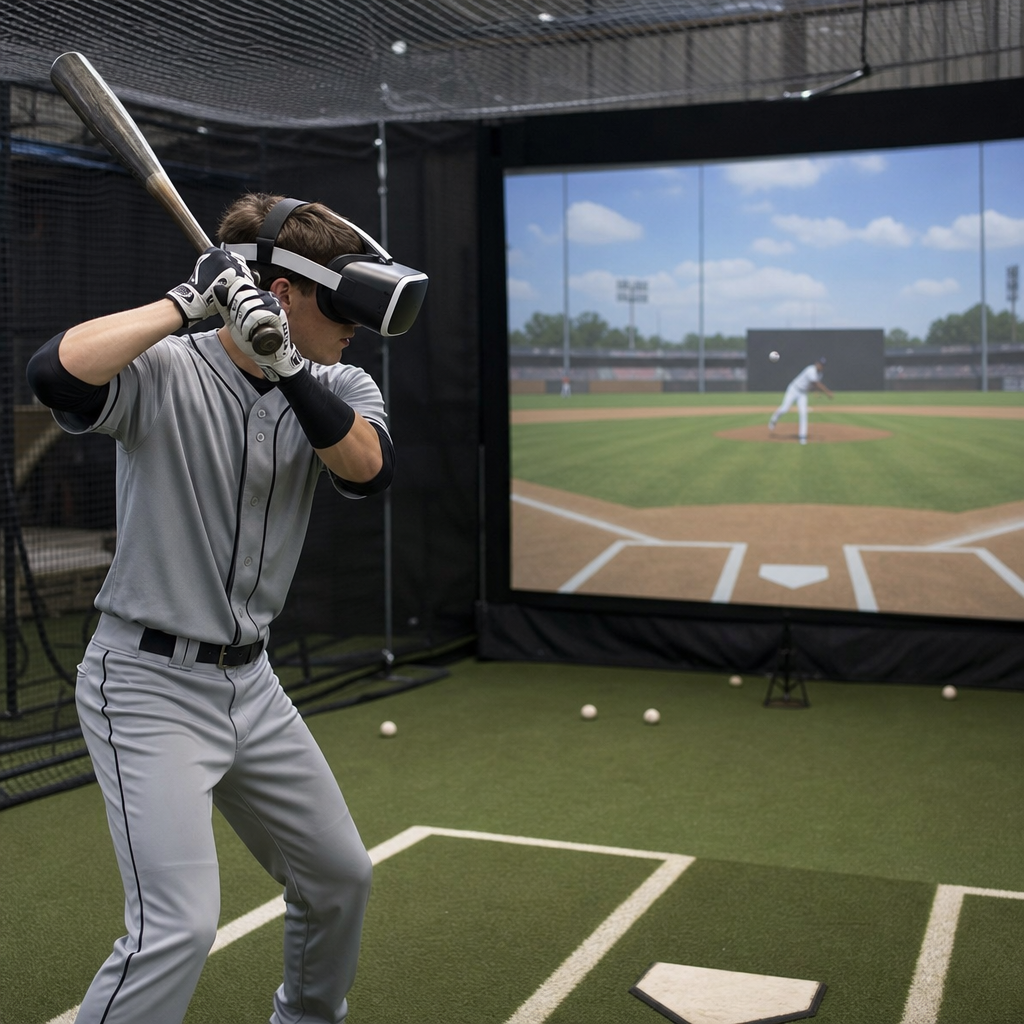
Baseball training is entering a period where virtual reality and augmented reality are no longer experimental add-ons but practical tools that can change how players see pitches, build decisions, recover from mistakes, and prepare for games. In this hub on closing thoughts about innovation and change, virtual reality refers to fully simulated environments viewed through a headset, while augmented reality refers to digital information layered onto the real world through glasses, screens, or mobile devices. Both matter because baseball is a timing sport built on perception, reaction, and repetition, and those ingredients can now be trained with far more precision than traditional batting practice or video review alone. I have worked with player-development staff evaluating training technology, and the most important lesson is straightforward: the best systems do not replace coaches, cages, or bullpens; they make each of those assets more targeted, measurable, and adaptable.
The reason this topic belongs at the center of baseball innovation is that the game has always rewarded teams that convert information into repeatable action. Radar guns, high-speed cameras, TrackMan, Hawk-Eye, force plates, and biomechanical analysis changed pitching labs and hitting programs by showing what the body and ball were doing. VR and AR extend that same logic into the athlete’s decision window, the fraction of a second when a hitter identifies spin, location, and velocity, or when a fielder judges angle, hop, and throw. That makes these tools relevant from youth development to Major League Baseball. They can compress learning time, create safe practice volume, and reveal mental skills that are usually hard to observe. As a hub article, this piece connects the broader themes of innovation, adoption, resistance, and long-term value across the sport.
What Virtual and Augmented Reality Actually Change in Baseball Training
VR changes baseball training by giving players game-like reps without requiring a live pitcher, full field, or physical wear from repeated swings and throws. A hitter can face a digital version of a known opponent, track a left-hander’s release height, recognize a slider shape, and make swing decisions in a controlled setting. Because the software logs timing, chase rate, contact decisions, and visual behavior, coaches can see whether the hitter is improving at the exact skill they want to train. That is a major step forward from generic “see the ball better” advice. In practical terms, teams use VR for pitch recognition, approach planning, and return-to-play progression because it lets athletes train the brain and eyes even when full physical work is limited.
AR changes training in a different way. Instead of replacing the environment, it enhances live work with overlays and cues. A pitcher might see target zones during bullpen sessions. A fielder might use a system that projects route information or reaction prompts during defensive drills. A hitter may review swing-path traces or hot-zone overlays immediately after a round. The key advantage is context. Players stay in the real cage, on the real mound, or on the real field while receiving layered feedback. In my experience, athletes who resist fully immersive systems often adopt AR faster because it feels closer to normal practice. That matters in baseball, where routines are personal and trust is earned slowly.
These technologies also change the economics of repetition. Live at-bats are valuable but limited. Coaches cannot always provide elite velocity, realistic sequencing, or enough left-on-left looks for every hitter in an organization. Minor league affiliates often face resource constraints, travel fatigue, and uneven competition. A strong VR platform can standardize exposure across levels, while AR can support consistent drill design across multiple sites. That does not eliminate coaching differences, but it narrows avoidable gaps. For organizations trying to build a development system rather than a collection of isolated instructors, that consistency is one of the strongest arguments for adoption.
Practical Applications for Hitters, Pitchers, and Fielders
For hitters, the clearest use case is pitch recognition training. Baseball’s hardest task is often not the swing itself but the decision before the swing. Research on batting performance consistently shows that expert hitters pick up early ball-flight information and release cues better than less experienced players. VR can isolate those cues. A coach can program sessions where hitters call out pitch type, take or swing based on zone criteria, or rehearse a count-specific plan against modeled arsenals. Companies serving baseball have built libraries of pitchers and customizable environments for exactly this reason. In plain terms, a hitter can get smarter without burning through hundreds of physically taxing swings.
Pitchers benefit through planning, visualization, and tactical rehearsal. A starter can walk through an opposing lineup and test sequence ideas before a series. A reliever can rehearse entering with runners on base and a specific hitter at the plate. AR can support bullpen command work by highlighting target quadrants or showing intended miss locations. This becomes especially useful when linked with existing ball-tracking systems such as Rapsodo, TrackMan, or Hawk-Eye. Instead of treating command as a vague feel, a coach can connect intent, movement profile, and result. The pitcher sees where the ball should start, where it actually traveled, and how that matches game strategy.
Fielders and catchers have valuable applications too. Outfielders can train first-step reactions, wall awareness, and route efficiency using simulated reads. Infielders can rehearse double-play feeds, slow-roller decisions, and pre-pitch positioning awareness. Catchers can improve receiving, blocking anticipation, and hitter tendency recall. One development director I worked with cared less about “wow factor” than about whether a tool created better pre-pitch preparation. That is the right lens. The best systems strengthen anticipation, because baseball rewards players who solve the problem before the ball arrives.
| Role | VR Use | AR Use | Main Benefit |
|---|---|---|---|
| Hitters | Pitch recognition, count-based decisions, opponent prep | Zone overlays, immediate swing feedback | Better swing decisions and approach consistency |
| Pitchers | Sequence rehearsal, lineup planning, pressure scenarios | Target cues in bullpens, command visualization | Clearer intent and more repeatable execution |
| Fielders | Read simulation, route training, situational reps | Positioning prompts, reaction markers | Faster decisions and cleaner first movements |
| Catchers | Pitch calling scenarios, hitter tendency study | Setup targets, receiving feedback | Improved game management and preparation |
Why These Tools Fit the Modern Development Model
Baseball already moved toward evidence-based development. Driveline Baseball helped popularize data-rich training environments. Major league clubs built pitching labs, hitting labs, and integrated performance departments. NCAA programs followed with force plates, bat sensors, motion capture, and objective testing. VR and AR fit this model because they capture a part of performance that traditional metrics only infer: perception and decision quality under baseball-like constraints. Exit velocity tells you what happened after contact. Swing-decision metrics begin to explain why the contact happened. Immersive technology goes a step deeper by training the recognition process itself.
This matters because player development is no longer linear. Prospects arrive with different backgrounds, movement patterns, and learning styles. Some need explicit feedback. Others improve through external cues and game-like constraints. VR can serve athletes who learn by repetition and pattern exposure, while AR can support those who need real-time prompts inside live movement. A system built around both tools can be individualized without becoming chaotic. In organizations I have seen succeed with technology, the staff starts with a narrow question: do we want better swing decisions against velocity, better pre-series planning, or better defensive reads? They then choose the least disruptive tool that solves that problem. Technology adoption fails when teams buy hardware before defining the behavior they want to change.
Another reason these tools fit modern baseball is workload management. Players cannot always absorb more physical volume, especially during the season. A veteran hitter may not want extra batting practice but still needs to sharpen tracking before facing a high-ride fastball pitcher. A recovering player may be cleared for visual and cognitive training before full on-field intensity. VR becomes a low-impact bridge. AR supports micro-adjustments without adding a separate session. This is where innovation becomes practical rather than flashy: it respects the limits of the body while still expanding the volume of relevant reps.
Limits, Risks, and What Teams Must Get Right
Virtual and augmented reality will not fix poor coaching, bad drill design, or a weak development culture. The first risk is confusing simulation with transfer. If the images are unrealistic, the latency is noticeable, or the task lacks game pressure, the athlete may improve inside the device without improving on the field. That is why validation matters. Teams should compare training outputs with chase rate, contact quality, swing decisions, and game performance over time. If no transfer appears, the intervention needs redesign. A headset session that looks advanced but does not change behavior is just expensive entertainment.
There are also human factors. Some players experience motion discomfort in VR. Others become overloaded by too much information. AR can clutter attention if the overlays are poorly timed or visually noisy. Coaches must manage dosage carefully. Short, focused sessions usually beat long novelty sessions. Privacy and data governance matter as well, especially when biometric or performance data is stored by third-party vendors. Clubs and schools should know who owns the data, how long it is retained, and whether it can be used to train commercial models. These are not side issues. Trust determines adoption.
Cost is another real constraint. Elite systems may be easier for MLB organizations than for high schools or small colleges. Yet the long-term pattern in sports technology is clear: hardware gets cheaper, software gets better, and useful applications move down-market. The important question is not whether every program can buy the most advanced setup today. It is whether coaches understand the training principles well enough to choose a realistic entry point. A tablet-based AR review workflow or shared VR station can still provide value when the purpose is precise. Baseball history shows that competitive advantage rarely comes from owning a tool alone. It comes from integrating the tool into daily habits better than everyone else.
Closing Thoughts on Innovation and Change in Baseball
Innovation in baseball succeeds when it deepens the connection between information and execution. Virtual reality and augmented reality matter because they train the moment where games are actually decided: recognition, anticipation, commitment, and adjustment. They sit naturally alongside ball-tracking systems, biomechanics, scouting reports, and coaching expertise, turning isolated data points into actionable rehearsal. For a sport that can be conservative by culture and brutally competitive by outcome, that combination is powerful. It allows organizations to create more deliberate development plans, gives players clearer feedback, and opens training access that was previously limited by facilities, staffing, or physical wear.
The bigger lesson across this subtopic is that change in baseball is rarely about replacing the old with the new. It is about selecting what improves decisions, preserves health, and scales good coaching. Some innovations disappear because they solve no urgent problem. Others, like high-speed video and pitch tracking, become foundational because they answer questions coaches ask every day. VR and AR are moving toward that second category, especially in hitter preparation, mental rehearsal, and return-to-play progressions. Their future will depend less on novelty than on proven transfer, affordable implementation, and coach education. Programs that win with these tools will be the ones that define clear objectives, test outcomes honestly, and keep the athlete’s experience at the center.
If you are building an “Innovations and Changes in Baseball” content hub, use this page as the bridge between separate topics such as wearable tech, automated ball-strike systems, biomechanics, analytics, and player development strategy. The central takeaway is simple: innovation matters when it helps baseball people make better choices faster and more consistently. Virtual and augmented reality can do exactly that when used with discipline. Review your current training gaps, identify one decision skill that needs improvement, and evaluate whether immersive technology can train it better than your current routine.
Frequently Asked Questions
How can virtual reality improve baseball training in ways traditional practice cannot?
Virtual reality can improve baseball training by giving players access to high-quality repetition without the physical wear and tear that comes with constant live reps. In a VR environment, hitters can face simulated pitchers, track pitch shapes, identify release points, and practice swing decisions over and over again in game-like situations. That matters because baseball is heavily built on recognition, timing, and anticipation. A player does not always need to swing a bat at full speed to get better at reading spin, distinguishing fastballs from breaking balls, or understanding how different counts change pitch selection. VR allows coaches to isolate those mental and visual elements in a way that is difficult to replicate consistently on the field.
Another major advantage is control. Coaches can design specific scenarios, such as two-strike at-bats, high-velocity sequences, or a particular pitcher’s tendencies, and repeat them as often as needed. Instead of waiting for the right practice moment to happen naturally, training staff can build it on demand. This makes VR especially useful for situational preparation and decision-making work. It also creates opportunities for injured players or athletes in lighter workload periods to stay mentally engaged with the game while limiting physical stress. Traditional training still matters deeply, but virtual reality adds a layer of targeted cognitive practice that can sharpen performance between physical sessions.
What role could augmented reality play during baseball practice and game preparation?
Augmented reality has the potential to make baseball instruction more immediate, visual, and actionable because it places useful information directly into the athlete’s real-world environment. Instead of moving a player away from a drill to review video or discuss mechanics, AR can overlay cues, markers, or feedback while the athlete is still on the field, in the cage, or in the bullpen. For example, a hitter might see strike-zone references, bat-path guidance, or timing windows layered onto a live training session. A pitcher might view visual targets, release consistency indicators, or movement patterns without leaving the mound. That kind of instant feedback can tighten the connection between instruction and execution.
AR may also transform pregame preparation. Coaches and players could use smart glasses, tablets, or field-side screens to review defensive positioning, opponent tendencies, pitch usage, or situational tendencies in a format that feels more intuitive than static charts. Because augmented reality blends digital information with the real setting, it can help players connect strategy to actual movement and space. That is valuable in a sport where inches, angles, and split-second reactions matter. While the exact tools will continue to evolve, the broader promise of AR is clear: it can turn information into something players see and apply in real time rather than something they only review after the fact.
Can VR and AR actually help players make better decisions at the plate and in the field?
Yes, one of the strongest cases for VR and AR in baseball is their ability to improve decision-making. At the plate, hitters are constantly solving a complex problem in a fraction of a second. They must recognize pitch type, speed, location, and movement almost immediately, then decide whether to swing. Virtual reality can train that process by exposing players to realistic pitch sequences and helping them build pattern recognition through repetition. Over time, this can improve visual discipline, pitch recognition, and confidence in swing decisions. The goal is not simply more swings, but better choices under pressure.
In the field, augmented and virtual tools can help players rehearse reads, routes, positioning, and reactions. Infielders can study how different hitters produce contact profiles in specific counts. Outfielders can train first-step reactions and angle recognition. Catchers can use immersive tools to study pitcher-hitter matchups, game-calling tendencies, and base-running situations. Because these technologies can recreate game-like pressure and context, they allow athletes to practice decisions that might only appear a few times in a real game. That is important because baseball rewards preparation as much as raw skill. Better decisions often come from seeing the game clearly before the moment arrives, and VR and AR can make that preparation far more deliberate.
Are virtual and augmented reality useful only for elite players, or can younger athletes and developing teams benefit too?
These technologies are not limited to professional organizations, even though elite teams may adopt them first and on a larger scale. Younger athletes, amateur programs, and developing teams can benefit significantly from VR and AR because the underlying needs are the same at every level: seeing the game better, learning faster, and making smarter decisions. For a young hitter, facing consistent simulated pitching can help build comfort with velocity and pitch recognition before stepping into more advanced competition. For a developing pitcher, visual overlays and simulated feedback can reinforce target accuracy, sequencing concepts, and mechanical awareness. For coaches, these tools can make instruction more engaging and easier to personalize.
That said, value depends on implementation. The best results come when VR and AR are used to support sound coaching rather than replace it. Younger players still need physical fundamentals, good communication, and age-appropriate development plans. A headset or AR display is not a shortcut to mastery. However, when used thoughtfully, these tools can accelerate understanding, especially for players who respond well to visual learning. As the technology becomes more affordable and easier to use on mobile devices, training facilities, schools, and travel programs may find that immersive tools are not luxury items but practical extensions of modern player development.
What are the biggest limitations and challenges of using VR and AR in baseball training?
The biggest limitation is that immersive technology cannot fully replace the physical and emotional realities of live baseball. A virtual at-bat can sharpen pitch recognition and mental timing, but it does not perfectly duplicate the feel of a real swing, the pressure of a packed stadium, or the subtle unpredictability of human competition. Similarly, AR can deliver valuable feedback in practice, but too much visual information can become distracting if the system is not designed carefully. Coaches must balance data and instruction with the player’s ability to stay comfortable, focused, and athletic.
There are also practical challenges. Equipment cost, software quality, data accuracy, and ease of use all affect whether a team sees real value. If the simulation is unrealistic, delayed, or overly complex, players may lose trust in it quickly. Motion sickness, headset comfort, and limited practice integration can also slow adoption. Just as important, teams need coaches who understand how to translate technology into actual development goals. The most effective programs are not built around novelty; they are built around clear training outcomes such as improving swing decisions, refining visual tracking, or preparing for a specific opponent. In that sense, the future of VR and AR in baseball is less about flashy gadgets and more about thoughtful application. When the tools are accurate, relevant, and integrated into a larger training philosophy, they can be powerful. When they are used without purpose, they become just another distraction.