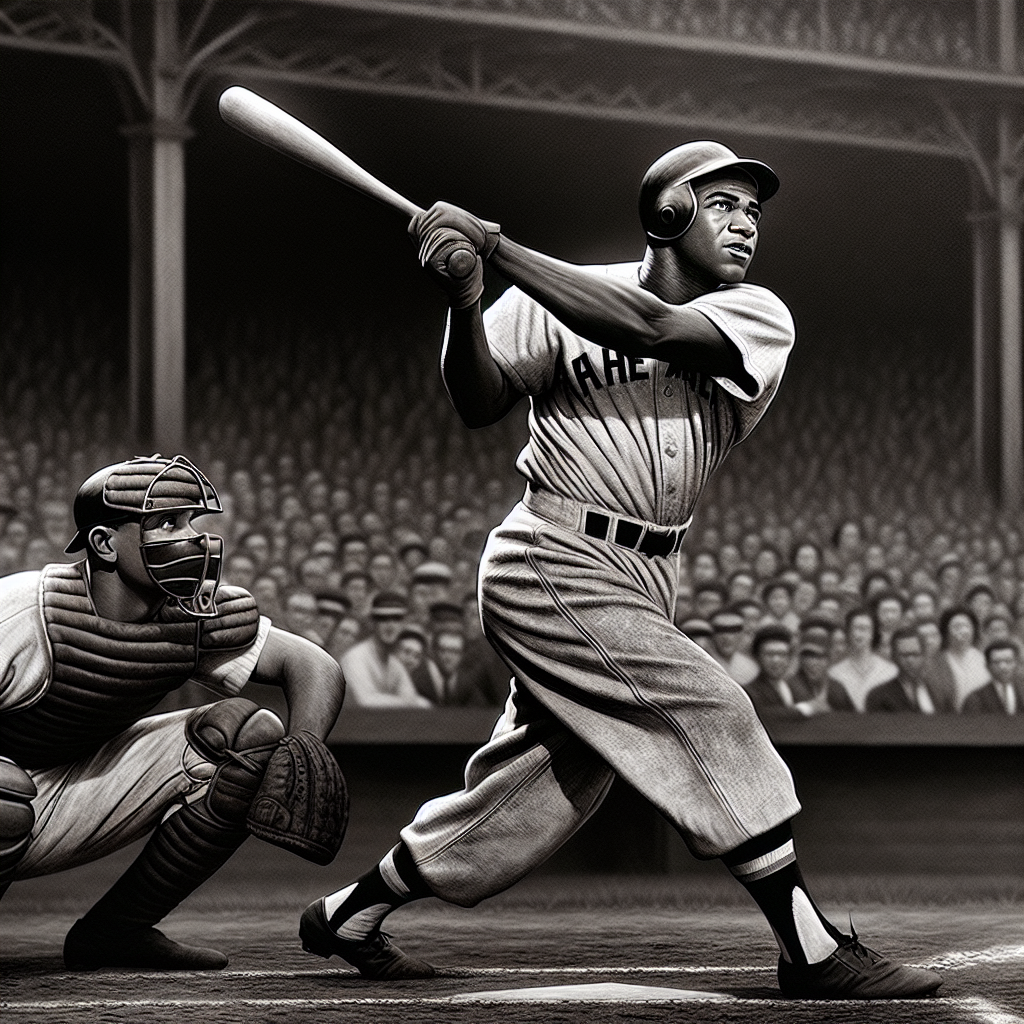
In the rich history of Major League Baseball (MLB), the home run has always been a captivating and celebrated feat. Few, however, have left as indelible a mark on this aspect of the game as Henry Louis “Hank” Aaron. Known as “Hammerin’ Hank,” Aaron’s illustrious career is filled with landmark achievements, none more significant than his pursuit and eventual eclipse of Babe Ruth’s coveted all-time home run record. This article delves deep into Aaron’s historic chase, the milestones along the way, and the remarkable impact his achievements have had on the sport and beyond.
Growing up in Mobile, Alabama, Aaron developed a passion for baseball at a young age. Despite facing the adversities of segregation and limited opportunities, his talent on the field was undeniable. Aaron’s journey to the majors began with the Indianapolis Clowns in the Negro Leagues before he made his way to the Milwaukee Braves in 1954. From that moment, it was evident that the baseball world had not only found a skilled player but a future legend.
Throughout the 1950s and 60s, Aaron consistently demonstrated his prowess with the bat. A master of hitting for both average and power, he steadily climbed up the home run ranks. However, it wasn’t until the late 1960s and early 1970s that the whispers about Aaron breaking Babe Ruth’s long-standing record of 714 home runs began to intensify. What followed was a chapter in baseball history that has since transcended the sport, epitomizing perseverance, excellence, and resilience.
The Early Years and Road to MLB
Hank Aaron’s ascent to baseball greatness began in a vastly different era of professional sports. Born in 1934 in a segregated South, Aaron’s early life was marked by the social dynamics of the time. Despite these challenges, his love for the game flourished, and he honed his skills playing sandlot ball before eventually joining the semi-pro Mobile Black Bears. This local exposure was crucial, as it prepared him for the more competitive level of play he would soon encounter.
Aaron’s talents quickly caught the eye of Negro League scouts, and at 18, he signed with the Indianapolis Clowns. Playing for the Clowns was a pivotal step in his career, showcasing his extraordinary talent to a broader audience. His short stint in the Negro Leagues helped solidify his reputation, and in 1952, the Boston Braves purchased his contract, ushering him into the world of Minor League Baseball.
In the minors, Aaron continued to display exceptional batting prowess. His versatility as a hitter, combined with his strong work ethic, made him one of the league’s standout players. By 1954, he had made the leap to the majors with the Milwaukee Braves, where he quickly established himself as a key player. Aaron’s journey from the Negro Leagues to the MLB was not only a personal triumph but also a significant chapter in the integration of baseball.
Consistency and Excellence
Once integrated into the majors, Aaron’s career quickly took off. Right from his debut season in 1954, he showcased a remarkable blend of power, contact, and fielding ability. Over the next two decades, Aaron’s consistency was nothing short of extraordinary. It was rare for him to miss games, and he remarkably remained an offensive powerhouse throughout his career.
This steady performance saw him racking up impressive numbers year after year. For Hank Aaron, home runs were a significant part of the equation, but his overall contribution was equally impressive. With a lifetime batting average of .305 and over 3,700 hits, Aaron’s impact went beyond just swinging for the fences. He was a complete player.
Aaron’s consistency earned him numerous accolades, including the 1957 National League (NL) MVP award, where he led the Braves to a World Series title. Throughout the 1960s and early 1970s, as each season passed, Aaron moved closer to Babe Ruth’s seemingly unassailable home run record.

The Chase for the Record
The anticipation surrounding Aaron’s pursuit of Babe Ruth’s home run record reached a fever pitch by the early 1970s. Every time Aaron stepped to the plate, the possibility of history being made was palpable. He ended the 1973 season just one home run shy of Ruth’s 714, ensuring that the 1974 season opener would be a momentous occasion.
On April 8, 1974, in a game against the Los Angeles Dodgers, Aaron stepped in to face pitcher Al Downing. The atmosphere was electric, a mix of excitement and tension, with millions tuned in nationwide. In the fourth inning, with the count at 1-0, Aaron connected with a fastball, sending it soaring over the left-field fence at Atlanta’s Fulton County Stadium. The celebration that followed was extraordinary, as Aaron triumphantly rounded the bases and touched home plate, officially becoming the new home run king with 715 career homers.
A record that many thought untouchable had been surpassed, and Hank Aaron had cemented his legacy as one of baseball’s greatest figures. It was a moment that transcended sports, resonating deeply with history, culture, and the ongoing struggle for civil rights in America.
Facing Adversity and Racism
Aaron’s path to this historic milestone was not without its challenges. As he approached Ruth’s record, he faced a barrage of racial abuse and threats. For many, the idea of a black man surpassing a white icon like Babe Ruth was unacceptable, and Aaron endured vitriolic racism from some quarters of the public.
The hate mail, threats, and demeaning messages were a stark reminder of the era’s racial tensions. Aaron received so many threatening letters that the FBI had to become involved, highlighting the dangerous undercurrent that permeated his chase for the record. Yet, amid this adversity, Aaron displayed immense courage and resolve, focusing on his goal rather than the vitriol directed at him.
His stoic perseverance in the face of such challenges not only made his achievement all the more remarkable but also elevated him to a symbol of strength and dignity in the fight against racial injustice. Aaron’s story is a testament to triumph and an enduring example of courage under immense pressure.
The Legacy of Hank Aaron
Hank Aaron’s legacy extends far beyond the home run record. His name is synonymous with excellence, integrity, and resilience. After his retirement in 1976, Aaron’s influence continued to be felt across the baseball world and beyond. His career statistics are nothing short of astounding: 755 home runs, 2,297 runs batted in (RBIs), 3,771 hits, and countless other milestones and accolades.
He was elected to the Baseball Hall of Fame in 1982, a fitting recognition of his indelible impact on the game. Beyond the numbers, Aaron’s influence can be seen in the opportunities he helped create for future generations of African American players. He was a trailblazer who shattered barriers and paved the way for others to follow in his footsteps.
In his post-playing years, Aaron continued to be a prominent figure in baseball and the community. He was involved in numerous charitable endeavors, particularly focusing on education and youth programs. His life and career embodied the principles of hard work, humility, and perseverance, and he remains an enduring role model for athletes and non-athletes alike.
Conclusion
Hank Aaron’s journey in baseball is a story of extraordinary skill, unmatched consistency, and profound perseverance. His pursuit and surpassing of Babe Ruth’s home run record is a historic milestone that transcends the sport, serving as both a symbol of athletic greatness and a beacon of hope and resilience in the face of adversity.
Aaron’s achievements on the field are complemented by his character and contributions off it. In an era marked by societal upheaval and racial tension, Aaron’s stoic determination and relentless drive provided inspiration to countless individuals. His legacy is a multifaceted one, reflecting not just his prowess as one of the greatest baseball players of all time, but also his role as a trailblazer in the ongoing struggle for equality and justice.
As we reflect on the legacy of Hank Aaron, we remember a man who exemplified the very best of what sportsmanship and humanity can offer. His records and statistics serve as benchmarks of greatness, but it is his resilience, grace under pressure, and unwavering commitment to excellence that truly define Hank Aaron’s enduring legacy in the annals of baseball history.
Frequently Asked Questions
1. Who was Hank Aaron and what made his home run record chase historically significant?
Hank Aaron, often known as “Hammerin’ Hank,” was a professional baseball player whose career spanned 23 years, primarily with the Milwaukee/Atlanta Braves. What makes his chase of the home run record so significant is its context and the era during which it occurred. Aaron was pursuing one of the most venerated records in Major League Baseball, the career home run record held by the legendary Babe Ruth, who had hit 714 home runs. Babe Ruth’s record was not just a number; it was a symbol of baseball supremacy and had stood unchallenged since 1935. Aaron’s pursuit of this record captured the public’s imagination and was a testament to both his talent and perseverance in the face of tremendous pressure, including facing adversity and racial challenges. His determination and success resonated across the nation and beyond, transcending the sport itself.
2. How did Hank Aaron manage the pressure and challenges he faced during his pursuit of Babe Ruth’s record?
The chase for Babe Ruth’s home run record was pressure-packed for Hank Aaron, not only due to the weight of baseball history but also because of the sociopolitical climate of the era. As Aaron closed in on Ruth’s record, he received thousands of letters, many of them supportive, yet an alarming amount filled with hate and racism, denouncing him simply because of the color of his skin. It was a tumultuous period in American history, with Civil Rights Movement activities still resonating across the country. Despite the pressure and threats, Aaron remained remarkably composed and focused on his goal. He credited his success to his upbringing and personal resolve. He leaned on a close circle of family and friends, his unyielding determination, and his love for the game. He often spoke about how he didn’t seek to be a hero but simply wanted to excel at his craft and let his performance on the field speak for itself.
3. What are some of the key milestones and moments during Hank Aaron’s chase of the home run record?
Hank Aaron’s journey to surpassing Babe Ruth’s home run record was marked by numerous unforgettable milestones. One pivotal moment came on April 8, 1974, when Aaron hit his record-breaking 715th home run at Atlanta-Fulton County Stadium off Los Angeles Dodgers pitcher Al Downing, passing Babe Ruth’s longstanding mark. This historic home run sent ripples throughout the sports world and solidified Aaron’s place in history. In addition to this crowning achievement, Aaron’s career was dotted with consistency and excellence. He achieved 30 or more home runs in a season 15 times and batted over .300 in 14 seasons. Aaron’s durability and his exceptional consistency over more than two decades were as remarkable as his power-hitting prowess, contributing to his ultimate success in exceeding 755 home runs by the end of his career.
4. What legacy did Hank Aaron leave in baseball and how is it perceived today?
Hank Aaron’s legacy in baseball is not merely defined by statistics and records but by his embodiment of grace under pressure and his significant impact on both the sport and society. He pioneered the path for African-American athletes at a time when racial tension was high and became a symbol of hope and progress. Aaron’s career home run record stood from 1974 until 2007, serving as a benchmark for excellence and resilience. Beyond home runs, Aaron also held numerous other records and received countless accolades, including the National League MVP Award in 1957 and the Presidential Medal of Freedom in 2002. To this day, Aaron is widely respected and celebrated not just for his athletic accomplishments but for his humanitarian work and his role in furthering racial equality. His integrity, humility, and fierce competition endure as pillars of what it means to be an exceptional athlete and individual.
5. How did Hank Aaron’s career after breaking the home run record unfold, and what contributions did he make post-retirement?
After breaking Babe Ruth’s record, Hank Aaron continued to play three more seasons, ending an extraordinary career with a total of 755 home runs. He retired after the 1976 season but remained actively involved in baseball and beyond. Aaron transitioned into various executive roles within the Atlanta Braves organization, contributing to player development and diversity initiatives. He was an advocate for fairness and inclusion within the sport and used his platform to support numerous charitable causes, advocating for education, youth empowerment, and civil rights, solidifying his role as a significant social activist. Aaron authored several books, sharing inspiring stories of his life and career, and became a revered figure offering guidance and inspiration to younger generations. His post-retirement life reflected the same principles he championed on the field: dedication, perseverance, and a fervent belief in the possibility of change and equal opportunity for all.