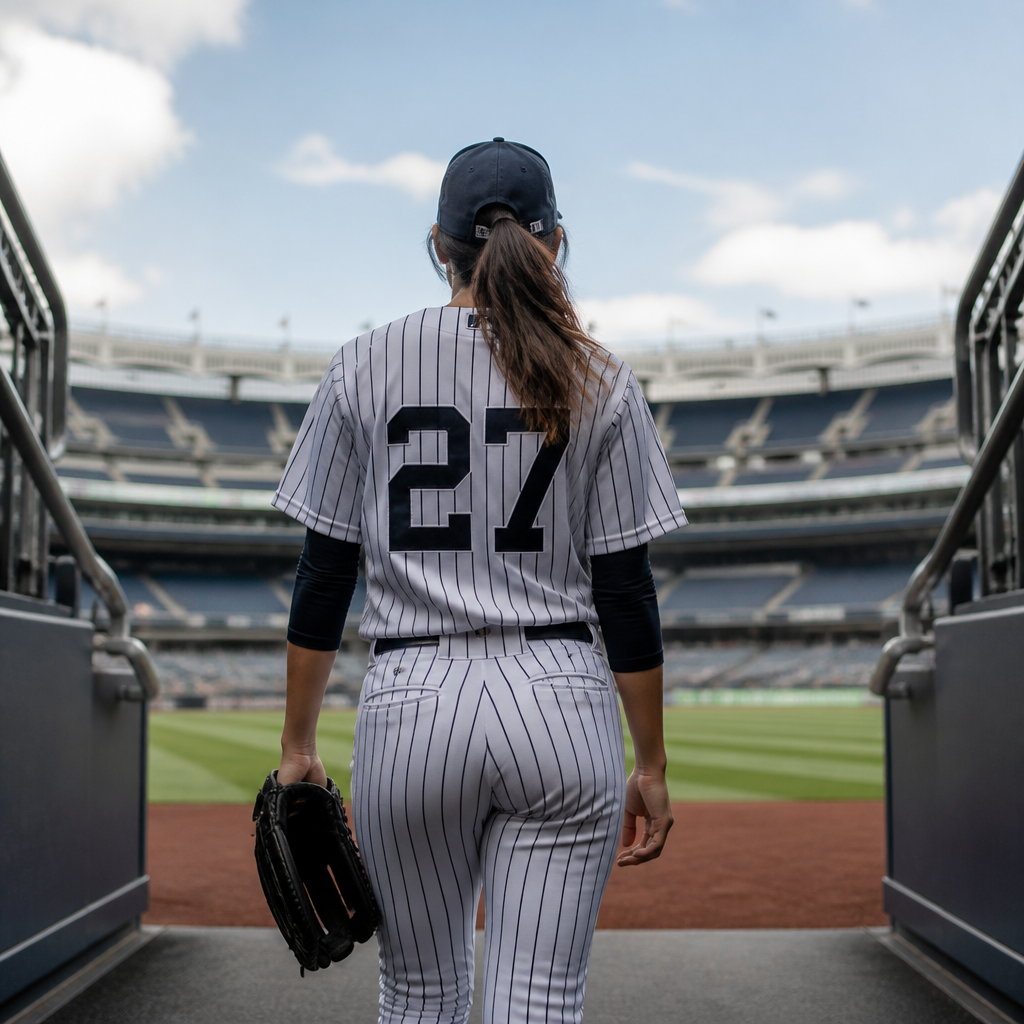
Women have been part of baseball for nearly as long as the sport has existed, yet their path from local sandlots and semiprofessional clubs to the edges of the major leagues has rarely been told as one connected journey. In baseball, “minor leagues” can describe formal farm systems, independent circuits, developmental academies, college summer leagues, and the many unofficial proving grounds where players, coaches, umpires, broadcasters, and executives build careers. The “majors,” meanwhile, means more than a spot on a Major League Baseball roster. It includes front office leadership, coaching staffs, scouting departments, broadcast booths, ownership groups, and the cultural center of the game. Understanding women’s journey in baseball matters because it reveals how talent advances when opportunity expands, how institutions change slowly under pressure, and why representation in a national pastime still shapes who believes they belong on the field.
I have worked on baseball content and player development research long enough to see the pattern repeat: women rarely lack ability, preparation, or baseball intellect; they are more often asked to clear barriers that men never notice. That is why this subject cannot be reduced to novelty stories. It is a history of participation, exclusion, adaptation, and measurable progress. It stretches from nineteenth-century women’s clubs and barnstorming teams to the All-American Girls Professional Baseball League, from college softball players who transitioned into baseball to women now working in biomechanics, analytics, and player development. The hub for this miscellaneous branch of women in baseball must therefore connect many threads: playing opportunities, labor structures, cultural myths, international tournaments, media visibility, and the practical question every reader asks next—what has actually changed, and what still needs to happen?
A clear definition helps. Women in baseball refers specifically to women participating in baseball, not softball, although the two sports often intersect through shared training pipelines and limited opportunities. A player trying to reach professional baseball needs access to live pitching, defensive reps on a full baseball field, strength and conditioning, objective evaluation, and competition against quality opponents over time. The same principle applies to nonplaying careers. A woman seeking advancement as a scout, coach, analyst, or executive needs decision-making authority, a credible track record, mentors, and the chance to fail, adjust, and rise like anyone else in the baseball industry. The story, then, is not simply whether women can belong in baseball. History has already answered that. The real issue is how pathways are built, blocked, and rebuilt.
Baseball’s record shows women have repeatedly entered the game when given a route. Lizzie Murphy played first base against major league stars in exhibition games in the 1920s. Toni Stone, Mamie Johnson, and Connie Morgan played in the Negro Leagues in the 1950s, proving women could compete in high-level men’s professional environments under intense scrutiny. Ila Borders pitched professionally in men’s independent leagues in the 1990s and became a reference point for modern discussions about women on the mound. More recently, MLB organizations have hired women into on-field coaching and development roles, and women’s baseball national teams have created visible international standards. Each example matters on its own, but together they show that progress in baseball has come through repetition, evidence, and persistence rather than one breakthrough moment.
Early pathways: barnstorming teams, exclusion, and persistence
Women’s baseball history began in scattered local clubs, factory teams, school teams, and touring sides that often had to market themselves as entertainment before audiences would accept them as athletes. In the late nineteenth and early twentieth centuries, Bloomer Girls teams traveled widely, mixing baseball skill with showmanship because promoters believed spectators needed both to buy tickets. That compromise reflected the era’s restrictions, but it also kept women in the game. These teams gave players innings, public attention, and practical baseball education. At the same time, formal institutions rarely invested in lasting women’s leagues, which meant progress depended on unstable gate receipts and individual promoters.
Exclusion hardened as organized baseball became more bureaucratic. By the mid-twentieth century, opportunities for girls to keep playing baseball narrowed sharply once youth divisions separated by gender steered them toward softball. That diversion had consequences. A player developing in softball can gain elite hand-eye coordination, arm strength, and competitive experience, yet she still loses baseball-specific reps: leads off first, turns around the bag, reads a larger field, and adjusts to overhand pitching shapes and timing. I have seen this issue in development conversations again and again. Talent is not the bottleneck; accumulated baseball reps are. When those reps disappear at age twelve or thirteen, the long-term pipeline weakens.
The All-American Girls Professional Baseball League, founded in 1943, remains the most famous women’s professional baseball structure in the United States. It offered salaries, travel, uniforms, league governance, and sustained competition for more than a decade. But it also required players to navigate gendered expectations that male professionals did not face, including beauty training and rigid conduct rules. The league proved that women’s baseball could draw crowds and produce star players, yet its legacy is mixed because it survived partly by packaging players within acceptable cultural norms. Still, it created a benchmark: women’s baseball works when administrators commit resources, scheduling, and promotion over multiple seasons.
The long climb from scattered opportunities to professional credibility
After the AAGPBL folded in 1954, women who wanted baseball careers entered a fragmented landscape. Some played in amateur adult leagues, some joined military or industrial teams, and some shifted into softball because scholarship and competition structures were simply more available. This period is important because it explains why women’s baseball progress can look slower than it should. Baseball development is cumulative. Miss several years of quality competition, and the gap becomes structural, not personal. Men moved through Little League, high school baseball, college programs, summer leagues, and farm systems. Women often had to stitch together private training, isolated teams, and rare tournaments.
Independent and semiprofessional baseball became crucial proving grounds. Ila Borders pitched in college baseball at Southern California College and later in the St. Paul Saints organization and other independent clubs. Her career mattered because it replaced abstraction with performance data. She threw strikes, logged innings, handled clubhouse pressure, and answered the practical baseball question that matters most: can this player help a team win? Similar importance attaches to women who entered men’s leagues internationally, whether in Canada, Japan, Australia, or Latin America. Every credible appearance weakens the old argument that women’s baseball belongs only in exhibitions.
International competition has also transformed legitimacy. The Women’s Baseball World Cup, organized under the World Baseball Softball Confederation, gave national teams a regular elite platform. Japan has been especially influential, winning multiple world titles through disciplined development and technical precision. The Japanese model shows what happens when girls can access organized coaching earlier and more consistently. National team tournaments create scouting opportunities, performance benchmarks, and film libraries that evaluators can use. They also give young players visible role models. Visibility is not a cosmetic issue in baseball; it affects recruitment, sponsorship, and whether local organizers can justify starting teams.
Where women are advancing in today’s baseball industry
The route to the majors now runs through more than the batter’s box. Women have made notable gains as coaches, analysts, executives, trainers, and umpires, and these gains matter because they normalize baseball authority. Kim Ng became MLB’s first woman general manager when the Miami Marlins hired her in 2020, after decades in front offices with the White Sox, Yankees, Dodgers, and MLB headquarters. Alyssa Nakken became the first woman to coach on the field in a major league regular-season game with the San Francisco Giants in 2022. Rachel Balkovec managed the New York Yankees’ Low-A affiliate in 2022, the first woman to manage at that level in affiliated baseball. Bianca Smith reached professional baseball coaching with the Boston Red Sox organization. These are not symbolic footnotes. They show organizations trusting women with player preparation, roster decisions, and daily competitive operations.
Baseball operations departments have changed in parallel. Modern clubs rely on TrackMan, Hawk-Eye, Rapsodo, force plates, motion-capture systems, and integrated performance models. That shift has opened doors for professionals whose authority comes from analysis, communication, and evidence rather than old assumptions about who “looks” like a baseball lifer. Women now work in research and development, biomechanics, sports science, medical coordination, mental skills, and international scouting. In my experience, the clubs making the fastest progress treat gender inclusion as a talent acquisition issue. If an organization ignores half the potential expertise pool, it voluntarily weakens itself in a sport where marginal advantages matter.
| Area | Common entry path | Why it matters |
|---|---|---|
| Playing | Youth baseball, travel ball, national teams, independent leagues | Builds game reps and visible performance records |
| Coaching | College roles, player development internships, minor league staffs | Creates on-field authority and instructional impact |
| Front office | Analytics, scouting support, operations assistant roles | Influences hiring, roster construction, and policy |
| Umpiring and media | Amateur circuits, training schools, local broadcasts | Shapes rules enforcement and public perception |
Broadcasting is another major pathway. Women such as Jessica Mendoza, Melanie Newman, and Heidi Watney have expanded the public face of baseball analysis and reporting. Serious broadcast work requires command of pitch design, roster strategy, labor context, and game rhythm, not just presentation skill. When audiences routinely hear women explain tunneling, swing decisions, defensive positioning, or service-time implications with precision, baseball literacy broadens and resistance weakens. Media visibility alone does not change hiring, but it influences who is treated as credible before a job interview even begins.
The barriers that still shape women’s baseball careers
The most persistent obstacle is the pipeline gap. Boys usually access baseball-specific competition at every youth stage; girls are often redirected to softball, even when they want baseball. That means fewer teams, fewer tournaments, fewer trained coaches, and fewer scouts evaluating girls as baseball players. Travel costs compound the issue. Families may need to cross state lines for girls’ baseball events or seek specialized instruction unavailable locally. By the time a talented player reaches late adolescence, she may be athletically advanced but baseball inexperienced relative to male peers who have logged thousands more reps.
Bias also remains practical, not merely attitudinal. Hiring in baseball often depends on networks, recommendations, and comfort under long, demanding schedules. If decision-makers have never worked with women in baseball roles, they may default to familiar candidates and call it “fit.” Clubhouses, travel arrangements, facilities, and reporting structures can become friction points when organizations treat a woman’s presence as an exception to manage rather than normal staffing to support. The answer is not performative messaging. It is policy: equitable hiring processes, clear advancement ladders, safe reporting channels, and resources that let people do the job without carrying the burden of being the first.
There is also a developmental truth the sport must accept. If women are to reach higher levels as players, baseball cannot rely on isolated prodigies. It needs volume. That means youth leagues welcoming girls, high-level girls’ baseball tournaments, college club and varsity experiments, international exchanges, and independent teams willing to evaluate performance honestly. One standout pitcher or infielder will always be treated as an exception. Hundreds of well-trained players create a market, and markets change institutions faster than inspirational anecdotes do.
What meaningful progress looks like next
The next phase of women’s baseball will be defined by infrastructure. More girls’ baseball programs are emerging through initiatives tied to USA Baseball, MLB-supported development efforts, and regional organizations, but scale is the real test. Success means a ten-year-old can find a team nearby, a fifteen-year-old can face strong competition regularly, and a twenty-two-year-old can choose among credible playing or industry roles without starting from scratch. It also means data collection: participation numbers, retention rates, hiring outcomes, and promotion timelines. Baseball respects what it measures.
For readers exploring this hub, the central lesson is simple. Women have already proven they belong in baseball as players, coaches, executives, analysts, umpires, and broadcasters. The journey from the minor leagues to the majors has never been about permission from history; it has been about access to repetitions, institutions, and decision-making power. The sport improves when those access points widen, because baseball is better at identifying and developing talent when its gates are open. If you run a league, hire, coach, invest, or cover the game, start with one practical step: create a real pathway, then make sure women can use it repeatedly and visibly.
Frequently Asked Questions
What does “from minor leagues to majors” really mean in the context of women’s baseball?
In this context, “from minor leagues to majors” is about far more than a single promotion from one roster to another. For women in baseball, the phrase captures a long, layered journey through the sport’s many proving grounds: youth leagues, local sandlots, high school and college programs, independent teams, developmental academies, international competition, coaching pipelines, front-office internships, umpire schools, broadcasting booths, and player development roles. Not every path is formal, and that is exactly the point. For much of baseball history, women have had to build careers in spaces that were not always designed to welcome them, which means their rise has often come through persistence, reinvention, and excellence across multiple parts of the game.
It also helps to understand that “the majors” does not only refer to appearing on a Major League Baseball field as a player, though that remains one of the sport’s most visible barriers. The majors can also mean reaching baseball’s highest levels as a coach, scout, executive, analyst, strength specialist, athletic trainer, broadcaster, or umpire. Women have increasingly entered those roles in recent decades, showing that the route to the top of the sport is broader than traditional narratives suggest. Seen this way, the journey is connected: experience in local and lower-level baseball environments often becomes the foundation for leadership at the game’s highest levels.
That broader definition matters because it tells a truer story. Women have always been part of baseball’s ecosystem, even when they were left out of its official mythology. Their movement through the sport has not been linear, but it has been real, influential, and historically significant.
Have women historically played baseball, or is this a relatively modern development?
Women have played baseball for nearly as long as the sport itself has existed. This is not a recent trend or a modern invention. Across the 19th and early 20th centuries, women participated in barnstorming teams, local clubs, school competitions, community games, and semiprofessional settings. In some eras, they drew large crowds, challenged expectations, and proved that baseball skill was never limited by gender. What changed over time was not women’s interest in the game, but the visibility and legitimacy granted to their participation.
One of the clearest examples of women’s longstanding place in baseball came during World War II, when the All-American Girls Professional Baseball League brought national attention to women playing at a high level. But that league should be seen as one chapter, not the whole story. Before it, women were already playing. After it, women continued to compete in amateur, semipro, and international baseball, even as opportunities narrowed and public memory often shifted their story toward novelty rather than continuity.
That historical erasure is why the phrase “women’s journey in baseball” is so important. It reconnects moments that are too often treated as isolated exceptions. Women did not briefly appear in baseball and then vanish. They remained in the sport in different forms, sometimes visible and sometimes not, working through limited access to teams, facilities, scouting networks, and financial support. Recognizing that longer history helps explain both the progress that has been made and the barriers that still exist.
What kinds of barriers have women faced in trying to advance through baseball’s development system?
The barriers have been structural, cultural, and practical all at once. Structurally, baseball’s pipeline has long been organized around boys’ and men’s participation, which affected everything from youth opportunities to scouting exposure. Many girls who loved baseball were steered toward softball, not because softball lacks value, but because baseball institutions often treated it as the default path for female athletes. That meant fewer girls had access to sustained baseball coaching, elite competition, recruiting networks, and the repetition needed to keep advancing through the game’s traditional channels.
Culturally, women in baseball have often had to prove not only that they belong, but that their presence is not symbolic. Players, coaches, umpires, and executives have all faced skepticism rooted in outdated assumptions about knowledge, authority, leadership, and athletic capacity. In many cases, women were judged as representatives of their gender rather than as individuals developing a craft. That creates extra pressure and a smaller margin for error, especially in a sport where advancement often depends on trust, repetition, and being given time to grow.
Practical barriers matter too. Limited roster spots, inconsistent funding, fewer all-girls baseball programs, reduced media coverage, and lack of long-term institutional investment can all slow progress. For non-playing roles, women have also faced challenges in hiring, networking, mentorship, and advancement into decision-making positions. Even today, many of the women who succeed in baseball do so by navigating systems that were not originally built with them in mind. Their progress is meaningful not because the barriers are gone, but because they have continued to push through them and reshape the sport along the way.
In what ways are women reaching the “majors” today, even if they are not yet common on MLB playing rosters?
Women are reaching baseball’s highest levels in more ways than ever before. While MLB playing rosters remain the most visible frontier, women have made important gains as coaches, coordinators, analysts, executives, medical professionals, strength and conditioning specialists, broadcasters, and scouts. These roles are not peripheral. They influence player development, strategy, health, communication, organizational culture, and the long-term direction of clubs. In other words, women are not only entering baseball’s top tier; they are actively shaping how the modern game operates.
This matters because baseball has always been bigger than the 26-player roster. A major league organization depends on a vast network of expertise, and women are increasingly part of that network at meaningful levels. Their advancement often begins in what might loosely be called the “minor league” stage of a career: working in player development, serving in collegiate summer baseball, building experience in independent leagues, covering the sport in smaller media markets, or gaining on-field credibility in instructional and developmental environments. Those experiences create the resume, relationships, and authority needed to move upward.
There is also a growing international dimension to women’s baseball. National teams, global tournaments, and cross-border development programs have given women more opportunities to compete, coach, and be evaluated in serious baseball settings. While the path is still narrower than it should be, the overall trend is clear: women are steadily expanding their presence at the highest levels of the sport, and their success is making it harder for baseball institutions to treat inclusion as optional or exceptional.
Why is it important to tell women’s baseball history as one connected journey rather than as a series of isolated milestones?
Because isolated milestones can be inspiring, but they can also be misleading. If women’s presence in baseball is framed only through rare firsts, headline moments, or novelty stories, it becomes easy to miss the deeper reality: women have continuously contributed to the game, often through overlapping roles and generations. Telling the story as one connected journey reveals that progress did not appear out of nowhere. It was built by players who kept competing when leagues disappeared, by coaches who taught the game without much recognition, by umpires and executives who entered male-dominated spaces, and by advocates who kept creating opportunities where few existed.
A connected narrative also shows how baseball development actually works. Very few people, in any role, leap straight to the top. Careers are built in smaller parks, regional leagues, instructional settings, and less glamorous jobs. That is as true for women as it is for anyone else in baseball. Seeing the full pathway helps readers understand that women’s advancement has always depended on access to repetitions, mentorship, competition, and institutional trust. It is not a side story to baseball history; it is baseball history.
Perhaps most importantly, telling the story this way changes what future generations can imagine. When girls, young women, and aspiring professionals see that there is a lineage behind them, they are more likely to view their own ambitions as realistic rather than exceptional. And when fans, teams, and the broader baseball community understand that women’s place in the sport has deep roots, the conversation shifts from whether they belong to how the game can better support their continued rise.