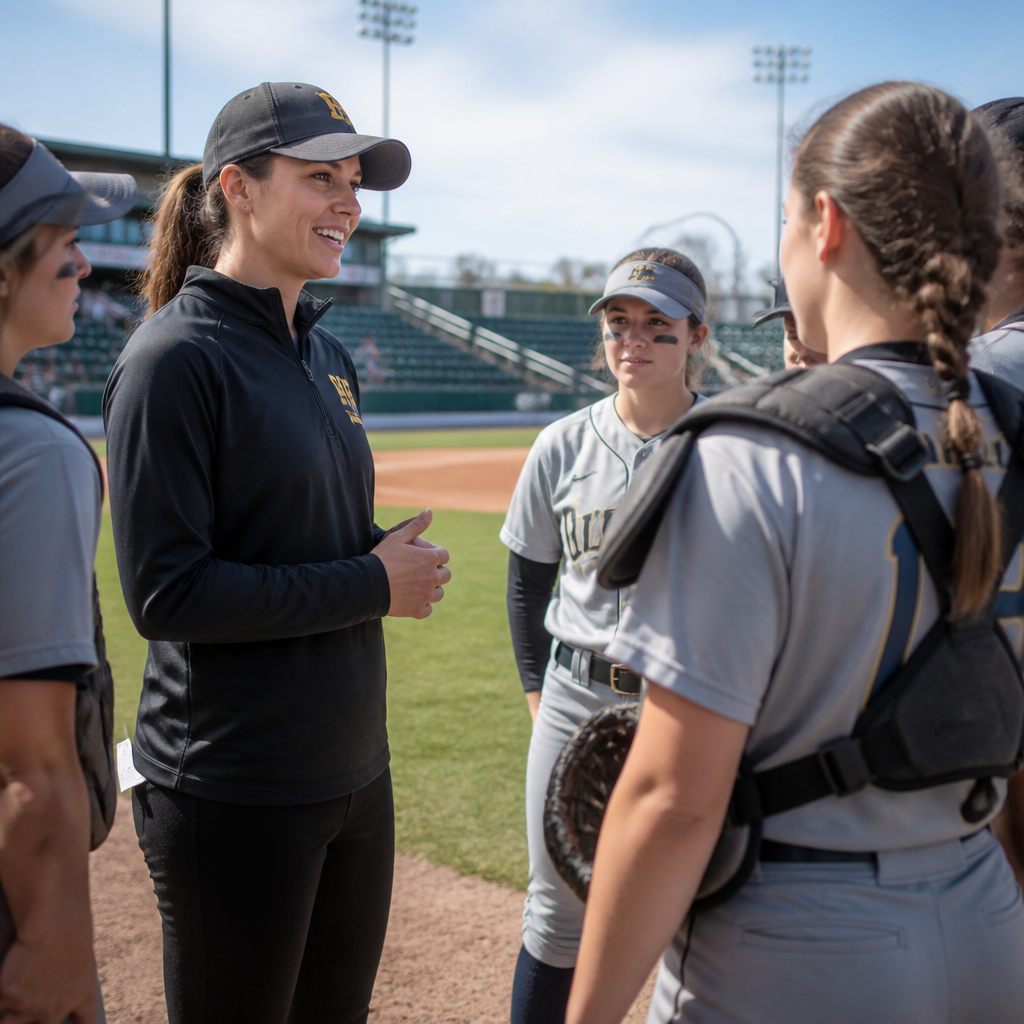
Baseball has long been framed as a men’s game, yet the field has never belonged to one gender alone. “Field of Dreams: Women Creating Opportunities in Baseball” is ultimately about access: who gets to play, coach, scout, lead, invest, report, and shape the future of the sport. Within the broader women in baseball conversation, the miscellaneous category matters because many of the most important advances do not fit neatly into one box. They happen in community programs, front offices, independent leagues, youth clinics, media platforms, academic research, equipment design, and local advocacy. Together, these efforts expand the baseball pipeline for girls and women at every level.
When I have worked on baseball development projects, the biggest lesson has been simple: opportunity in this sport is rarely created by a single breakthrough. It comes from a network of decisions that lowers barriers one by one. A girls’ clinic introduces basic skills. A school athletic director approves field time. A parent finds a travel team. A college coach notices talent. A women-focused showcase draws scouts. A front office hires a female analyst, then a coordinator, then a director. Progress in baseball is cumulative, and women creating opportunities in baseball are often building systems, not just headlines.
That is why a hub article for this subtopic should define the landscape broadly. Opportunities in baseball include playing opportunities, employment opportunities, leadership opportunities, visibility opportunities, and ownership of baseball knowledge. They also include practical supports such as safe facilities, properly sized uniforms, mentoring, transportation, funding, and media coverage that treats women as baseball professionals rather than novelties. When these supports are absent, talent leaves the game early. When they are present, the sport gets better competitors, better decision-makers, and a broader fan base.
The importance is measurable. Major League Baseball and USA Baseball have invested in initiatives such as the Trailblazer Series, Elite Development Invitational, and girls baseball programming to expand entry points for young athletes. Women now work across MLB organizations in operations, player development, biomechanics, analytics, strength and conditioning, and broadcasting. The Baseball For All movement has created tournaments and advocacy pathways for girls who want baseball rather than being redirected to softball. Internationally, women’s baseball has grown through WBSC competition, giving more players a visible standard to pursue. These examples prove that women in baseball are not waiting for permission; they are designing pathways where none existed.
Why opportunity gaps persist across baseball
The first question many readers ask is direct: if girls and women love baseball, why are opportunities still limited? The answer is structural. Baseball in many regions channels girls toward softball at an early age, which means fewer girls receive baseball-specific coaching, game reps, and long-term development. By adolescence, the shortage becomes self-reinforcing. Coaches may claim there are not enough girls for teams, while girls drop out because there are no teams, no peer group, and no clear future. This is not a talent problem. It is a pathway problem.
Another barrier is cultural expectation. Even now, some families, administrators, and coaches assume baseball is unusual for girls, particularly once players reach middle school or high school. That assumption affects roster decisions, field allocation, scholarship attention, and simple confidence. I have seen strong players spend more energy proving they belong than refining swings, command, or defensive reads. Opportunity creation therefore has two sides: building programs and changing default beliefs. The best organizations do both at once by offering real competition and normalizing women’s presence in every baseball setting.
Resource inequality also matters. Access to private instruction, travel ball, quality bats, catcher’s gear, and tournament fees can determine whether an athlete stays in baseball. The same is true for career paths off the field. Internships in professional baseball are often low paid and concentrated in expensive cities, limiting entry for many women. Small interventions make a difference: stipends, host housing, intentional recruitment, and mentorship systems consistently widen participation. Opportunity is rarely abstract. It usually looks like money, time, transport, coaching, and someone opening a door before talent is obvious to everyone else.
How girls and women are creating new playing pathways
Women creating opportunities in baseball often start with the most visible need: places to play. Organizations such as Baseball For All have been central to this work by running all-girls tournaments, clinics, and advocacy campaigns that let athletes develop without constantly being isolated as the only girl on a roster. That does not replace coed baseball; it strengthens the ecosystem. Some players thrive on coed teams, others benefit from girls-specific competition, and many need both. The point is optionality. A healthy baseball pipeline offers multiple on-ramps rather than a single narrow route.
Youth showcases and national development events also matter because they convert participation into recognition. MLB and USA Baseball programs, including the Trailblazer Series and the girls baseball segments connected to national development efforts, provide elite instruction, peer networks, and visibility to decision-makers. For a young player, meeting coaches, former national team athletes, and women working in the game can be transformational. It tells her that baseball is not a phase. It can be an identity, a community, and potentially a profession.
Independent and international baseball have added important layers. The Women’s Baseball World Cup, organized through the WBSC, gives players a global stage and establishes benchmarks for skill development. National teams from countries including Japan, the United States, Canada, Australia, and others have raised competitive standards and public awareness. In practical terms, international play creates coaching demand, media attention, sponsorship opportunities, and proof that women’s baseball deserves formal investment. Every tournament makes it easier for a local organizer to tell a sponsor, school, or city official that this game has a real future.
Careers beyond the batter’s box
Playing is only one part of the baseball opportunity map. Some of the most durable change is happening in baseball operations and support roles. Women now work as general managers, assistant general managers, coordinators, analysts, biomechanists, trainers, strength coaches, and player development staff across professional baseball. Kim Ng’s appointment as general manager of the Miami Marlins was a landmark because it demonstrated that women can hold the sport’s most scrutinized decision-making roles. Rachel Balkovec’s rise to managing in affiliated professional baseball likewise challenged assumptions about leadership in the dugout.
These breakthroughs matter because baseball is an apprenticeship industry. People learn by doing, observing, and building trust over time. When one woman enters a front office, she can influence hiring lists, intern pipelines, and the everyday expectations of a department. I have seen how representation changes meetings. A female analyst or coordinator often becomes a bridge for younger candidates who need informal guidance on where jobs are posted, what software skills matter, how to present player evaluations, or how to navigate clubhouse dynamics professionally. Visibility becomes infrastructure.
The skills required in these careers are also more diverse than many fans realize. Baseball operations may demand fluency in R, Python, SQL, TrackMan, Hawk-Eye, biomechanics reports, video systems, and advance scouting methodology. Coaching roles may require communication skill, drill design, motor learning knowledge, and individualized development planning. Media and communications work needs reporting discipline, on-camera presence, editing, and audience strategy. Women creating opportunities in baseball are not entering one lane. They are occupying the full map of modern baseball labor.
What organizations can do right now
Most progress in women in baseball comes from repeatable operational choices, not symbolic gestures. The table below outlines practical actions that youth organizations, schools, colleges, teams, and baseball businesses can implement immediately.
| Area | Concrete action | Why it works |
|---|---|---|
| Youth participation | Offer girls baseball clinics and guaranteed roster spots | Reduces isolation and creates early retention |
| Coaching | Recruit women as assistant coaches and instructors | Builds visible leadership and mentorship |
| Hiring | Use structured interviews and paid internships | Expands access and limits informal bias |
| Equipment | Provide inclusive sizing for uniforms and protective gear | Improves comfort, safety, and professionalism |
| Competition | Support girls tournaments and showcase events | Creates scouting and development pathways |
| Media | Cover women’s baseball as a standard beat | Increases legitimacy, discoverability, and sponsors |
Structured hiring deserves special attention. Baseball has historically relied on referrals and closed networks, which favor people already near power. Clear job descriptions, standardized evaluation rubrics, and paid entry-level roles produce better candidate pools. The same logic applies to player development. If a league says it welcomes girls but offers no outreach, no bathroom access plan, no equipment fit considerations, and no anti-harassment process, the welcome is incomplete. Inclusion in baseball must be operationalized.
Facilities and equipment are often overlooked, yet they send a strong signal. Uniform cuts, chest protectors, and training apparel designed without women in mind create unnecessary friction. So do schedules that consistently prioritize boys’ teams for premium field times. Small changes have a compound effect because they communicate seriousness. When girls see their names on tournament graphics, their sizes in inventory, and women in dugouts and offices, baseball stops feeling borrowed. It feels like theirs.
The role of media, research, and community networks
Media coverage shapes opportunity because it determines what audiences, sponsors, and decision-makers consider normal. When women in baseball are covered only as firsts, inspiration stories, or rare exceptions, the public misses the depth of the field. Better coverage tracks performance, hiring trends, development models, tournament results, and organizational accountability. Journalists, podcasters, and creators who report on women’s baseball consistently are building the historical record that future players and executives will rely on.
Research matters too. Participation data, retention patterns, injury studies, and labor analysis help organizations invest intelligently. For example, if a program sees high dropout rates among girls between ages twelve and fourteen, that usually points to a missing competition tier, social isolation, scheduling conflicts, or a lack of visible advancement. Data turns anecdote into action. Universities, nonprofits, and governing bodies can strengthen women in baseball by publishing clearer metrics on who enters the game, who stays, and why.
Community networks may be the most underrated engine of all. Parents sharing information about inclusive leagues, coaches referring players to showcases, women in front offices mentoring students, and former players returning to run clinics all create durable local ecosystems. I have watched one weekend clinic lead to a travel team, then to a regional tournament, then to a sponsorship deal. That is how baseball opportunity often grows: not through one national announcement, but through repeated local coordination that proves demand exists and deserves investment.
Where this subtopic connects to the wider women in baseball conversation
As a hub within the women in baseball topic, miscellaneous coverage should connect readers to every adjacent issue. Playing opportunities link to girls baseball development, national teams, and international competition. Career pathways connect to women coaches, executives, scouts, umpires, athletic trainers, broadcasters, and analysts. Visibility connects to baseball media, documentaries, podcasts, social platforms, and historical archives. Policy connects to school access, league rules, anti-discrimination standards, and workplace equity. None of these areas stands alone. Growth in one category strengthens the others.
That interconnected view is essential because baseball systems are interdependent. A girl who sees women broadcasting MLB games may imagine a media career. A player who attends a Trailblazer-style event may later become a coach. A front office that hires women into research and development may also support community clinics, opening a new youth pipeline. Miscellaneous does not mean random. It means cross-functional. It is the place where baseball culture, labor, development, and visibility intersect.
For readers exploring this subject, the central idea is clear: women creating opportunities in baseball are not a side story to the sport. They are active builders of its future. They are expanding who can participate, who gets hired, who is seen as credible, and which versions of baseball receive resources. Follow the programs, leagues, staff appointments, tournaments, and local advocates doing this work. Support them with attention, funding, and institutional backing. That is how the field of dreams becomes a field of access, and how the next generation finds baseball ready for them.
Frequently Asked Questions
Why is “Field of Dreams: Women Creating Opportunities in Baseball” about more than just players on the field?
Because the future of baseball is shaped by far more than what happens between the foul lines. This topic is really about access across the entire sport: who gets to play, who gets hired to coach, who is trusted to scout talent, who sits in front-office decision-making roles, who owns teams, who funds development programs, who covers the game in the media, and who builds the pipelines that connect communities to opportunity. For women in baseball, progress often happens in spaces that do not receive the same attention as the major leagues, but those spaces are where long-term change begins.
Community clinics, youth development programs, independent leagues, nonprofit initiatives, local leadership roles, and baseball operations departments all help determine who feels welcome in the game. When women create opportunities in these areas, they are not simply participating in baseball; they are reshaping how the sport identifies talent, distributes resources, and imagines leadership. That matters because a sport becomes more durable and more competitive when it draws from the widest possible pool of knowledge and experience. In that sense, this story is not only about representation. It is about strengthening baseball itself by opening doors that were historically narrowed or closed.
What kinds of opportunities are women creating in baseball today?
Women are creating opportunities at every level of the baseball ecosystem, often in practical, measurable ways. Some are launching and expanding youth programs that introduce girls to baseball early, giving them access to quality coaching, competitive play, and a clear sense that the sport belongs to them too. Others are working in player development, analytics, strength and conditioning, sports medicine, operations, communications, umpiring, broadcasting, journalism, and club leadership. In many cases, women are not waiting for access to be granted; they are building new pathways where none existed before.
That can look like organizing clinics in underserved communities, mentoring young athletes, advocating for girls’ baseball teams, creating internship pipelines into front offices, investing in grassroots training infrastructure, or helping independent organizations fill gaps that traditional systems have ignored. It can also mean changing the culture inside existing institutions by improving hiring practices, broadening recruitment networks, and normalizing women’s authority in professional baseball environments. These efforts may seem varied, but they are connected by a common goal: expanding who gets to participate meaningfully in the sport and who gets to influence what baseball becomes next.
Why does the “miscellaneous” side of women in baseball matter so much?
The miscellaneous category matters because many of the most important breakthroughs in baseball do not happen in a single, easily labeled lane. They happen in the in-between spaces where access is either created or denied. A woman running a local baseball nonprofit, coordinating travel opportunities for girls, helping a club improve its hiring pipeline, advising on player development strategy, or building relationships between community programs and professional organizations may not fit neatly into one category such as player, coach, or executive. Yet that work can have a profound effect on who enters the sport and who stays in it.
In reality, lasting progress is often built through interconnected efforts rather than headline roles alone. If girls have nowhere to play, future coaches and executives never emerge. If women are not included in scouting, operations, and media, the sport loses valuable perspectives on talent, culture, and growth. If local programs do not have support, the pipeline remains fragile. The so-called miscellaneous category is where infrastructure gets built, where access becomes practical instead of theoretical, and where baseball’s future becomes more inclusive in ways that can endure beyond one season or one news cycle.
What barriers still exist for women pursuing careers and leadership roles in baseball?
Although progress is real, barriers remain at nearly every stage of the baseball pipeline. Some are visible, such as limited funding for girls’ baseball programs, fewer formal opportunities, or hiring systems that rely too heavily on old networks. Others are cultural and harder to measure, including assumptions about who looks credible in a dugout, front office, scouting department, or clubhouse. Women in baseball are still often asked to prove expertise in ways that men are not, and they may face isolation when they are the only woman in a department or one of very few in a leadership structure.
Another challenge is the lack of continuity between entry-level access and long-term advancement. It is not enough to create internships or one-time programs if there are no mentorship structures, promotion pathways, and institutional commitments behind them. Retention matters as much as recruitment. So does visibility. When women are consistently seen in coaching, operations, media, and executive roles, it expands the imagination of what is possible for the next generation. Addressing these barriers requires more than symbolic support. It requires investment, accountability, broader talent identification, and a willingness from baseball institutions to treat inclusion as a competitive and organizational strength, not as a side issue.
How can baseball organizations and communities create more opportunities for women in the future?
The most effective approach is to think in terms of systems, not isolated gestures. Organizations can start by investing in girls’ baseball at the grassroots level, supporting community programs, funding development opportunities, and creating clear pathways from youth participation to advanced competition and professional roles. They can also improve hiring by widening search processes, evaluating candidates based on expertise rather than tradition, and ensuring women have real opportunities in baseball operations, coaching, scouting, player development, communications, and leadership. Mentorship and sponsorship are especially important because access often depends on relationships as much as qualifications.
Communities play a major role as well. Parents, educators, local coaches, journalists, and fans all help shape whether girls and women feel baseball is truly open to them. Coverage matters. Role models matter. Partnerships between schools, nonprofits, independent leagues, and professional organizations matter. When communities treat women’s participation in baseball as normal, valuable, and worth investing in, opportunity expands in practical ways. The future of baseball will be stronger if it is built by more people with more perspectives and more routes into the game. That is the core idea behind women creating opportunities in baseball: not just asking for a place in the sport, but actively helping define its next era.