
Welcome to our detailed exploration of early baseball uniforms, where tradition meets innovation. The story of baseball’s iconic attire is not just one of color and design but one deeply intertwined with the evolution of the sport itself. From the rudimentary designs of the mid-19th century to the more sophisticated and functional garments, join us as we traverse through the eras, examining how baseball uniforms have shaped, and been shaped by, the game as we know it today.
Introduction: Early Baseball Uniforms – Function Meets Form
Baseball, dubbed America’s pastime, has a rich history that dates back to the early 19th century. In these nascent years, the rules were still taking shape, and standard uniforms were but a distant idea. Players often donned everyday clothes or whatever they had at hand, resulting in a motley collection of apparel on the field. However, as the game gained popularity and formal structures began to emerge, so did the need for more practical and cohesive clothing. Uniforms were not merely a matter of aesthetics but served specific functional purposes that evolved with the game’s strategic and physical demands.
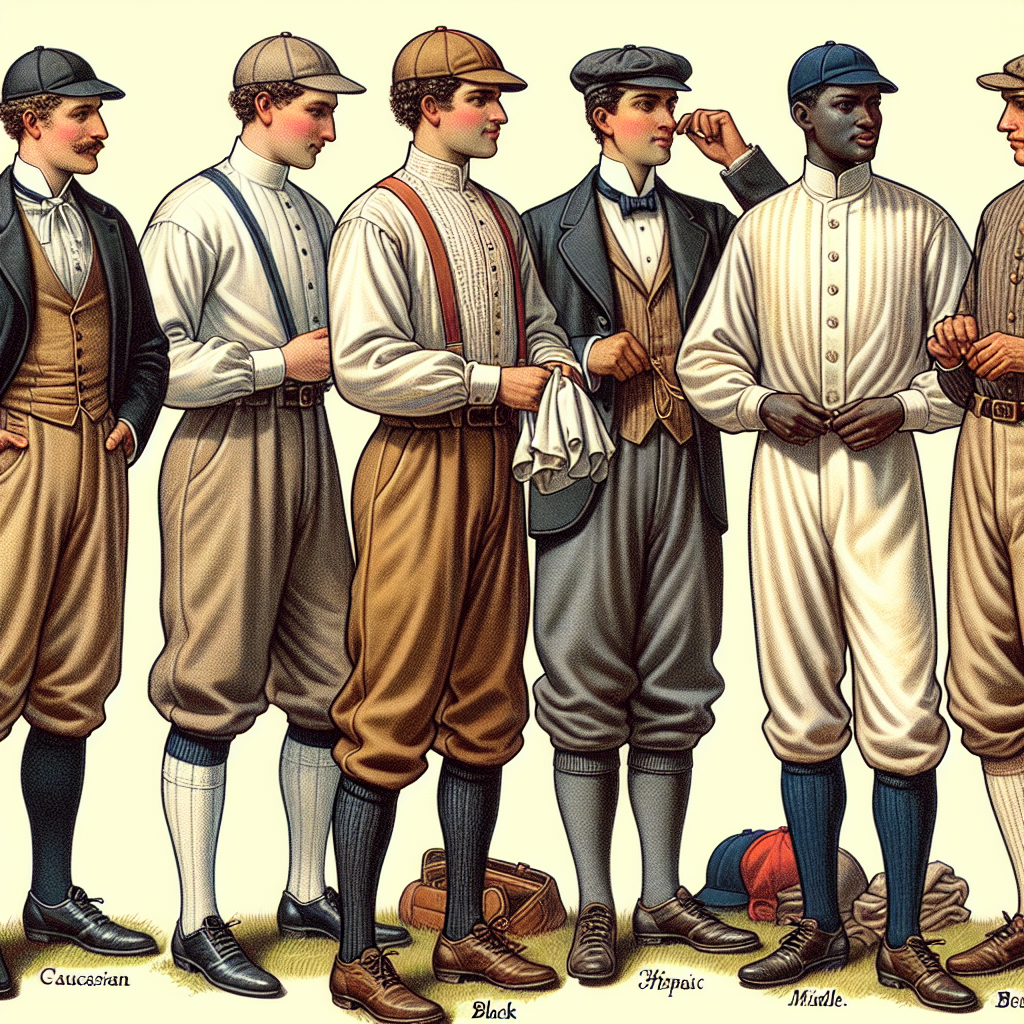
The earliest recorded baseball uniforms appeared in the mid-19th century. The New York Knickerbockers, a pioneering team formed in 1849, were among the first to standardize their attire, sporting blue wool pants, white flannel shirts, and straw hats. This outfit marked the beginning of a long journey toward the stylized and performance-oriented baseball uniforms we recognize today. These early uniforms were simple, rudimentary, and reflected the clothing styles of the period rather than being designed specifically for athletic performance.
The evolution of baseball uniforms paralleled the sport’s growing sophistication. Teams began to adopt specific colors and designs, helping to foster team identity and fan loyalty. By the 1860s, as baseball began to professionalize, uniforms started to incorporate more functional elements. Materials changed to breathable fabrics that allowed for greater ease of movement, and designs began to address the abrasive nature of the game, with reinforced areas to prevent tearing and injury.
As uniforms evolved, so did the embellishments. Embroidery, team logos, and player numbers became commonplace, transforming uniforms from mere functional clothing to symbols of team pride and fan affiliation. This shift reflected broader societal trends, with advancements in manufacturing and textile technology contributing to more durable and diverse design options.
The Evolution of Materials and Design
The materials used in early baseball uniforms were quite different from the high-tech fabrics we see on the diamond today. Initially, uniforms were made from wool and flannel, chosen for their durability and warmth. However, these materials were heavy and not particularly breathable, often leaving players overheated and uncomfortable—particularly during the warmer months.
Over time, the quest for comfort and performance saw a transition to lighter, more breathable fabrics. The turn of the 20th century began to see uniforms made from cotton blends, which offered a significant improvement over their woolen predecessors. These materials were not only lighter but also allowed for greater moisture absorption, helping to keep players cool and dry.
By the 1940s and 1950s, synthetic fabrics like polyester began to make an appearance. These materials revolutionized sportswear by offering resilience, flexibility, and a degree of customization previously unattainable. Polyester blends could be engineered to specific requirements, balancing strength, stretch, and breathability in ways natural fibers could not match.
Design features also advanced alongside material improvements. Early uniforms were button-downs, reflecting contemporary casual wear. These were later supplemented or replaced by uniforms with zippers and elastic waistbands, considerably enhancing ease of use and fit. Reinforced stitching and padding in high-stress areas became standard, offering players some protection against the physical rigors of the game.
Customization also became increasingly sophisticated. Teams experimented with different styles of lettering, numbering, and logos. These elements not only added to the aesthetic appeal but also helped fans differentiate players on the field more easily, fostering a closer connection between teams and their supporters. Today, the latest technological advances, like moisture-wicking fabrics and ergonomic designs, reflect a continual commitment to both functionality and style in baseball uniforms.
Color Schemes and Patterns Through the Years
The color schemes and patterns of early baseball uniforms were often dictated by the need for visibility and distinction on the field. Initially, teams selected colors that were simple and practical. The first baseball teams often wore plain white or gray uniforms, as these colors were easiest to clean and maintain. However, as rivalries grew and teams sought to create unique identities, the variety and vibrancy of colors increased.
Throughout the 19th and early 20th centuries, bold solid colors began to emerge. For instance, the Chicago Cubs, known then as the Chicago White Stockings, sported their famous white and blue. Stripes and other patterns also started to appear, adding a visual flourish that made teams stand out not just in play but also in the growing number of team photographs and illustrations plastered across newspapers and magazines.
The Roaring Twenties and subsequent decades saw an explosion in the range of colors and designs used. With better dye technology and more sophisticated manufacturing techniques, teams could afford to experiment with more complex color schemes and patterns. This period saw the introduction of road uniforms, which typically featured darker colors to differentiate from the home whites and grays. Checkerboard patterns, pinstripes, and multi-colored trims became popular, reflecting broader fashion trends.
The post-World War II era saw a return to simpler, cleaner designs, partly influenced by a sense of austerity and the practical need for functional and durable sportswear. Yet, colorful experimentation never entirely disappeared. By the 1970s, bright and bold styles came back with a vengeance, most famously represented by the gaudy, multi-colored uniforms of the Houston Astros.
Today, classic designs still hold sway, with many teams reverting to a more traditional look that honors the sport’s rich history. However, modern color palettes and patterns often incorporate contemporary influences, blending the old with the new to create visually appealing and functional uniforms.
Branding and Marketing Influence
The commercialization of baseball in the late 20th century brought a new dimension to the design and significance of uniforms. No longer just a matter of team identity, uniforms became a key component of branding and marketing strategies. This shift was driven by the growing importance of television broadcasting, merchandise sales, and brand sponsorships, which transformed baseball uniforms into powerful marketing tools.
Teams began to partner with major sports apparel manufacturers like Nike, Adidas, and Under Armour, creating opportunities for innovative designs and new technologies. These partnerships brought significant financial benefits to teams, helping subsidize costs and boosting revenue through sales of replica jerseys and related merchandise. The branding of these uniforms extended beyond the team names and logos to include prominent manufacturer logos, making them integral to the visual identity of both the team and the brand.
Special edition uniforms, such as those worn during the All-Star Game, postseason, or commemorative events, further capitalized on fan engagement. Limited-edition releases and collaborations became highly sought-after collectibles, turning baseball uniforms into fashionable items that transcended the sport. Modern designs often reflect this business acumen, striking a balance between tradition and cutting-edge style to appeal to a broad audience.
The influence of branding is also evident in the global spread of baseball fandom. As Major League Baseball (MLB) expands its reach internationally, uniforms play a crucial role in marketing the sport and its teams to new audiences. The recognizable colors, logos, and styles help to forge a global brand identity that resonates with diverse audiences, fostering a worldwide community of baseball enthusiasts.
Uniform Regulations and Changes to Boost Performance
As baseball uniforms evolved, regulations and standards emerged to ensure consistency and fairness. Major League Baseball, in particular, has established comprehensive uniform guidelines that teams must adhere to. These regulations cover various aspects, from color schemes to logo placement, ensuring that each uniform not only looks professional but also maintains the integrity and tradition of the sport.
One of the most significant changes in uniform regulations is the emphasis on player safety and performance. Advanced materials that enhance breathability, flexibility, and durability are now standard, helping players perform at their best under various conditions. Moisture-wicking fabrics, ergonomic cuts, and lightweight padding are examples of innovations that have been integrated into modern uniforms to support peak athletic performance.
Uniform design has also adapted to the demands of modern gameplay. For example, the rise of dynamic pitching and base-stealing strategies has influenced the development of uniforms that minimize resistance and maximize mobility. Tailored fits and stretchy fabrics enable players to move freely, improving agility and speed on the field.
Regulations also extend to personalization options, such as player numbers and names. Consistent placement and size requirements ensure uniformity across teams, contributing to a professional appearance. Furthermore, the introduction of rules governing the use of special uniforms, such as throwbacks or themed attire, ensures that these variations respect the sport’s history and traditions.
The ongoing advancements in sports science continue to shape uniform regulations and designs. As new research emerges on athletic performance, recovery, and injury prevention, uniform technologies and standards will undoubtedly evolve, driving continual improvements in how players are outfitted on the field.
Baseball Uniforms as Cultural Icons
Baseball uniforms have transcended their functional origins to become cultural icons. They symbolize not only the team and its history but also broader aspects of society, including fashion, identity, and community. Classic uniforms, such as those worn by the New York Yankees or the Boston Red Sox, are instantly recognizable and carry a sense of nostalgia and pride for fans. These uniforms are celebrated not just for their design but for what they represent—a connection to the past and the enduring spirit of the game.
The cultural significance of baseball uniforms is reflected in their presence in popular media, from movies and television shows to music and art. Iconic uniforms have been immortalized in film, from “The Natural” to “Moneyball,” cementing their place in the collective imagination. The visual appeal of baseball attire has inspired countless fashion trends, with elements of uniform design appearing in everyday clothing and streetwear.
In addition to their fashion and media influence, baseball uniforms serve as symbols of community and belonging. Wearing a team’s jersey is a way for fans to express their allegiance and participate in a shared experience. This sense of unity is especially evident during major games and events, where seas of fans dressed in team colors create a powerful visual representation of collective support and enthusiasm.
Baseball uniforms also reflect broader societal changes and cultural movements. For example, the integration of baseball teams in the mid-20th century marked a significant moment in civil rights history, and the uniforms of that era are emblematic of this progress. Commemorative uniforms and patches celebrate milestones and honor contributions, adding layers of meaning and significance to the sport’s attire.
In conclusion, baseball uniforms are much more than practical garments; they are woven into the fabric of cultural identity and history. They capture the evolution of the sport, embody team spirit, and connect generations of fans in a shared celebration of America’s pastime.
Conclusion: The Ever-Evolving Significance of Baseball Uniforms
The journey of baseball uniforms from their humble beginnings to their current status as cultural icons is a testament to the sport’s enduring appeal and its ability to adapt and innovate. From the simple woolen outfits of the New York Knickerbockers to the high-tech, performance-oriented uniforms of today, each era has contributed to the rich tapestry of baseball history. As we have explored, the evolution of baseball uniforms reflects broader trends in material science, fashion, and marketing. Early uniforms prioritized durability and practicality, while modern designs balance functionality with aesthetics, catering to both player performance and fan engagement. The integration of branding and marketing demonstrates the commercial impact of baseball uniforms, while ongoing advancements in technology and regulation ensure that the needs of contemporary athletes are met. The cultural significance of baseball uniforms cannot be overstated. They are symbols of team identity, fan loyalty, and societal progress. Iconic designs evoke nostalgia and pride, serving as visual representations of memorable moments and milestones in the sport’s history. Whether through films, fashion, or community events, baseball uniforms continue to leave an indelible mark on the cultural landscape, reflecting the values and aspirations of the times. As we look to the future, it is clear that baseball uniforms will continue to evolve, embracing new technologies and design philosophies. The ongoing quest for performance optimization, coupled with the desire to honor tradition, will drive innovation in uniform design. Fans can expect to see exciting developments that enhance the game while preserving the heritage and spirit of baseball. Ultimately, baseball uniforms are more than just attire; they are integral to the identity and legacy of the sport. They connect players and fans, past and present, in a shared celebration of a beloved game. As we anticipate the next chapter in the evolution of baseball uniforms, we can appreciate the rich history and cultural significance that make them an enduring symbol of America’s pastime.
Frequently Asked Questions
1. What were early baseball uniforms like in the mid-19th century?
Early baseball uniforms in the mid-19th century were rudimentary at best. In the 1840s and 1850s, baseball was still evolving, and so were its uniforms. Players initially wore their everyday clothes, leading to a lack of uniformity among teams. By the 1850s, there was a push towards more uniform apparel, which led to the introduction of basic woolen flannel shirts, often with button-up fronts and coupled with long trousers. Caps were introduced to shield players from the sun, and teams began to adopt colors or emblems to distinguish themselves. These early uniforms were not designed with athlete comfort or practicality in mind; rather, they served the purpose of team identification. Over time, the designs became slightly more sophisticated, but they were still a far cry from the specialized sportswear we see today.
2. How did the materials used in baseball uniforms evolve through the years?
The materials of baseball uniforms have drastically evolved from the early days when wool was the go-to fabric. In the 19th century, heavyweight wool was chosen for its durability, despite being hot and itchy, because it was relatively affordable and available. As textile technology advanced, lighter and more breathable materials started being used. By the early 20th century, cotton started to replace wool, providing more comfort and flexibility. In the 1930s and 1940s, satin was introduced for night games due to its sheen under artificial lights. Today, uniforms incorporate advanced synthetic fibers designed to wick moisture, reduce weight, and maximize player mobility, reflecting a significant evolution in both fashion and function.
3. When and how did team logos and colors become a standard part of baseball uniforms?
The use of team logos and colors in baseball uniforms began in earnest in the post-Civil War era. As baseball gained popularity and teams began to form more formal organizations, the importance of team branding became apparent. By the 1870s, most teams wore jerseys adorned with an initial or emblem representing their city or team. Colors were not just a fashion statement; they were vital for team identity, helping fans and players distinguish between opponents at a glance. Teams like the Cincinnati Red Stockings and the Brooklyn Bridegrooms made early use of distinct hues that would come to be strongly associated with their franchises. As the sport grew, marketing and team rivalry fueled the evolution and standardization of logos and colors, culminating in the diverse and vibrant designs we see in leagues today.
4. How did the functionality of baseball uniforms improve over time?
The functionality of baseball uniforms has improved significantly as the sport evolved and as player needs became more prioritized. Initially, uniforms were crafted more for durability than performance, often made of heavy materials with little regard for comfort or practicality. Over the decades, several key changes contributed to enhanced functionality: the introduction of stirrup socks for better ankle movement, adjustable belts and buttons for fit customization, and improved fabric technology ensuring better cooling and moisture management. The integration of player safety features like padding in certain uniform parts also added a functional aspect that was not originally present. Today, uniforms are performance-oriented, aiming to support player agility, reduce drag, and enhance overall comfort.
5. Have any classic baseball uniform elements withstood the test of time?
Yes, several classic elements of early baseball uniforms have maintained their place in the sport’s attire over the years. The baseball cap is perhaps the most iconic; originally introduced in the 1840s, its primary design has remained largely unchanged, now serving as both a functional and fashionable item. Similarly, certain uniform styles – such as the pinstriped jerseys famously associated with teams like the New York Yankees – have become traditional staples. Buttons down the front and team emblems or initials on the chest continue to pay homage to the traditional aspects of early uniforms, keeping the history of baseball woven into the fabric of its uniforms. These enduring elements highlight the sport’s rich heritage while continuing to meet modern demands.