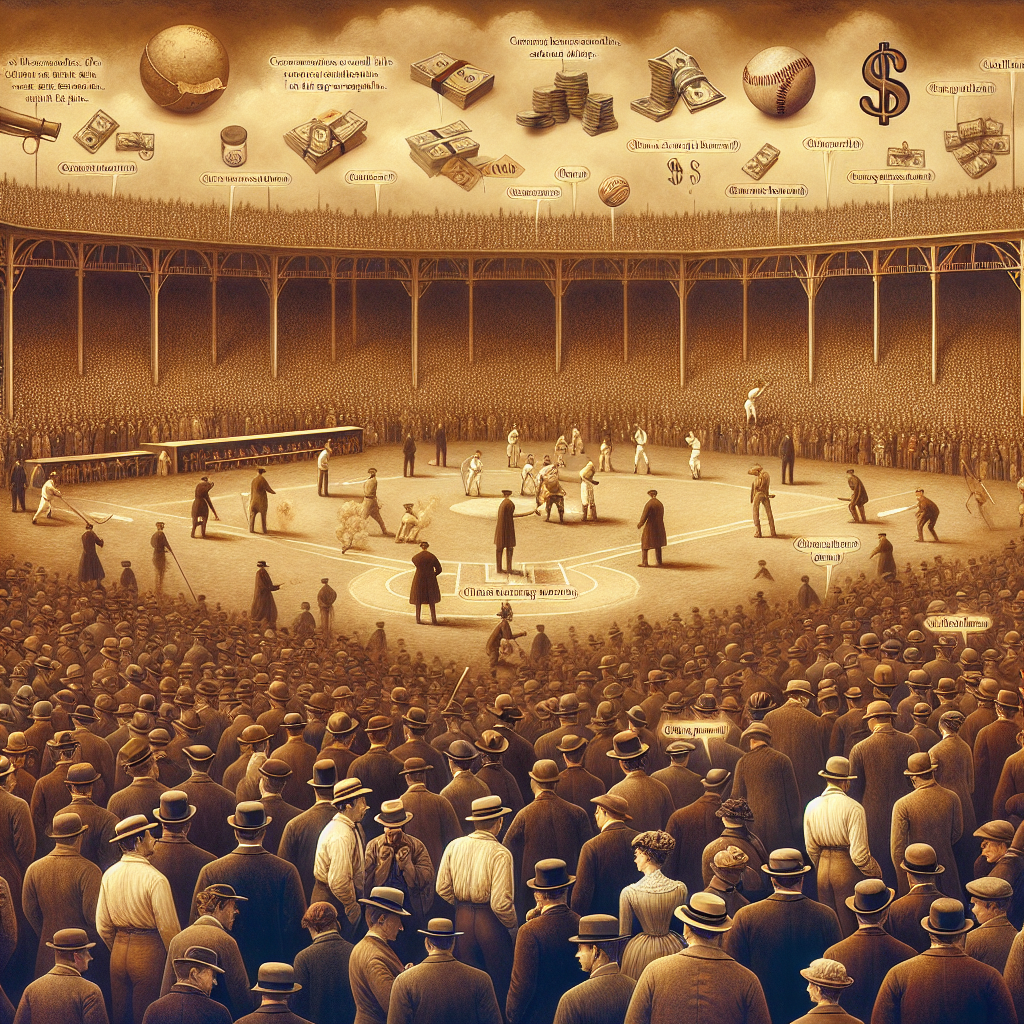
The early history of baseball is often romanticized with recollections of iconic players, legendary games, and the birth of America’s pastime. However, beneath this nostalgic veneer lies a series of scandals that rocked the sport long before the infamous Black Sox scandal of 1919. These formative controversies not only shaped public perception of the game but also led to significant reforms that have impacted baseball for generations. In this article, we will delve into these early baseball scandals, uncovering the shadowy corners of the sport’s history and exploring their lasting effects on the game.
The Louisville Grays Scandal of 1877
While the 1919 Black Sox scandal is etched in the annals of baseball infamy, it was not the first instance of game-fixing to plague the sport. The Louisville Grays scandal of 1877 stands as a dark chapter in the nascent professional leagues. Four Grays players—Jim Devlin, George Hall, Al Nichols, and Bill Craver—were accused of deliberately losing games in exchange for bribes from gamblers. The National League, desperate to maintain its integrity, held an investigation that resulted in lifetime bans for the involved players. This scandal exposed the vulnerabilities of professional baseball to corruption and led to the first significant efforts to protect the game from external influences. As a result, the National League began tightening regulations around player conduct and gambling, setting a precedent for future governance.
The Cincinnati Reds Scandal of 1878
Hot on the heels of the Louisville Grays scandal, the Cincinnati Reds found themselves embroiled in controversy in 1878. This scandal revolved around allegations that Reds’ manager Lip Pike had intentionally thrown games. Suspicion first arose when Pike made unusual lineup choices, and rumors spread that he was receiving money to influence game outcomes. Although the investigation did not uncover concrete evidence to convict Pike, the scandal further tarnished baseball’s reputation and underscored the sport’s susceptibility to corruption. In response, more stringent measures were introduced, including tighter control and monitoring of team managers and players, to curb the influence of gambling and ensure fair play.
The Beer and Whiskey League
The late 19th century saw the rise and fall of the American Association, a rival league to the National League nicknamed the “Beer and Whiskey League” due to its liberal stance on alcohol sales at games. Founded in 1882, the American Association initially aimed to provide a more affordable and enjoyable baseball experience, appealing to a working-class audience. However, its lax regulations soon led to frequent gambling-related scandals. One notable incident involved the 1884 Brooklyn Atlantics, whose players were accused of “laying down” in exchange for payments from gamblers. These frequent scandals stained the league’s reputation, leading to its eventual collapse in 1891. The downfall of the American Association served as a lesson for baseball authorities on the need for strict regulatory frameworks to maintain the sport’s integrity.
Queen City Club Controversy
In 1879, the Cincinnati Reds experienced another tarnished moment known as the Queen City Club controversy. This incident involved the club’s reluctance to discipline player Charley Jones after he was accused of intentionally playing poorly. Allegations surfaced that Jones and several teammates had accepted bribes to throw games. Despite public outcry and pressure from other teams, the club’s management delayed taking action. This episode highlighted the necessity for a centralized governing body to enforce rules and uphold the integrity of the game. Consequently, this scandal catalyzed the formation of more unified league rules and the eventual establishment of the commissioner’s office to oversee and regulate baseball’s broader interests.
The Pittsburgh Alleghenys and Player Collusion
The Pittsburgh Alleghenys, now known as the Pittsburgh Pirates, faced their fair share of controversy in the late 19th century. In 1890, the team’s players were embroiled in accusations of collusion with gamblers. The scandalous behavior included deliberately throwing games to reap financial rewards from bets placed against their own team. This incident was part of a broader pattern of corruption that prompted baseball leaders to double down on their efforts to root out dishonesty. The outcome saw stricter penalties for those found engaging in gambling related activities and led to the establishment of the National Agreement of 1903, which sought to foster cooperation between the National League, the American League, and minor leagues to safeguard the sport’s integrity.
The Chicago White Stockings Scandal of 1885
The Chicago White Stockings, later known as the Cubs, faced a huge controversy in 1885 when their star player Cap Anson was rumored to have influenced game outcomes for financial gain. Allegations against Anson included making side deals with bookies and manipulating team performance. Although direct evidence did not surface, the speculation severely tainted the team’s image and raised doubts about the fairness of competition in professional baseball. This scandal underscored the need for baseball to address its vulnerabilities proactively. In response, the league began implementing more robust systems of oversight, increased transparency in team operations, and greater accountability among players and personnel in order to foster a culture of honesty and fair competition.
Conclusion: Legacy of Early Baseball Scandals
Examining the early scandals in baseball reveals a sport grappling with its own growing pains, striving to establish integrity amid a climate ripe for corruption. These incidents played a crucial role in highlighting the need for stringent regulations and oversight within the sport. From the lifetime bans following the Louisville Grays scandal to the foundational rules set in place after the downfall of the Beer and Whiskey League, each controversy contributed to the evolving governance of baseball.
In recognizing and understanding these early scandals, we gain a richer appreciation for the resilience and adaptability of baseball as it worked to overcome challenges and solidify its place in American culture. The lessons learned from these dark chapters laid the groundwork for the sport’s integrity, reinforcing the importance of transparency, accountability, and ethical behavior. Ultimately, these early scandals, though damaging at the time, served as catalysts for progress and reform, helping to build a stronger and more respect-worthy American pastime.
Frequently Asked Questions
What were some early baseball scandals before the Black Sox scandal of 1919?
Before the infamous Black Sox scandal, baseball had its fair share of controversies that put its integrity under fire. Let’s talk about one of the earliest known scandals called the “Louisville Grays scandal” of 1877. This incident involved four members of the Louisville Grays who were accused of conspiring to throw games in exchange for money. The players were Jim Devlin, George Hall, Al Nichols, and Bill Craver. Their actions involved agreeing to lose games intentionally as a wager made by gamblers on the outcome. This scandal was quite serious at the time as it directly challenged the credibility and fair competitive spirit of the game. Following a thorough investigation, the implicated players were banned for life, setting a precedent for how the league would handle corruption.
Then we have the 1889 scandal involving the Brotherhood of Professional Base Ball Players, a players’ union which led to the foundation of the Players’ League in 1890. The league was formed in protest against the unfair labor conditions imposed by the National League’s reserve clause, which bound players to one team. The clash between team owners and players over contractual and labor disagreements reflected how early baseball was as much about business as it was about play. Although the league only lasted a single season, it called attention to the monopolistic practices many clubs followed and ultimately led to restructuring baseball contracts to allow more player rights.
Another noteworthy scandal involved the 1900’s New York Giants Manager John Montgomery Ward and his controversial involvement in bribing umpires. While never proven, the scandal hinted at deeper retaliations between teams and officials and served to publicize the need for transparency and fair officiating in baseball. Such incidents were an early indication of how baseball was wrestling with professionalism amidst an era of growing commercial interests.
How did these early scandals impact the public perception of baseball?
In the nascent years of professional baseball, the sport was really growing as America’s pastime. The romanticism was undeniable—heroes of the diamond were idolized far and wide. Yet, these early scandals came as a stark reminder to the public that even in America’s beloved game, corruption had found a foothold. Initial reactions were mixed; some fans were in disbelief, shocked that their heroes could stoop to such behavior. For others, these scandals confirmed suspicions of the greed that had begun infiltrating beyond the playing field.
The damage was not just emotional; it also swayed public trust. The media coverage of these incidents painted a more pragmatic picture of the sport: while baseball was meant to be a fair game, it was also a business arena where money could sway decisions. This often led to more skepticism and a call for the game to uphold stronger moral codes – not just for the fans, but for the integrity of the game itself. The apprehension resulted in decreased attendance at games and a more cautious fan base that required substantial efforts to rebuild their faith in the sport.
In the long run, however, these scandals were a necessary evil that paved the way for reforms. The stringent measures and closer scrutiny were signs of a sport on the path towards legitimacy, ensuring that later generations could enjoy baseball free of corruption.
Were there any reforms implemented as a result of these early scandals?
Absolutely! In the aftermath of these controversies, baseball saw a series of crucial reforms aimed at restoring credibility and fairness. One of the most significant actions was the establishment of the National Agreement of 1903, which was an accord between the National League and the American League to regulate contract disputes and territories. This agreement was partly driven by the need to stabilize relations between baseball’s warring factions, curbing player disputes that often escalated into larger controversies.
The introduction of the commissioner system is another reform worth mentioning. Although it was initially created as a response to the Black Sox Scandal, its roots trace back to the turmoil and lessons learned from these early frictions. The role of the commissioner, personified by Judge Kenesaw Mountain Landis, became pivotal in maintaining order and enforcing the game’s rules with credential authority. Landis had the power to ban players for life, as seen with the Black Sox, and he brought that same assertion to managing the sport’s integrity.
Additionally, the creation of a national commission, a precursor to the modern-day commissioner’s office, was an attempt to standardize and enforce fair play practices. These oversight bodies ensured that gambling was kept in check and that players understood the gravity of their professional responsibilities. The introduction of stricter penalties for dishonest conduct, both on and off the field, became a deterrent for anyone considering compromising the sport’s integrity. Collectively, these reforms laid the groundwork for today’s strict policies against game-fixing and other forms of malpractice.
How were gamblers and organized crime involved in these early scandals?
Gambling and organized crime were major players in early baseball scandals, treating the sport like a financial playground. During the late 1800s and early 1900s, professional sport offered new terrain on which gamblers could profit. Networked with underworld figures, these gamblers sought inside information or influenced outcomes directly through bribery and coercion.
In the Louisville Grays scandal, gamblers worked closely with players, offering sums of money that were hard for the relatively low-paid athletes to refuse. These associations reached sophisticated levels, with some games allegedly having entire innings orchestrated in favor of bettors, not teams. Organized crime also exploited baseball as a reliable vehicle for laundering money from illicit activities. Fixed games offered guaranteed wins to ardent gamblers, reinforcing the bad image.
This symbiotic relationship between players needing extra income and gamblers needing precise matches fostered an environment where anyone could be corrupted for a price. The ramifications of these gambling allegations were significant, both legally and socially, with players being deemed dishonest and crowds looking at the field with a cynical eye.
The connection to organized crime was not infrequently suspected but seldom proven publicly until widespread focus intensified after the Black Sox saga. Public outcry and media attention forced baseball to take more solid steps against such criminal machinations, leading to more robust preventative measures and stakeholder cooperation across the sport to maintain fair play.
Are there any other historical scandals in baseball that aren’t widely discussed?
Certainly, many forget about the infamous “Hitless Wonders” affair, involving the 1906 Chicago White Sox and Chicago Cubs—it was long rumored that collusion and poor intentions lay behind their subsequent World Series match. In a similar vein, controversies circled around the 1914 Miracle Braves, where whispers suggested games were manipulated in their favor. While hard evidence was never presented, these accusations hinted at a greater breadth of unscrupulous behavior within the league than the public was aware of.
For another less-discussed scandal, consider the 1924 New York Giants’ referee bribery allegations involving potentates of baseball made in cahoots with questionable bookmakers. While the list doesn’t get shorter, it serves as a testament to how baseball was constantly under scrutiny, with every small incident teaching bigger lessons about the need for accountability and transparent governance.
Even more obscure is the 1897 Baltimore Orioles’ conspiracy in “Syndicate Baseball,” where it was revealed that the Brooklyn Dodgers and Baltimore Orioles were owned by the same group. This allowed for undue advantages through player sharing and competition manipulation during the National League’s apex. It was commonly underreported but reflected profit-seeking ambitions that compromised polished standards intended for sport alone.
While these cases may not have received the notoriety the Black Sox event has, they contributed to the historical push toward refining baseball’s image and ensuring that games remained a showcase of athletic prowess, not financial ploys. As each layer of historical context is peeled back, it opens insightful discussions about how far baseball has come and how important integrity remains to the sport’s enduring relevance.