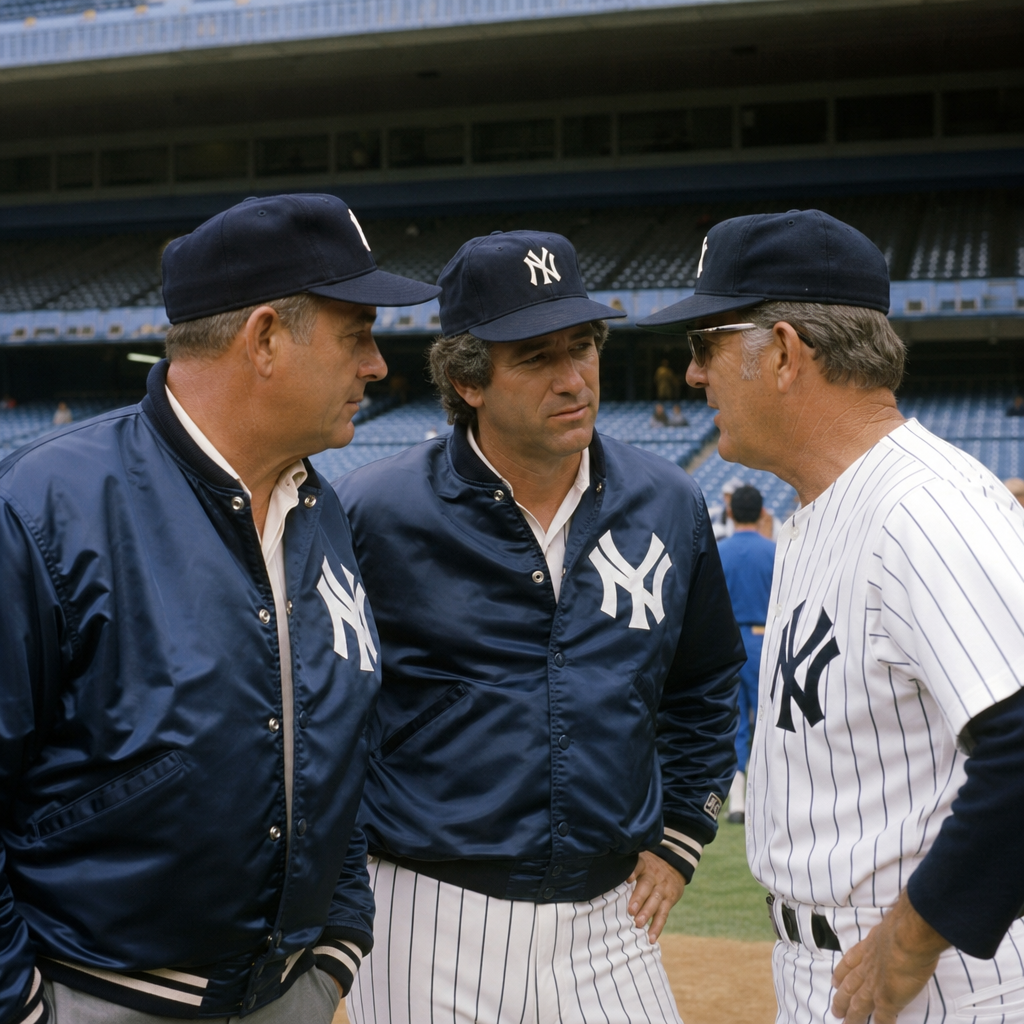
The 1976 New York Yankees’ managerial carousel remains one of the strangest episodes in franchise history because it mixed winning baseball, owner volatility, clubhouse politics, and nonstop media drama into one compressed season. In plain terms, a managerial carousel is a rapid series of leadership changes in the dugout, often driven by conflict as much as performance. For the Yankees, that carousel spun around Billy Martin, Dick Howser, and the ever-present influence of owner George Steinbrenner, whose appetite for control reshaped the organization. The story matters because it sits at the crossroads of sports management, celebrity ownership, and the modern tabloid treatment of baseball.
When people remember the 1970s Yankees, they usually jump to the Reggie Jackson years, the 1977 and 1978 championships, or the notorious Bronx Zoo label. Yet 1976 is the hinge point. The club won the American League pennant for the first time since 1964, but it did so while lurching through managerial uncertainty that reflected deeper tensions inside the franchise. I have always found this season useful as a case study because it shows that controversy does not merely trail success; sometimes it becomes part of the operating environment that produces it.
Understanding the 1976 Yankees also helps define several key terms. A manager handles lineups, pitching changes, clubhouse discipline, and game strategy. A general manager builds the roster and mediates between baseball operations and ownership. An owner funds the club but can either empower baseball people or override them. In the Yankees’ case, Steinbrenner rarely stayed hands-off. That tendency, more than any single losing streak or personality clash, made the carousel possible. The result was not random chaos. It was a pattern of intervention that would characterize the franchise for years.
As a hub within the broader scandals and controversies landscape, this topic belongs under miscellaneous because it touches many categories without fitting neatly into one. It was not a gambling scandal, criminal case, or rules violation. Instead, it was a public power struggle played out through firings, rehiring, leaks, and dugout authority disputes. To understand why the 1976 New York Yankees’ managerial carousel still gets cited, you have to look beyond the headlines and see how each move changed the culture of the club and the way baseball leadership was discussed across the sport.
Why the Carousel Started Before Opening Day
The carousel effectively began in the previous offseason. Billy Martin had managed the Texas Rangers in 1975 and had become available after conflict there, which already hinted at the kind of combustible energy he brought. Steinbrenner admired Martin’s intensity and toughness. He also believed Dick Howser, despite being a thoughtful and capable manager, lacked the confrontational edge the owner wanted. Howser had guided the Yankees in 1974 and 1975, compiling winning records and helping stabilize a club that had spent much of the late 1960s and early 1970s outside the spotlight. Still, Steinbrenner wanted a stronger public symbol of urgency.
That distinction matters. Howser was not fired because he failed in the standings. He was pushed aside because his style did not satisfy an owner who equated visible aggression with leadership. In baseball terms, Howser was respected for preparation, communication, and structured game management. In media terms, he was understated. Steinbrenner, operating in New York and cultivating his own image, preferred a manager who could embody combat. Martin fit that vision perfectly. The change immediately turned normal organizational decision-making into controversy because it suggested that temperament had outweighed results.
From my perspective, this is where the season’s scandalous quality really took shape. Teams change managers all the time, but replacing a competent winner for reasons that were partly theatrical invites scrutiny. Writers questioned whether the Yankees were prioritizing discipline or drama. Players had to recalibrate expectations before a meaningful game had even been played. The message from ownership was clear: no level of stability was secure if the owner sensed a mismatch between his personality and the dugout’s tone.
Billy Martin’s Arrival and the Immediate Shift in Tone
Martin arrived with credibility. He had won as a player, understood New York’s pressure, and projected absolute competitiveness. He also brought a reputation for confrontation, demanding practice habits, and emotional management. Those traits can energize a team in short bursts, and the 1976 Yankees responded early. Martin pushed for sharper baserunning, aggressive bullpen usage, and constant accountability. Veterans knew they would be challenged directly. Younger players knew mistakes would not be ignored. That edge appealed to Steinbrenner because it turned the manager’s office into an extension of ownership’s urgency.
But Martin’s strength was also his risk. He managed with friction. In a city where every quote could become front-page material, friction rarely stayed private. The Yankees of 1976 were talented enough to win, yet they were also volatile enough to produce daily narratives about who was angry, who was benched, and who held real authority. I have seen similar patterns in later clubs: a hard-driving manager can sharpen focus, but if ownership constantly hovers, the manager’s intensity becomes part of a larger instability instead of a controlled leadership style.
On the field, the roster gave Martin plenty to work with. Thurman Munson provided leadership behind the plate. Chris Chambliss gave the lineup balance. Graig Nettles offered power and elite defense at third. Catfish Hunter anchored the rotation when healthy, and the bullpen had useful depth. This was not a rescue mission. It was a contender being handed to a manager expected to impose personality as much as strategy. That combination made every disagreement newsworthy because the team was too good for excuses and too famous for privacy.
The Team Won, but the Tension Never Left
One reason the 1976 New York Yankees’ managerial carousel still fascinates historians is that the club succeeded while sounding perpetually uneasy. They finished 97-62, won the American League East, and beat the Kansas City Royals in the AL Championship Series. In most organizations, that would validate leadership. In the Yankees’ environment, winning did not erase conflict; it postponed consequences. Steinbrenner continued to comment publicly. Martin continued to manage forcefully. Reporters continued to parse every disagreement for signs of the next rupture.
The table below shows how the principal figures differed in style and why those differences mattered to the controversy.
| Figure | Role in 1976 story | Primary management style | Effect on controversy |
|---|---|---|---|
| George Steinbrenner | Owner | Interventionist, public, impatient | Created instability by second-guessing baseball decisions |
| Dick Howser | Displaced former manager | Calm, methodical, low-drama | Made the change look less like necessity and more like preference |
| Billy Martin | New manager | Intense, confrontational, motivational | Raised performance ceiling while increasing daily tension |
| The New York media | Amplifier | Relentless, personality-driven coverage | Turned internal disputes into a season-long public spectacle |
That dynamic is why this episode belongs in any serious Yankees controversies guide. The problem was not incompetence. It was structural instability at the top. A team can survive occasional blowups, but if players suspect the owner’s mood can rearrange authority at any moment, the manager’s voice is never fully insulated. That uncertainty becomes part of the clubhouse atmosphere, even during a pennant race.
The Steinbrenner Factor and the Mechanics of Instability
No analysis of this miscellaneous scandal can avoid Steinbrenner, because he was not a background character. He was the engine. After buying the Yankees in 1973, he quickly established a pattern that blended spending, ambition, impatience, and direct involvement. He wanted instant restoration of the franchise’s dominance and saw delay as failure. That philosophy helped revive the Yankees financially and competitively, but it also produced a climate where managers worked under permanent review. In practical terms, every lineup slump, pitching controversy, or newspaper story had the potential to draw ownership into baseball operations.
Steinbrenner’s behavior in 1976 mattered beyond one manager. It normalized the idea that Yankees leadership was provisional. That reputation affected hiring, player confidence, and media coverage. It also blurred accountability. If a manager was aggressive, was he acting from conviction or anticipating the owner’s preferences? If the front office made a move, was it a baseball decision or an ownership directive? These questions are central to the controversy because a carousel is not just a sequence of names. It is a system where authority rotates or is perceived to rotate.
Baseball history offers other meddlesome owners, but few matched Steinbrenner’s visibility. He criticized personnel publicly, reversed course abruptly, and treated the club like a daily enterprise rather than a delegated institution. That approach made the Yankees compelling and exhausting in equal measure. It also explains why the managerial story of 1976 resonates far outside traditional game summaries. People return to it because it illustrates how ownership style can become the biggest storyline even on a pennant winner.
How the Media Turned a Dugout Story Into a Public Controversy
New York in the mid-1970s was already an ideal incubator for baseball drama. The city had aggressive tabloids, influential columnists, talk radio energy, and a fan base that viewed Yankees leadership as civic theater. Martin was made for headlines, Steinbrenner encouraged headlines, and the club’s success ensured constant attention. Routine disagreements that might have stayed local elsewhere became evidence of crisis in New York. Once that cycle begins, it reinforces itself. A manager feels watched, players answer questions about rumors, and ownership reacts to the coverage covering its own reactions.
This is where the miscellaneous label is useful. The controversy was partly baseball, partly communications failure, partly celebrity management. I have worked on enough public-facing sports narratives to know that repeated visibility changes behavior. People start performing certainty, toughness, or outrage because silence is interpreted as weakness. In 1976, the Yankees’ internal life increasingly had an audience. That made resolution harder. Even when the team won, the coverage searched for the next fracture line because everyone understood that the franchise’s leadership structure was combustible.
The broader lesson is simple: in high-profile organizations, process matters as much as outcomes. If authority changes are communicated badly, or if ownership appears to undercut managers in public, every tactical decision gets reframed as politics. That happened repeatedly with the Yankees, which is why the season still serves as a textbook example of how media ecosystems can magnify management disorder.
Legacy, Historical Meaning, and Related Miscellaneous Controversies
The immediate baseball result of 1976 was a pennant followed by a World Series sweep loss to the Cincinnati Reds, one of the greatest teams ever assembled. The larger legacy was that the Yankees proved they were back as contenders while also proving they would be uniquely turbulent under Steinbrenner. That pattern continued. Martin would return to the Yankees multiple times, be fired multiple times, and become inseparable from the franchise’s mythology. Howser later managed the Kansas City Royals to a championship and remains an important reminder that calm competence was never the real problem in New York.
As a hub article for miscellaneous controversies, this story connects to several adjacent themes. One is ownership interference, seen across sports whenever wealthy principals bypass professional chain of command. Another is the cult of the fiery manager, where visible anger is mistaken for superior leadership even when evidence is mixed. A third is the role of metropolitan media in escalating conflict. The 1976 Yankees sit at the center of all three, which makes this article a useful starting point for readers exploring noncriminal, nonrules-based sports controversies that still changed history.
The key takeaway is not that intensity fails or that assertive owners always harm teams. Steinbrenner’s spending and ambition undeniably helped restore the Yankees. Martin’s forcefulness undeniably energized clubs. The point is narrower and more important: sustainable winning depends on aligned authority. When ownership, manager, and roster pull in different emotional directions, even success can feel unstable. The 1976 New York Yankees’ managerial carousel endures because it captured that contradiction perfectly. If you are exploring scandals and controversies in sports, use this episode as a guidepost, then continue into related cases where leadership conflict became the real story behind the scoreboard.
Frequently Asked Questions
What does the phrase “managerial carousel” mean in the context of the 1976 New York Yankees?
In the case of the 1976 New York Yankees, “managerial carousel” refers to the unusually fast and highly public sequence of leadership changes involving Billy Martin, Dick Howser, and the looming authority of owner George Steinbrenner. A managerial carousel is more than a simple firing and replacement. It suggests instability, repeated changes in direction, and a situation where the dugout becomes a revolving door rather than a steady command post. That description fits the 1976 Yankees because the club was talented enough to win, yet it was constantly pulled into drama over who was really in charge, how the team should be run, and whether the manager had the owner’s trust.
What made the situation especially strange was that this was not a losing team desperately searching for answers. The Yankees were competitive and relevant, which made the upheaval seem even more unnecessary and theatrical. Instead of managerial moves being driven strictly by standings, they were tied to personality conflicts, public criticism, internal politics, and Steinbrenner’s impatience. That combination is why historians and fans still describe 1976 as a carousel rather than a routine transition. The story is remembered as much for tension and volatility as for baseball results.
Why was the 1976 Yankees managerial situation considered so unusual?
The 1976 Yankees’ managerial situation was unusual because most clubs that change managers repeatedly in a short period are underperforming, rebuilding, or collapsing. The Yankees were not in that category. They had a strong roster, major expectations, and enough ability to contend at a high level. Yet the season still became defined by managerial controversy. That contradiction is a big reason the episode stands out in franchise history. Winning normally quiets internal arguments. In the Bronx that year, winning did not eliminate them.
Another reason it felt so extraordinary was the public nature of the conflict. George Steinbrenner’s ownership style was aggressive, emotional, and highly visible. He did not operate quietly behind the scenes. His opinions often became part of the daily news cycle, which meant that disagreements about leadership were amplified in newspapers, television reports, and clubhouse conversation. Billy Martin brought fire, confidence, and confrontation. Dick Howser represented a different kind of presence, steadier and more measured, but he too operated under an owner who could quickly alter the power structure around him.
The result was a season in which authority never felt fully settled. Players, reporters, executives, and fans all sensed that the Yankees were functioning inside a pressure cooker. That is what made the managerial story so unusual: it was not just about changing one manager for another, but about a major franchise showing how ownership volatility and clubhouse politics could make even a successful season feel chaotic.
How did George Steinbrenner influence the Yankees’ managerial changes in 1976?
George Steinbrenner was the central force behind the turbulence. Even when he was not physically in the dugout, his presence shaped the atmosphere around the team. Steinbrenner believed deeply in direct control, immediate accountability, and constant urgency. Those traits helped make him one of the most consequential owners in baseball history, but they also created instability. In 1976, his involvement went far beyond broad organizational oversight. He influenced confidence levels, public messaging, and the perceived job security of the manager on a near-daily basis.
Steinbrenner’s approach mattered because managers need room to establish authority with players. When ownership sends mixed messages, criticizes leadership publicly, or appears ready to make sudden changes, that authority can erode. In the Yankees’ case, everyone understood that Steinbrenner’s opinion could quickly reshape the chain of command. That reality made every disagreement feel larger and every slump feel more dangerous. It also encouraged nonstop media scrutiny, because reporters knew the owner himself was part of the story.
His influence is one of the main reasons the 1976 episode remains so memorable. Billy Martin and Dick Howser were important figures, but Steinbrenner was the constant. He set the emotional temperature of the franchise. The carousel did not spin simply because of tactical baseball decisions. It spun because the owner’s intensity, impatience, and need for control turned managerial leadership into an ongoing drama. In that sense, Steinbrenner was not just reacting to events. He was actively shaping them.
What roles did Billy Martin and Dick Howser play in the 1976 Yankees’ story?
Billy Martin and Dick Howser represented two very different leadership styles, and that contrast is essential to understanding the season. Martin was fiery, combative, emotional, and deeply associated with old-school baseball toughness. He could energize a team and command attention instantly, but he also brought friction. His personality was hard to separate from the headlines that followed him. In a market like New York, that made him both magnetic and combustible. He was exactly the kind of manager who could thrive in chaos and, at times, intensify it.
Howser, by contrast, was generally seen as more composed and methodical. He had a calmer managerial presence and fit the image of a steady baseball man trying to guide a talented team through a demanding season. But calm leadership alone was not enough to neutralize the forces surrounding the Yankees in 1976. He was operating in an environment where ownership pressure, clubhouse dynamics, and media obsession made managerial stability difficult to maintain. That is why the comparison between the two men remains so interesting. The issue was not simply that one was strong and the other was weak, or one was right and the other was wrong. It was that both were managing under conditions that were unusually intense and politically charged.
Together, Martin and Howser symbolize the larger conflict within the Yankees that year: should the club be led with volatility and force of personality, or with steadiness and discipline? Because the team was talented enough to win either way, the debate never stayed purely theoretical. It became part of the franchise’s identity that season. Their roles were not just managerial job titles; they became characters in one of the Yankees’ most dramatic leadership sagas.
Why does the 1976 Yankees managerial carousel still matter in baseball history?
The 1976 Yankees managerial carousel still matters because it captures several enduring truths about professional sports in one unforgettable episode. First, it shows that talented teams are not automatically stable teams. A club can win games and still be consumed by internal tension. Second, it demonstrates how much ownership style can affect on-field leadership. Managers are often judged by wins and losses, but the 1976 Yankees remind us that their success also depends on organizational trust, clear authority, and consistent support from above.
It also matters because it helped define the public image of the modern Yankees under George Steinbrenner. His era became associated with relentless ambition, giant personalities, aggressive intervention, and a willingness to make headlines as readily as championships. The events of 1976 were an early and vivid example of that formula. They showed the baseball world that the Yankees would not simply be a team people watched for results. They would also be a team people watched for drama.
Finally, the story endures because it remains genuinely compelling. It features a powerful owner, high expectations, clashing managerial styles, clubhouse politics, and a nonstop New York media spotlight. That combination gives the season a lasting place in baseball memory. Historians and fans return to it not just to ask who managed when, but to understand how leadership, ego, pressure, and performance collided inside one of the sport’s most famous franchises.