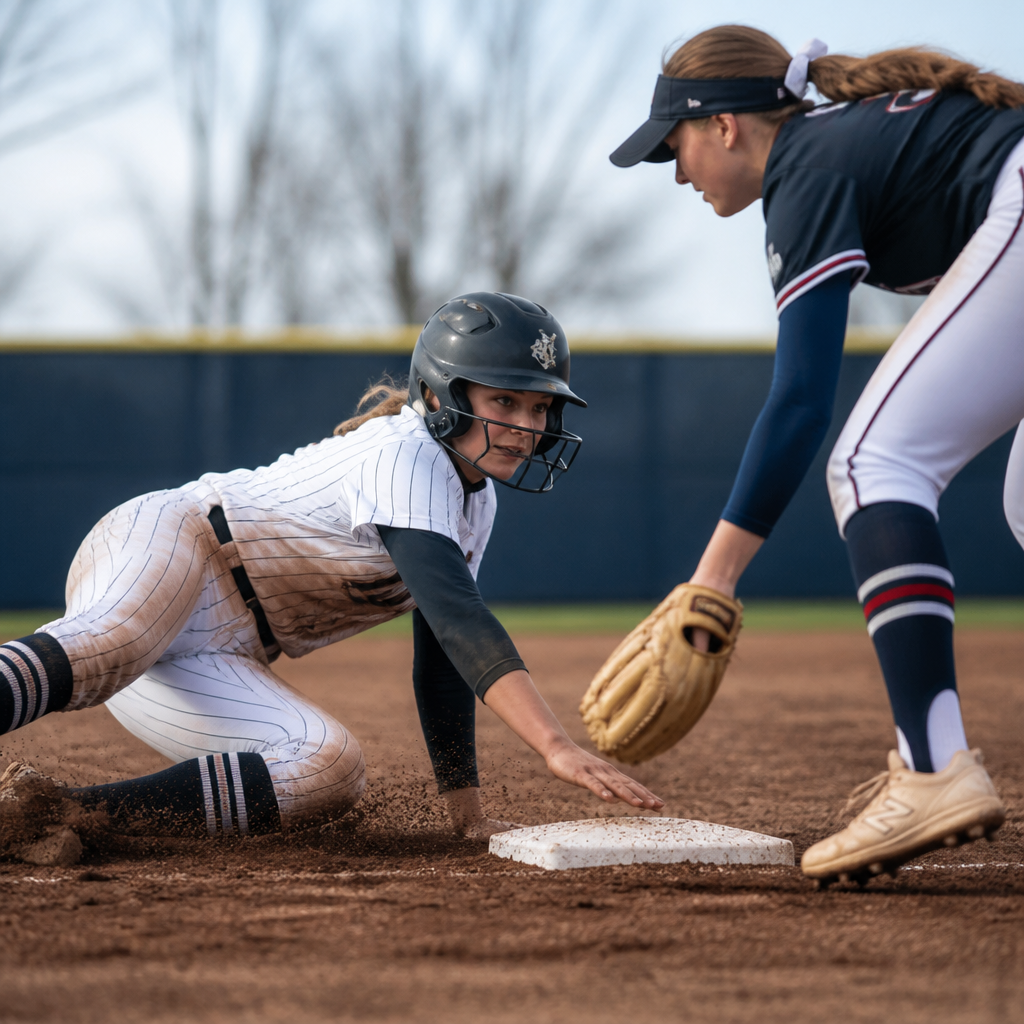
Women’s collegiate baseball is moving from the margins toward legitimate national visibility, and that shift matters far beyond the diamond. The phrase “women’s collegiate baseball” refers to organized baseball opportunities for women at colleges and universities, whether through varsity programs, club teams, developmental squads, or emerging intercollegiate competitions. It differs from softball in rules, field dimensions, pitching style, equipment demands, and player development pathways. For decades, talented women who preferred baseball often had to choose between playing softball, joining men’s teams, or leaving the sport altogether. That gap created a hidden pipeline problem: girls could play youth baseball, but there were few places to continue in college.
I have watched that pipeline issue shape roster decisions, recruiting conversations, and athlete retention at every level of the game. A player can compete successfully in travel baseball at fourteen, hold her own in high school workouts, then reach college age and find almost no institutional landing spots. That is why the rise of women’s collegiate baseball is so significant. It is not simply about adding teams. It is about building a complete competitive ecosystem that includes coaching, strength training, tournament scheduling, eligibility standards, media coverage, and a credible route to national team play.
This emerging sector sits within the broader “Women in Baseball” landscape, but the collegiate branch deserves special attention because college sports provide structure. Universities offer facilities, athletic training, academic support, alumni networks, and the public legitimacy that helps newer sports grow. In practical terms, a college team creates repetition: regular practices, conference-style competition, athletic department oversight, and measurable performance data. Those ingredients turn scattered interest into a sustainable talent pool.
The timing also makes sense. Baseball participation among girls has been more visible through initiatives such as MLB’s Trailblazer Series, USA Baseball women’s national team programming, Baseball for All tournaments, and increased representation in coaching and front-office roles. As more girls stay in baseball through high school, demand for college options naturally rises. Search interest around women’s college baseball, women playing NCAA baseball, and college baseball opportunities for female athletes reflects a basic question many families now ask: where can a woman keep playing real baseball after graduation?
This hub article answers that question comprehensively. It explains how women’s collegiate baseball developed, what forms it currently takes, which institutions and organizations are pushing it forward, what barriers still exist, and where the next breakthroughs are likely to come from. It also serves as a roadmap for the “Miscellaneous” branch of the Women in Baseball topic by connecting history, policy, player development, campus operations, and future growth. If you want to understand why women’s collegiate baseball is rising now, start with the structure around the sport rather than a single headline. The story is not one team or one athlete. It is the gradual construction of an overdue competitive pathway.
How women’s collegiate baseball developed outside traditional systems
Women have played baseball in the United States since the nineteenth century, but colleges never built a broad, formalized framework for them the way they did for men’s baseball or women’s softball. That distinction matters. Men’s college baseball benefits from the NCAA, NAIA, and junior college systems, each with longstanding recruiting pipelines and scholarship models. Women who wanted baseball rarely had access to equivalent infrastructure, so they assembled opportunities from fragments: club sports, intramural competition, local men’s leagues, and occasional roster spots on men’s college teams.
In my experience, most people underestimate how much hidden labor built the current moment. Student organizers booked fields, ordered uniforms, found volunteer coaches, negotiated travel budgets through campus recreation departments, and scheduled games against whoever would play them. That club-sport foundation remains essential. On many campuses, women’s baseball first appeared not as an athletic department initiative but as a student-led effort proving that demand already existed.
The growth of Baseball for All, founded by Justine Siegal, has been especially important because it created a visible national community for girls and women in baseball. USA Baseball has also helped by sustaining women’s national team competition and identification pathways. When college-aged players can see a continuum from youth events to national team camps, collegiate participation becomes more than a symbolic activity. It becomes part of a real development ladder.
Another driver has been media visibility around women competing in men’s collegiate baseball environments. Stories about women making college rosters attract attention because they challenge assumptions, but the deeper lesson is structural: isolated breakthroughs are not enough. A single woman on a men’s team may prove the talent exists, yet broad access requires dedicated opportunities where women can train, compete, and lead at scale.
What women’s collegiate baseball looks like today
Right now, women’s collegiate baseball exists in several forms rather than one unified model. Some athletes compete on men’s varsity or club baseball teams. Others play on women’s club teams organized through campus recreation or student life offices. A smaller but growing number participate in intercollegiate women’s baseball events, showcases, and invitational series. This patchwork can seem messy, but it also shows an active market testing formats before a dominant structure emerges.
The clearest answer to “Is there women’s college baseball?” is yes, but availability depends on the institution. There are club teams at schools such as Occidental College and Montclair State, and there have been organized efforts at multiple campuses to create recurring women’s baseball programs. Emerging events have brought together college women from different schools for tournament play, proving that enough players exist to support meaningful competition when scheduling is coordinated.
There is still an important distinction between recognition and sanctioning. A school can support a women’s baseball club without offering varsity status, scholarships, or conference membership. That matters for budgeting, recruiting, insurance, and travel. Club status usually means lower funding and more administrative work for athletes. Yet club programs can move faster than varsity systems because they face fewer approval layers. In practice, many of the strongest collegiate baseball communities for women have started in clubs and then pushed upward.
For athletes and families, the current landscape can be summarized this way:
| Pathway | How it works | Main advantage | Main limitation |
|---|---|---|---|
| Women’s club baseball | Student-run or recreation-supported teams | Dedicated baseball environment | Limited funding and irregular schedules |
| Men’s club baseball | Women try out for existing college club teams | Established competition calendar | Roster access varies by campus culture |
| Men’s varsity baseball | Rare individual roster spots | Highest competition and resources | Extremely limited openings |
| Women’s invitational events | Cross-campus tournaments and showcases | Visibility and networking | Not always tied to a full season |
That variety is not a weakness by itself. Early-stage sports often develop through overlapping structures. The key question is whether these structures begin connecting into regularized leagues, postseason opportunities, and standardized recruiting channels.
Why institutions are paying closer attention now
Universities are not embracing women’s collegiate baseball purely out of sentiment. Several practical factors make the sport more viable today. First, student demand is easier to document. Interest forms, club participation numbers, showcase attendance, and social media engagement provide administrators with evidence that this is not a novelty request from one or two athletes. Second, baseball facilities already exist on many campuses. While access, scheduling, and field specifications still require planning, the presence of batting cages, bullpens, and training rooms lowers startup barriers compared with creating a sport from scratch.
Third, colleges increasingly understand the value of distinctive programming. A school that supports women’s baseball can attract applicants seeking a rare opportunity, generate earned media, and strengthen its inclusion credentials in a concrete way. That does not mean every program decision is altruistic, but motives do not have to be pure for outcomes to be meaningful. If institutional goals align with athlete opportunity, growth follows.
There is also a development rationale. Women’s baseball players often arrive with diverse experience: coed youth leagues, travel teams, softball crossover backgrounds, and private skills training. With proper coaching, that athlete pool can improve quickly. I have seen players who lacked extensive game reps close gaps fast once they entered consistent baseball-specific training environments. Colleges that invest early are likely to shape the competitive standard for years.
External organizations reinforce this momentum. USA Baseball, the Women’s Baseball World Cup structure under the World Baseball Softball Confederation, and grassroots groups all benefit when more college-aged women remain active in the sport. Collegiate baseball extends player careers through ages when many athletes otherwise disappear from the pipeline. That retention directly supports national team depth, coaching development, and future leadership in the sport.
Barriers still holding back women’s college baseball
The biggest obstacle is not talent. It is infrastructure. Without a broadly sanctioned governing framework, teams must solve scheduling, officiating, eligibility, travel funding, and competitive balance one campus at a time. That slows progress and makes programs vulnerable to turnover when a key student leader graduates. Sustainable growth requires systems that outlast individual champions.
Funding is the second major barrier. Even modest club baseball costs add up quickly: uniforms, baseballs, catcher’s gear, bats, helmets, insurance fees, vans or flights, hotel rooms, umpire pay, indoor cage rentals, and strength support. Unlike established varsity sports, women’s baseball often cannot rely on guaranteed athletic department lines. Fundraising fills the gap, but fundraising is not a substitute for institutional commitment.
Another issue is perception. Many administrators still instinctively route baseball-interested women toward softball, assuming the sports are interchangeable. They are not. A right-handed overhand pitcher trained in baseball mechanics is not simply choosing between two branding options. She is choosing between different movement patterns, tactical systems, and identity within the game. Treating softball as an automatic replacement erases the actual sport the athlete wants to play.
Competition density also remains thin. Teams need enough opponents within reasonable travel distance to sustain a season. Without regional clusters, every series becomes expensive and logistically difficult. That is why hubs matter. Once several schools in one area field women’s baseball teams, growth accelerates because the schedule becomes feasible.
Finally, data collection is weak. Established college sports have clear statistics, participation reports, and benchmarking tools. Women’s collegiate baseball still lacks consistent public records across all programs. Better data would improve recruiting, sponsorship, and administrative planning because decision-makers trust visible numbers.
What growth will require over the next decade
The next phase of women’s collegiate baseball will depend on formalization. Schools do not all need to move straight to varsity status, but they do need common operating standards. That includes published eligibility rules, safety protocols, season windows, roster minimums, coaching requirements, and scheduling agreements. A stable intercollegiate association, whether built independently or through an existing college-sport structure, would provide the backbone the sport currently lacks.
Recruiting must mature as well. Right now, much of the process happens through personal networks, showcases, and social media discovery. That can work in the short term, but long-term credibility requires organized prospect databases, evaluation events, and transparent communication between coaches and families. Baseball-specific skill metrics such as exit velocity, pop times, arm strength, spin characteristics, and defensive actions should be assessed in context, not as novelty markers because the athlete is a woman.
Coaching education is another critical piece. Programs need coaches who understand baseball-specific instruction for women without resorting to stereotypes. Good coaching in this space means adjusting to the individual athlete, not lowering standards. It means teaching swing decisions, pitch design, force production, arm care, and game strategy with the same rigor found anywhere else in baseball.
Media coverage should also evolve from inspirational framing to beat-style reporting. Human-interest stories helped open the door, but sustained legitimacy comes from coverage that discusses lineups, player development, tournament results, facility upgrades, and coaching hires. When women’s collegiate baseball is covered as baseball first, audiences learn to evaluate it seriously.
For readers following the wider Women in Baseball hub, this “Miscellaneous” page points to the central truth behind every related story: progress comes from pathways. If you are an athlete, parent, coach, administrator, or donor, support the programs that already exist, ask colleges what opportunities they offer, and help turn scattered chances into a permanent collegiate game.
Frequently Asked Questions
What does “women’s collegiate baseball” actually mean, and how is it different from softball?
Women’s collegiate baseball refers to organized baseball opportunities for women at colleges and universities, including varsity teams, club programs, developmental rosters, regional competition, and emerging intercollegiate pathways. That definition matters because many people still assume women who want to play at the college level must automatically move into softball. In reality, baseball and softball are separate sports with different identities, skill demands, and development systems. Women’s collegiate baseball exists to give players a chance to continue playing baseball itself rather than switching to a related sport.
The differences are significant. Baseball uses a larger field, longer base paths, a different ball, and overhand pitching from a raised mound, while softball uses underhand or windmill pitching, a larger ball, and a smaller field. Hitting mechanics, defensive positioning, throwing demands, timing, and strategic rhythm all differ as a result. A player developed in baseball may prefer baseball-specific training, competition, and long-term progression, especially if her goal is to stay connected to national teams, international competition, coaching pipelines, or broader baseball opportunities. Understanding that distinction is central to understanding why women’s collegiate baseball is gaining attention: it is not an alternative label for softball, but a movement to create legitimate baseball pathways for women within higher education.
Why is women’s collegiate baseball receiving more national attention now?
Women’s collegiate baseball is gaining visibility because several long-building forces are finally converging. First, there is a growing generation of girls and young women who have stayed in baseball longer, trained at higher levels, and made it clear they want postsecondary opportunities without leaving the sport. Second, social media, streaming, and digital sports coverage have made it much easier for previously overlooked programs and athletes to be seen. A club team or invitational event that might once have existed in isolation can now reach national audiences, attract recruits, and build momentum across regions.
There is also a broader cultural shift at work. Colleges, athletic departments, and sports organizations are paying closer attention to inclusion, access, and the value of expanding participation opportunities. As more people recognize that women have long played baseball, the conversation is changing from “Is this possible?” to “How should this be structured and supported?” That shift is important. It moves women’s collegiate baseball from novelty status toward institutional legitimacy. National attention also grows when there are more organized competitions, clearer developmental pathways, and stronger links to coaching, leadership, and international baseball ecosystems. In short, the rise in visibility is not accidental; it reflects years of player persistence, grassroots organizing, and a sports landscape that is finally beginning to acknowledge unmet demand.
What kinds of opportunities currently exist for women who want to play baseball in college?
The opportunity landscape is broader than many people realize, even though it is still developing. At present, women interested in collegiate baseball may find openings through club teams, student-run baseball organizations, developmental squads, coeducational baseball environments, exhibition schedules, regional tournaments, and pilot intercollegiate competitions. In some cases, women compete on existing club baseball teams; in others, schools and local organizers create women-centered opportunities designed to build roster depth, regular training, and meaningful competition. These structures vary widely by campus, which is both a strength and a challenge.
The strength is flexibility. Colleges do not need to wait for a perfect national model before launching something meaningful. A school can start with a club team, skills development program, recruiting network, or partnership-based schedule and grow from there. The challenge is consistency. Because women’s collegiate baseball is still emerging, resources, travel support, coaching access, facilities, and competitive calendars are not yet standardized. For players and families, that means researching each program carefully: What kind of schedule does the team play? Is coaching formalized? Are there fundraising requirements? Is there access to batting cages, strength training, and athletic trainers? The current moment is best understood as a growth phase. Opportunities exist and are expanding, but the structure is still being built in real time.
Why does the rise of women’s collegiate baseball matter beyond sports?
Its importance goes far beyond wins and losses. When women’s collegiate baseball grows, it sends a larger message about who gets to belong in traditional athletic spaces and whose ambitions are taken seriously. For years, many girls who loved baseball were subtly or explicitly told that the sport had a limit for them. Creating college-level baseball opportunities challenges that assumption and helps normalize the idea that women can pursue baseball not just recreationally, but competitively, publicly, and with institutional support.
This kind of visibility has ripple effects. It influences youth participation, because younger players are more likely to stay in the sport when they can see a future in it. It affects leadership, because college programs can produce future coaches, organizers, administrators, and advocates who understand the women’s game from direct experience. It also matters educationally and culturally. Colleges help define what is considered legitimate, worthy, and investable. When universities make room for women’s baseball, they validate athletes who have long existed outside standard pathways. That creates broader conversations about access, equity, sports identity, and how institutions respond to emerging demand. In that sense, women’s collegiate baseball is not only about expanding a roster; it is about expanding opportunity, recognition, and the imagination of what college sports can include.
What needs to happen next for women’s collegiate baseball to keep growing?
For sustained growth, women’s collegiate baseball needs stronger infrastructure, more institutional commitment, and clearer long-term pathways. Visibility alone is not enough. Programs need dependable scheduling, coaching support, practice facilities, equipment budgets, recruiting systems, and administrative backing. Schools that are interested in starting or expanding opportunities should think in stages: establish a club or developmental model, create regular competition, track participation and demand, build local and regional partnerships, and then evaluate whether more formal intercollegiate structures are possible. Growth becomes much more realistic when it is treated as a strategic investment rather than a one-off event.
It is also essential to build a connected ecosystem. That means better collaboration among colleges, youth baseball organizations, tournament operators, national governing bodies, and advocates working to expand the women’s game. Athletes need visible entry points, not scattered exceptions. Coaches need education on how to recruit and support women baseball players. Media outlets need to cover the sport with consistency rather than treating it as an occasional human-interest story. Perhaps most importantly, stakeholders must keep listening to players themselves. Their experiences reveal where barriers still exist and what support structures actually matter. If those pieces come together, women’s collegiate baseball can move from promising emergence to durable national presence, with colleges playing a central role in shaping that future.