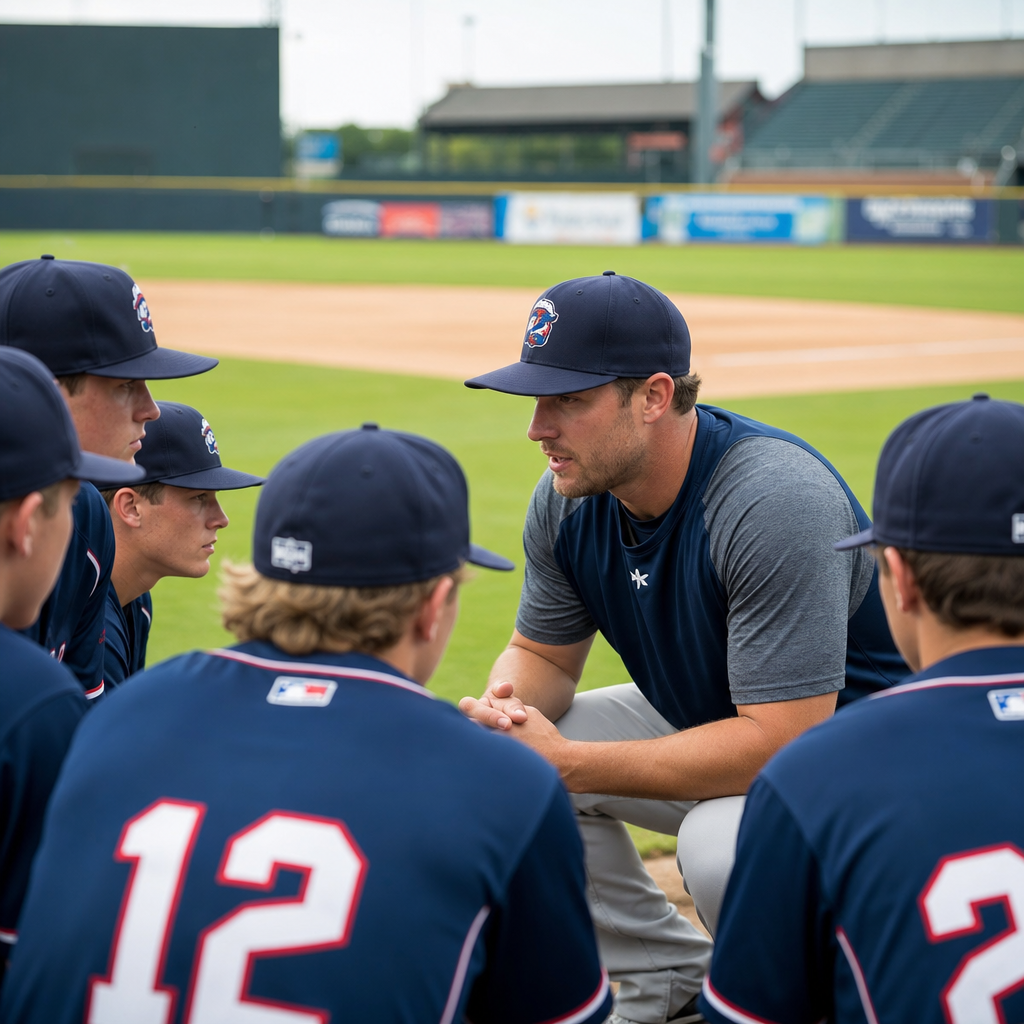
Cultivating leadership in the minor leagues starts with a simple truth: development rarely happens in comfortable conditions. In professional baseball’s lower levels, players ride buses overnight, share apartments, stretch meal money, and perform under constant evaluation. Those realities create a demanding environment where leadership is not a title handed to a veteran or coach. It is a daily practice built through consistency, accountability, communication, and resilience. For anyone studying leadership through the lens of sports, the minor leagues offer one of the clearest, most practical classrooms available.
When I have worked around player development settings, the strongest leaders were often not the loudest voices in the clubhouse. They were the players who arrived prepared, helped younger teammates adjust, and kept standards intact when fatigue and frustration made shortcuts tempting. In this context, leadership means influencing performance and behavior toward a shared goal. Culture means the repeated habits a group accepts as normal. Development means the long process of improving skills, decision-making, and professionalism over time. Those terms matter because the minor leagues are built on all three. Talent may earn a signing bonus, but sustained progress depends on leadership that turns raw ability into dependable performance.
This topic matters well beyond baseball. The minor leagues compress many of the same pressures found in business, education, military units, and community organizations: uncertain advancement, uneven resources, changing teams, public feedback, and frequent setbacks. A player can go 0-for-12, get promoted unexpectedly, switch positions, or be released after years of work. Leaders in that environment must regulate emotion, maintain trust, and keep people focused on controllable actions. That is why lessons from Class A, Double-A, and Triple-A resonate with managers, coaches, teachers, and young professionals. The setting is unique, but the principles are broadly useful. Learning how leadership grows in the minor leagues helps explain how durable character is formed anywhere performance matters.
Why the Minor Leagues Build Leaders Differently
The minor leagues develop leadership differently because they strip away many comforts that can hide weak habits. At the major league level, players have more support, better travel, larger salaries, and more stable roles. In the minors, uncertainty is part of the job description. According to Major League Baseball’s player development structure, athletes may move between complex leagues, Single-A, High-A, Double-A, and Triple-A depending on performance, organizational need, and health. That instability forces players to adapt quickly. A clubhouse leader in this environment learns to communicate with new teammates, absorb coaching changes, and stay grounded when circumstances shift overnight.
The best example is routine under pressure. A position player may finish a game after midnight, board a bus, arrive at a hotel at 4 a.m., and still be expected to complete defensive prep, cage work, scouting review, and strength training before first pitch. Leaders emerge by protecting standards during those stretches. They show younger teammates how to organize a day, recover efficiently, and avoid the emotional drift that long seasons produce. In practical terms, that might mean coordinating early work, reinforcing defensive positioning cards, or reminding a prospect that one bad series does not erase six months of progress. Leadership becomes visible because the environment gives players constant opportunities either to model discipline or abandon it.
Scarcity also sharpens judgment. Even after recent improvements in housing and pay, minor leaguers still face practical constraints that major leaguers do not. Resources are better than they were before MLB’s 2022 housing policy, but schedules remain demanding and career windows remain narrow. In that kind of system, self-management is inseparable from leadership. Players who budget time well, prepare meals intelligently, recover consistently, and seek feedback without defensiveness become stabilizing figures. They help teammates see that professionalism is not glamorous. It is repeatable behavior under less-than-ideal conditions.
Accountability, Routine, and the Everyday Standard
One of the clearest life lessons from minor league baseball is that accountability is rarely dramatic. It usually shows up in ordinary actions repeated for months. Clubhouse leaders set the everyday standard by being on time, understanding scouting reports, executing individualized development plans, and owning mistakes without excuses. In baseball operations, this is often called process orientation. Coaches care about outcomes, but they evaluate whether the player followed the process that is most likely to produce good outcomes over a long sample. Leaders reinforce that distinction because a 140-game season punishes emotional overreaction.
Consider a pitcher working on fastball shape and vertical approach angle, or a hitter trying to improve swing decisions in two-strike counts. Results may temporarily get worse during adjustment. A poor leader chases immediate comfort and encourages shortcuts. A strong leader helps teammates stay committed to the plan while still being honest about performance. I have seen veteran catchers do this exceptionally well. They can remind a struggling arm that conviction, tempo, and execution matter more than scoreboard panic in a developmental outing. That kind of voice protects the learning environment without lowering standards.
Accountability also means peer-to-peer correction. In healthy clubhouses, players address problems before coaches need to intervene. If someone is missing defensive meetings, drifting through base-running prep, or bringing negative energy into the dugout, respected teammates can reset expectations more effectively than staff lectures. This is not about policing personalities. It is about protecting the group’s working culture. Teams that make steady progress usually have players who understand that talent is individual, but preparation is contagious.
| Leadership habit | What it looks like in the minors | Life lesson outside baseball |
|---|---|---|
| Consistency | Following the same preparation routine during winning and losing streaks | Reliable habits outperform bursts of motivation |
| Accountability | Owning missed signs, poor routes, or recovery mistakes without excuses | Credibility grows when responsibility is accepted quickly |
| Adaptability | Handling promotions, demotions, role changes, and new coaching voices | Career growth favors people who adjust without losing standards |
| Service | Helping younger players with scouting prep, travel routines, or language barriers | Leadership is measured by how much better others perform around you |
Resilience After Failure and Uncertainty
If leadership in the minor leagues has a central test, it is response to failure. Baseball is built on it. A hitter who succeeds three times in ten is often considered excellent. A reliever can execute quality pitches and still lose because of sequencing or defense. Prospects also live with uncertainty that statistics do not capture. Promotions can be delayed. Injuries can interrupt a breakout season. Roster decisions can reflect organizational depth rather than merit alone. Leaders do not deny those frustrations. They teach teammates how to keep moving through them.
The most useful resilience lesson is separating identity from performance. Players who attach self-worth entirely to the box score usually ride emotional highs and lows that drain judgment. Strong leaders create a steadier frame: evaluate the at-bat quality, pitch execution, decision-making, body language, and response time after mistakes. This approach aligns with how modern player development departments use video, biomechanics, TrackMan, Hawk-Eye, and force-plate data. The goal is not to ignore results. It is to understand the underlying indicators that lead to sustainable improvement. Leaders who communicate this well prevent slumps from becoming cultural contagion.
Real-world examples appear every season. A prospect may be sent back to High-A after struggling in Double-A, then return stronger because he learned to rebuild his routine rather than resent the assignment. Another player may shift from starting to relief, or from shortstop to center field, and discover a clearer path to the majors by embracing a new role. Those moments mirror career pivots outside sports. People rarely control every external decision, but they can control response quality. Minor league leadership turns disappointment into usable information.
Communication Across Cultures, Roles, and Generations
Minor league clubhouses are diverse workplaces. American college draftees, high school signees, Latin American prospects, independent ball veterans, and rehab assignments from the major leagues can all share one room. Ages, incomes, languages, and life experience vary widely. That diversity makes communication a leadership skill, not a soft extra. The best team leaders learn how to make information clear, respectful, and actionable across those differences.
This is especially important in baseball because so much instruction is precise. A coach may be discussing release height, spin efficiency, chase rate, or lead-foot timing. If a player does not fully understand the message, performance suffers. Good leaders bridge those gaps. They translate coaching language into plain terms, include quieter teammates in conversations, and pay attention to nonverbal signals that indicate confusion or frustration. In bilingual environments, even basic effort to connect matters. A veteran who learns key baseball terms in Spanish or takes time to explain defensive positioning to a younger international player is doing more than being polite. He is increasing team function.
Communication also changes by role. Catchers often lead through game planning and mound presence. Infielders lead through positioning and pace. Older bench players may lead by helping prospects prepare for specialized roles such as pinch hitting or late-inning defense. Staff leaders must balance instruction with emotional awareness, especially after errors, rough outings, or difficult roster conversations. Clear communication is not constant talking. It is knowing what needs to be said, when it should be said, and how directly it should be delivered.
Servant Leadership and the Value of Small Actions
Some of the most effective minor league leaders practice a service-first style. They pick up details that make the group function better, even when those actions do not produce personal recognition. That can mean organizing extra defensive reps, sharing advance scouting notes, helping a teammate navigate a new city, or keeping the dugout focused after a long rain delay. In player development, these small actions compound. They reduce friction, protect energy, and create trust.
This matters because the minor leagues are not built for ego comfort. Everyone wants to advance, and roles can feel temporary. In that environment, selfishness is easy. A player can focus only on his own at-bats, own metrics, and own timeline. Yet the athletes who are remembered as true leaders usually make other people better. They understand that service is not weakness. It is influence through usefulness. Coaches trust those players more because they improve the daily environment, not just their own stat line.
Outside baseball, this lesson is powerful. Many people assume leadership begins after a promotion into formal authority. The minor leagues prove the opposite. Leadership often begins with tasks that look too small to matter. Showing up prepared, sharing information, calming pressure, and helping someone adjust to a new standard are all forms of leadership. Over time, those actions establish reputation. Reputation then creates influence. Influence eventually creates opportunity.
How This Hub Connects the Wider Minor Leagues and College Baseball Conversation
As a hub within the broader minor leagues and college baseball topic, this page belongs to the miscellaneous category because leadership touches every other subject in the ecosystem. It connects to player development, recruiting, NIL-era decision-making, draft strategy, coaching philosophy, strength and conditioning, sports psychology, travel demands, nutrition, and clubhouse culture. A college program trying to prepare players for pro ball is not only teaching swing mechanics or pitch design. It is teaching time management, feedback response, team accountability, and role acceptance. Those are leadership foundations.
The same is true for families and fans following the developmental path. Understanding leadership clarifies why organizations value certain players beyond raw tools. A prospect with average physical grades may still move quickly because he processes information well, stabilizes younger teammates, and handles adversity professionally. Conversely, elite talent can stall if routine, communication, and accountability are weak. That is why leadership should sit near the center of any serious conversation about minor league baseball.
The main takeaway is straightforward: the minor leagues cultivate leadership by demanding maturity before comfort arrives. Players learn to lead through routine, accountability, resilience, communication, and service. Those lessons matter because they turn development into something larger than athletic advancement. They show how people can build trust, hold standards, and grow through uncertainty in any competitive environment. If you are exploring the wider world of minor leagues and college baseball, use this hub as a starting point, then follow the connected topics that explain how leadership shapes every stage of the journey from prospect to professional.
Frequently Asked Questions
What makes the minor leagues such a powerful environment for learning leadership?
The minor leagues are a powerful leadership classroom because they strip away comfort and expose character. Players are asked to perform while dealing with long bus rides, uncertain schedules, shared living spaces, modest salaries, and constant competition for limited opportunities. In that kind of setting, leadership cannot depend on status, titles, or polished speeches. It shows up in small, repeatable behaviors: arriving prepared, handling frustration without blaming others, supporting teammates after poor performances, and maintaining standards even when nobody is watching. That is exactly why the environment is so instructive. It reveals that real leadership is less about authority and more about influence under pressure.
Another reason the minor leagues teach leadership so effectively is that growth happens in public and often imperfectly. Players fail often, make adjustments quickly, and learn that emotional discipline matters just as much as physical ability. A leader in this world learns to stay steady when results are uneven, communicate clearly when tension rises, and keep a group connected when exhaustion and uncertainty set in. Those lessons translate far beyond baseball. Whether someone leads in business, education, healthcare, or community work, the same truth applies: people trust leaders who remain accountable, resilient, and team-minded when conditions are difficult. The minor leagues simply make that truth impossible to ignore.
How does adversity in the minor leagues help develop leadership qualities?
Adversity is one of the fastest ways to reveal and refine leadership because it forces people to choose how they will respond when circumstances are not ideal. In the minor leagues, adversity is not occasional; it is part of the daily landscape. Players deal with slumps, demotions, injuries, fatigue, financial strain, and the emotional weight of being evaluated constantly. Those experiences create pressure, and pressure tends to expose habits. Some people become negative, reactive, or self-focused. Others learn to regulate their emotions, take responsibility, and help stabilize the group. That second response is where leadership starts to take shape.
The value of adversity is that it teaches leaders to separate what they can control from what they cannot. A player cannot control every roster move, umpire call, or bad bounce, but they can control preparation, effort, attitude, and communication. Over time, this mindset builds maturity. Leaders in difficult environments learn to stay useful even when they are disappointed. They learn to encourage teammates while working through their own struggles. They learn that credibility grows when actions remain disciplined during hard moments, not just when things are going well. In that sense, adversity does not automatically create leaders, but it does create the conditions where leadership can be practiced, tested, and strengthened in a very real way.
What leadership traits are most important in the minor leagues?
Several leadership traits matter in the minor leagues, but four stand out consistently: consistency, accountability, communication, and resilience. Consistency matters because teammates and coaches need to know what they can expect from a person each day. A consistent leader prepares seriously, competes honestly, and treats others with respect regardless of recent results. Accountability matters because excuses spread quickly in difficult environments. Leaders own mistakes, accept coaching, and set the tone by focusing on improvement instead of blame. Communication matters because tension and uncertainty are common. Strong leaders know when to speak, how to listen, and how to deliver messages that are honest without being destructive.
Resilience may be the defining trait of all. In the minor leagues, setbacks are guaranteed. A leader must recover quickly without pretending disappointment does not exist. That means showing emotional steadiness, adapting to change, and helping others keep perspective after a loss, an error, or a difficult stretch. Humility is also essential. The best leaders in developmental environments do not act as if they have all the answers. They remain coachable, curious, and willing to serve the team in practical ways. Taken together, these traits form a style of leadership that is grounded, dependable, and deeply influential. It is not flashy, but it is exactly what demanding environments require.
Can leadership in the minor leagues come from players without formal authority or veteran status?
Absolutely. One of the clearest lessons from the minor leagues is that leadership is not reserved for the oldest player, the top prospect, or the person with the loudest voice. In many cases, the most respected leaders are those who influence the environment through daily habits rather than formal authority. A younger player can lead by preparing with discipline, asking thoughtful questions, encouraging teammates, and responding to coaching with maturity. A backup player can lead by staying engaged, supporting others, and bringing energy to a demanding season. Leadership in this setting is earned through trust, and trust comes from behavior people see over time.
This matters because teams function best when leadership is distributed rather than concentrated in one or two people. When multiple players take responsibility for standards, communication, and culture, the group becomes more stable. Informal leaders often shape the day-to-day mood of a clubhouse more than official titles do. They influence how teammates handle failure, how newcomers are welcomed, and whether accountability feels constructive or critical. That is a valuable lesson for any organization. Effective leadership cultures are built when people at every level understand they have a role in setting standards and supporting the mission. The minor leagues make this especially visible because the margin for emotional drift is small, and peer influence can make a significant difference.
What practical leadership lessons from the minor leagues apply outside of baseball?
The practical lessons are remarkably transferable. First, the minor leagues teach that leadership is a daily discipline, not a one-time performance. In any field, people respond more strongly to repeated actions than to occasional inspiration. Showing up prepared, following through on commitments, and staying composed under pressure builds trust over time. Second, the minor leagues reinforce the importance of accountability. Strong leaders do not spend energy protecting their image when mistakes happen. They acknowledge errors, make adjustments, and move forward. That habit is just as important in workplaces, families, schools, and community organizations as it is in sports.
Another major lesson is that effective leaders communicate with clarity and empathy, especially when conditions are stressful. In the minor leagues, confusion and fatigue can easily create frustration. The same is true in any demanding environment. Leaders who listen well, set expectations clearly, and address problems directly without humiliating people tend to create healthier, more productive teams. Finally, the minor leagues teach resilience with realism. Leaders are not expected to be unaffected by setbacks; they are expected to recover productively and help others do the same. That combination of honesty, steadiness, and service is what makes leadership durable. For anyone studying how leaders are formed, the lesson is simple and powerful: demanding conditions do not excuse poor leadership; they reveal the kind of leadership that actually works.